Most people who research Malta as a relocation destination start with Sliema or St Julian's. The articles point there, the property portals are full of listings, the restaurants and gyms and coffee shops are concentrated there, and the ferry to Valletta runs from the Sliema waterfront. If you are arriving with no prior knowledge and want to be comfortable immediately, the strip from Sliema to Paceville delivers. It is efficient, it is familiar in the way that any Mediterranean urban seafront is familiar, and it works.
Some of our clients, after they have done their research, after they have visited Malta once or twice, after they have spoken to the people who actually live there full-time, ask about somewhere else entirely. They ask about Mdina.
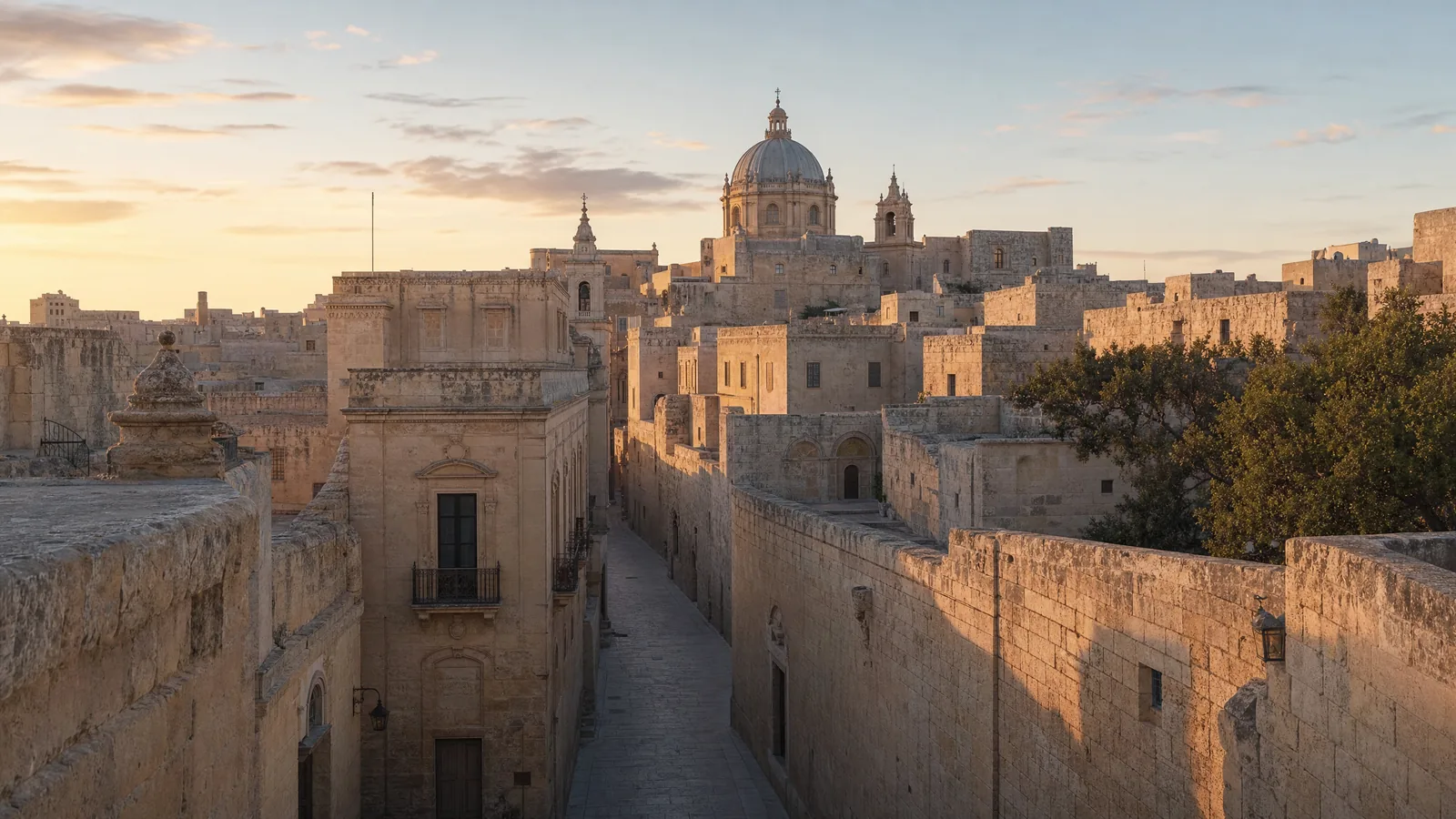
Mdina is the oldest continuously inhabited city in Malta, the mediaeval capital that the Knights bypassed in favour of Valletta, a walled city of barely 250 permanent residents perched on the highest ridge of the island. It is called the Silent City. In the hours before the day-trippers arrive and after they leave, the name is completely accurate.
What Mdina actually is
The site has been inhabited since the Bronze Age. The Romans called it Melite and built their villa outside its walls, in what is now Rabat. The Arabs built a medina here, which is where the modern name comes from: the Arabic word for city. The Normans built a cathedral. The Knights of St John, arriving in 1530 and finding the Grand Harbour far more strategically suited to their naval purposes, shifted the capital south and left Mdina to settle into a quiet existence as an aristocratic retreat.
That aristocratic character has never entirely left. The families that have lived in Mdina's palazzi for centuries have surnames that appear in the Maltese nobility roll, and some of the great houses within the walls have been in continuous family ownership for three hundred years or more. The Mdina Experience and the Cathedral Museum give the historical record. But the texture of the place is not in the museum. It is in the quality of the silence at 7am, when the light is horizontal and golden and the only sound is the bells.
Why serious clients ask about it
The profile of a client who ends up asking about Mdina is recognisable. They are typically older, often over fifty. They have money that is already made. They are not building a startup from a co-working space in St Julian's. They are not looking for proximity to nightlife or a social scene of fellow expats. They want to live somewhere that rewards paying attention, somewhere with genuine historical depth, somewhere where the pace of life is their pace and not the pace of the place they left.
Mdina appeals to exactly the person who has spent twenty years in a capital city being efficient and now wants to spend the next twenty years being deliberate.
The practical realities are significant, and they matter before you romanticise the prospect. The permanent population inside the walls is fewer than 300 people. There are no supermarkets inside Mdina. The car access is restricted: residents have passes, but the streets are barely wide enough for one vehicle and parking is essentially nonexistent within the walls. The immediately adjacent town of Rabat, which shares the ridge and bleeds into Mdina without a visible seam, provides the everyday infrastructure: shops, pharmacies, cafes, the bus routes to the rest of the island.
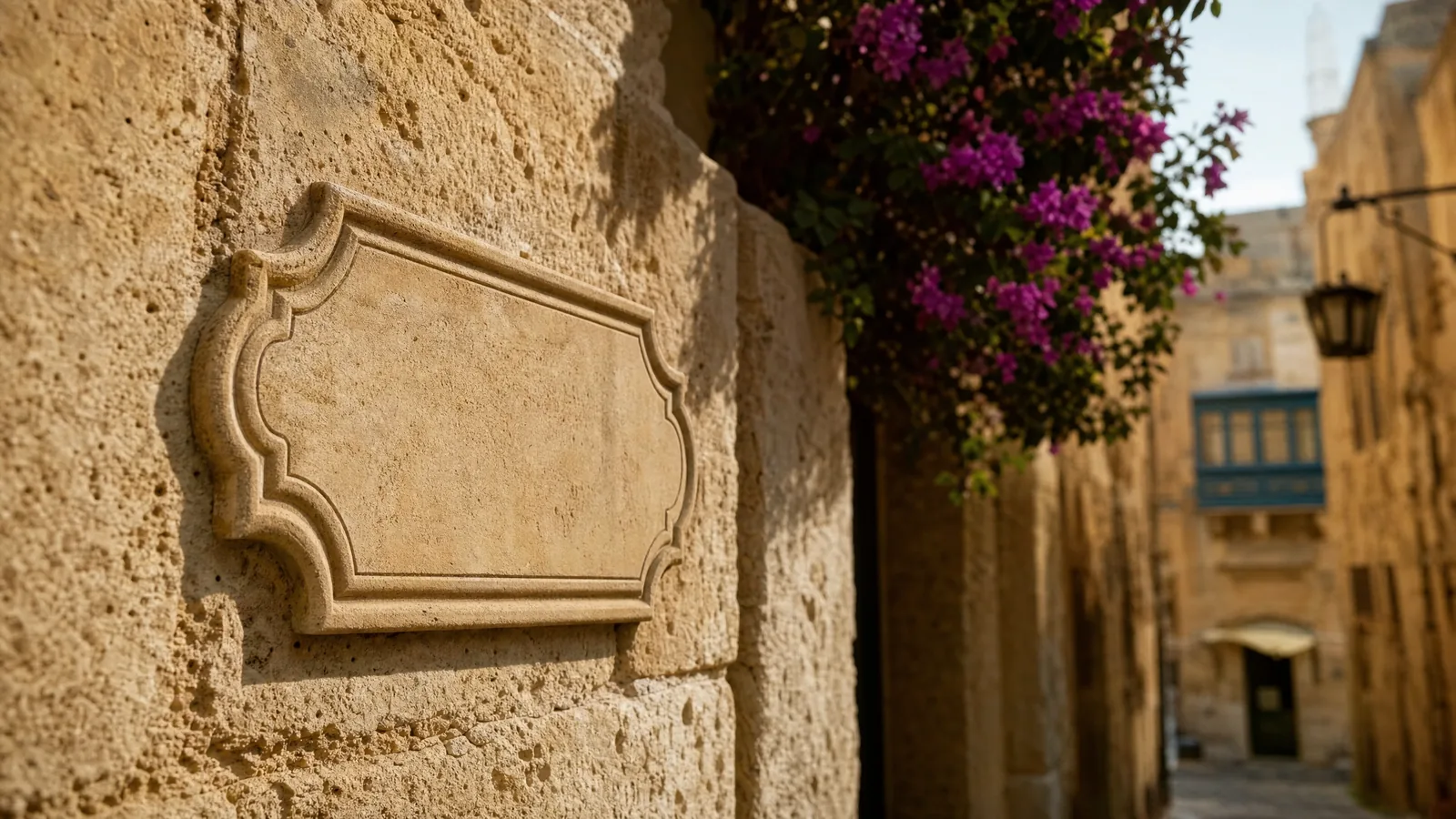
The properties within the walls are almost exclusively old, thick-walled palazzi and townhouses. They are expensive to maintain. They require specialist restoration work. Air conditioning can be retrofitted but must be done sensitively. The thick limestone walls, often a metre or more in depth, mean that the buildings are naturally temperature-regulated to a degree that more modern construction is not: cool in summer, cold in winter in a way that central heating must address.
The property market
Mdina's property market is small, illiquid, and rarely reaches the public portals. Most transactions happen through personal networks, through lawyers who have acted for the established families for generations, through word of mouth. If you want to buy inside the walls, you need a local professional with relationships, not a property search website.
Prices per square metre inside Mdina are among the highest in Malta for residential property, not because the average quality is high but because the properties that do come to market are significant: multi-storey palazzi with internal courtyards, first-floor piano nobile apartments with views across the island to the sea. These are not frequently available. When they are, they move quietly.
Our guide to Malta property covers the broader island market. For Mdina specifically, direct advice through our network is the practical starting point.
Living there: the honest account
I will give you the honest version, based on what our clients who have moved there actually report.
The summer question is real. Mdina sits on the highest point of Malta and catches the breeze better than anywhere else on the island. In July and August, when Sliema is stifling and the seafront is crowded, Mdina in the evening is, comparatively, pleasant. The streets are empty of tourists by 8pm. The temperature is a degree or two lower than the coast. The silence returns.
The winter question is also real. Malta's winters are mild by Northern European standards, but they are not warm. January and February bring rain, wind, and temperatures in the low teens. A palazzo without adequate heating is cold. The thick walls that keep the summer heat out keep the winter damp in. Clients who move to Mdina expecting year-round warmth need to manage their expectations and their heating budget.
The lifestyle is genuinely different. There are no bars, no restaurants to speak of within the walls. The social life, to the extent that it exists, is the social life of a very small, very private community. If you are someone who needs ambient social stimulus, proximity to restaurants, the easy option of a walk to a wine bar: Mdina is not the answer. If you are someone who reads, who walks, who thinks, who values the quality of an evening in a great stone room with a book and a glass of Maltese wine from the Marsovin or Meridiana estates: it is exactly the answer.
This is the choice that nobody tells you is on the table when you start researching Malta. The table is larger than the brochures suggest.
If Mdina sounds like it might be the right fit, book a consultation and we can talk through what a move there actually involves, practically and legally.