In AD 60, the Apostle Paul was on a ship sailing from Crete to Rome. A storm drove the vessel off course. After two weeks at sea, the ship ran aground on a sandbar and broke apart. The passengers swam ashore.
They had landed in Malta.
Paul stayed for three months. He healed the father of the Roman governor Publius, who converted to Christianity and became the first Bishop of Malta. By the third century, the Maltese were almost entirely Christian.
That was nearly 2,000 years ago. The faith has not left.
I am a Catholic. When I first arrived in Malta, I understood immediately why clients who share that faith tend to stay. There is something here that you do not find in most of Western Europe anymore — a country where Christianity is not a historical footnote but a living, public, argued-about, celebrated fact of daily life.
The Numbers
- Malta’s constitution establishes Roman Catholicism as the state religion
- 82.6% of the population identified as Catholic in the 2021 census
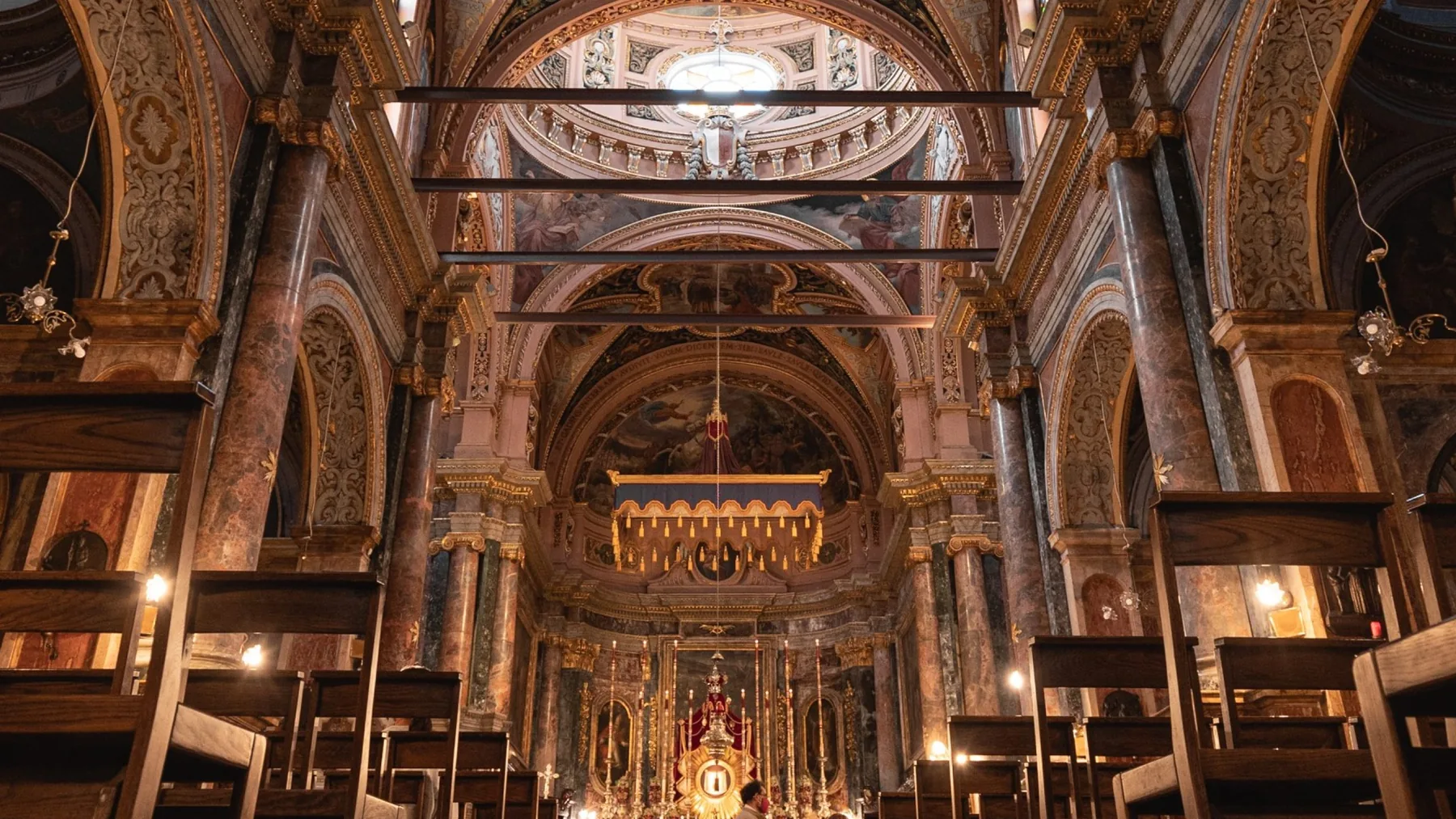
- 359 churches on Malta and Gozo combined — more than one per square kilometre
- A prayer is recited at the opening of every sitting of the Maltese parliament
- Crucifixes hang in every hospital room, every classroom, every public building
- Abortion is illegal in all circumstances — the only EU member state where this remains the case
- Assisted dying is illegal
This is not a country that has retained the architecture of Christianity while abandoning the substance. It is a country where the substance is still debated, still contested, and still present.
The Festa
Every Maltese village has a patron saint. Every patron saint has a feast day. Every feast day is a festival.
The Maltese festa is unlike anything else in Catholic Europe. Each village divides between two competing clubs — the band clubs — each loyal to a different saint or confraternity. They compete on the quality of their fireworks, their decorations, their brass band performances. The rivalry is genuine, occasionally ridiculous, and entirely charming.
For a Catholic family with children, the festa calendar is one of the great gifts of Maltese life. From May through September, nearly every weekend offers a village somewhere on the island bursting with processions, fireworks, street food, and community.
Holy Week
Malta’s Holy Week observances are among the most serious in Europe. On Holy Thursday, the faithful observe the tradition of visiting seven churches — the seba’ knejjes — to pray before elaborate altars of repose. Churches in Valletta, Mdina, and Rabat are crowded until late at night.
Good Friday processions in Valletta and Rabat are large, solemn, and genuinely moving. Statues of the Passion are carried through the streets. Confraternity members in robes walk in silence.
For a Catholic arriving in Malta from Britain, Ireland, Australia, or North America — where this kind of public faith is increasingly invisible — it is a recalibration.
The Sanctuaries
Two sanctuaries in particular matter:
Ta’ Pinu, Gozo: A basilica built on the site where a woman named Karmni Grima heard the voice of Our Lady in 1883. The interior walls are covered in votive offerings — photographs, crutches, baby clothes — left by those who believe they received miracles here. The last three popes have visited. It is one of the great Marian shrines of the Mediterranean.
Our Lady of Mellieħa: The oldest Marian shrine in Malta, built into a cave, tradition holds that St. Luke himself painted the image of Our Lady that hangs there.
For Catholic Families
If you are raising children in the faith, Malta is one of the most supportive environments in Europe:
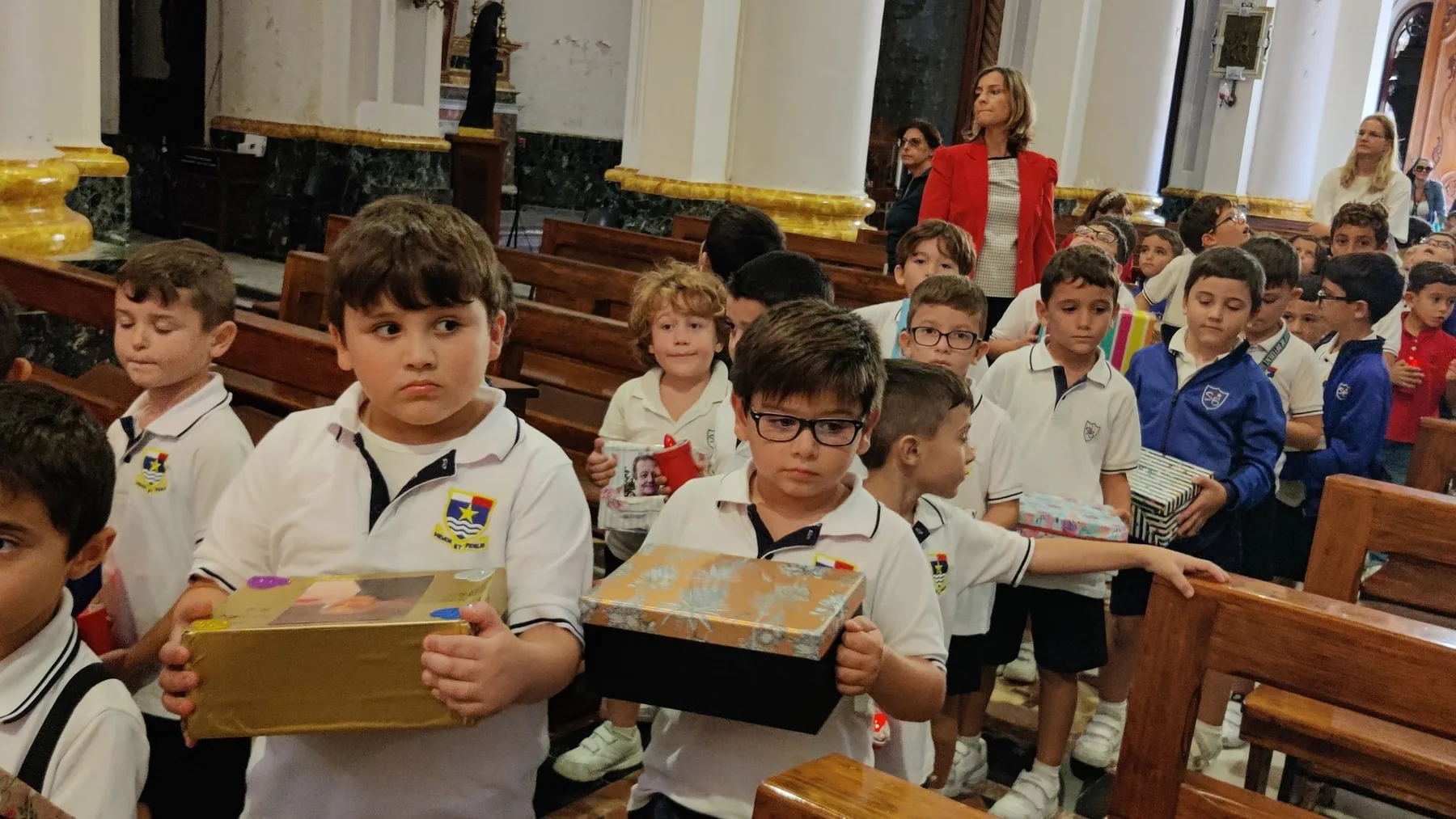
- Religious instruction is taught in all state schools (with opt-out available)
- Church schools are state-funded under the 1993 Concordat with the Vatican and are not obliged to provide sex education that conflicts with Catholic teaching
- The calendar is structured around the liturgical year in a way no other EU country matches
- Community life — at the parish level — is genuinely alive
Read our full education guide for families.
The Honest Note
Malta is not a theocracy. Divorce was legalised in 2011 after a referendum. Same-sex partnerships have legal recognition. The country is secularising — younger Maltese attend Mass less regularly than their grandparents. These tensions are real and discussed openly.
But compared to the rest of Western Europe? Malta remains — by a considerable margin — the most Catholic country in the EU. For a Catholic family choosing where to live, that is not a footnote. It is a fundamental feature of the place.