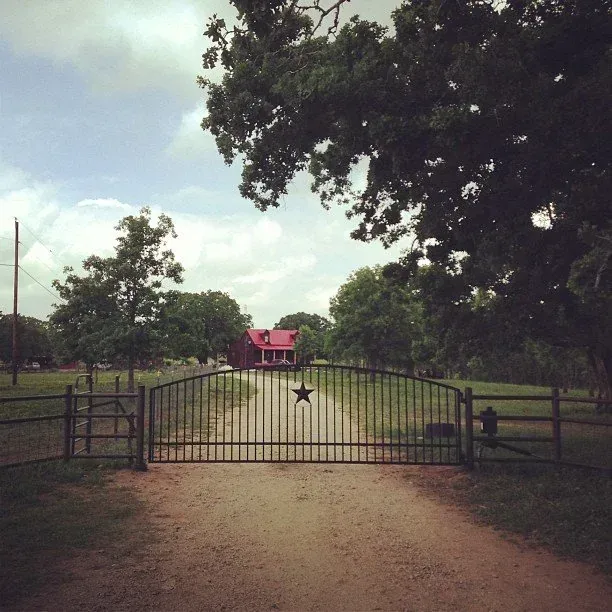
I have to tell you something that might sound like a contradiction: I love the American South. Not in a casual, postcard way, but in a deep, lived-in, sun-baked, road-tripped way. I moved to Texas in 2011 after living in Florida. I’ve driven through Louisiana with zydeco music crackling on the radio, eaten fried green tomatoes in Georgia that made me question whether vegetables are supposed to taste that good, and sipped bourbon on a porch in Mississippi watching fireflies rise like sparks from the grass.
The South gets under your skin. It’s the way strangers greet you in the grocery store, the way conversations drift lazily across fences, the way church parking lots fill up early on Sundays. It’s the pecan pie that somehow tastes better when it’s served on a plate older than you are, and it’s the sweet tea so loaded with sugar it could probably power a mid-sized car. It’s the architecture too, white-columned plantation houses, humble shotgun shacks, and clapboard churches with steeples pointing straight to Heaven. And it’s the weather, oh Lord, the weather: summer thunderstorms that crash through the heat like a drumroll before the heavens open.
I love all of it. Which is why it pains me to talk about the Civil War.
The War I Hate Talking About
I hate it for two reasons.
First, because it’s a wound that still hasn’t fully healed, and talking about it can turn a friendly dinner table into a shouting match faster than you can say “pass the cornbread.”
Second, because deep down, I sometimes wonder if the war had to happen at all. Most other countries, Britain, France, Brazil, managed to end slavery without a four-year bloodbath that killed more Americans than both World Wars combined. Could we have done the same? Maybe. I’ll never know. None of us will.
But one thing I do know, and here I won’t mince words, is this: the Civil War was not about “states’ rights.” It was about slavery. Full stop. Period. End of paragraph. I don’t care how many half-baked “heritage not hate” arguments people throw at me over barbecue.
The Paper Trail of Truth
If you doubt me, go read the actual words of the people who started it. The secession declarations of Mississippi, Texas, Georgia, and South Carolina aren’t dusty legal technicalities; they’re loud, proud manifestos for slavery.
Mississippi’s declaration says it outright: “Our position is thoroughly identified with the institution of slavery, the greatest material interest of the world.”
Texas’ declaration warns that freeing the enslaved would bring “the inevitable calamities of race conflict.”
These weren’t accidental lines buried on page 12. They were the reason for secession. The beating heart of the rebellion.
So when I see a statue of Jefferson Davis, I’m not looking at “Southern heritage.” I’m looking at the bronze face of a man who led an armed rebellion to destroy the United States in defense of human bondage.
The Poison of the Lost Cause
If you want to understand why Jefferson Davis still has statues in the United States, you have to understand the Lost Cause, a carefully manufactured lie that’s been poisoning American memory for more than a century.
The Lost Cause wasn’t born during the war. It came later, when the South lay in ruins, its cities burned, its economy shattered. Confederate veterans, politicians, and their families faced an unbearable truth: they had fought a war for slavery and lost. So they began to rewrite the story.
In this retelling, the Confederacy wasn’t fighting for human bondage at all, oh no, it was fighting for noble “states’ rights” and “Southern honor.” Slavery was painted as a benign, even civilizing institution. Generals like Robert E. Lee became flawless saints. And Jefferson Davis? He was elevated to a tragic, misunderstood patriot.
This myth didn’t stay confined to nostalgic front-porch storytelling. It was institutionalized. Textbooks in Southern schools were rewritten to reflect it. Monuments sprouted in town squares, not immediately after the war but decades later, especially during the Jim Crow era, when Black Americans were being disenfranchised and terrorized. The statues weren’t just about “remembering history”; they were about reinforcing white supremacy in the present.
The Lost Cause is why people still talk about the Civil War as if it were some tragic misunderstanding between two equally noble sides, rather than a rebellion to preserve slavery. It’s why some insist Jefferson Davis deserves honor in public spaces. And it’s why removing his statues matters so much, because every day they stand, they keep that lie alive.
An Enemy of the United States
Let’s put this in perspective. Jefferson Davis was President of the Confederate States of America. The Confederacy was not some romantic agrarian club of genteel farmers sipping mint juleps. It was a government formed for the explicit purpose of breaking away from the United States, fighting its soldiers, and preserving slavery forever.
That makes Davis, in the most literal, dictionary-definition sense, an enemy of the United States.
And here’s where the absurdity really hits: we still have statues of him in American cities. Richmond, Virginia, the former Confederate capital, long had a towering monument to Davis, as if he were a hero instead of a man who tried to dismantle the country.
Imagine any other nation doing this. Would France put up a statue of Marshal Pétain, leader of the Nazi-collaborationist Vichy regime? Would the UK install a monument to an IRA commander in the middle of London? Would Russia erect a statue of a Chechen separatist in Moscow? Of course not.
The Hitler Analogy That Offends People
Every time I make the comparison, someone clutches their pearls: “How dare you compare Jefferson Davis to Hitler?” Well, let’s keep our heads straight here. Davis was not a genocidal maniac seeking world domination. But he was the head of a government that waged war on the United States and sought to keep millions of human beings in chains. The moral magnitude is different, but the category, enemy of the U.S., is the same.
So when I say, “Having a statue of Jefferson Davis in Richmond is like having a statue of Hitler in Washington, D.C.,” I’m talking about the principle. You don’t honor people who fought to destroy your country. It’s that simple.
The William Wallace Distraction
Some defenders try to pull a fast one: “Well, Britain has a monument to William Wallace in Stirling, and he fought the English too!” Yes, and here’s the part they conveniently skip: Scotland is not England. Stirling is in Scotland, and Wallace is a Scottish national hero. It’s not the same country honoring an enemy; it’s a part of the same modern UK honoring its own ancestor who fought a foreign oppressor centuries ago.
If the Jefferson Davis statue were in an independent “Republic of the South” today, the comparison might hold. But it’s not. It’s in the United States, the very nation he tried to break apart.
Why This Hurts More Because I Love the South
Now, you might be wondering: if I love the South so much, why am I not willing to give these statues a pass? The truth is, my love for the South is exactly why I can’t.
I’ve seen too much of its beauty, its generosity, its raw humanity to let its history be reduced to a bronze lie. I’ve been welcomed into homes where the biscuits came out of the oven just as I stepped inside. I’ve been given unsolicited life advice by a gas station attendant in Alabama who turned out to be wiser than half the consultants I’ve ever paid. I’ve stood under live oaks older than the Constitution, draped in Spanish moss that swayed in a warm night breeze.
This place deserves better than myths. It deserves to be proud of the right things: its music, its cuisine, its storytelling, its grit. Not a false, romanticized image of men who fought for the right to keep people as property.
The Food That Tells the Truth
Let me put it this way: Southern food tells you everything you need to know about Southern culture. It’s rich, inventive, and built on the blending of traditions: African, Native American, European. Gumbo isn’t just a dish; it’s a history lesson in a bowl. Fried chicken, collard greens, cornbread - these are the edible records of resilience, adaptation, and survival.
But when we put up statues to Confederate leaders, we’re erasing part of that truth. We’re pretending that the South was somehow separate from the horror of slavery, when in reality, much of what we love, even the recipes, came from people who were enslaved.
If we can celebrate the food without acknowledging the hands that made it possible, we’re telling a half-story. And half-stories are dangerous.
Erasing Statues Is Not Erasing History
Here’s another argument I hear: “If we take the statues down, we’re erasing history!” No. We’re putting history in its proper place: in museums, books, and classrooms, where it can be studied and understood, not glorified.
A bronze man on a horse in the middle of the city isn’t history; it’s hero-making. And when the hero in question is an enemy of the nation, we’re crossing into madness.
Removing a statue doesn’t erase the past any more than putting down the sweet tea pitcher erases the fact you’ve already had three glasses. The past happened. We just don’t need to toast to it in the town square.
A Future Worth Fighting For
If there’s one thing I’ve learned from my years in the South, it’s that people here care about honor. They care about doing right by their ancestors. But doing right by them doesn’t mean clinging to the worst parts of their legacy. It means telling the truth about it.
And here’s the truth: Jefferson Davis was not a patriot. He was not a hero. He was a man who fought to keep other men, women, and children in chains. He was the president of a hostile foreign power that lost a war against the United States.
Honoring him with statues is not Southern pride. It’s national self-sabotage.
The Bottom Line
I will keep loving the South. I will keep traveling its back roads and eating my way through its diners. I will keep listening to its music, learning from its storytellers, and enjoying its unmatched warmth. But I will not pretend that Jefferson Davis was anything other than what he was: an enemy of the United States whose cause was the preservation of slavery.
The South is more than the Confederacy. The South is gospel choirs and jazz horns, catfish fries and Mardi Gras parades, Friday night football and Sunday morning potlucks. It is farmers and fishermen, poets and preachers, dreamers and doers. It does not need bronze traitors to tell its story.
Take the statues down. Put them in museums. Teach the history. And let the South, the real South, the one I love, finally stand on the right side of the truth.