I am writing this from Rhodes, my first time on the island, and I did not expect to spend a holiday quietly arguing with my own assumptions about what a good move looks like.
We came here almost by accident. A few weeks ago I took the family to Crete, and we stood inside the ruins of the Palace of Knossos, that strange and beautiful labyrinth where the line between myth and masonry dissolves. The children were genuinely awestruck, which is no small thing, and so were we. We liked Greece so much that we did the unreasonable thing and simply booked another holiday on the spot. This time Rhodes, staying close to Lindos on the east coast. Sometimes the best decisions are the ones you make while you are still happy.
Lindos: a white village under an ancient crown
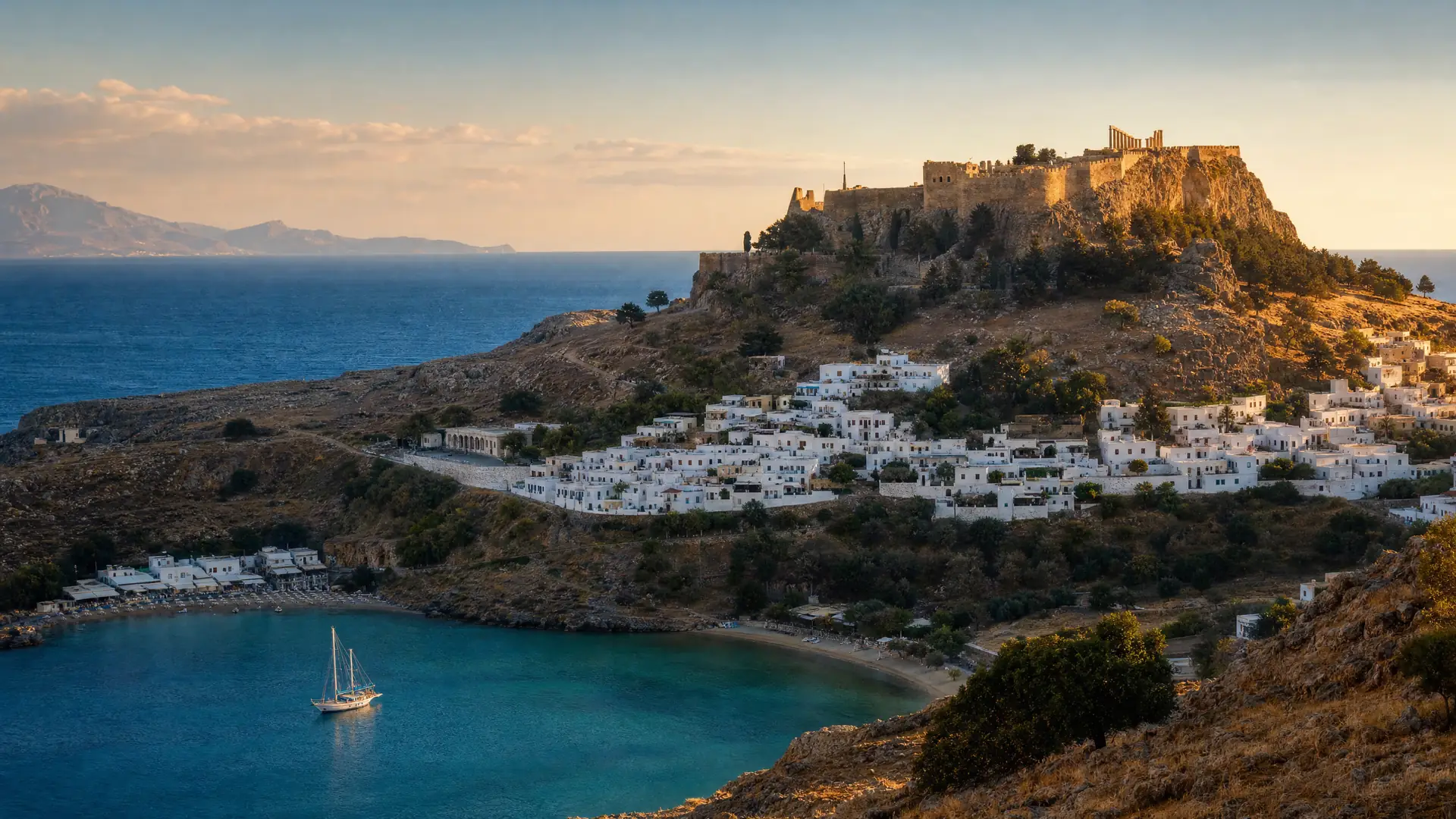
Lindos is the kind of place that does not really photograph. You can try, and the pictures are lovely, but they miss the feeling of it. A tumble of whitewashed houses spills down the hillside, the lanes are too narrow for cars, and bougainvillaea spills over the walls in colours that look turned up past realistic.
And then you look up. Above the village, on a cliff that drops 116 metres straight into the sea, sits the Acropolis of Lindos. People worshipped the goddess Athena Lindia up there from the ninth century BC, and the Doric temple that still stands was raised around 300 BC. It is, by common agreement, one of the most beautiful ancient sites in Greece, second only to the Acropolis of Athens. If you want the full history before you climb, this is a good place to start: the Acropolis of Lindos.
But here is the detail I keep returning to. The temple is not the top layer. The whole acropolis is wrapped in a medieval fortress, and that fortress was built by the Knights of St John in the fourteenth century, set straight on top of the older Byzantine walls. A Greek temple to Athena, crowned by a crusader castle, looking out over a sea that has carried Phoenicians, Romans, Ottomans and cruise ships. You do not have to go looking for layered history in this part of the world. It is simply lying around, waiting for you to notice it.
A day the iPads lost
A few days ago we booked a private tour on a small sailing boat, just our family and a skipper who clearly loved his stretch of coast. He took us out to a string of quiet coves around Lindos that you cannot reach from the road, the water shifting from deep navy to a pale, impossible turquoise as the bottom rose up to meet us.
We swam off the back of the boat. The children jumped in until they were exhausted and then jumped in again. We ate simple food in the shade of the sail and let the afternoon go slack. It was one of those rare, unrepeatable days where nobody reached for a screen, nobody asked how long until we get there, and the iPads were not missed for a single second. If you have travelled with a large family, you know exactly how rare and how valuable that is. I have built a working life around the idea that the best things happen when you are willing to go a little off the obvious path. That cove was a reminder I did not know I needed.
The Knights are everywhere here
What has struck me most, though, is not the temples or the beaches. It is the constant, quiet presence of the Knights of Malta.
It starts small. The bar in our hotel is named after them. Local brands carry the eight-pointed Maltese cross on their labels as if it were the most natural badge in the world, which here it is. And then you go into Rhodes Town and understand why.
The old town of Rhodes is a UNESCO World Heritage Site, and the Knights of St John built most of what makes it extraordinary. The Order occupied the island from around 1309 until 1522 and turned it into one of the great fortified cities of the medieval world, surrounded by four kilometres of walls. You can walk the Street of the Knights more or less as they left it, past the auberges where knights from different nations once lodged, up to the formidable Palace of the Grand Master. UNESCO calls the upper town one of the most beautiful Gothic urban ensembles anywhere, and standing in it you do not argue. If you want to read the official record, it is here: the Medieval City of Rhodes on the World Heritage list.
So the cross on the beer label and the castle crowning the cliff at Lindos and the great walls of Rhodes Town are all the same story. This was a Knights’ island for two hundred years. And then, quite suddenly, it was not.
How they got cast out, and why it was the best thing that ever happened to them
In 1522, Suleiman the Magnificent brought an enormous Ottoman army to Rhodes. The Knights, hopelessly outnumbered, held out behind their walls for roughly six months. It was brutal. In the end the Grand Master, Philippe Villiers de L’Isle-Adam, negotiated an honourable surrender. The surviving knights were allowed to leave the island with their banners, their weapons and their dignity, but leave they did. After two centuries, they were cast out of Rhodes.
What followed was not glory. It was homelessness. For the better part of a decade the Order wandered the Mediterranean, guests and refugees, looking for somewhere to belong. Then in 1530 the Emperor Charles V handed them the islands of Malta and Gozo, along with Tripoli, in exchange for the now famous symbolic rent of a single falcon paid once a year. The full lineage, Jerusalem to Acre to Cyprus to Rhodes to Malta, is set out by the Order itself: the names of the Order.
Here is the part people forget. The Knights did not want Malta. After the lushness and strategic glamour of Rhodes, this sun-baked rock with thin soil and no timber felt like a demotion, almost an insult. They accepted it reluctantly, as you accept the only offer on the table.
And then, in 1565, Suleiman came for them again. The Great Siege of Malta is one of the legendary last stands of European history. The Knights, led by Grand Master Jean Parisot de Valette, held against a vastly larger Ottoman force through a long and savage summer. And one of the quiet reasons they won is the very thing that had felt like the curse of the place. Malta sat far from the Ottoman heartland. The supply lines were long, the campaigning season was finite, and when a relief force finally arrived from Sicily, the exhausted Ottomans withdrew rather than face winter so far from home.
Sit with that. The banishment turned out to be the benefit. The island they were given as a consolation prize, the one they did not want, was precisely the ground on which they could finally win. The thing that looked like the end of them became the foundation of a golden age that lasted more than two centuries. Their new capital was named Valletta, after the man who held it. The defeat at Rhodes was the necessary first step to the victory at Malta. They simply could not see it at the time, because nobody ever can.
My own Malta connection
I have a soft spot in this story, because Malta was once home to me too. Over twenty-five years I have lived and built across Switzerland, the United Kingdom, the United States, Ireland, Scotland and Malta, and I have learned that the place you end up loving is rarely the place you would have predicted. Malta was one of those. You arrive thinking it is a stepping stone and you leave having had some of the formative years of your life there.
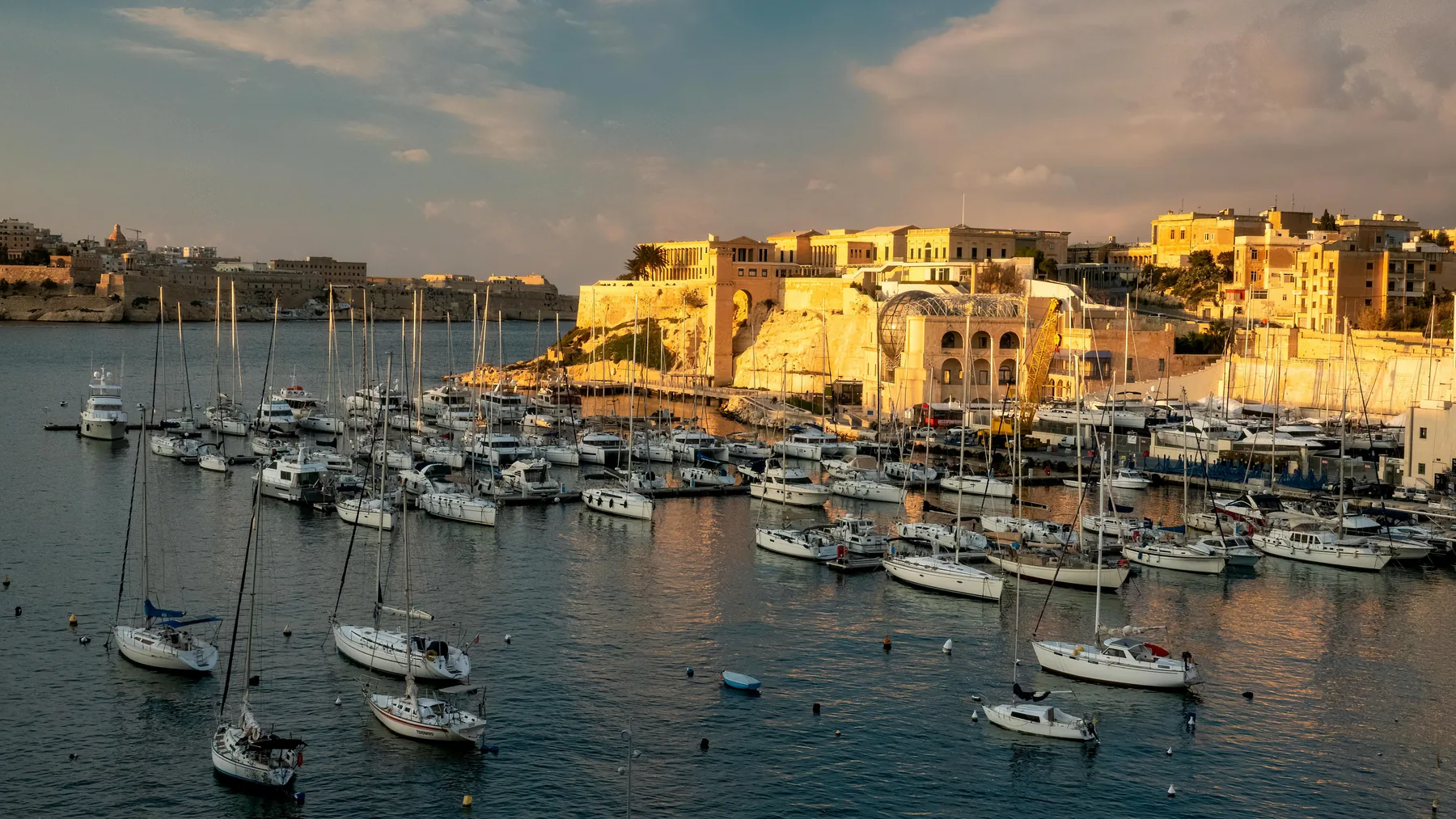
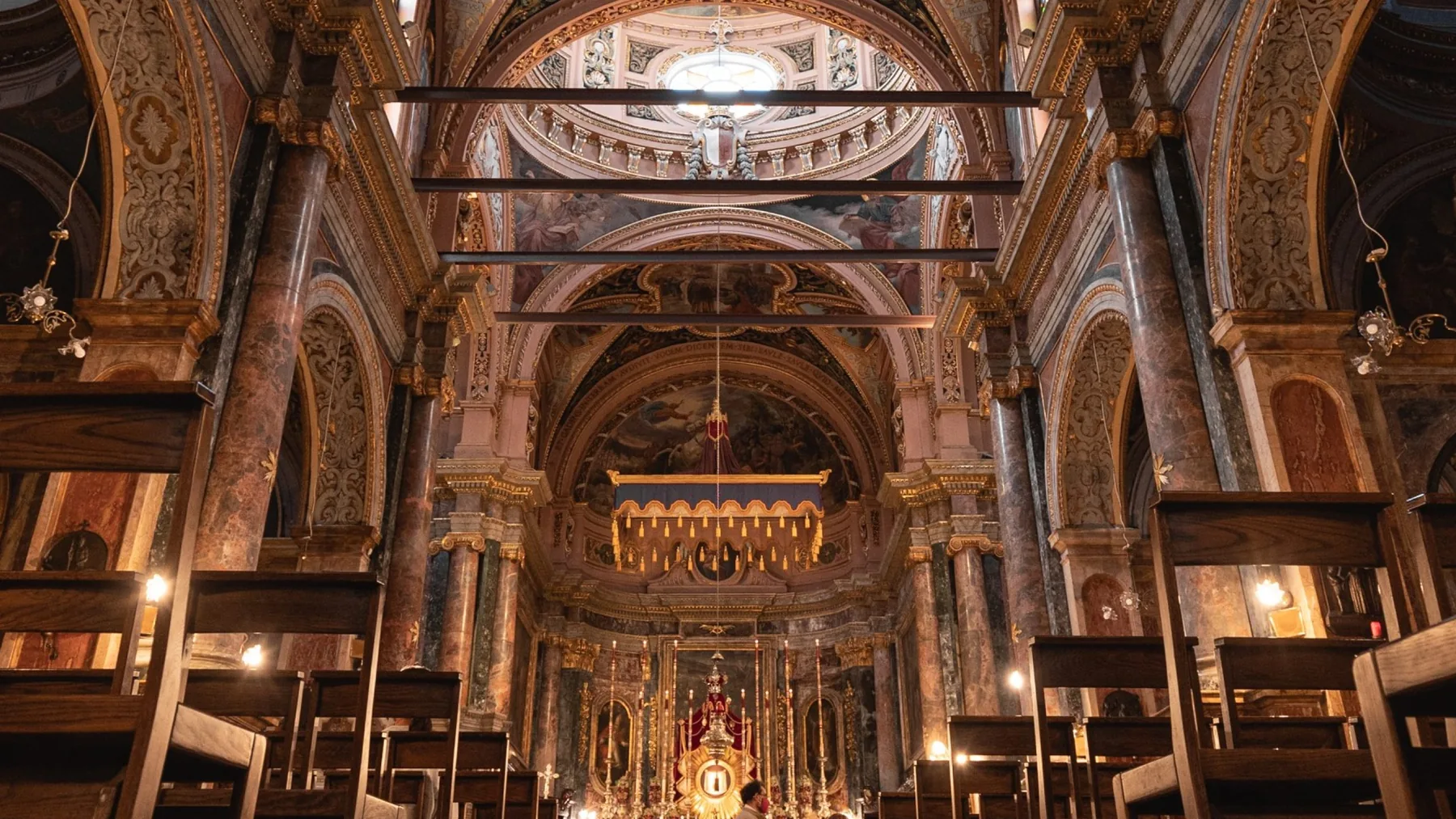
So walking through Rhodes and seeing the cross of Malta on every other doorway has felt oddly personal. These two islands, hundreds of miles apart, are stitched together by the same Order, the same architecture, the same eight-pointed cross. The Knights carried Rhodes to Malta in their habits and their stonework, and you can read the join in both places if you know to look.
Everything in Europe is connected, especially the history
This is what Europe does to you if you pay attention. Nothing stands alone. A temple to Athena holds up a crusader castle. A surrender in Rhodes makes a victory in Malta possible. A falcon paid once a year founds a sovereign order that still exists today. The continent is one long conversation between centuries, and the threads run everywhere once you start pulling them.
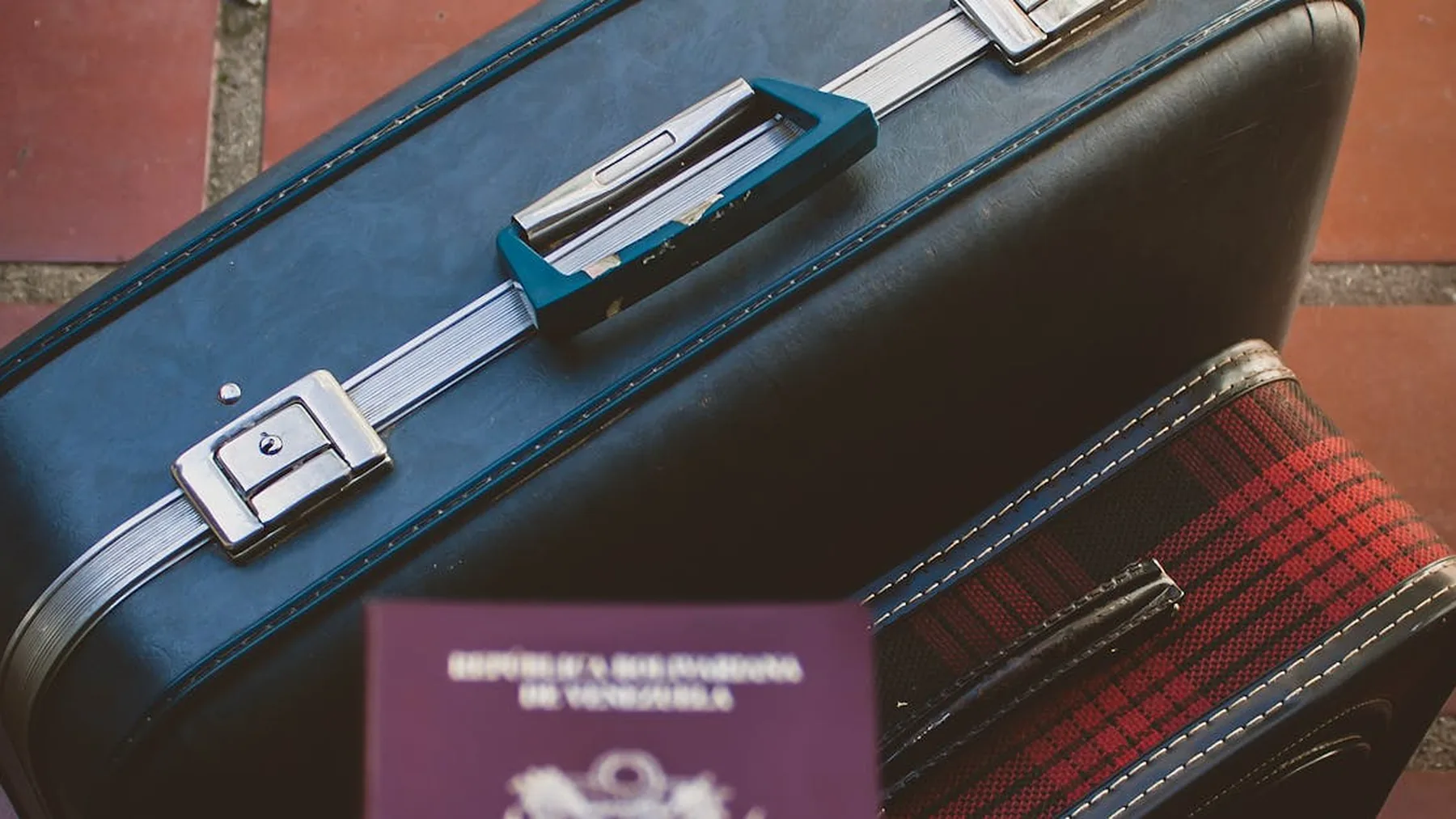
I think about this constantly, because I spend my working life helping people move abroad, and the Knights are, in the end, simply the most dramatic émigrés in European history. They were forced out of a home they loved. They went somewhere they did not choose and were not sure they wanted. And that reluctant, second-best, consolation-prize move became the making of them.
I see the same arc again and again with the people I advise who move to Malta, or anywhere else for that matter. The decision is rarely clean. It often starts with a push rather than a pull, a tax regime that has stopped making sense, a country that no longer feels like the one they signed up for, a quiet sense that they need a Plan B. They arrive braced for compromise. And then, surprisingly often, the place they settled out of necessity becomes the place they would not now leave for anything. The forced move becomes the good move. The banishment becomes the benefit.
The Knights took four decades and one near-apocalyptic siege to understand that the worst thing that happened to them was also the best. Most people do not need quite so long. But the lesson is the same, and you can read it off the walls of two islands at opposite ends of the same sea.
If you have been turning over a move of your own, half pushed and half pulled, it may be worth remembering that you are in very old company. Sometimes the rock you did not want is the only ground on which you can actually win. If you want to talk it through, I am always happy to.
For now, though, the boat is booked again for tomorrow, the children are asleep, and somewhere down in the harbour the cross of Malta is catching the last of the light. Life is short and fleeting. You get one shot. Make it count.