Some years ago I went house hunting in north Austin. One place stopped me cold. Clean lines, generous rooms, a quiet confidence to the whole thing. I could have signed that afternoon.
Amy was not moved. She walked it once, slowly, then handed down her verdict like a magistrate. “This was decorated by a man,” she said. “A rich man, perhaps. But a man.” It had everything except the thing she was hunting for, that softness and intuition people tend to credit to a woman’s eye. The house was handsome. It was not warm. I have replayed that line many times since, because it remains the truest thing anyone has ever said about Malta.
A House Decorated by a Man
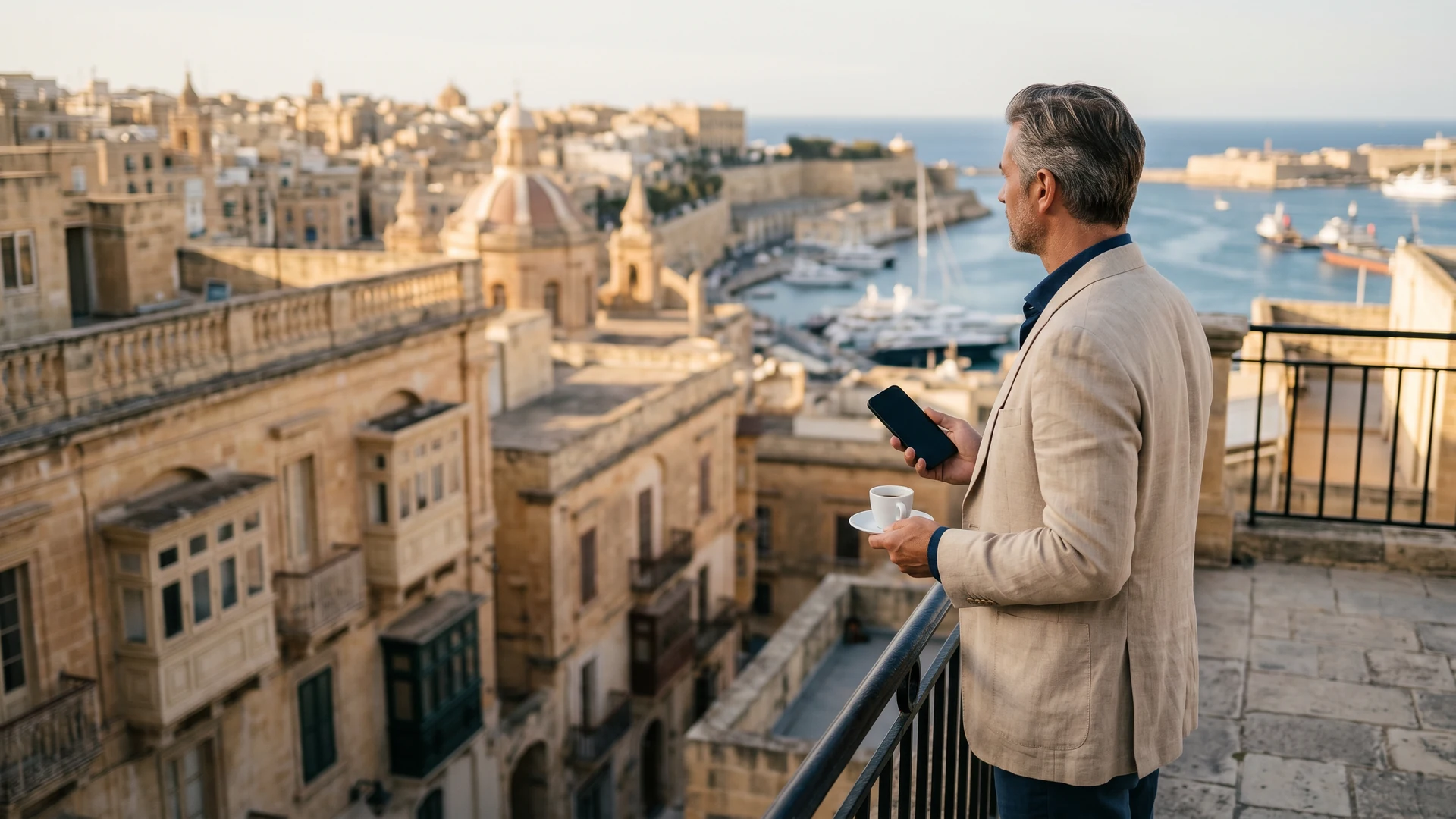
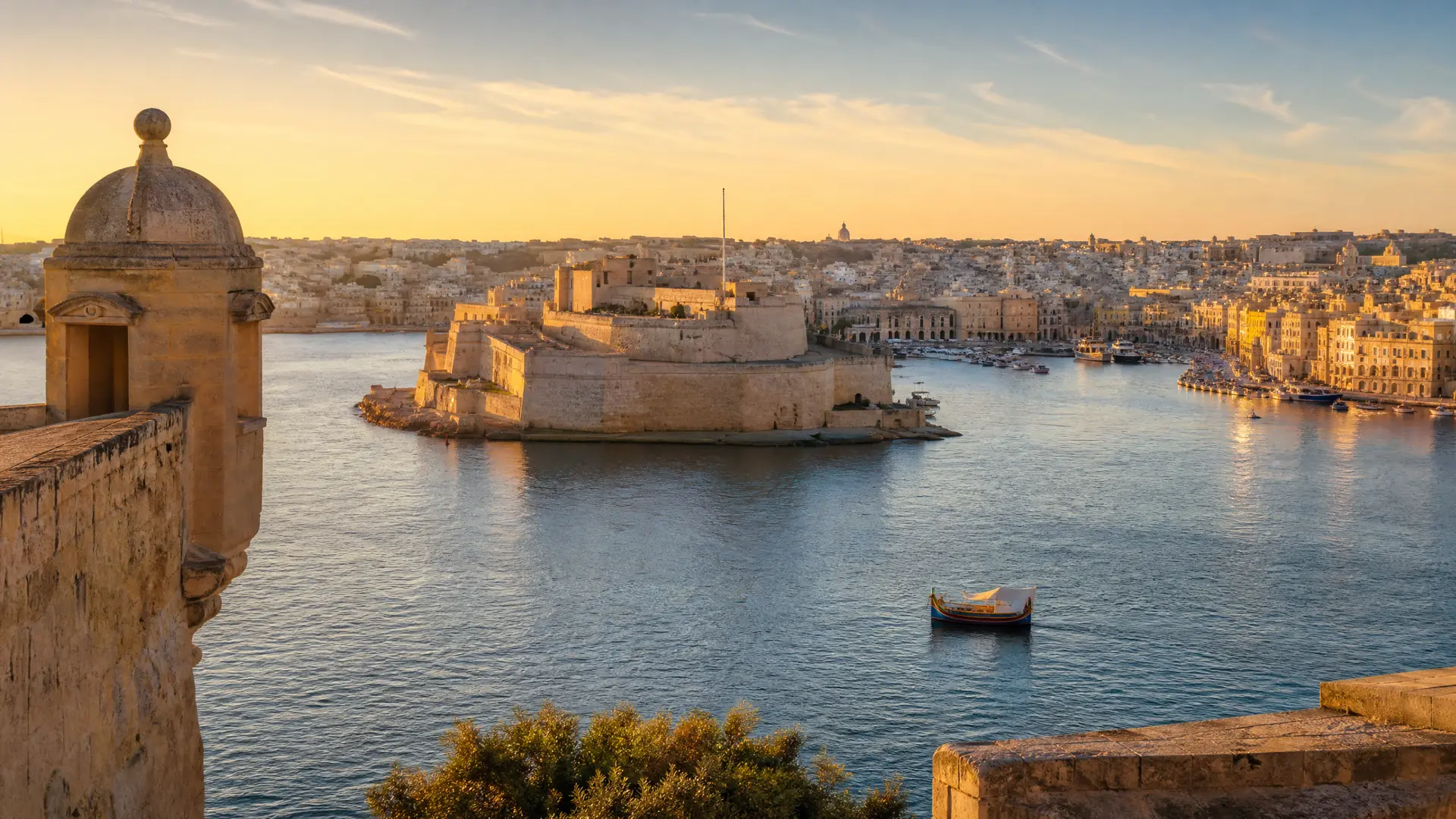
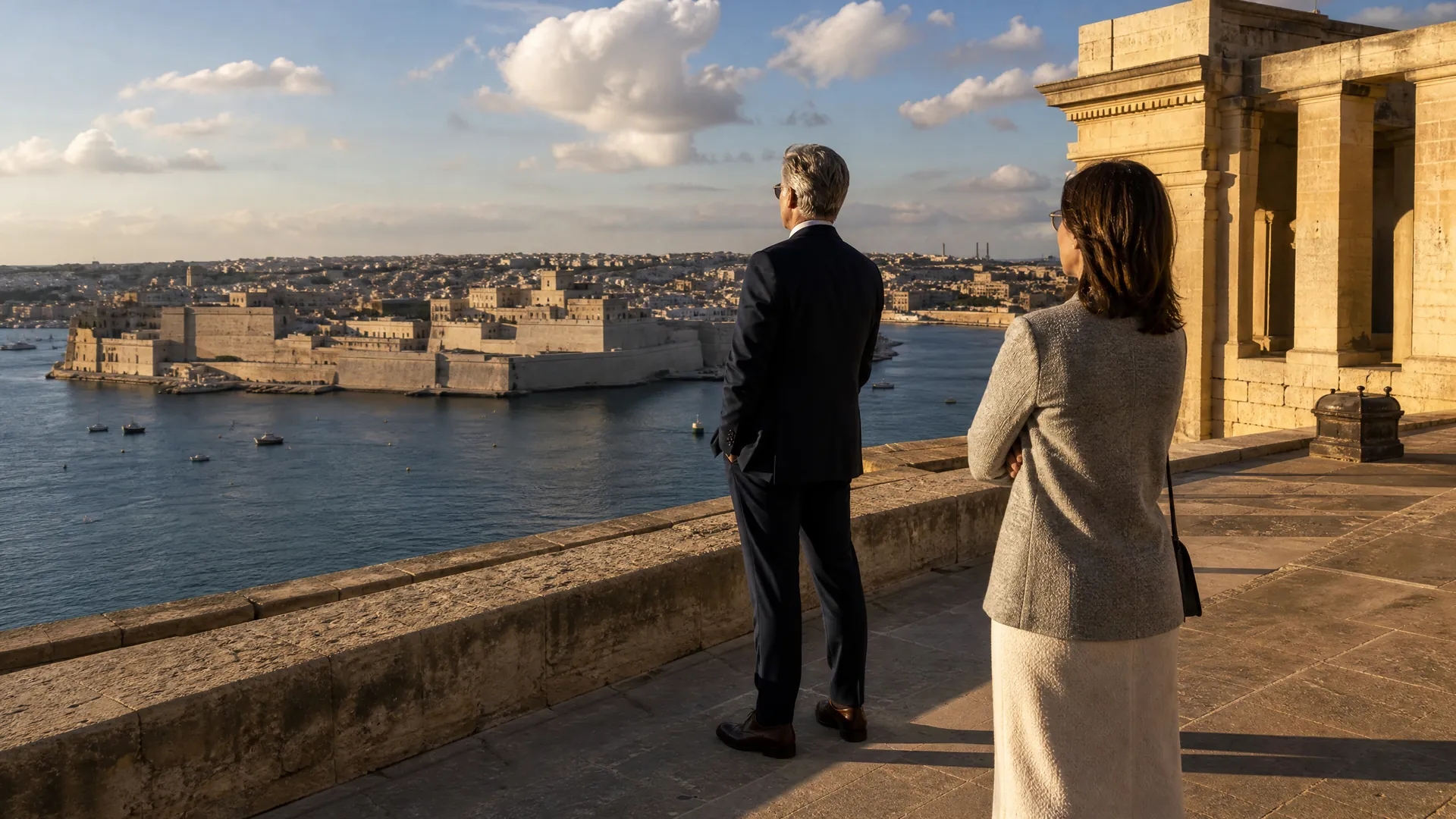
Malta is a man’s island, and it has never pretended otherwise. It was built by knights, by soldiers of the Order of St John who arrived in 1530 and held the island until 1798. They did not measure a view by its prettiness. They measured it by its field of fire. After surviving the Great Siege of 1565, they raised an entire fortified city, Valletta, on a bare rock, naming it for the Grand Master who had held the line. It was, in the spirit of the period, built by the knights, for the knights. You can still read the whole defensive logic in the stone today, in the fortifications of Valletta that ring the harbour like a clenched jaw.
That is the island’s founding instinct. Function over beauty. Survival over decoration. Beauty was permitted only where it also served a purpose, and that single fact explains almost everything a visitor feels and cannot quite name.
The Husbands Say Yes First
I see it in my own clients. When a couple comes to weigh Malta as a possible base, it is almost always the husband who falls first. He likes the harbour, the heft of the bastions, the sense that the place was engineered by people who took threats seriously. He likes that it works.
The wives are often more reserved. Not unimpressed, just unconvinced. They register, correctly, that the island is short on the soft luxuries other Mediterranean destinations sell by the kilo. Malta does not flirt with you. It shakes your hand, sizes you up, and gets down to business. Some people find that bracing. Others find it cold. Both reactions are fair.
Not Mallorca. Not Santorini.
This is where Malta refuses to play the game. It is not Mallorca. It is not Santorini. There are no whitewashed villages arranged for the camera, no pastel calm, no sense that the landscape was styled for a honeymoon. Those islands are built around pleasure and ease. They are designed to be loved at first sight.
Malta is built around defense and consequence. The dominant colour is the honey-grey of cut limestone, not blue and white. The dominant shape is the bastion, not the cupola. The sea is magnificent, but it arrives framed by gun lines and watchtowers rather than infinity pools. You do not melt into Malta. You respect it, the way you respect a man who has clearly been in a few fights and won them.
Even the Beauty Is Male
Of course Malta has beauty. It has churches that stop your breath, palaces, and some of the finest art in the Mediterranean. But notice how it all feels. It is a male kind of beautiful.
St John’s Co-Cathedral is the clearest example. From the outside it is plain, almost severe, a fortress church. Step inside and it detonates into gold, Baroque on every surface, with Caravaggio’s Beheading of Saint John the Baptist hanging in the oratory. That is the Maltese aesthetic in a single room. The beauty is not soft or welcoming. It is overwhelming, martial, built to impress and even to intimidate. It is the beauty of power, of an order of fighting monks making a point. Refinement in the service of dominance, never the other way round.
A Backdrop for Men’s Stories
It is no accident that Malta has become the favourite set for men’s stories. Hand a director a script full of sieges, swords, empires and betrayal, and Malta hands back the location almost for free.
Fort Ricasoli alone has played ancient Rome in Gladiator and Gladiator II, and the walls of Troy in Troy. Mdina became King’s Landing, and Fort Manoel became the place where Ned Stark lost his head in Game of Thrones. Add Assassin’s Creed, Ridley Scott’s Napoleon, The Count of Monte Cristo and World War Z, and the pattern is hard to miss. These are not romances. They are stories about duty, violence, ambition and survival, and the island the camera keeps choosing is the one the knights built. The full list of films shot in Malta reads like the programme of a very particular kind of cinema.
London Is a Man. Paris Is a Woman.
I feel the same thing when I compare two cities I know well. London is a man. Paris is a woman. London is grey, practical, a little gruff, built around commerce and getting things done, beautiful in a way you have to earn. Paris is composed, sensual, made to be admired from the first glance. Neither is better. They are simply different temperaments cast in stone.
Malta sits firmly on the London side of that line. It is the gruff, capable, unsentimental member of the Mediterranean family. The one who does not need you to like him, and is therefore strangely easy to trust.
The Tax Code Has the Same Character
Here is the part that delights the kind of person I advise. Malta’s tax treatment has exactly the same personality as its architecture. Practical, functional and refreshingly direct. No theatre, no ornament, just a structure that works.
The island runs on a remittance basis inherited from the British. If you become resident without becoming Maltese-domiciled, you are taxed on your Maltese income and on foreign income you actually bring in, while foreign income you leave abroad stays outside the net. Foreign capital gains are not taxed at all, even when remitted. Under the residence programmes, qualifying foreign income remitted to Malta is taxed at a flat 15 percent. There is no wealth tax, no inheritance tax, and no annual property tax. You can read the framework straight from the Malta Tax and Customs Administration without wading through poetry.
There is a strategic point buried in that plainness. When the United Kingdom abolished its own non-dom regime in 2025, it left Malta as one of the last English-speaking, common-law, remittance-basis jurisdictions inside the EU. For an internationally mobile family, that is not a footnote. That is the whole game. Functional, straightforward and quietly decisive, exactly like the forts.
But Then, Hey, I Am a Man
I have always liked Malta, and I know why. I like how compact it is, that you can cross the centre of operations in an afternoon. I like the fortifications. I like that you can get things done there, that solutions actually work, that a handshake still moves a file. I like that the island does not waste your time pretending to be softer than it is.
A wife may walk those same bastions and feel the chill that Amy felt in a north Austin living room, the sense of a place arranged by someone who prized strength over warmth. She would not be wrong.
But then, hey. I am a man.