I have been coming and going from Malta for the better part of twenty years, and these islands are never still for long. I spend a great deal of time here, a lot of it alongside clients, many of them from the German-speaking countries, who are weighing up a move to the Mediterranean and want to see the place properly before they decide. Showing people Malta again and again, year after year, you notice the changes in a way that a resident, boiling the frog slowly, sometimes does not.
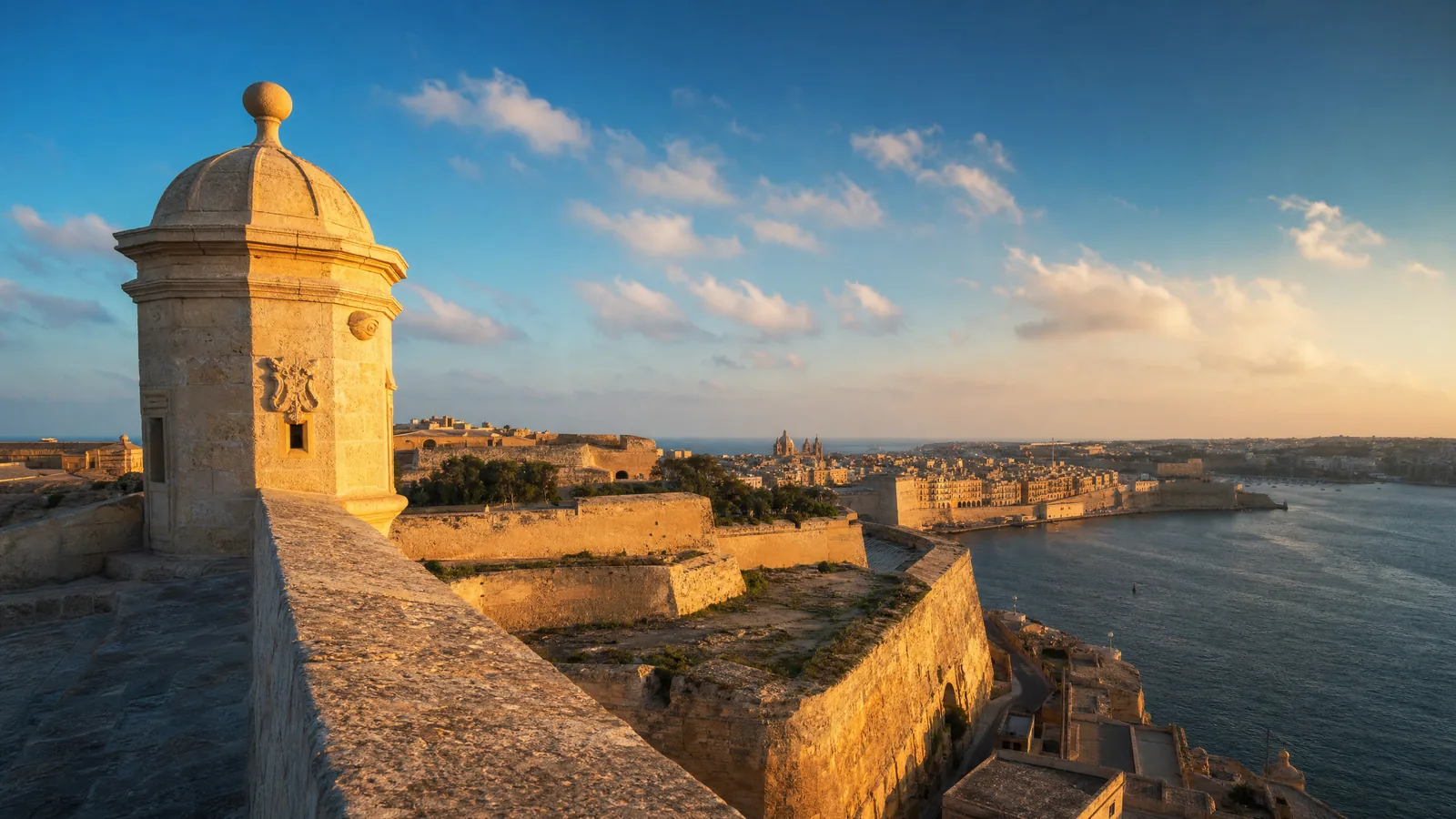
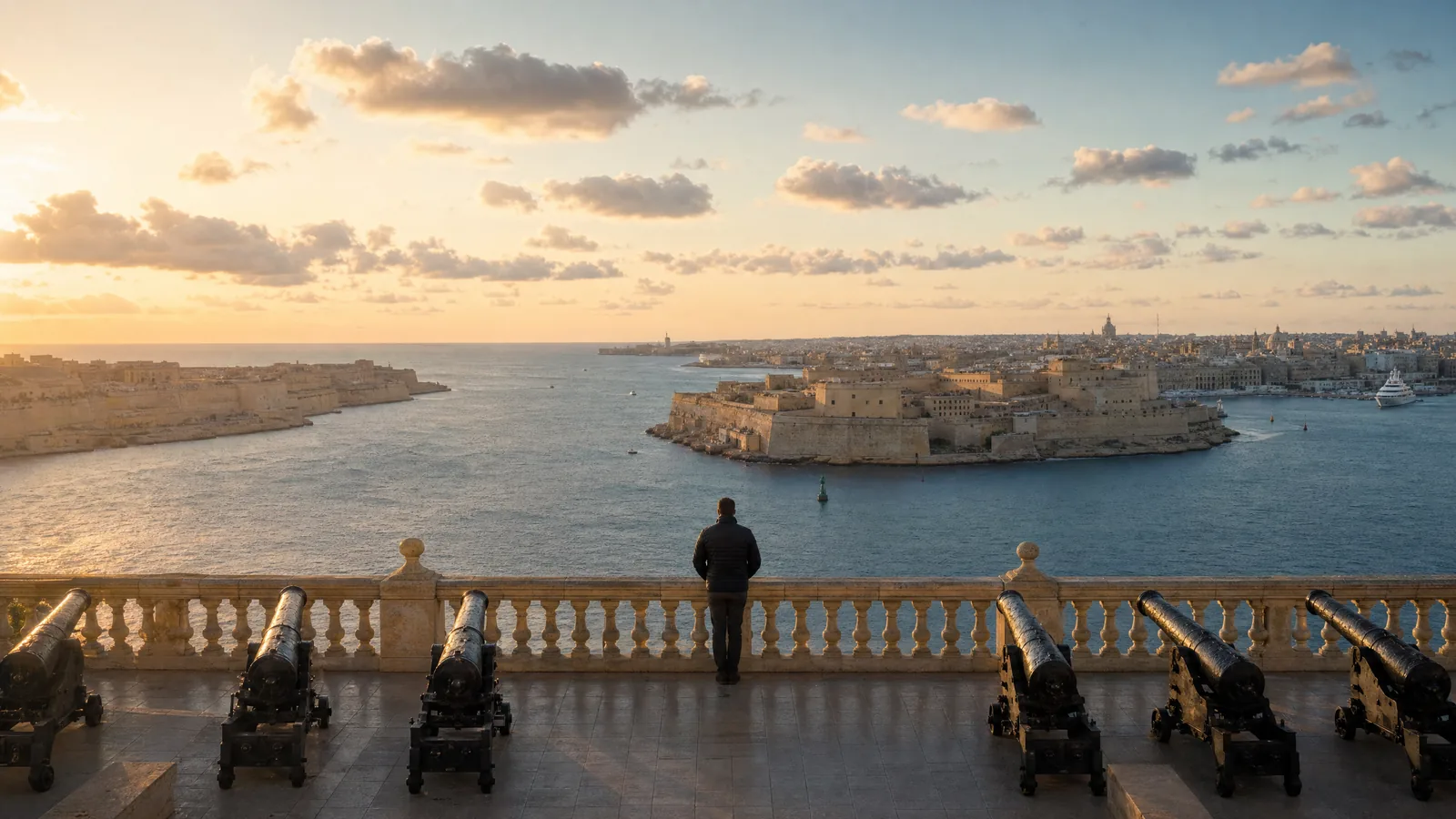
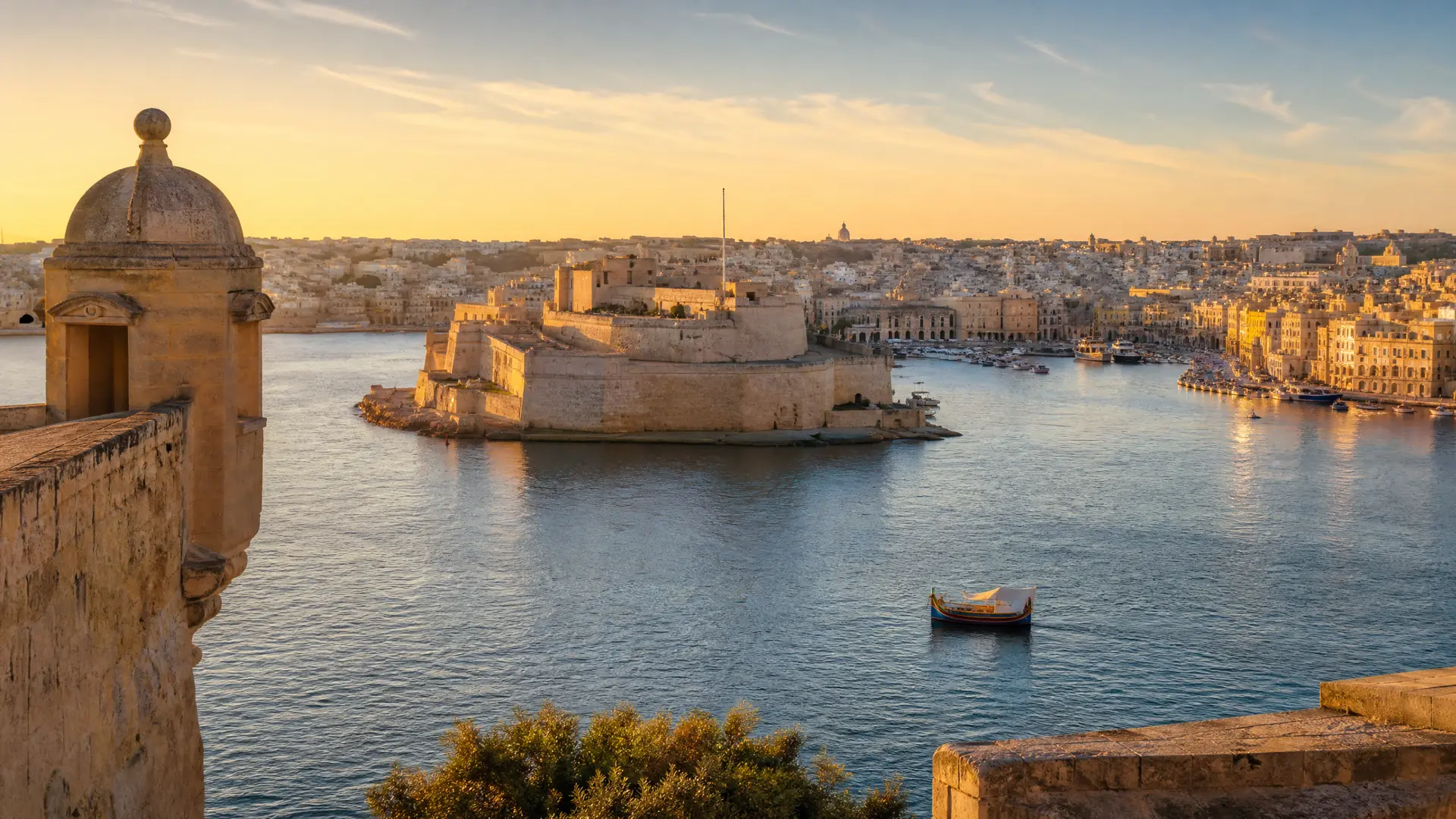
A few weeks ago I collected a client from the airport who had not set foot on the island in at least five years. By the time we came around the bastions and the Grand Harbour opened up in front of us, he had gone quiet. He could not believe how much had been done. How beautiful, and how alive, Valletta had become. I could not agree with him more.
A capital reborn
For a long time Valletta was a working town that emptied out the moment the shops pulled down their shutters. A grand stage set of a city, full of civil servants by day and all but deserted by night. That Valletta is gone.
The turning point was 2018, when Valletta was European Capital of Culture, and the momentum has never really stopped since. Renzo Piano gave the city a new City Gate, a new Parliament, and an open-air theatre built into the ruins of the old Royal Opera House that the war left in pieces. The old covered market, Is-Suq tal-Belt, reopened as a food hall. Strait Street, once the islands’ most notorious lane of bars and bad behaviour, has come back to life with restaurants, wine and jazz. Palazzi that were crumbling a decade ago are now boutique hotels with rooftops looking out over the harbour. Walk the city on a warm evening now and it is busy, elegant and lived-in. My client was right to be astonished.
Old-school Malta: the Three Cities and Birgu
Here is my own confession. I used to live in St Julian’s, in the thick of it, and for years I thought that was the place to be. These days I would far rather be on the other side of the Grand Harbour, in Birgu, the oldest of the Three Cities.
Birgu, Vittoriosa to give it its other name, was a fortified town before Valletta even existed. Fort St Angelo sits at its tip, the Collachio still holds the old auberges of the Knights, and the streets are narrow, shaded and quietly grand. Down on the Vittoriosa Waterfront, yachts now lie berthed beneath baroque facades, and yet the place keeps its working parish rhythm. This is old-school Malta: real, unhurried, still belonging to the people who live there. It is the Malta I fell for in the first place, and the Malta I now send the right kind of client to discover.
The catch, and it is a real one, is that the secret is out. Rents and purchase prices in the Three Cities have risen sharply. A restored townhouse in Birgu now commands money that would have looked absurd only a few years ago. That is the price of being discovered.
The faded glamour of St Julian’s and Sliema
St Julian’s and Sliema, by contrast, have lost much of their charm for me. An enormous amount has been built there, and yet the strange thing is how faded it all looks. Towers go up beside half-finished sites, the seafront has been concreted over inch by inch, the traffic is heavy, and Paceville is what it is. The energy that once felt glamorous now feels worn. I no longer steer people there to live if I can help it.
Where I tell people to stay
This shift shows in a small but telling way: where I put my own family and my clients when they come.
For years my answer was the Hilton at Portomaso. The marina, the tower, comfortable and reliable, and I recommended it without a second thought. Now I almost always say the Phoenicia. The grand 1930s hotel that stands just outside City Gate, beautifully restored, with its gardens running down toward Marsamxett Harbour, the pool terrace, and a genuine sense of arrival the moment you walk in. It is a different category of stay altogether, and it tells you exactly where the island’s centre of gravity has moved. It has moved back to Valletta.
From one fine table to a Michelin map
The food tells the same story. Five years ago, if you wanted a serious dinner, there was really only one answer: de Mondion, up in Mdina, in the Xara Palace, with the whole island laid out below the ramparts. It was wonderful, and it was more or less alone.
Today Malta carries a genuine Michelin map. The islands now hold seven starred restaurants, headed by ION Harbour by Simon Rogan in Valletta, which holds two stars, with de Mondion, Under Grain, Noni, Rosami and Fernando Gastrotheque among the rest, and fresh stars arriving in Sliema. For a country this small to wear this many stars is not an accident. It means the talent, the standards and the money have all arrived.
The real reason people come: the tax case
For all the lifestyle, the substance of why I bring clients here is the tax position, and it remains one of the most attractive in Europe for the internationally mobile.
The heart of it is the non-dom remittance basis. If you become resident but not domiciled in Malta, you are taxed on your Maltese-source income and on whatever foreign income you actually bring into Malta. Foreign income you keep abroad falls outside the Maltese net, and foreign capital gains are not taxed even if you remit them. There is a modest minimum tax floor for non-doms with substantial foreign income, and that is the trade.
On top of that sit the residence programmes. The Residence Programme for EU, EEA and Swiss nationals, and the Global Residence Programme for everyone else, both apply a flat 15 per cent to foreign income remitted to Malta, against a fixed minimum annual tax. Alongside this Malta levies no wealth tax, no inheritance tax, no annual property tax and no council rates. For business owners, the full imputation system can bring the effective corporate rate down to around 5 per cent once shareholder refunds are applied.
One thing has changed here, and for the better. The golden passport is gone. In April 2025 the European Court of Justice struck down Malta’s citizenship-by-investment scheme as incompatible with EU law. For serious people this is no loss. The case for Malta was never a passport you could buy. It was residence, substance and a tax system that rewards people who genuinely build part of their life here. That case is now cleaner than it has ever been.
The harder truths
I would not be honest if I painted only the bright side. A good deal has changed for the worse, and clients deserve to hear it.
Overdevelopment is the great wound. The cranes are everywhere, the dust and the noise are constant, and older buildings and open ground keep disappearing into another block of apartments. Traffic has become genuinely difficult. The population has grown fast on imported labour, and the roads, the power, the water and the waste systems have not kept pace. There was the FATF greylisting in 2021, a real blow to the financial centre, although Malta worked its way off the list in 2022 and used the shock to tighten its house. And prices, as I said, have climbed across the board. Some of the island’s quietest corners are quiet no longer.
So, is it still worth it?
For all of that, I keep coming back, and I keep helping people make the move. Malta rewards the patient and the discerning. Skip the glossy strip, spend your time in Valletta and the Three Cities, understand the tax properly rather than from a brochure, and the case is as strong as it has ever been. Arguably it is stronger now, because it rests on substance rather than on a passport with a price tag.
My client flew home having decided to come. He was not seduced by the towers. He was won over by a reborn capital, a quiet street in Birgu at dusk, a long dinner, and a tax position that actually does what it says. That, in the end, is the real Malta.
Andere reden. Wir setzen es um.