I have written about Rhodes already, in a piece for The Brief about the Knights of St John and the forced move that became their greatest victory. That piece is here if you want the history. This one is different. This one is about what spending a week on a Greek island reminded me about why Malta, of all the choices available to the internationally mobile HNWI, remains the one I have been recommending since 2012.
Rhodes is one of the most beautiful places I have been. I say that having lived across six countries and visited considerably more. Lindos, where we stayed, is genuinely extraordinary: whitewashed lanes, a Doric temple on a clifftop, bays of impossible turquoise. We took a small boat through the coves. The children swam until they could not swim any more. The food was excellent, the wine was cold, and the pace was the pace of a place that has been receiving visitors for three thousand years and has learned not to be hurried by any of them.
And throughout the week, as someone who spends a great deal of time thinking about jurisdictions, I kept finding myself running the comparison I could not stop running. Greece and Malta. Two Mediterranean island nations. Two sets of limestone. Two languages soaked in ancient history. Two completely different answers to the question of what it means to be a place where careful people can build a stable life.
Greece, seen clearly
Let me be precise about what I mean, because I am not dismissing Greece. I am describing it accurately, which is something its tourist infrastructure understandably avoids.
Greece has an income tax system with marginal rates up to 44%. It has a presumptive taxation system, the "tekmirio" rules, which can impose tax on lifestyle expenditure regardless of declared income. It has a social security contribution burden that, for the self-employed, is significant. Property taxation through the ENFIA (Unified Property Ownership Tax) is annual, property-value-based, and supplemented by a complementary tax on owners of higher-value portfolios.
Greece does have a non-dom regime, introduced in 2020, which allows qualifying foreign nationals to pay a flat annual tax of EUR 100,000 on all foreign-source income, with no questions asked, no further assessment, no compliance requirement on offshore income. The regime has attracted a number of very wealthy individuals, primarily from the Middle East, Russia, and Asia, who have the assets to make a flat EUR 100,000 annual payment look attractive. For that specific cohort, at that specific level of wealth, it is competitive.
For the majority of our clients, including the British entrepreneur exiting a business, the German Unternehmer diversifying their tax base, the Irish professional with a substantial pension, the Australian investor with a property portfolio, the Greek non-dom regime is not the right fit. The EUR 100,000 minimum is high if your foreign income is not in the millions. The domestic tax rates on Greek-source income remain punishing. And Greece's institutional environment, which I will come to, is a genuine constraint.
The institutional question
Here is the thing that does not show up in the Instagram photographs of Santorini: Greece has deep institutional weaknesses that Malta does not have.
The Greek tax authority, the AADE, has a long reputation for inconsistent enforcement, arbitrary assessment, and difficulty in resolving disputes through the formal administrative process. The court system is slow by European standards. Property title in Greece requires significant due diligence, given historic issues with uncertified land, informal structures, and a land registry that is still being digitised. Banking relationships for foreigners and new residents can be extraordinarily difficult, a hangover from the capital controls of 2015 that took years to formally lift and left a lasting scar on institutional trust.
None of this is a reason not to visit Greece, or to own a holiday property there, or to admire it as one of the genuinely great civilisations the world has produced. It is a reason to think carefully about whether it is the jurisdiction on which you want to base a serious relocation.
Malta, by contrast, operates under English common law (with a civil law underlay, but the commercial law framework is familiar to British, Irish, Australian, and American clients). It has a developed, English-language professional services sector: accountants, lawyers, fiduciaries, company formation agents, all operating to EU standards and within a framework our clients can navigate. The Malta Financial Services Authority is a credible regulator. The courts function. The land registry is reliable. Banking is difficult, as it is everywhere in the post-2008 compliance environment, but it is navigable in ways that the Greek system sometimes is not.
Two islands, two answers
I am sitting in Rhodes writing this, and I can see both islands clearly from where I stand. Not literally: Malta is three hundred miles southwest, below the horizon. But in the way that matters, which is the view you get after two decades of advising people on where to put their lives and their assets.
Rhodes is where you come when you want beauty, history, warmth, and the deep pleasure of a culture that has had three thousand years to work out how to live well. It delivers all of that with extraordinary generosity.
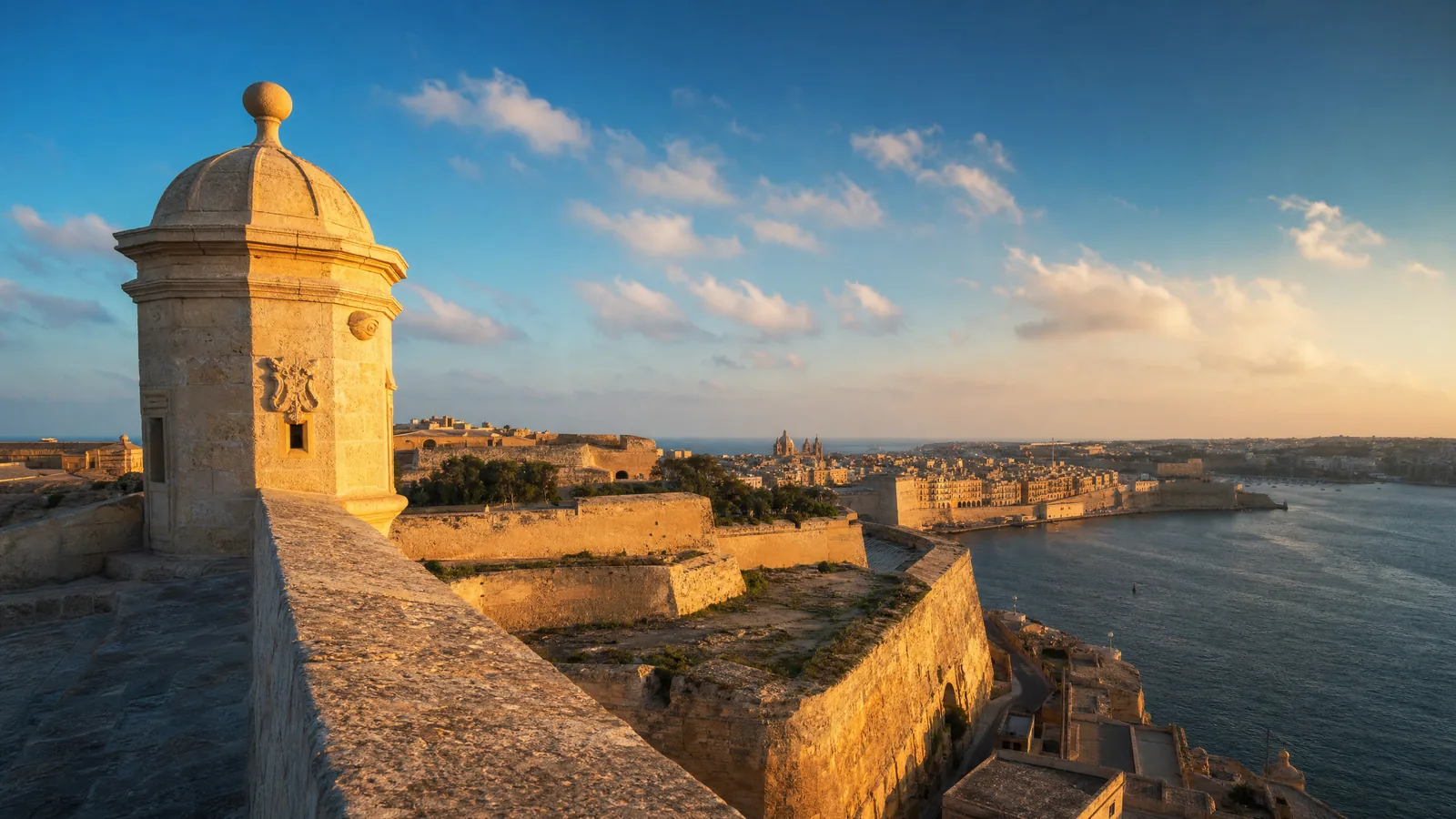
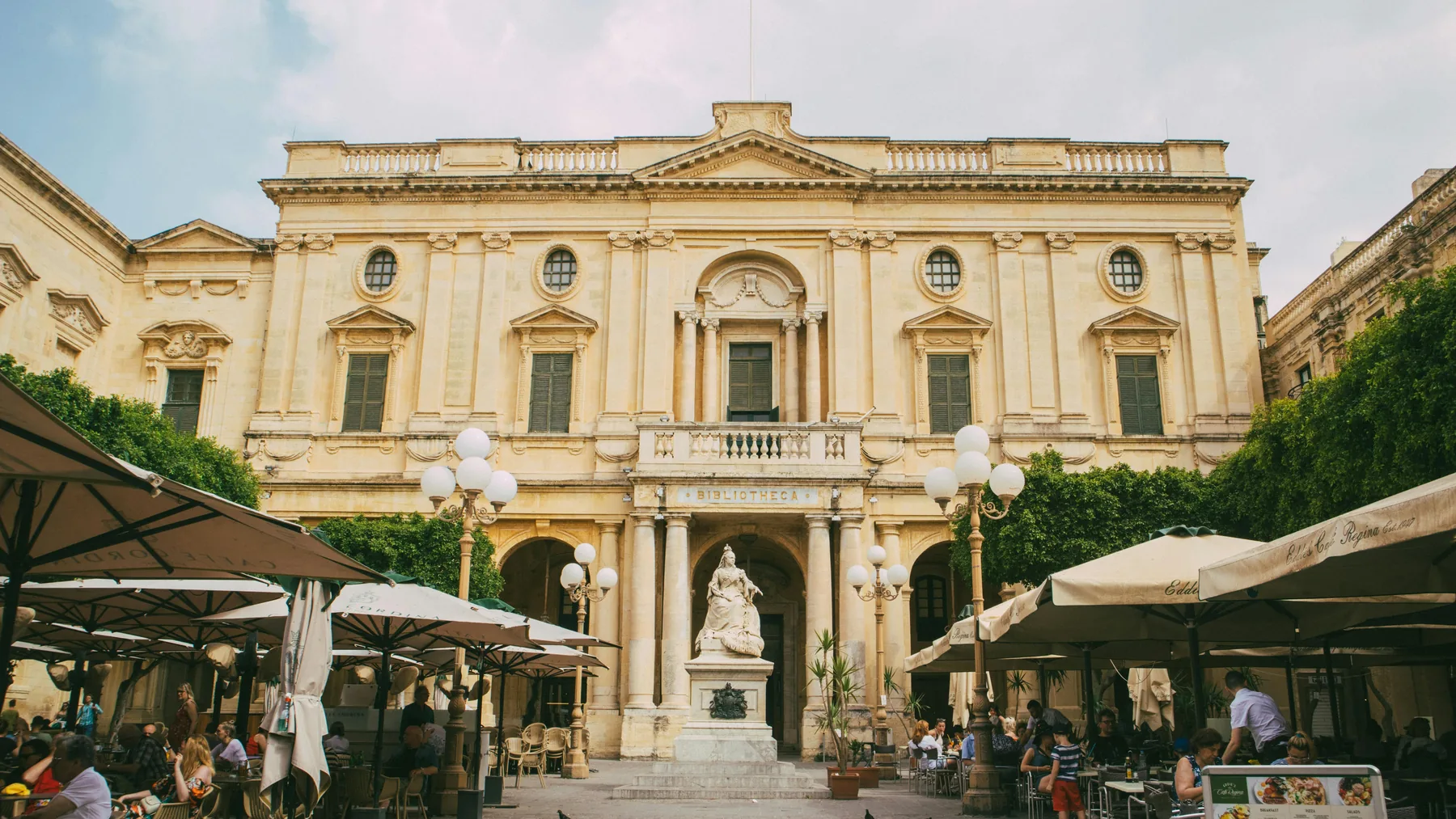
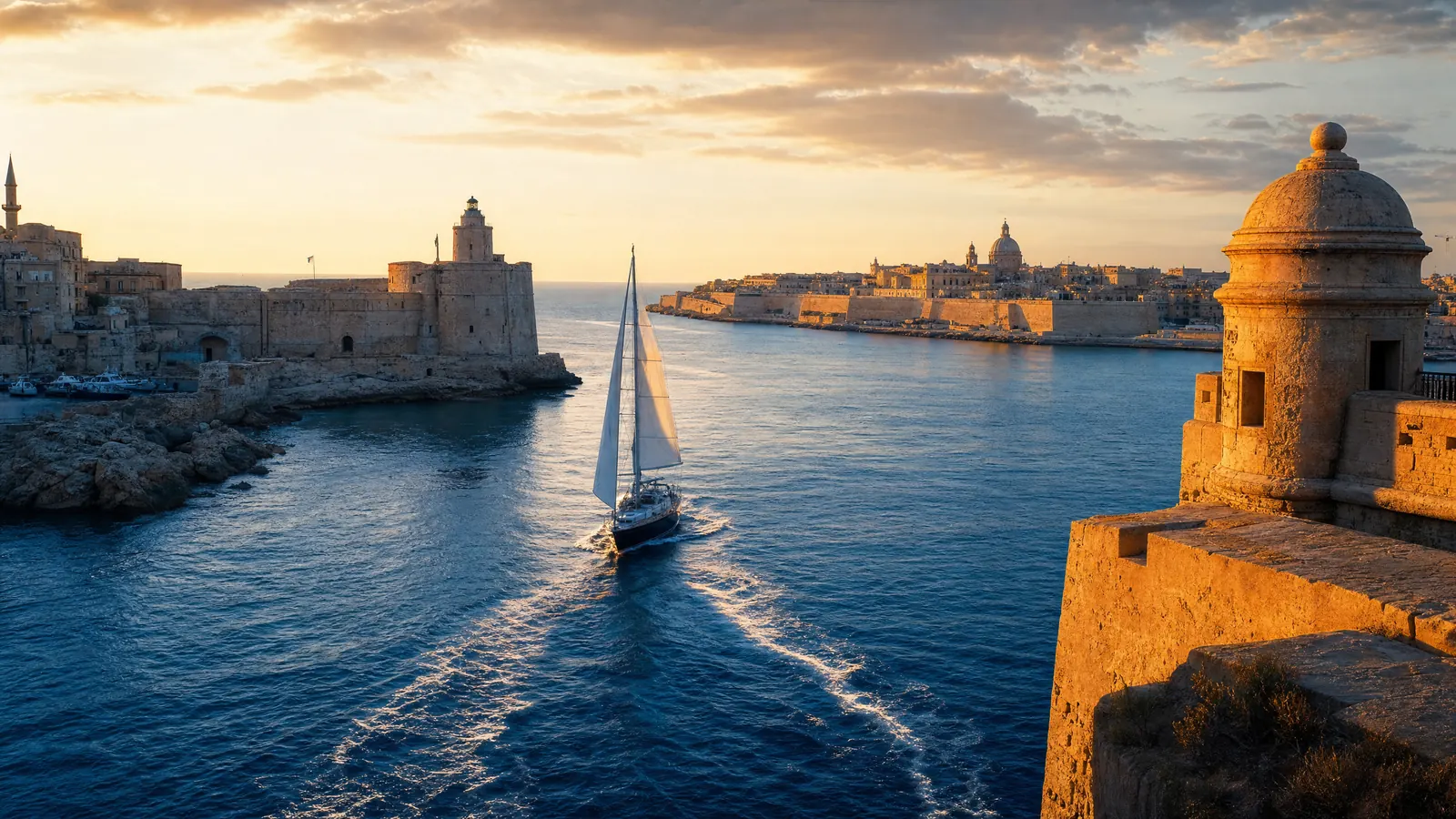
Malta is where you come when you want all of that, plus an English-speaking EU jurisdiction with a legally coherent tax framework, a functioning institutional environment, a Catholic culture if that matters to you, and a professional services infrastructure that can support a business, a structure, and a life. Malta is not as immediately breathtaking as Rhodes. Valletta is beautiful, and Mdina is extraordinary, but the island does not have Lindos. What it has is something harder to photograph and considerably more useful over time.
The Knights understood this when Suleiman sent them south. The rock they were given as a consolation was, in the end, a better platform than the jewel they had lost. Sometimes the thing that looks like the demotion is actually the foundation.
If you are considering Malta and want to understand whether it is the right fit for your circumstances, book a consultation. We have been doing this since 2012 and we know both the framework and the realities on the ground.