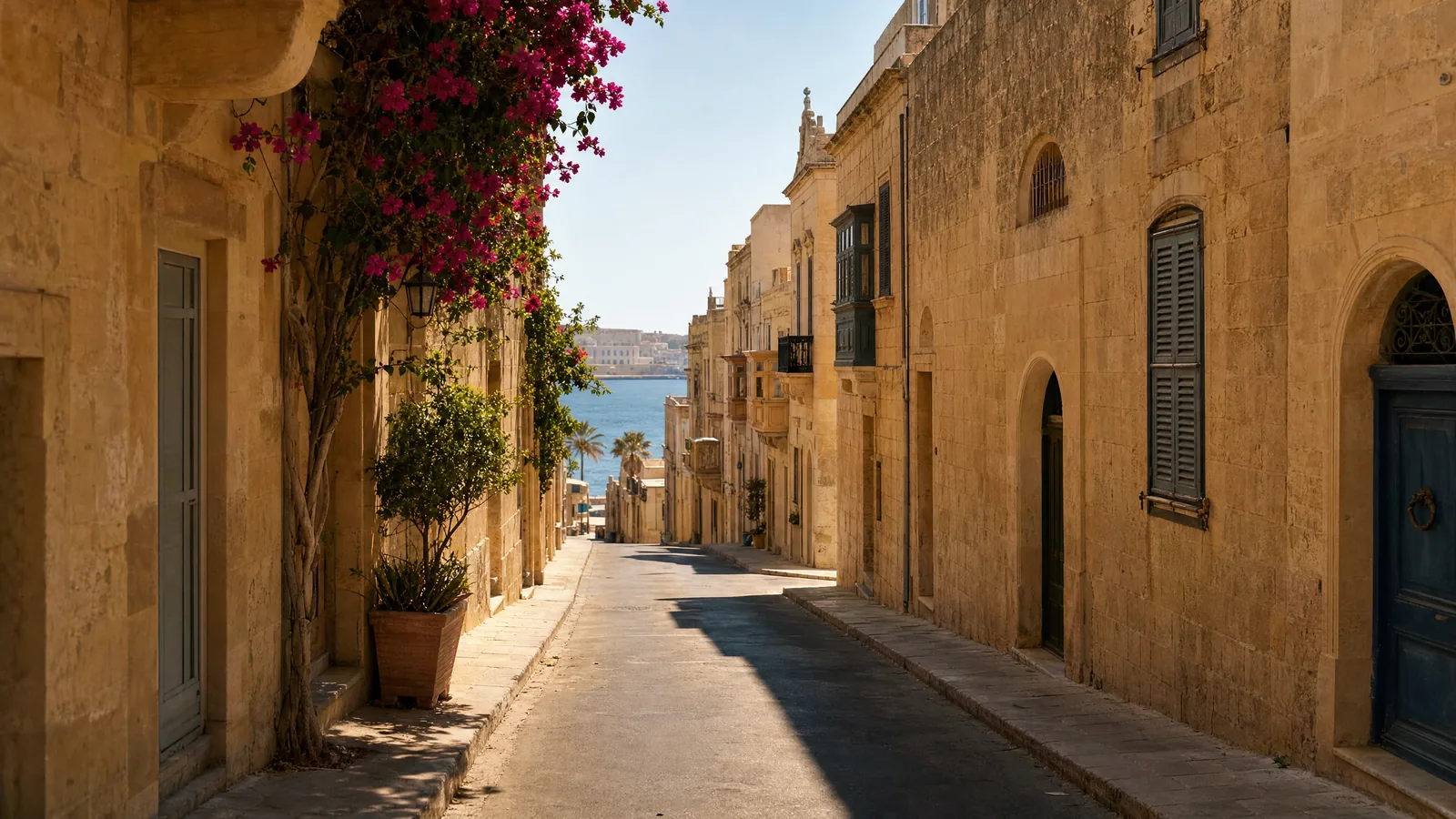
The brochures show Malta in April. Soft light, green hills, the harbours gleaming, a light cardigan optional. Nobody publishes the August photographs, and there is a reason for that.
Malta in high summer is a different experience. The temperature regularly exceeds 35 degrees Celsius from July through September. The humidity comes in from the sea. The island is small, the roads are busy, the beaches are full, and the tourists arrive in numbers that the infrastructure handles with varying degrees of grace. It is still beautiful, in the way that the Mediterranean is always beautiful. But if you are planning to relocate to Malta, or to spend serious time there, you need to know what you are walking into.
I have always believed that the best thing an advisor can do for a prospective client is to tell them the things they would rather not hear. On Malta's summer, the truth is more useful than the brochure.
What the numbers actually say
According to Malta's national meteorological service, MaltaMet, average July temperatures sit at around 27-28 degrees Celsius in the shade, with maximums regularly hitting 35 to 38 degrees. The sirocco, the hot dry wind that comes north off the Sahara, occasionally pushes temperatures into the low 40s. This is not a Mediterranean breeze situation. This is sustained, serious heat.
The humidity varies. The north African air that drives the sirocco is dry. The maritime air from the north is not. On humid August days in Valletta, standing in direct sun at midday is unpleasant for anyone and potentially dangerous for the elderly or the very young. Malta has no mountains, no lakes, no significant elevation. There is nowhere on the island that is meaningfully cooler than anywhere else.
The Maltese know this, of course, and they have organised their lives around it for centuries. The afternoon shutdown is not cultural affectation; it is a rational response to meteorological reality. Serious work happens in the morning and the evening. The middle of the day is for shade, air conditioning, and a refusal to be outdoors unless you have a reason.
The practical adaptation
New residents who come from Northern Europe, Britain, Ireland, or Scandinavia consistently underestimate the adjustment. Some adapt quickly. Others find it more difficult than they expected. Here is what actually works.
Air conditioning is non-negotiable. Not "nice to have." Non-negotiable. Any property you rent or buy for summer occupation needs to be properly air-conditioned, not one unit in the bedroom and hope for the best, but the whole living space. Malta's older limestone buildings are naturally insulating and can be genuinely cool if designed correctly, the thick stone walls absorb and slowly release heat. But without modern AC to assist, a Maltese apartment in August can be difficult to sleep in.
Timing matters as much as location. The people who live well in Malta in summer are the people who have restructured their day. Early morning swim before 8am, when the beaches are empty and the water is perfect. Work during the morning hours. Lunch at home, windows shuttered against the afternoon sun. Back out after 5pm when the light changes and the heat breaks. The evenings in Malta in summer, from about 7pm until midnight, are among the most pleasant hours you will spend anywhere in the Mediterranean.
Gozo offers a marginal improvement. The smaller island is not dramatically cooler, the temperatures are similar, but it has more rural space, less traffic, more shade from the topography, and a slower pace that makes the heat feel less oppressive. Several of our clients who winter in Malta but find August in Sliema too much have found Gozo in summer considerably more manageable. Our guide to Gozo as a relocation destination covers the trade-offs in detail.
Mdina is the exception. The old walled city sits on the highest point of the island and catches whatever breeze exists. Its narrow streets are shaded. Its thick medieval walls hold the cool. In August, Mdina at 6am or 9pm is one of the genuinely lovely places to be in Malta. More on Mdina in our separate piece on the Silent City.
When serious relocators leave
Here is the thing nobody puts in the FAQ. A significant proportion of full-time Malta residents leave the island in August. They go to Scotland, to Scandinavia, to the Austrian mountains, to anywhere with altitude and cool air. They are not abandoning Malta. They are using the optionality that residency in a sunny, stable, low-tax jurisdiction provides, which is that you can afford to spend a month or two somewhere more comfortable precisely because your tax bill is low enough to permit it.
The Malta tax residency programmes do not require 365 days of physical presence. They require genuine habitual residence and the satisfaction of specific programme conditions. Within those parameters, there is room to be somewhere cool in August and somewhere warm the rest of the year. Many of our clients treat this as the correct answer to the summer question, rather than trying to tough it out.
The honest bottom line
Malta in summer is not for everyone, and that is fine. If you are someone who genuinely loves the deep heat, who swims at midday and thrives in 36-degree afternoons, you will be happy. If you are someone who runs cold and finds Northern European winters oppressive, you will adapt and probably come to love it. If you are someone who has always found sustained heat difficult, you should either plan your calendar around August absence or look seriously at whether Malta is your first choice or your Plan B.
The weather is not a reason not to choose Malta. But it is a reason to choose Malta with your eyes open.