On 10 February, Malta stops.
Not entirely — it is a public holiday, not a lockdown. But on 10 February, the Feast of the Shipwreck of Saint Paul, the island marks the event that shaped its entire subsequent history: the moment in AD 60 when a storm drove a Roman ship aground on this coast and changed Malta forever.
For anyone who has recently moved to Malta, or who is considering it, this feast day is worth understanding — not just as a calendar entry but as a window into what kind of place this actually is.
What Happened
The story is in Acts of the Apostles, chapters 27 and 28. Paul was a prisoner being transported to Rome for trial. The ship — carrying 276 people — was caught in a violent storm somewhere south of Crete and driven for fourteen days before running aground on a sandbar. The ship broke apart. Everyone swam ashore.
They had landed in Malta.
Paul was welcomed. He lit a fire. A viper bit his hand; he shook it off without harm, and the islanders, who had expected him to swell up and die, concluded he was a god. He healed the father of Publius, the Roman governor of Malta, who was suffering from fever and dysentery. Publius converted. He became the first Bishop of Malta. Paul stayed three months, then sailed on to Rome.
Malta has been Christian ever since. Nearly two thousand years, uninterrupted.
What February 10th Looks Like
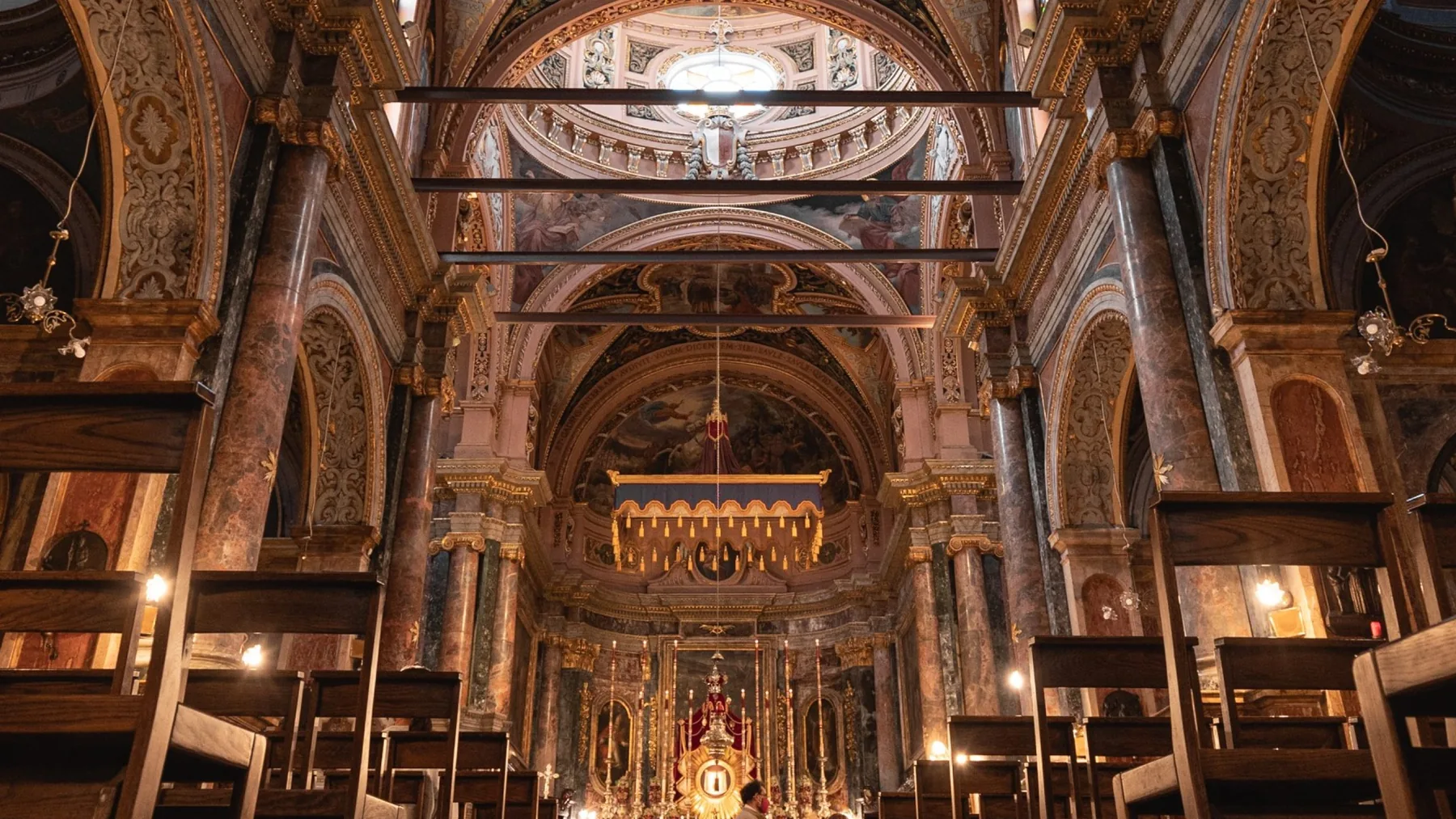
The feast is centred on the Basilica of Saint Paul’s Shipwreck in Valletta — a sixteenth-century church that holds, among its relics, the wrist bone of St Paul’s right arm and a fragment of the pillar on which he was beheaded in Rome.
The celebration is solemn and festive simultaneously — in the Maltese way, these things are never entirely separate. A procession carries the statue of St Paul through Valletta’s streets. The churches fill. The brass bands play. Families gather.
For the newly arrived expat, it can feel disorienting in the best way. This is a public holiday for a shipwreck that happened two thousand years ago. The country has not forgotten. It considers it worth celebrating. The state considers it worth marking with a national day off.
In Britain, the equivalent feast days were abolished in the Reformation five centuries ago and have not returned. In Australia, February 10th is an ordinary Thursday. In Malta, it is a reminder of who they are.
What This Tells You About Malta
I write about this not because it is a tax point or a residency programme requirement. I write about it because it is the kind of thing you need to know before you decide to live somewhere.
Malta is a country where the first-century travels of an apostle are treated as living history. Where the names of the streets, the dedications of the churches, the public holidays in the calendar, and the values written into the constitution all trace back to a continuous thread of faith that has not been broken in two millennia.
For a Catholic family, this is extraordinary. There is no other EU country where this is true.
For a non-Catholic — a secular Briton, an Australian who was baptised Church of England and hasn’t thought about it since — it is still worth knowing. You are moving to a place with deep roots. A place with deep roots behaves differently from a place without them. The social fabric is tighter. The obligations to community are more explicit. The calendar is ordered around something other than the next bank holiday weekend.
Some people find this uncomfortable. They want the warm weather and the low taxes without the culture. They would rather their new home had no particular identity of its own.
Those people tend to end up back in London or Sydney within two years.
The people who stay — who build lives here, who raise children here, who become genuinely part of the island — are the ones who understood that Malta is a place, not just a jurisdiction.
February 10th is one of the clearest expressions of that distinction.