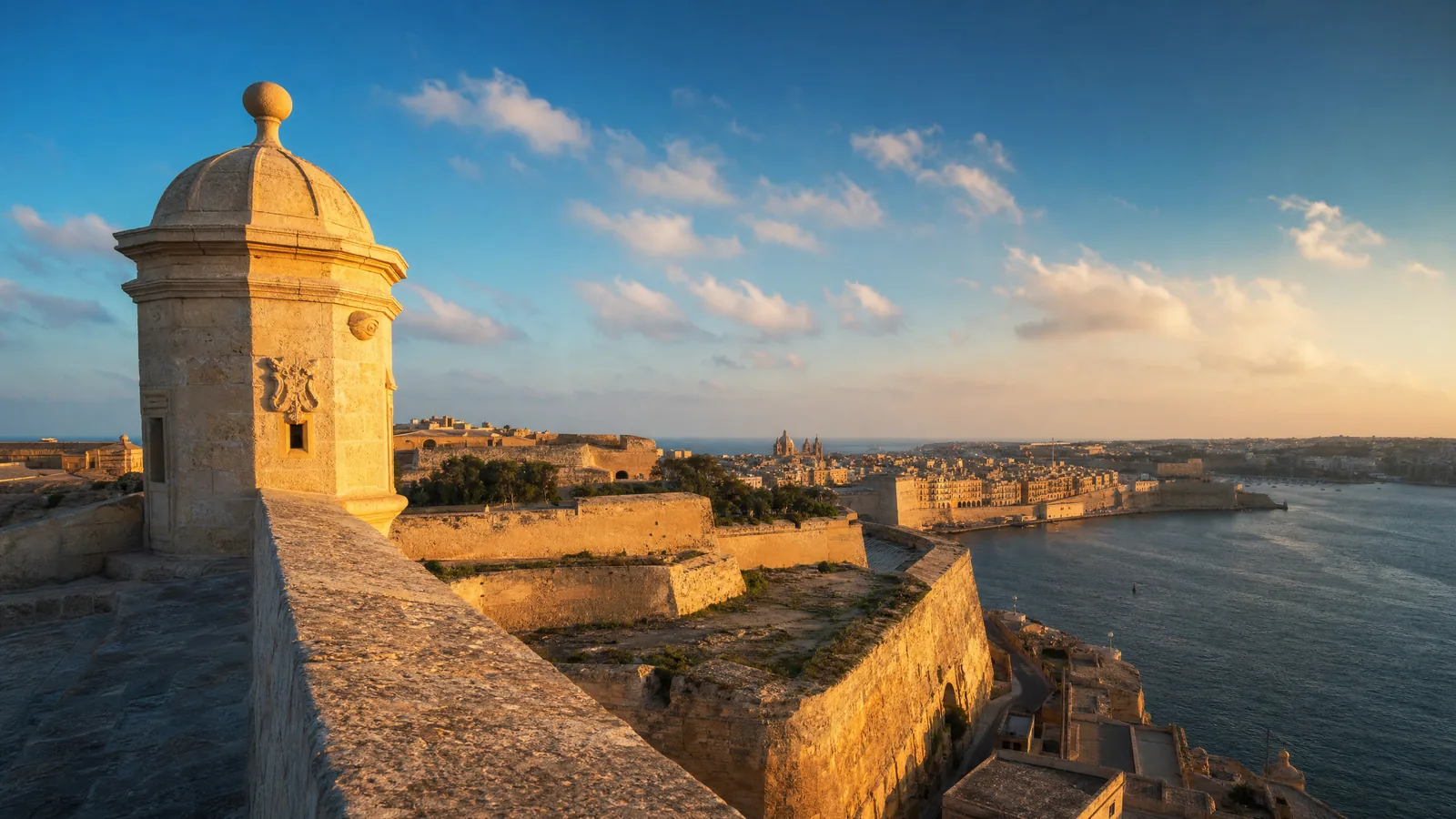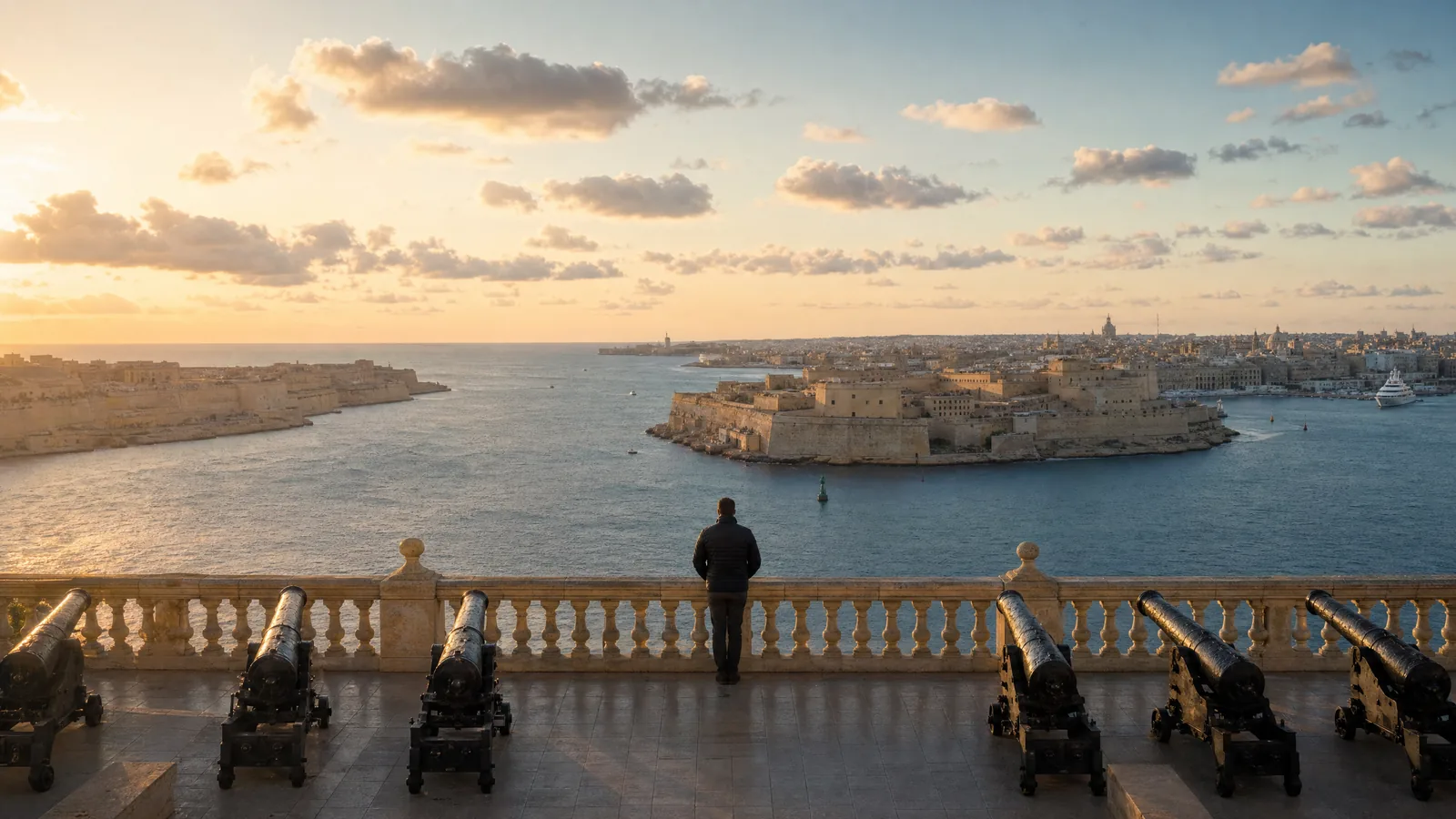
On Saturday 31 May, the people of a small Mediterranean island handed their Labour Party an unprecedented fourth consecutive term. Robert Abela called the election a year early, fireworks went off across Naxxar, and turnout came in at a frankly continental 87.4 percent.
Roughly 1,900 kilometres to the north, another island is also run by a party called Labour. That one is presiding over flat growth, a record wealth exodus, and a tax burden last seen when the country was rebuilding from the Blitz.
Let me be honest before I go further. I am not a Labour supporter. Not in Valletta, not in Westminster, not anywhere. My instinct is always lower taxes, smaller state, more freedom for the individual to keep what he earns. But intellectual honesty cuts both ways, and the plain truth is this: Malta Labour is doing OK. Britain’s Labour, governing its own island with far greater resources, could learn a great deal from it. So could anyone in the DACH world watching their own governments reach for the same Westminster playbook.
The Maltese scoreboard
Strip away the red flags and the chanting and look at the numbers, because the numbers are what matter.
The IMF’s most recent Article IV consultation records that Malta has grown at an average of nearly 7 percent a year over the past decade. Growth cooled to a still-enviable 3.9 percent in 2025, comfortably ahead of the eurozone, and the fourth quarter actually reaccelerated to 6.4 percent year on year.
Unemployment sits near 2.8 percent. The employment rate is around 81 percent, well above the EU average. Inflation has drifted back toward 2 percent. The current account runs a surplus of 6 to 7 percent of GDP. And the headline that should make every German and British finance minister wince: government debt is roughly 50 percent of GDP, comfortably below both the EU average and the Maastricht ceiling, according to PwC’s budget analysis.
So this is a self-governing island with low debt, near-full employment, surpluses, and growth that the rest of Europe can only dream about. That is the platform on which Abela just won a fourth term.
The British scoreboard
Now turn to the larger island.
Since Labour won in July 2024, the UK economy has effectively stalled. Output crawled along at roughly 1 percent in 2025, with several quarters barely scraping 0.1 percent. GDP per head has gone nowhere, which is the polite way of saying Britons are getting poorer on average even as the headline figure ticks up.
The Chancellor’s employer National Insurance increase has done exactly what its critics warned it would do: it has weighed on hiring, with unemployment forecast to climb toward 5.3 percent. And the total tax take is now heading for a historic high of nearly 38 percent of GDP, the heaviest burden since the 1940s. Rachel Reeves has already signalled that yet more tax rises and spending cuts are coming in the autumn.
Two islands. Two Labour parties. One is compounding, the other is contracting. The name on the door is identical. The philosophy behind it is the opposite.
The one difference that explains everything
Here is the crux of it, and it is the lesson Britain refuses to learn.
Malta governs as if capital and people can leave. Britain governs as if they cannot.
Malta is a tiny, import-dependent rock with no oil, no manufacturing base, and no captive market. It has never had the luxury of pretending the world owes it investment. So it competes for it. Low effective corporate taxation, a serious financial-services and iGaming sector, residency and relocation programmes, and a deliberate posture of being open for business. When you have nothing but your attractiveness to offer, you take attractiveness seriously.
Britain still behaves like the imperial capital of global finance, as though the wealthy, the founders, and the mobile professionals have nowhere better to go. That assumption is now being tested in real time, and Britain is losing.
Exhibit A: the directors are voting with their feet
The clearest illustration is the abolition of the non-dom regime in April 2025, stacked on top of higher capital gains tax, the scaling back of business asset relief, VAT on private school fees, a so-called mansion tax, and the extension of 40 percent inheritance tax to worldwide assets.
You will have seen the lurid headline figures from the wealth-migration consultancies claiming five-figure millionaire departures. Ignore them. Those estimates have been taken apart by serious analysts: Tax Policy Associates went so far as to call the most-quoted numbers effectively meaningless, pointing out that you simply cannot turn a headcount of “millionaires” into a reliable count of departing non-doms. I have no interest in repeating figures that do not survive scrutiny.
What does survive scrutiny is the public register. The Financial Times analysed Companies House filings and found that 3,790 company directors moved their official residence abroad between October 2024 and July 2025, a 40 percent jump on the 2,712 who left in the same window the year before. Departures peaked in April 2025, the very month the non-dom regime died, at 691 in a single month, up 79 percent year on year. A later FT analysis put the cumulative total at close to 6,000 directors since late 2023, with Dubai the runaway favourite destination.
These are smaller, soberer numbers than the consultancy press releases, and that is precisely why they carry weight. They are real people on a real statutory register, not a modelled guess, and the trend is unmistakable: the line jumps sharply the moment Labour confirmed it would tax global wealth. The 2026 Sunday Times Rich List, which counts named individuals rather than estimates, told the same story, with the billionaire tally slipping from a 2022 peak of 177 to 157.
The people on these lists are precisely the ones who fund the public services Labour wants to expand. You cannot tax someone who has moved to Dubai, Lisbon, or, yes, Malta.
What Britain could actually take from Malta
Three things, none of them ideological.
First, compete for capital instead of punishing it. Malta understands that a mobile investor is a guest, not a hostage. Britain has spent two years sending the opposite signal and is watching the consequences arrive on schedule.
Second, treat fiscal discipline as the foundation, not the afterthought. Malta funds its ambitions on a debt ratio half the size of Britain’s. Low debt buys options. High debt buys you the bond market’s permission slip and a Chancellor who has to raise taxes every November.
Third, make growth the actual policy, not the slogan. Every UK minister insists growth is the “number one priority.” Malta does not need to say it. It simply posts the numbers. A growth strategy that requires ever-higher taxes is not a growth strategy. It is a managed decline with better branding.
I am not selling you a fairy tale
None of this makes Malta a libertarian utopia, and I would be a propagandist rather than an honest writer if I pretended otherwise.
The island carries real reputational baggage. The 2017 assassination of journalist Daphne Caruana Galizia triggered a political crisis that ended Joseph Muscat’s premiership. Malta spent time on the financial greylist. Its passport-sale programme has drawn repeated fire from Brussels. And the IMF has been blunt that the labour-intensive, import-the-workforce growth model is straining infrastructure and cannot run forever. Abela’s majority this time was narrower than in 2022, which suggests Maltese voters know it too.
So this is not an endorsement. It is a comparison.
The lesson
Two islands. Two parties wearing the same colour and the same name. One has spent a decade making itself somewhere capital wants to be, and just won a fourth term on the strength of it. The other has spent two years making itself somewhere capital wants to leave, and is raising taxes to cover the shortfall the departures create.
I have lived in both countries. I know which one feels like it is moving forward. An island that forgets its people and its money can simply get on a plane will, sooner or later, watch them do exactly that.
Westminster might want to study the smaller island before the next budget. It will not, of course. But it should.