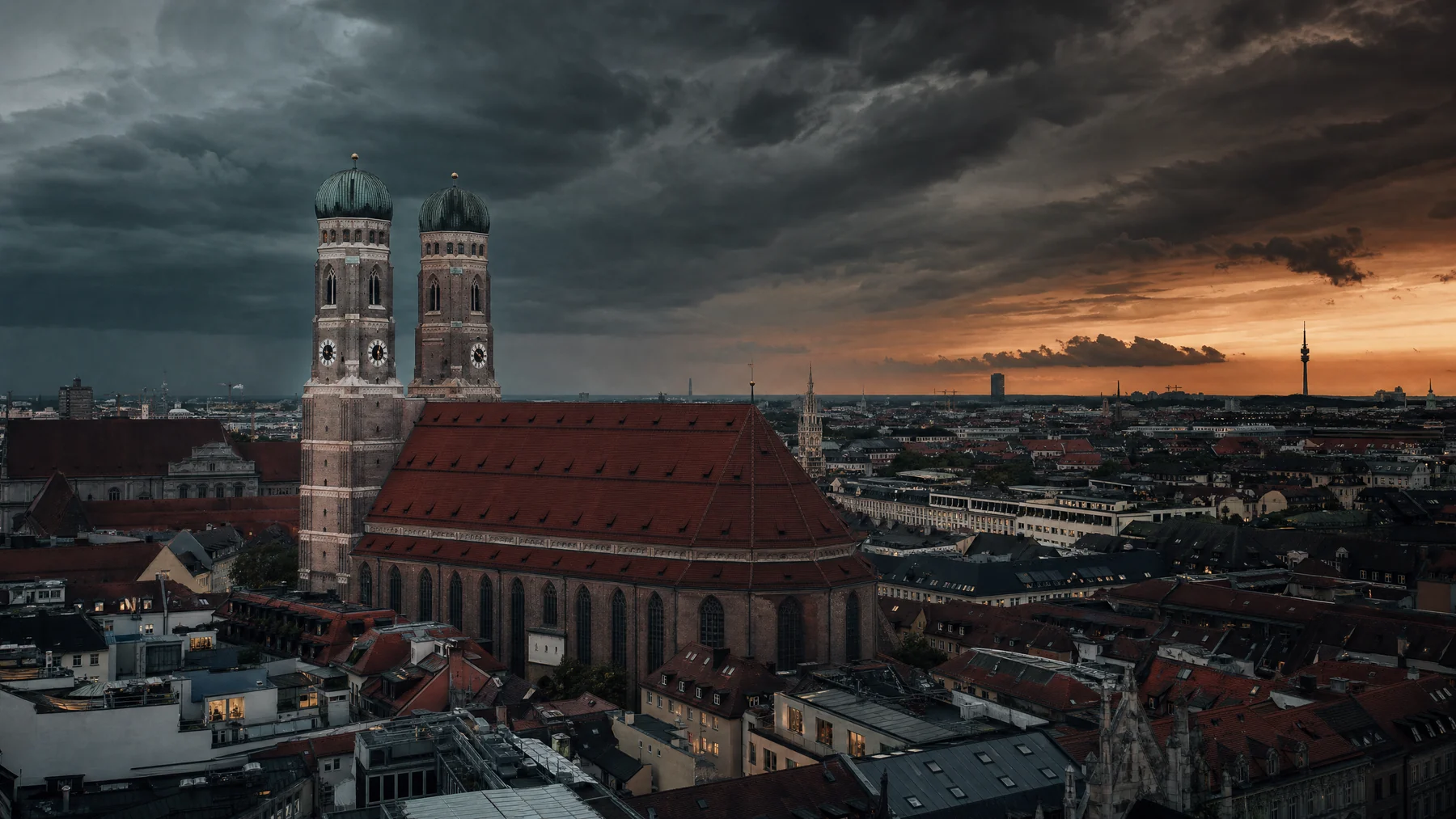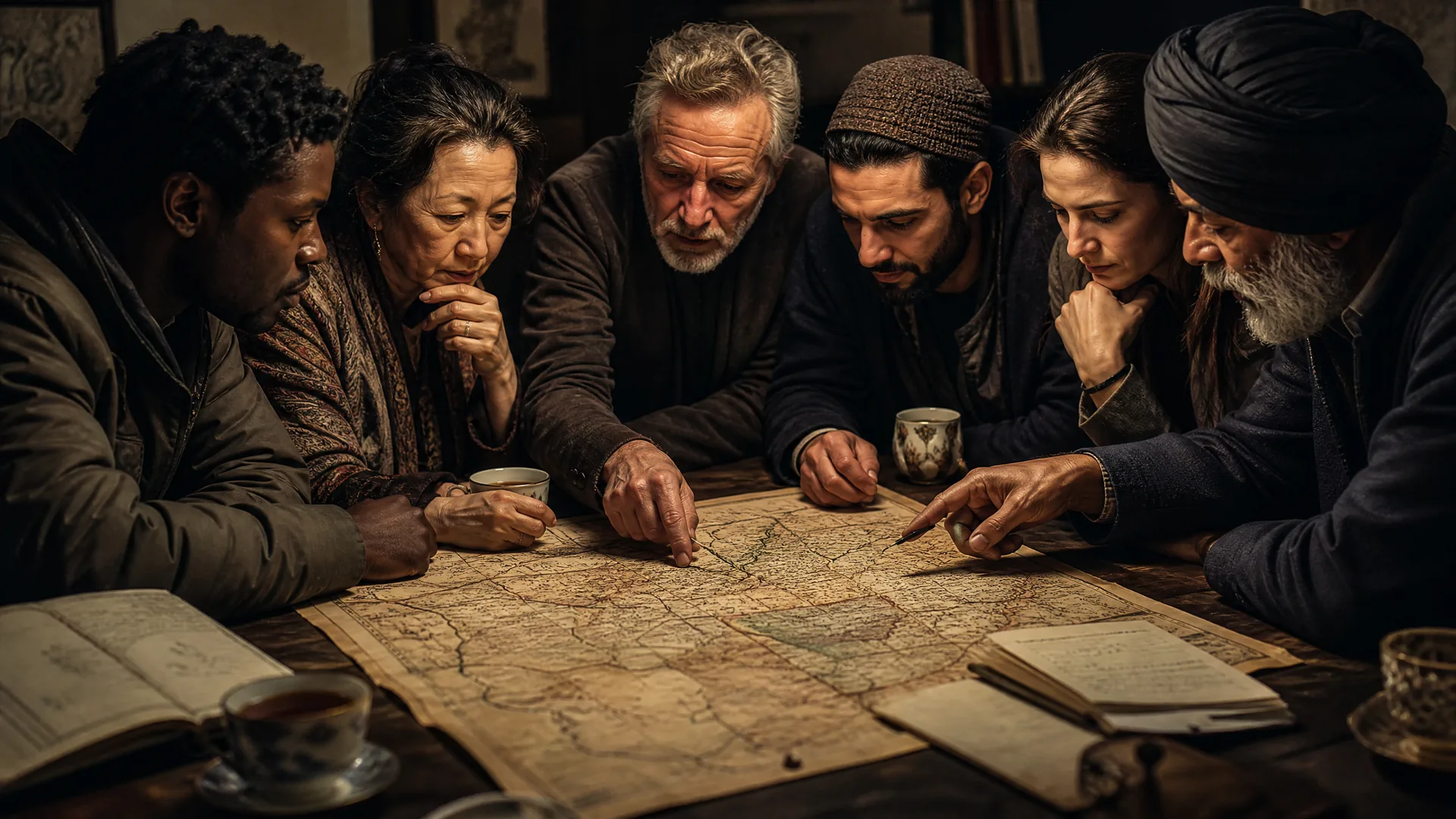
At our seminar in Zurich last week, a single provocation took over the room. The question was simple and uncomfortable. What if the nation-state, the very thing we are taught to treat as the natural unit of political life, has caused more bloodshed than it ever prevented? It is the kind of idea that sounds reckless until you start counting.
Begin with the obvious. The nation-state is a recent invention, not an eternal fact. For most of recorded history people lived under cities, duchies, leagues, empires, and confederations, under overlapping loyalties that no single flag could capture. The notion that a “people” must map cleanly onto a “state,” and that the two together form the proper container for human life, is barely two centuries old in its modern form. It was sold as liberation. In practice it has often been a machine for manufacturing enemies.
The case against the nation
Once you accept that a nation must have its own state, you also accept that every nation without one carries a grievance, and every state containing more than one nation has a problem to solve. That logic has filled cemeteries. The drive to make the map of peoples match the map of power gave us forced assimilation, population transfers, and the polite vocabulary behind the twentieth century’s worst crimes. Wars that earlier ages might have settled as dynastic quarrels became total, because now they were fought in the name of entire peoples rather than mere princes. A border had become an identity, and identity is something men will die for in numbers a dynasty could never command.
Africa: a map drawn by men who never went there
Nowhere is the point sharper than in Africa. At the Berlin Conference of 1884 and 1885, European powers drew the continent’s borders with rulers and pencils, splitting some peoples down the middle and herding rival groups into the same cage. The consequences were not abstract. A landmark economic study of these partitioned homelands found that ethnic groups divided by a colonial border have suffered measurably more warfare, more political violence, and more discrimination than groups left whole. The lines did not describe Africa. They were imposed on it, and Africans have been paying the invoice for more than a century. When the room in Zurich pushed back on me, this was the example that quieted them. It is worth adding, in fairness, that the African states themselves later chose to freeze those same borders rather than reopen them, precisely because redrawing lines invites its own endless wars. The damage is real. The cure is not simple.
The tribal instinct
Which brings us to the deeper claim, the one I am most willing to defend. We are not, by nature, creatures of the abstract mega-state. We are built for the small group. Robin Dunbar’s well-known work suggests a natural ceiling of roughly 150 stable relationships, the size of a band, a village, a clan, the human scale at which trust is personal rather than bureaucratic. Switzerland with its cantons, and the early United States with its jealous states, look less like exceptions and more like designs that took this instinct seriously. They kept power close to the ground, where the governed can still see the governors, and where exit is a short walk rather than an emigration.
When the tribe turns
And yet. If I stopped here I would be telling you only the half of the story that flatters my own conclusion, and a seminar that merely confirms its own priors is not worth the airfare to Zurich.
The tribe has a dark side, and it is not a small one. The same instinct that binds a community can butcher its neighbours. Rwanda in 1994 was not a tragedy of badly drawn borders. It was a tragedy of tribe, of an in-group and an out-group sorted into the living and the dead in a hundred days. The romantic word “tribal” should never be spoken without that memory attached.
There is also a category error worth naming plainly. Switzerland is not a tribe. It is one of the most sophisticated institutional achievements in European history, a confederation of different languages and faiths held together not by blood but by law, federalism, and a deep culture of subsidiarity. To call it tribal is to mistake the scaffolding for the building. And here sits the most awkward fact of all. The very thing that let the West scale beyond the clan, the slow dissolution of kin-based tribal structures across medieval Europe, is a leading candidate for why Western societies developed impersonal trust, the rule of law, and prosperity in the first place. Taken literally, tribalism is not the engine of the free society. It is closer to the thing the free society had to outgrow.
What actually travels
So where does that leave the Zurich thesis? Not in ruins, but refined, which is the most a good idea can hope for.
The villain was never size as such, and the hero was never the tribe as such. The real danger of the centralized nation-state is its blast radius. When all authority is gathered into a single apparatus, capturing that one apparatus means capturing everything, and the catastrophe scales with the size of the machine. A polycentric order, by contrast, has no single point of failure. Power is distributed, loyalties are layered, and a bad ruler can be escaped rather than merely endured. That is the genius of the Swiss model, and it has almost nothing to do with blood and almost everything to do with architecture.
The instinct my critics in Zurich were reaching for is sound. Human beings flourish where authority stays close, where exit is real, and where no one entity holds the whole. The mistake is to call that arrangement tribal, as though it were a return to the primitive. It is the opposite. It is the hard-won discipline of keeping power small on purpose, in a world that constantly tempts us to make it large. We do not need to romanticize the village to defend the principle. We need only remember that every monument to the unified state was built on ground that the state first had to flatten.
That is the lesson I took back from Zurich. Not that the nation killed us, but that concentration is the risk, distribution is the safeguard, and the men who draw the lines are rarely the men who have to live inside them.
Andere reden. Wir setzen es um.