Tomorrow, Tuesday 8 September, Malta takes the day off. Government offices close, the national flag goes up on public buildings, rowing crews race in the Grand Harbour, and the Church keeps a feast of the Virgin Mary. Newcomers usually find out about it the same way: the office is shut, the traffic is strange, and someone mentions a regatta.
The day has a name in law. The National Holidays and other Public Holidays Act, Chapter 252 of the Laws of Malta, lists five national holidays, and one of them is "the eighth of September known as Jum il-Vittorja". Victory Day. What it celebrates is less obvious than the name suggests, because it is not one victory. It is two, four centuries apart, that happen to share a date.
What the Law Says About 8 September
Chapter 252 is short, and worth knowing if you live here. Malta has five national holidays: Independence Day on 21 September, Republic Day on 13 December, Freedom Day on 31 March, Victory Day on 8 September, and the Sette Giugno on 7 June. On top of those come the public holidays in the Act's schedule, from New Year's Day to Christmas, including the feasts of St Paul's Shipwreck, St Joseph, St Peter and St Paul, the Assumption and the Immaculate Conception.
The Act says three concrete things about national holidays. They are public holidays. On those days the National Flag of Malta is flown on public buildings. And the Prime Minister gives such directions as he deems appropriate for their celebration. Government offices are closed on public holidays unless the Prime Minister directs otherwise.
There is also a rule that matters to anyone on a payroll. Since 1 January 2021, when a national or public holiday falls on a Saturday or a Sunday, employees get an extra day of vacation leave in compensation. This year the question does not arise: 8 September 2026 is a Tuesday, so it is simply a day off.
Victory One: The Great Siege Ends, 8 September 1565
The first victory is the older and more famous one. In 1565 the Ottoman Empire sent a fleet and an army against Malta, which was then ruled by the Order of St John, the Knights Hospitaller. The Knights had held the islands since 1530. Their story, and how they came to be here, is told in the history of the Knights of St John.
According to Heritage Malta, the national agency that runs the forts where the siege was fought, the Ottoman forces gave up their attempt to take the islands on 8 September 1565, after three months of relentless fighting and heavy losses.
The most famous episode of those three months happened at Fort St Elmo, a star-shaped fort built in 1552 at the tip of the Sceberras peninsula, where Valletta now stands. It was put up after an Ottoman raid in 1551 and warnings that a siege was coming. In 1565 it took the brunt of the attack. Heritage Malta's account is blunt: against all odds, the small fort resisted for a month and surrendered on 23 June. Its curators date the fighting there from 25 May to 23 June 1565.
The defence then held across the harbour, at Fort St Angelo in Birgu, the defenders' main stronghold. When the Ottomans withdrew in September, the Order's Grand Master, Jean de Valette, was rewarded from abroad: King Philip II of Spain sent him a sword and a dagger in recognition of the victory.
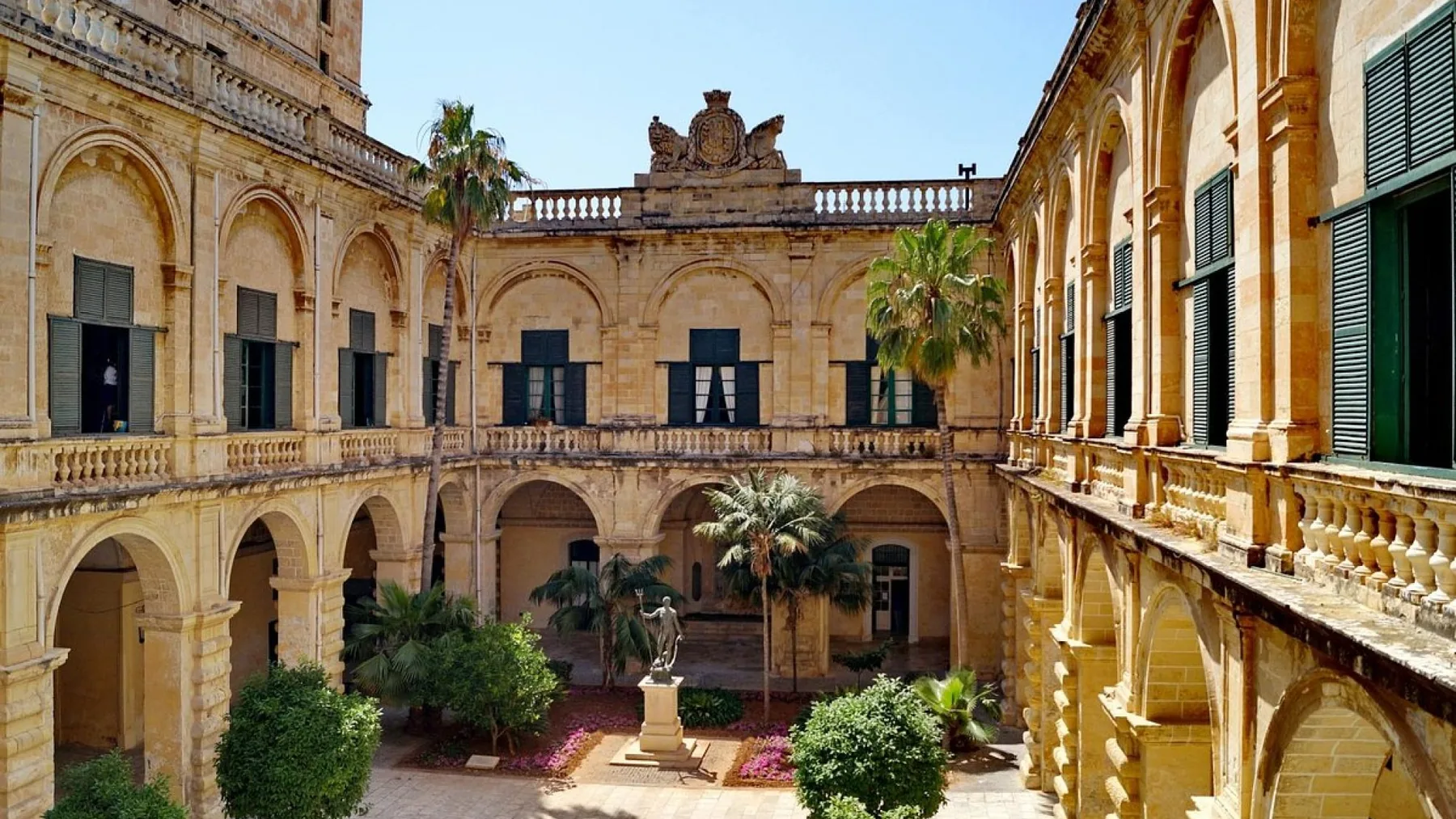
Those two objects tell you how old the 8 September tradition is. Heritage Malta records that the sword and the dagger, kept at the Grand Master's Palace, were shown to the public once a year in a procession held on 8 September, marking the day the Great Siege was lifted. The procession continued every year until 1797. A year later the French arrived, and Napoleon took both pieces to France. They ended up in the Louvre.
So when Malta marks 8 September, it is not inventing a tradition. It is continuing one that the Order kept until the French arrived.
Victory Two: The Wartime Siege Ends, September 1943
The second victory is closer to living memory. Malta formed part of the British Empire when the Second World War began, and for a while it was not on the front line at all. Heritage Malta explains that this changed when Fascist Italy declared war on the Allies on 10 June 1940. The first bombs fell the following day. Fort St Elmo, the same fort that had held the Ottomans for a month in 1565, suffered the first aerial bombardment on the islands on 11 June 1940.
What followed was a second siege, this time from the air and by sea. The low point came in the summer of 1942. By August the island was, in Heritage Malta's words, on the brink of capitulation. A supply convoy, Operation Pedestal, fought its way through under constant attack from air and sea. Only four merchant ships and the badly damaged tanker SS Ohio entered the Grand Harbour. Because the last ships arrived around the feast of the Assumption on 15 August, the convoy is also known as the Santa Marija Convoy. Santa Marija is still the summit of the Maltese summer, as the August survival guide describes.
A month later, on 13 September 1942, the George Cross was publicly presented at St George's Square in Valletta. The King's message, a replica of which is displayed next to the medal at the National War Museum, reads: "To honour her brave people I award the George Cross to the Island Fortress of Malta to bear witness to a heroism and devotion that will long be famous in history."
The siege did not end with a single battle. It ended, symbolically, a year later. Heritage Malta describes the second event commemorated on Victory Day as the date when the surrender of Fascist Italy was made public in 1943, giving Malta a breather in the Second World War. The Italy whose declaration of war had brought the bombs in 1940 was out of the war, and the announcement fell on 8 September, the same date as the lifting of the Great Siege 378 years earlier.
A Third Celebration: The Feast of Our Lady
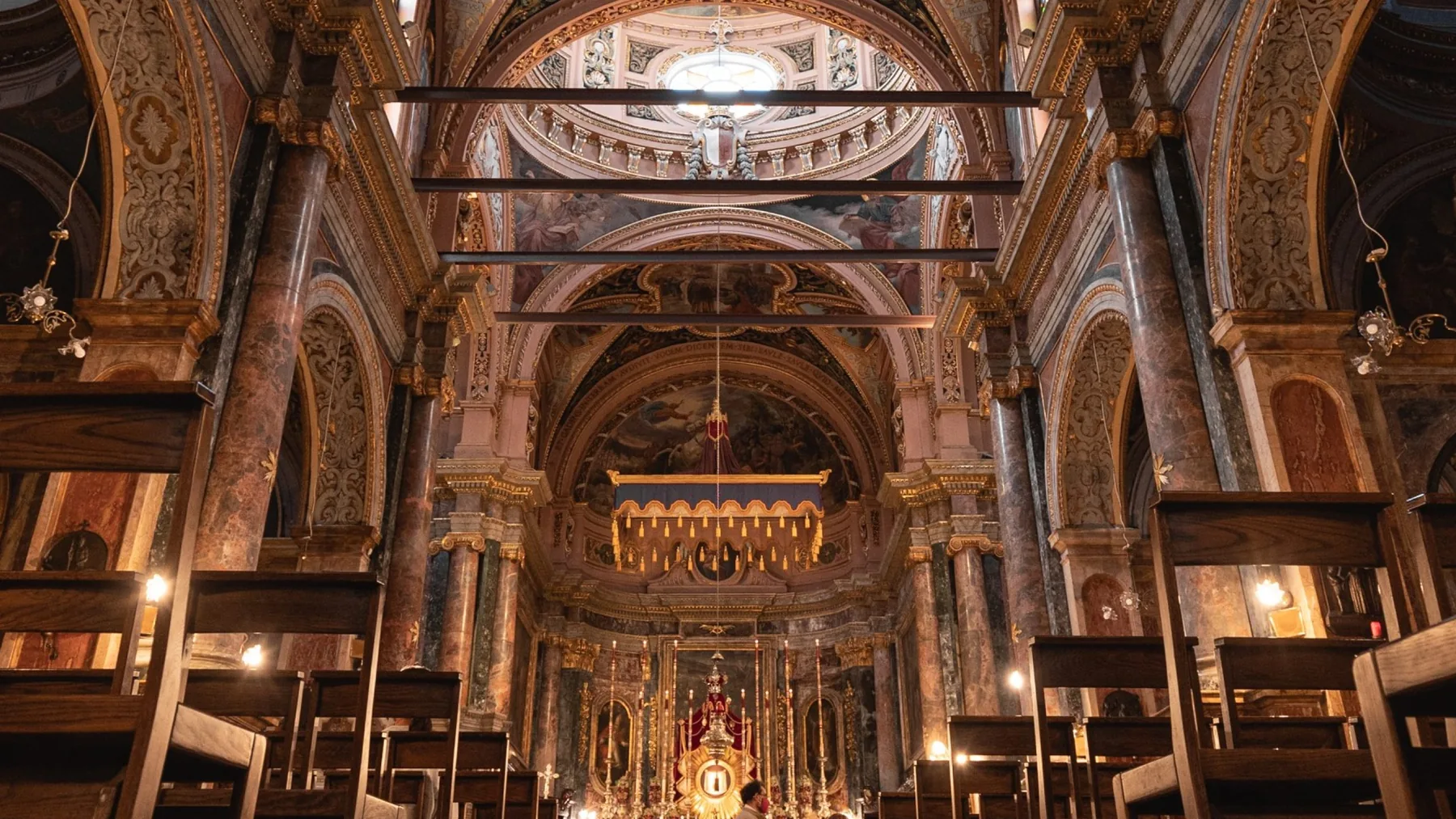
Heritage Malta adds a line that anyone who lives here will recognise: by sheer coincidence, the birth of the Virgin Mary is also celebrated on this day. The Church's feast of the birth of Mary falls on 8 September. The official tourism authority lists the public holiday simply as the Feast of Our Lady of Victories.
That is why Victory Day does not feel like a military anniversary. It feels like a festa. The day at Fort St Angelo itself begins with Mass in the fort's Chapel of the Nativity of the Virgin. The religious layer and the national layer have grown together, which is typical of how faith and public life overlap on these islands.
The Siege That Is Not on the List
If Victory Day celebrates two sieges, a third one is conspicuous by its absence. Between the Great Siege and the Second World War, Malta was besieged once more, and this time the Maltese were on the outside of the walls.
In 1798 the islands were taken over by the French under General Napoleon Bonaparte. Heritage Malta describes the French occupation of 1798 to 1800 as brief but decisive: Napoleon's arrival brought sweeping reforms and rising tensions, which led to a Maltese uprising and a two-year blockade of the French garrison that paved the way for British rule. The same French takeover is what ended the Order's government of Malta, a story told in more depth in the Knights who built Malta and lost a country.
The blockade ended in 1800, and it is a genuine siege story: this time a Maltese uprising blockaded a foreign garrison inside the fortifications the Knights had built. Some popular accounts fold it into Victory Day. The official description of the day, as Heritage Malta gives it, does not. It commemorates two high points: 1565 and 1943. The French blockade is remembered in its own right, in re-enactments at Fort St Angelo and elsewhere, but it is not what the flags are flying for on 8 September.
What Actually Happens on 8 September 2026
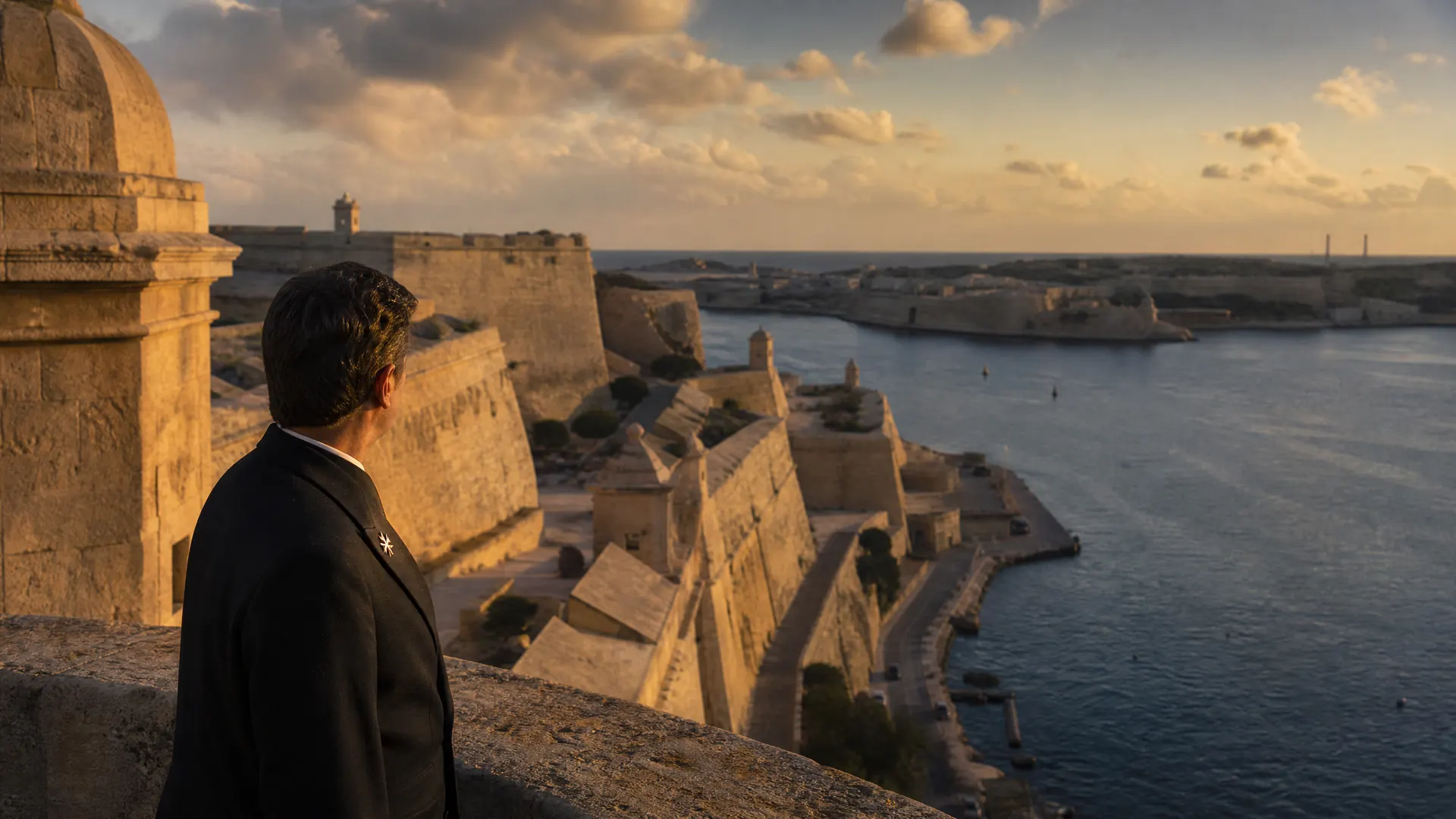
For 2026, Heritage Malta has published a full programme at Fort St Angelo in Birgu, the fort that was the Knights' headquarters during the Great Siege.
- The fort opens from 09:00 to 19:00, with last admission at 18:30.
- The day starts with Mass in the Chapel of the Nativity of the Virgin, followed by a commemoration at the Victory of the Great Siege Monument.
- At noon a second Mass is celebrated in St Anne's Chapel in Upper Fort St Angelo.
- In the afternoon a local re-enactment group performs.
- Entry is €3 for adults, seniors and students, and free for children up to 11 and Heritage Malta members. Tickets are sold only at the door on the day.
The fort is also a vantage point for the other fixture of the day: the National Regatta in the Grand Harbour. Rowing crews from Maltese towns race traditional boats across the water below the bastions. At the spring regatta on Freedom Day, Heritage Malta describes teams from several Maltese cities competing for a prize called the Palju over 11 races in four types of rowing boat.
Why It Matters if You Live Here
For a foreign resident, Victory Day is easy to treat as a free Tuesday. It is worth more attention than that, for three reasons.
First, it explains a lot about how Malta sees itself. The islands have been attacked, besieged and bombed repeatedly, and they have held. The national story is a story of endurance, and 8 September is the day that story is told in public. The eight-pointed Maltese cross of the Knights and the George Cross of 1942 both belong to that story.
Second, it is one of the most accessible days of the year to see the harbour forts. Reduced entry at Fort St Angelo, Masses in the fort's chapels, re-enactors on the ramparts, and the regatta on the water below: it is a full day of history for the price of a coffee.
Third, it is practical. Government offices are shut, and the regatta brings people to the harbour towns. If you have errands, do them on Monday.
And if someone tells you that Victory Day celebrates three sieges, you can now give the more precise answer. It celebrates two victories on one date: the end of the Great Siege on 8 September 1565, and the announcement of Italy's surrender on 8 September 1943. The third siege, the French blockade, has its own place in Malta's memory. The feast of Our Lady, by coincidence or providence depending on who you ask, completes the day.