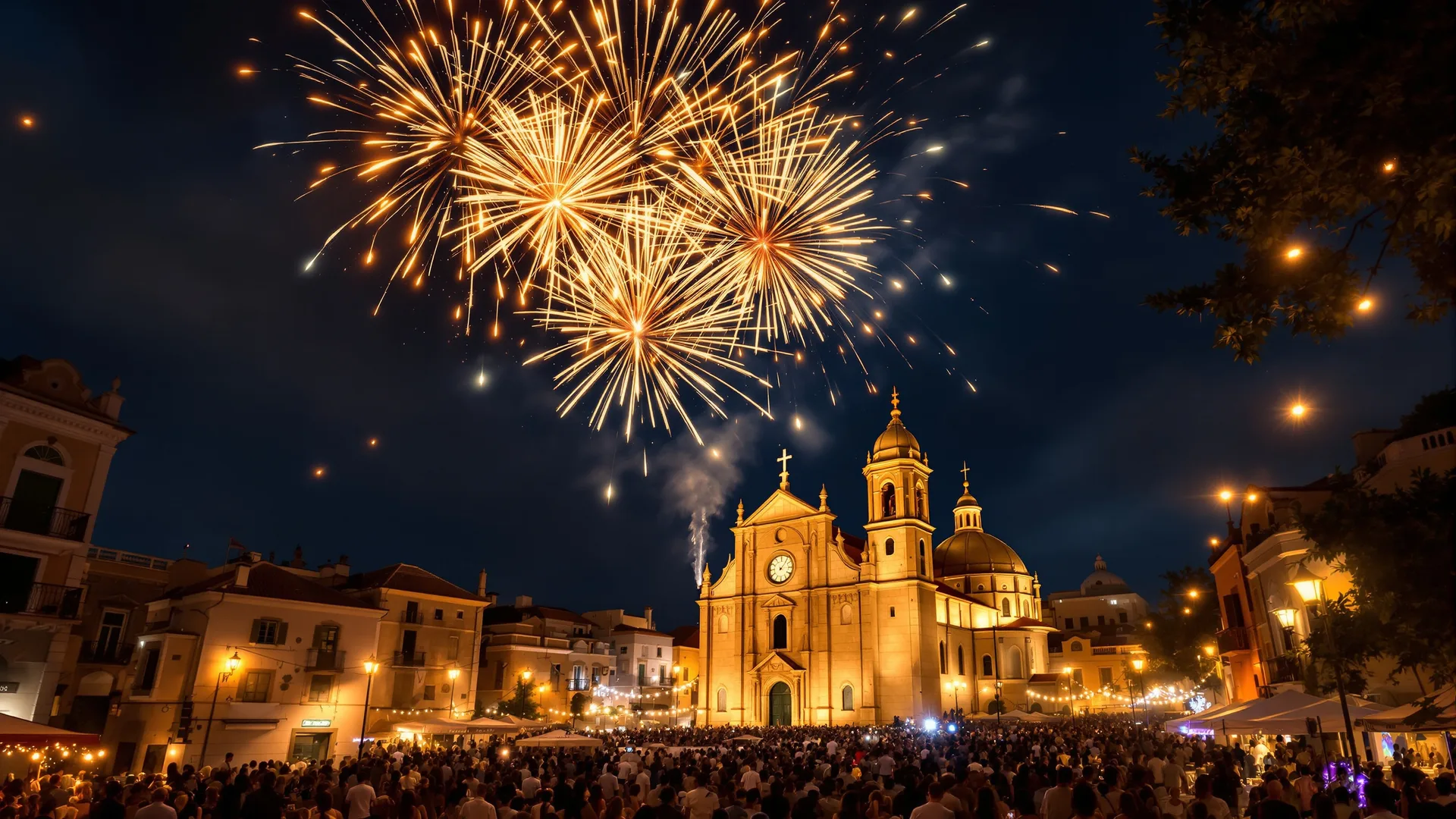
August is the month Malta stops pretending. The heat settles in and refuses to leave. The festa season, which has been building since June, reaches its climax. Half the island queues for the Gozo ferry. The other half sits in air-conditioned rooms wondering why it stayed. And every year, somewhere around the second week, a newly arrived resident sends me a message that says some version of: nobody told me it would be like this.
I lived on Malta twice, a year at a time, so I have been through the full cycle. My sister-in-law Sabrina has lived in Valletta since 2012 and has never missed an August. Between us we have a reasonably honest picture of what this month actually is: the most intense, most Maltese, and least comfortable month of the year. This is the survival guide I wish someone had handed me before my first one.
The Heat Is Not a Rumour
Let us start with the facts, because the brochures will not give them to you. In August the average daytime maximum sits around 31 degrees Celsius, and on the bad days, when the wind swings round and comes off the Sahara, it climbs well past 35. The nights barely help. Humidity rolls in from the sea and sits on the island like a damp towel. If you want the official numbers rather than my recollection, the Malta International Airport Met Office publishes the data, and none of it will surprise anyone who has spent a July and August on the island.
What the raw temperature does not capture is the absence of relief. Malta has no mountains, no forests, no rivers, no altitude worth mentioning. There is no cooler valley to drive to, no shaded hillside, no evening chill. The highest point of the island is a little over 250 metres and it does not feel meaningfully different from sea level. When people ask me how Malta in August compares to Spain or Italy in August, that is the answer: the heat itself is similar, but in Spain you can drive into the hills. In Malta you can drive to a different piece of hot limestone.
The one genuine mercy is the sea. By August the water around Malta is around 27 degrees, which is warmer than most heated pools in northern Europe. A swim at seven in the morning, before the boats and the crowds, is not a leisure activity in August. It is thermal regulation. The residents who cope best are the ones who treat the sea as infrastructure.
Festa Season, and Why the Island Forgives August Everything
Here is the thing that makes August in Malta different from August anywhere else in the Mediterranean: the festas. Every Maltese parish celebrates its patron saint with a festa, a week of band marches, street decorations, illuminated church facades, and fireworks. The season runs through the summer, but it builds towards one date, and that date is the 15th of August.
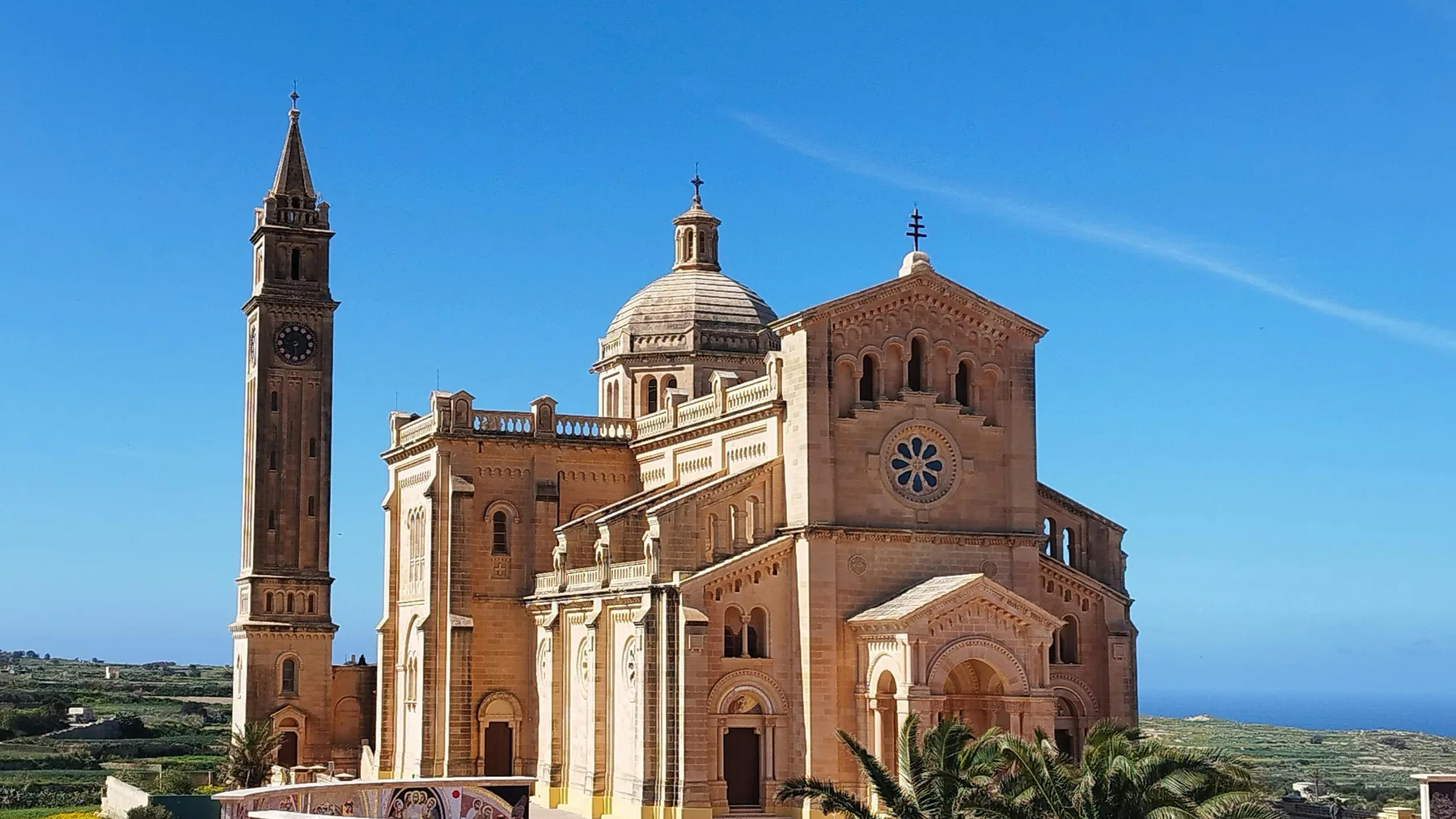
Santa Marija, the feast of the Assumption of Our Lady, is the summit of the Maltese year. It is a public holiday, and it is celebrated as a full titular festa in seven localities at once: Mosta, Mqabba, Qrendi, Gudja, Għaxaq, Attard, and Victoria on Gozo. Seven parishes, one night, all competing, all letting off fireworks over their own church. Guide Me Malta has a good rundown of all seven, and if you are on the island in mid August you should pick one and go. Mqabba, a small village in the south with an outsized reputation for its pyrotechnics, is the connoisseur's choice.
The date carries more weight than religion alone. In August 1942, with Malta under siege, starving and nearly out of fuel, the surviving ships of Operation Pedestal fought their way through to the island. The crippled tanker Ohio, held together by escort destroyers lashed to her sides, was brought into Grand Harbour on the 15th of August, the feast day itself. The Maltese call it Il-Konvoj ta' Santa Marija, the Santa Marija convoy, and the coincidence of the date has never been treated as a coincidence on the island. When the fireworks go up on the 15th, they are not just for the Madonna. They are for survival.
I will be honest about the practical side: if you live near a festa parish, you will not sleep through it. The fireworks begin days before the feast itself, and the morning petards, fired in broad daylight purely for the bang, start early. The first year this drove me slightly mad. By the second year I had understood that this is not noise pollution. It is the sound of a village that still knows who it is, and there are fewer and fewer places in Europe where you can hear that. My advice is to stop fighting it and walk down to the square.
The Two Maltas of August
August splits the island in two, and the line does not appear on any map.
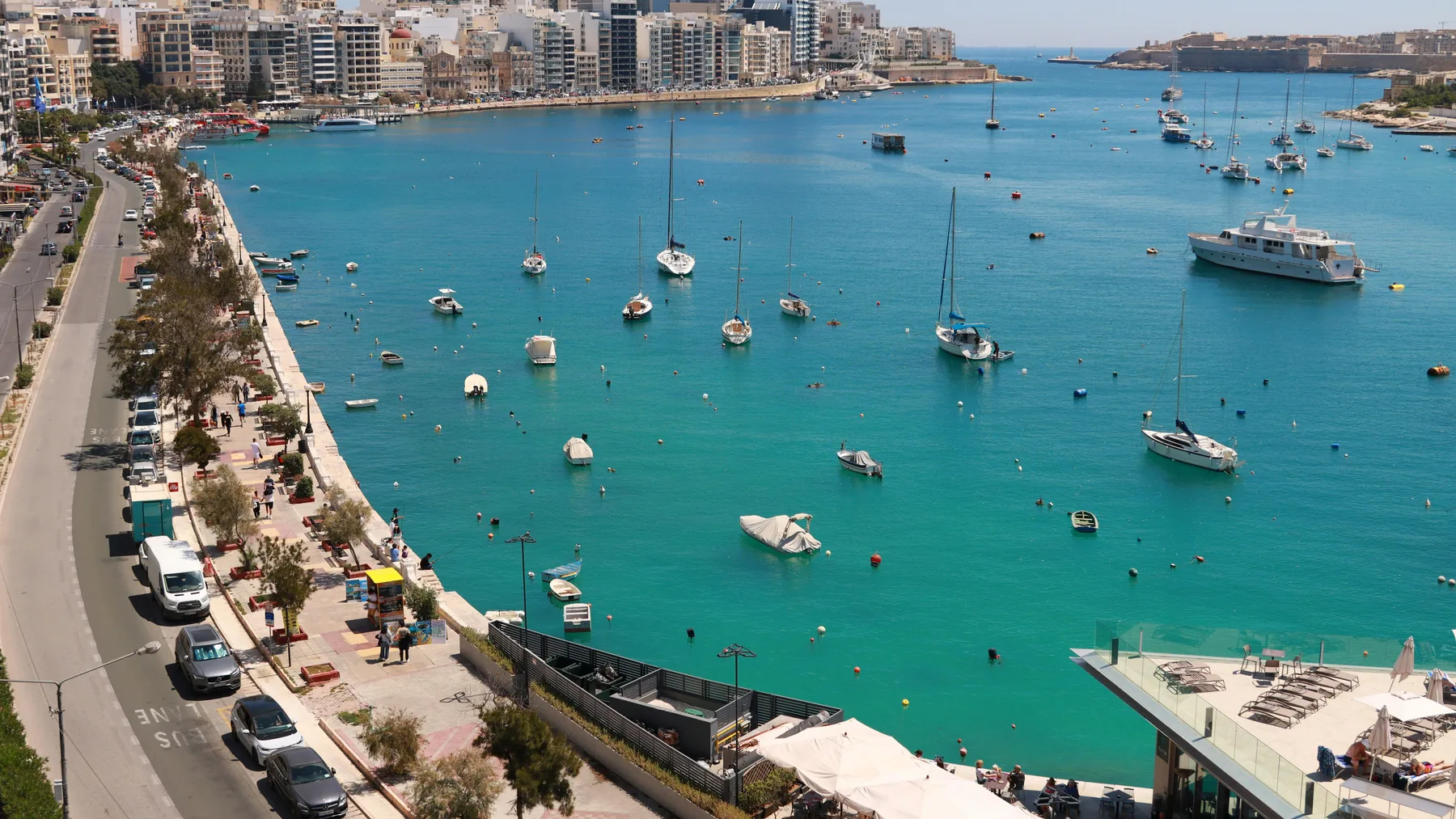
On one side there is tourist Malta: Sliema, St Julian's, Buġibba, the beach clubs, the queues at the Blue Lagoon. This Malta is at maximum density in August. Hotel prices peak, restaurants run on their summer staff, the promenade is a slow river of sunburn, and the traffic between Sliema and St Julian's achieves a kind of solemn stillness. If your only experience of Malta is this strip in this month, you will leave with an entirely wrong impression of the island. I say that as someone who has strong views on where to actually live here.
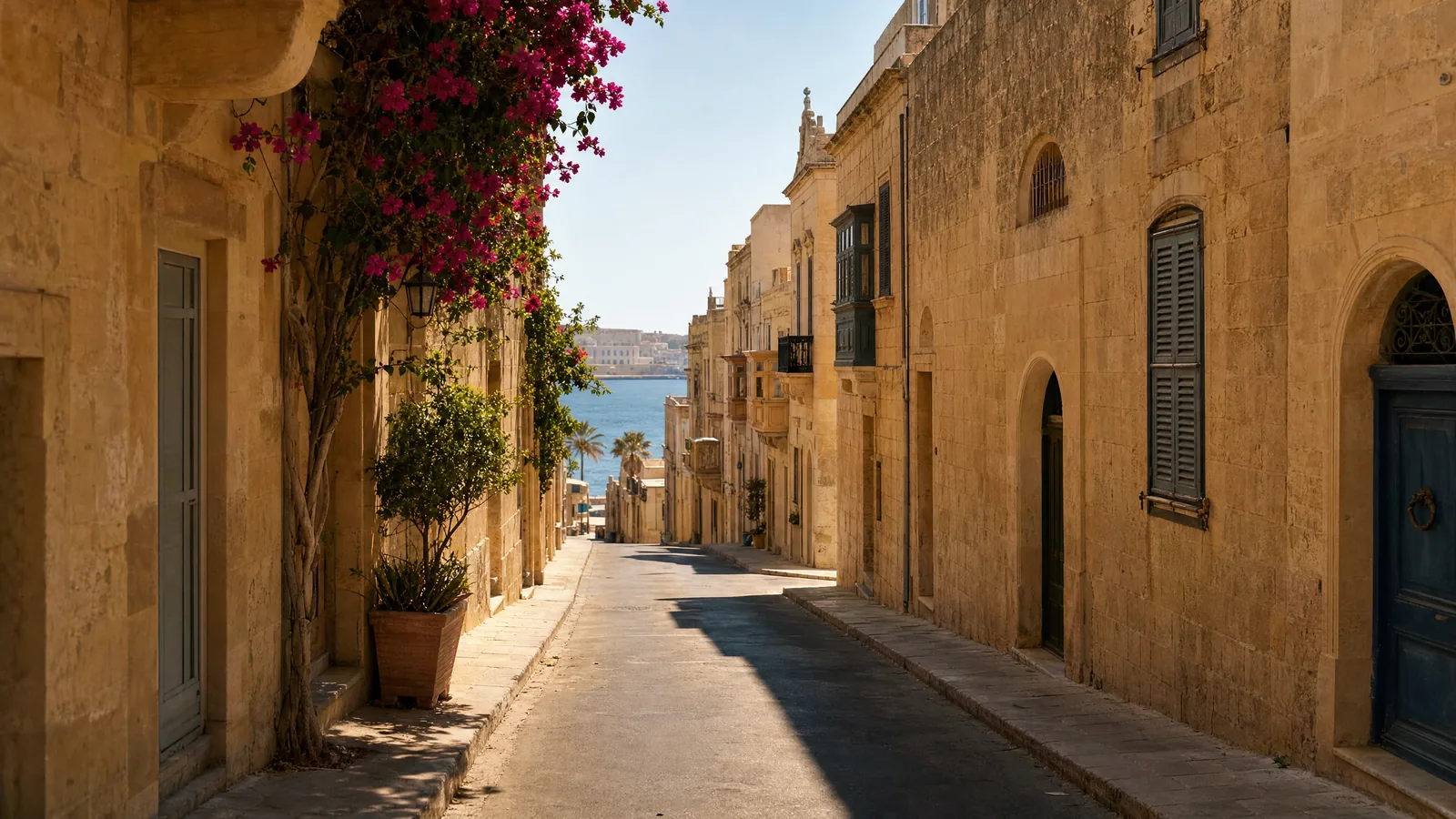
On the other side there is village Malta: Żebbuġ, Siġġiewi, Għaxaq, Qrendi, the places the tour buses pass through without stopping. In August these villages turn inward and celebrate. The festa is not staged for visitors. It would happen identically if not a single tourist came. Families who emigrated to Australia and Canada fly back for their village's feast. The band clubs, some of them older than most European states, run on volunteers and rivalry. Ten minutes of driving separates these two Maltas, and in August the contrast is at its sharpest.
The lesson for anyone thinking about living here is simple: in August, the geography of your life matters more than in any other month. The person in a Sliema high-rise and the person in a Għaxaq townhouse are having two different Augusts, which is really the whole question of where to live on this island compressed into thirty one days.
The Art of the Ferry
And then there is the third August ritual: the exodus to Gozo.
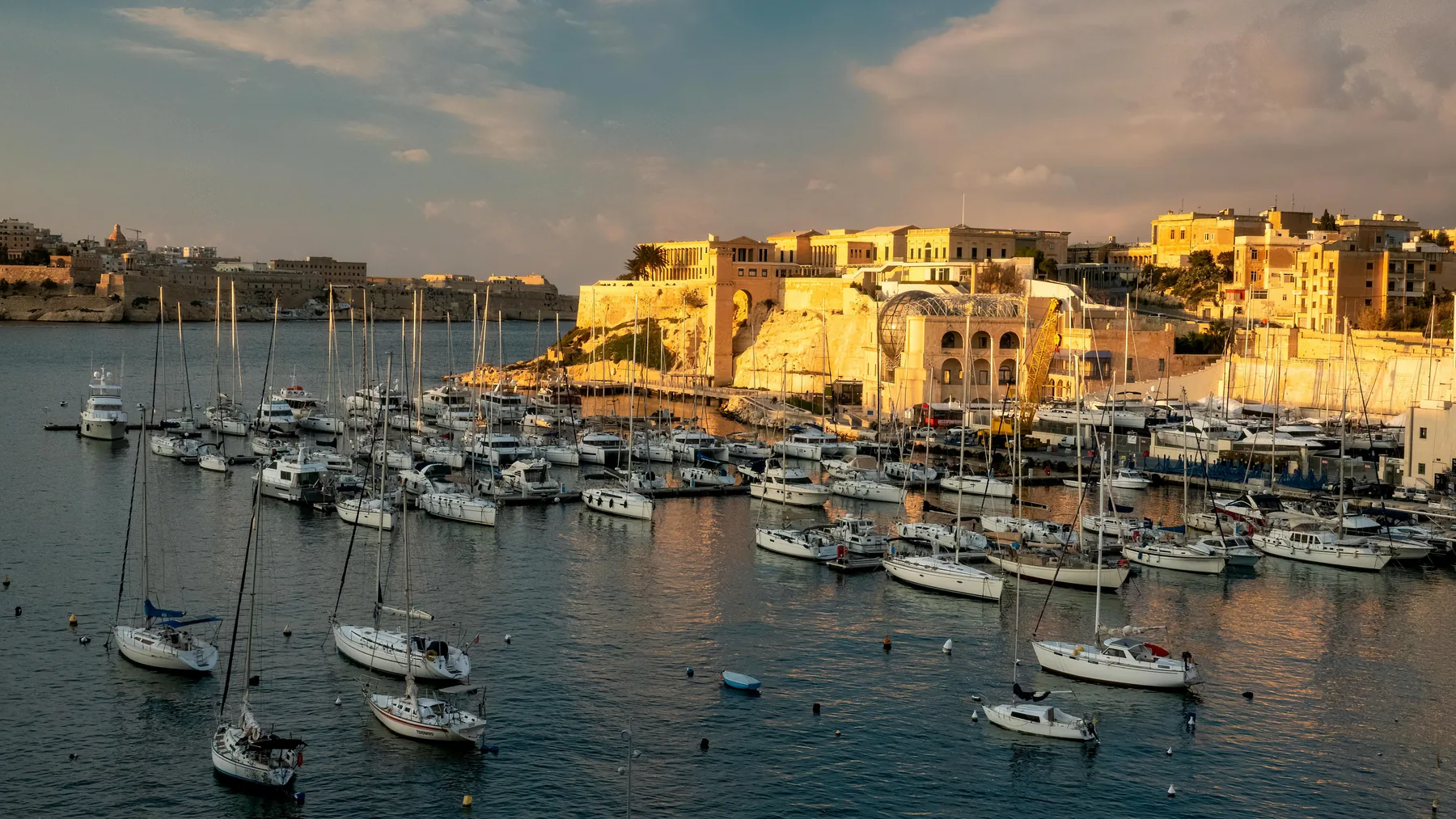
The mechanics first. The Gozo Channel car ferry runs between Ċirkewwa, at the northern tip of Malta, and Mġarr harbour on Gozo. The crossing takes about 25 minutes, and in high season the boats run around the clock, roughly every 45 minutes through the night. There is also a fast ferry for foot passengers between Valletta's Grand Harbour and Mġarr, which does the trip in about 45 minutes and spares you the drive north. Timetables move around, so check the Gozo Channel schedule before you commit to a plan. One quirk that surprises everyone the first time: on the car ferry you pay on the Gozo side, on the way back. The outbound journey feels free. It is not, but it feels it.
Every August, a substantial part of Malta decamps to Gozo. Families who own a farmhouse there move over for weeks. Others rent. The result is that Gozo in August is the busiest it ever gets while still being calmer than Malta, which tells you something about both islands.
The art of the ferry is entirely a matter of timing. On the Friday evenings of August, and above all in the days before Santa Marija, the queue of cars at Ċirkewwa can stretch back up the hill, and you will sit in it for an hour or more with the engine off and the windows down. The experienced do one of three things: they cross at dawn, they cross late at night, or they leave the car in Malta and take the fast ferry as a foot passenger. The inexperienced arrive at six on a Friday evening with a loaded car and learn the lesson the way I learned it, which is slowly, in a hot queue, watching three boats load without them.
The Practical Survival Rules
After two years of residence and many more years of visits, my August rules are these.
Air conditioning is not a luxury and you should budget for it honestly. Whatever you rent or buy needs proper cooling in the rooms you actually live in, not a single struggling unit in the bedroom. Run it, and accept that your summer electricity bills will be a real line item. Maltese residential electricity gets more expensive per unit as your consumption rises through the tariff bands, so a hot summer household feels it. I treat the August and September bills as part of the cost of the climate, the way a Bavarian treats the January heating bill, and I price it into any honest cost-of-living discussion.
Restructure the day rather than fighting it. Swim early. Work through the morning. Stay indoors between noon and five, shutters closed, exactly as the Maltese have done for centuries. Come back out in the evening, which is when Malta in summer is at its genuine best: the stone still warm, the light long, dinner outside at ten at night without a jacket. The people who suffer in August are the people trying to keep northern European hours in a North African climate.
Respect the sun as a hazard, not a feature. The midday sun in a Maltese August is strong enough to hurt you, and the shade-free limestone landscape reflects it back at you. Hats, water, and humility.
And plan the ferry like an adult. Dawn or late night, or go on foot. Never Friday evening with a car.
Should You Even Be Here in August?
Now the honest question, the one I put to clients who are weighing up a move to the island: should you spend August in Malta at all?
Plenty of Maltese answer that question with their feet. Anyone who can arrange it takes leave in August, and a noticeable share of the island's professional class spends part of the month somewhere cooler: Italy, Austria, the UK. The residency programmes that bring most of my clients here do not demand 365 days of physical presence, and among internationally mobile residents the standing arrangement is common: Malta for ten months, somewhere with altitude or drizzle for the worst of the summer. There is no shame in it. The Maltese invented it.
But I will argue the other side, because somebody should. If you are going to make Malta your home rather than your address, you should do at least one full August. Not endure it. Do it. Stand in a village square on the night of Santa Marija with the band playing and the fireworks answering from three parishes at once, swim at dawn in a sea like warm glass, sit in the ferry queue and surrender to it. August is Malta with the volume turned all the way up: the heat, the faith, the noise, the stubbornness, the joy. Every reason the island is difficult and every reason people fall in love with it, compressed into one month.
Skip it every year, and you will have a tax residence. Do it once, properly, and you might have a home. My advice, for what it is worth: do it once, then book the mountains for next year like everyone else.
Work with Sebastian
If you are thinking about Malta as a residence, for the lifestyle, the tax treatment, or both, I have lived it twice and advised on it since 2012, and Sabrina is on the ground in Valletta. We will give you the real picture, August included. Book a consultation.