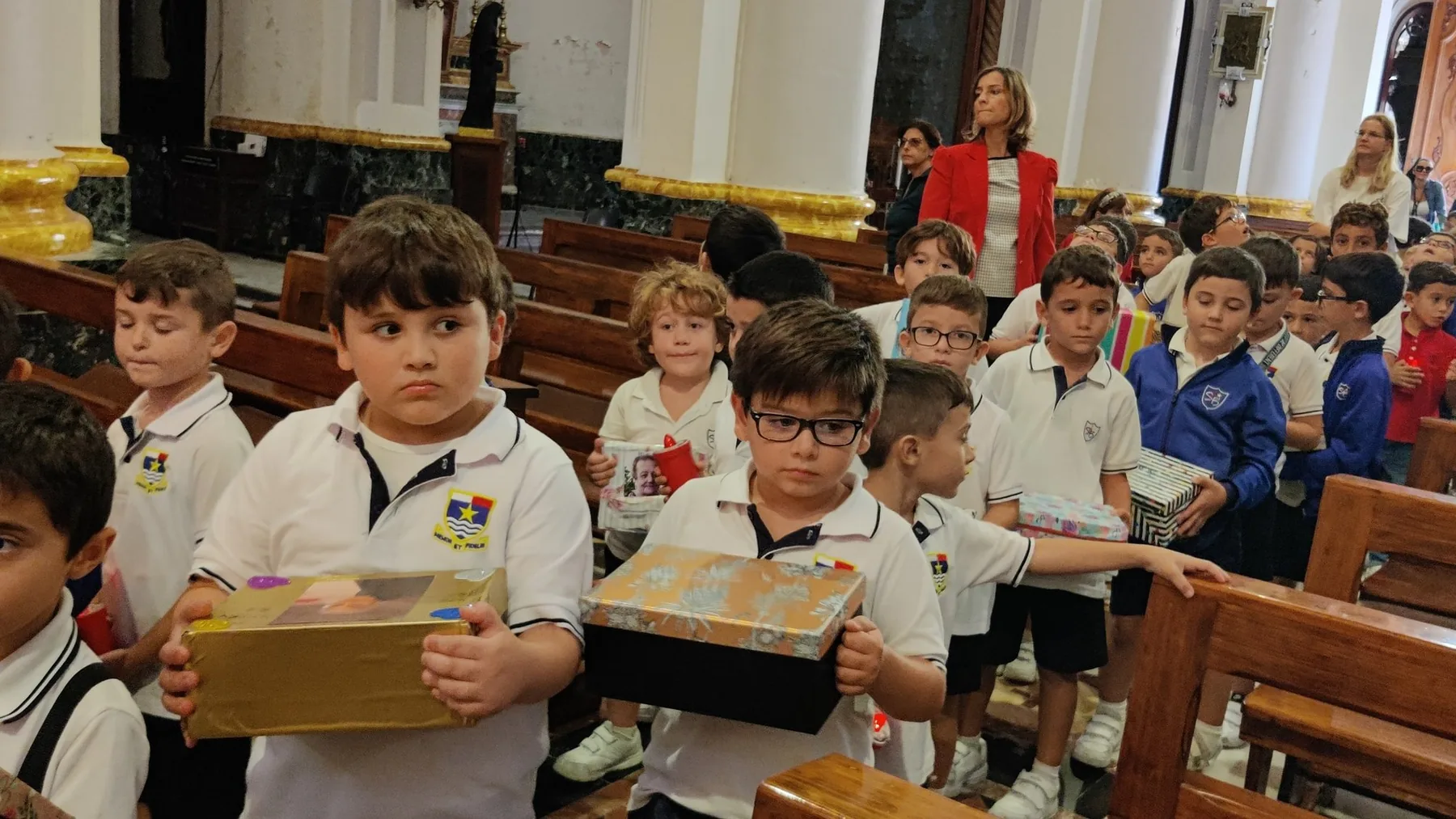
If you move to Malta with children, your children will not be the only newcomers in the classroom. In the 2024-2025 school year, 11,709 of the 60,339 pupils enrolled from pre-primary to secondary level in Malta and Gozo were not Maltese citizens. That is 19.4%, almost one in five, and the number of non-Maltese pupils grew by 12.0% in a single year.
The figures come from the National Statistics Office's annual education release, News Release 190/2026, published on 23 October. It counts every pupil in state, church and private schools, from kindergarten to Year 11, as at 31 March 2025. Childcare is not included. For families choosing a school, the most useful part is not the headline but the split by type of school, because the picture there is very uneven.
The headline numbers
- Total pupils: 60,339, up 0.2% on the previous year.
- Maltese pupils: 48,630, down by 1,112 (2.2%).
- Non-Maltese pupils: 11,709, up from 10,455.
- Other EU citizens: 3,842 (6.4% of all pupils), up 6.9%.
- Non-EU citizens: 7,867 (13.0% of all pupils), up 14.6%.
According to the NSO, 67.2% of non-Maltese pupils were third-country nationals. The total number of pupils barely moved; what changed is the mix. Without the growth in foreign enrolments, the school population would have shrunk.
Pupils in compulsory education, Year 1 to Year 11, numbered 50,890. Under the Education Act, schooling is compulsory in Malta from age five to fifteen, covering six years of primary and five years of secondary education.
Where foreign pupils go to school
The NSO breaks enrolment down by type of school in Table 8 of the full release. The differences are stark:
| Type of school | All pupils | Non-Maltese | Share non-Maltese |
|---|---|---|---|
| State | 35,860 | 9,269 | 25.8% |
| Church | 16,057 | 192 | 1.2% |
| Private | 8,422 | 2,248 | 26.7% |
| Total | 60,339 | 11,709 | 19.4% |
Three points stand out:
- State schools are where most foreign children are. Almost eight out of ten non-Maltese pupils attend a state school. More than one pupil in four in the state sector is not Maltese.
- Private schools have the highest share, at 26.7%, but in absolute numbers they host fewer than a fifth of foreign pupils.
- Church schools are almost entirely Maltese. Only 192 of their 16,057 pupils were non-Maltese, 1.2%. The NSO reports the figure without comment and does not give reasons.
How the mix changed in one year
Comparing 2024-2025 with the year before shows where the growth happened. In state schools, the number of non-Maltese pupils rose from 8,280 to 9,269, an increase of 989, while the number of Maltese pupils in the state sector fell from 27,610 to 26,591. The foreign share in state schools therefore jumped from 23.1% to 25.8% in a single year.
Private schools added 208 non-Maltese pupils, from 2,040 to 2,248, and their foreign share rose from 24.8% to 26.7%. Church schools moved from 135 to 192 non-Maltese pupils, a rise from 0.8% to 1.2%. The total number of pupils in each sector hardly changed: state schools went from 35,890 to 35,860, church schools from 16,090 to 16,057, and private schools grew from 8,217 to 8,422.
Put simply, the state system is absorbing almost all of the growth in foreign enrolments, while the number of Maltese children in state schools is falling. Private schools are growing a little, mainly at secondary level, where their enrolment rose from 2,802 to 2,958 pupils.
The pre-primary years follow the same pattern by sector. Of the 9,449 children in Kinder 1 and Kinder 2, 6,835 were in state kindergartens, 1,036 in church schools and 1,578 in private schools. For families arriving with a child of three or four, the state kindergarten is the most common starting point, and it is also where a foreign child is most likely to find other newcomers.
Overall, 59.4% of all pupils attended state schools, 26.6% church schools and 14.0% private schools. Our guide to Malta's schools describes the three systems and how families approach each of them.
Which nationalities
Table 9 lists the largest groups. Among EU citizens:
- Italian: 1,244 pupils (up 10.3%)
- Bulgarian: 332
- Romanian: 293
- Hungarian: 238 (up 14.4%)
- Polish: 218
Among non-EU citizens:
- Syrian: 865 (up 16.6%)
- Indian: 747 (up 35.1%)
- Chinese: 680 (up 29.0%)
- British: 602 (down slightly from 606)
- Serbian: 601 (up 7.9%)
British children count as non-EU citizens in these figures. The fastest growth came from Indian and Chinese pupils, both up by roughly a third in one year. Italian children remain the largest EU group by a wide margin.
Class sizes by type of school
For many parents, class size matters as much as the curriculum. The NSO's Table 4 gives the average number of pupils per class in compulsory education in 2024-2025:
| Level | State | Church | Private | All schools |
|---|---|---|---|---|
| Primary (Years 1 to 6) | 16.5 | 23.8 | 19.2 | 18.4 |
| Secondary (Years 7 to 11) | 17.8 | 22.3 | 18.7 | 19.1 |
State schools had the smallest classes at both levels, and church schools the largest. The biggest primary classes overall were in Year 4, with an average of 19.3 pupils, and the biggest secondary classes in Year 9, with 19.9. The NSO calculates average class size as the number of students divided by the number of classes.
Where the schools and the pupils are
Schools are concentrated around the harbour. The Northern Harbour District had 34.4% of all school levels and 37.7% of all pupils by location of school. But only 26.4% of pupils lived there. In other words, many children travel into the Northern Harbour area for school: overall, 31.1% of pupils attended a school outside their own district, while 68.9% studied in the district where they live.
The Northern District was home to 20.0% of pupils. Gozo and Comino accounted for 7.2% of pupils by school location.
That matters when choosing where to live. Families who settle in the north or the centre of the island and choose a school around the harbour are joining a daily flow of school traffic. Our guide to where to live compares the areas, and the family relocation guide looks at how the age of your children shapes the move.
Fewer young children
One trend in the tables is easy to miss. The number of children in Kinder 1 fell from 5,226 to 5,070, and in Year 1 from 4,636 to 4,341. Secondary enrolment rose slightly, from 23,108 to 23,298. Year 1, with 4,341 pupils, was the smallest year group in compulsory education. That fits a statement in the government's own Pre-Budget Consultation Document 2027: "Malta's fertility rate is the lowest in the EU27".
For parents, smaller entry cohorts can mean a little more room at the start of school. The release does not break nationality down by year group, so it does not show whether foreign children make up a larger share of the youngest classes.
Languages
Maltese and English are Malta's official languages and are not counted as foreign languages in the NSO's figures. Among secondary pupils in 2024-2025:
- Italian was studied by 52.9%,
- French by 22.5%,
- Spanish by 17.3%, with the number of Spanish learners up 8.3% on the previous year,
- German by 11.7%.
French shows the biggest gap between the sexes: 28.8% of girls studied it against 16.7% of boys.
In absolute numbers, 12,316 secondary pupils studied Italian, 5,248 French, 4,022 Spanish and 2,729 German. Smaller groups studied Arabic (176 pupils) and Chinese (50). For a family arriving from Germany, Italy, France or Spain, that means the home language is also taught as a school subject, though the release does not show at which schools each language is offered. Pupils can take more than one foreign language, or none, so the percentages do not add up to 100.
For children who arrive without English, the language question is different again. English is one of Malta's two official languages, and the release does not measure how many foreign pupils needed language support. That is a question to raise directly with the school.
Childcare is a separate question
The education figures exclude childcare. For families with very young children, the Budget 2027 speech of 26 October, published by the Ministry for Finance, announces a change to free childcare: families already using the service keep their eligibility until their children age out, but from 2027 new eligibility is limited to Maltese citizens, resident EU citizens and those who meet the criteria for long-term residents. The speech gives no further detail on how the new eligibility rule will be applied. Non-EU families planning a move should factor this into their budget, alongside the costs set out in our cost of living overview.
What the figures mean for families moving to Malta
The NSO data supports a few practical conclusions:
- Your child will not be the only foreign pupil, especially in state and private schools, where more than a quarter of classmates are non-Maltese on average.
- The three school systems are very different environments. Church schools are almost entirely Maltese and have the largest classes. State schools have the smallest classes and the largest number of foreign children. Private schools sit in between on class size and have the highest foreign share.
- Geography follows the schools. With almost a third of pupils commuting to another district, the location of the school you choose shapes daily life as much as the location of your home.
The release is a snapshot of one school year, taken in March 2025. It does not measure quality, results or waiting lists. For the practical steps of enrolling, the moving to Malta checklist sets out the order in which families usually work through housing, residence and schooling.
Work with Sebastian
If you are planning a move to Malta with children and want to think through schools, neighbourhood and residence together, book a consultation.