On 1 July 2026, in a courtroom in Valletta, nine jurors began hearing what Maltese commentators are calling the trial of the century. In the dock sits Yorgen Fenech, 44, heir to one of the island's great business dynasties, accused of commissioning the 2017 car-bomb assassination of the investigative journalist Daphne Caruana Galizia. He denies the charges. The attorney general wants a life sentence.
Let me say this plainly, because it needs to be said first and without qualification: the murder of Daphne Caruana Galizia was an abomination. A 53-year-old mother of three, a writer, was blown apart in her own car, a few hundred metres from her own home, by a bomb hidden in a shoebox under her seat. She was killed because of what she wrote and what she was about to write. Whoever ordered it, whoever built it, whoever pressed the button deserves the full, unflinching weight of the law. Her family has fought for nearly nine years with a dignity that shames her detractors. They deserve justice. Malta deserves justice. And if the evidence proves the charges, the man who ordered it should die in prison.
That is not in dispute. Not here, not anywhere on this site, not ever.
But something else has been on trial for nine years, and it has never been given a defence. That defendant is Malta itself.
The caricature: a nation reduced to a crime scene
Read the international coverage of this week's trial and a familiar portrait emerges. Malta as mafia island. Malta as Europe's corrupt cesspit. Malta as a sun-bleached rock where everyone is on the take, every politician is bought, every businessman launders money between espresso and lunch, and 550,000 people are collectively complicit in the death of one brave woman.
I have written about this before, and I will keep writing about it, because the caricature is false, it is lazy, and frankly, it is arrogant.
There is a particular tone that large countries reserve for small ones. When a journalist is murdered in a big country, it is a tragedy, an aberration, the work of rogue actors. When it happens in a small country, it becomes an indictment of the entire nation and everyone in it. The crime stops being something that happened in Malta and becomes something that is Malta. No British paper concluded from the murder of Jo Cox MP that Britain was a failed state. No Dutch commentator declared the Netherlands a narco-swamp beyond redemption when Peter R. de Vries was gunned down in central Amsterdam in broad daylight. Those countries were permitted complexity. Malta, apparently, is not.
That double standard has a name. It is condescension, and small nations have endured it forever.
What Malta actually did
Here is the part of the story the "failed state" narrative cannot survive, so it is usually whispered rather than shouted.
Malta caught them. Within weeks of the bombing, the three men who carried out the attack were arrested in a dawn raid. Malta convicted them. The Degiorgio brothers are serving 40-year sentences; their accomplice Vincent Muscat got 15 years. Malta kept going up the chain. In June 2025, Robert Agius and Jamie Vella, the men who supplied the bomb, were sentenced to life in prison. The middleman, Melvin Theuma, was pardoned in exchange for testimony and has lived under witness protection since 2019. And now, at last, the alleged mastermind stands before a jury, with the state demanding a life sentence, in a trial that press freedom observers have described as historic and emblematic for Europe.
Pause on that. Seven men prosecuted. Five convicted. One pardoned to secure the truth. One on trial. In how many countries, large or small, does the murder of a journalist end with the triggermen, the bomb-makers, the fixer and the alleged paymaster all in the machinery of justice? Globally, the overwhelming majority of journalist killings are never solved at all. The killers of hundreds of reporters across the world walk free, their names unknown, their trials never held. Malta's record on this single, terrible case is, by grim international standards, extraordinary.
And Malta did something rarer still. It turned the knife on itself. The Caruana Galizia family fought for and won a full public inquiry, and that inquiry, led by Maltese judges, delivered a 437-page report that did not flinch. It found that the state had allowed an "atmosphere of impunity" to spread from the top of government, and said the state should shoulder responsibility for the assassination. Maltese judges, on Maltese soil, condemning the Maltese state in the harshest language available.
Name me the large country that has done the same. Where is the 437-page state self-indictment over the journalists harassed, surveilled or hounded in bigger, richer, louder nations? It does not exist. Small Malta produced it.
The political consequences were real, too. A sitting prime minister, one of the most popular in Maltese history, resigned. Laws were reformed to make it harder to bury journalists under abusive libel suits, and those reforms are now rippling outward to Brussels and even to Westminster, where politicians are borrowing from the Maltese experience to draft their own anti-SLAPP measures. A murdered Maltese journalist changed European law. A Maltese woman, Roberta Metsola, presides over the European Parliament and championed that fight. This is not the biography of a failed state. This is the biography of a small democracy that was wounded, looked at itself with brutal honesty, and reformed.
The Malta I know
I have lived in six countries. I have spent decades of my life around Malta, worked with its institutions, its banks, its lawyers, its regulators, its families. So let me tell you about the Malta I actually know, as opposed to the one that exists in a foreign correspondent's three-day visit.
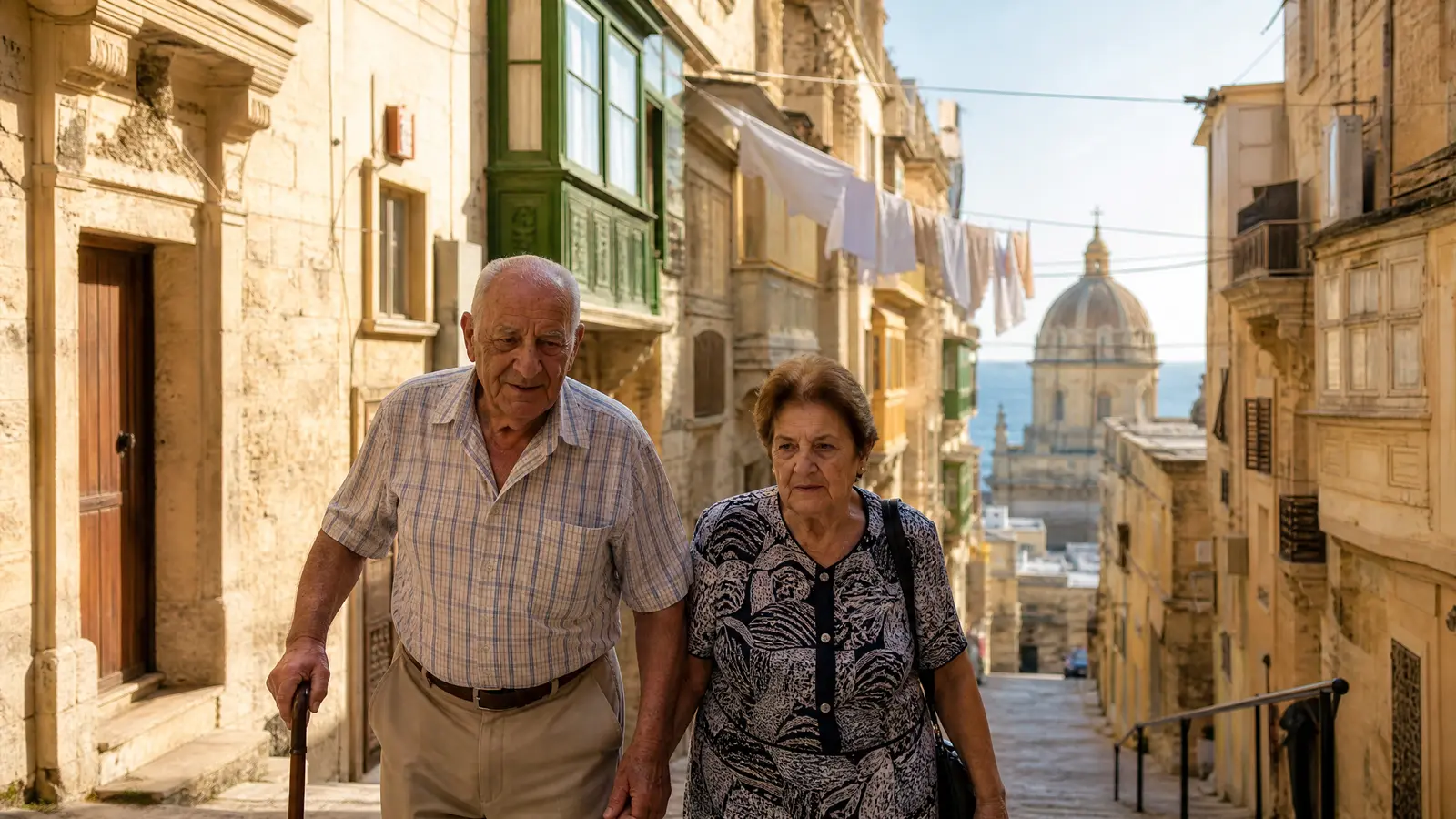
The Malta I know is a place where children still walk to school, where the village festa still shuts down the streets, where three generations still sit around one Sunday table. It is one of the safest countries in Europe by almost any measure of violent crime. It is a nation of ferocious workers who built prosperity on a rock with no oil, no gas, no minerals, no rivers, nothing but human ingenuity, seafaring nerve and the stubbornness of a people who survived sieges that would have broken empires. The Knights could not be starved out. The Luftwaffe could not bomb them out. The entire island was awarded the George Cross for collective heroism. These are not the descendants of cowards or crooks.
Does Malta have corruption? Yes. So does Germany, whose politicians pocketed millions in the mask procurement scandals. So does the Britain of PPE fast lanes. So does Brussels itself, where cash was found stuffed in suitcases in the Qatargate affair. Corruption is a human disease, not a Maltese one. The measure of a country is not whether wickedness occurs within its borders. It is what the country does when the wickedness is exposed. And on that measure, as this trial proves, Malta is doing exactly what a functioning state under the rule of law is supposed to do: putting its most powerful men, from a dynasty that owns hotels and the island's second-tallest tower, in front of an ordinary jury of ordinary citizens.
The rich and powerful in the dock. The state demanding life imprisonment. Tell me again about the mafia island where the elite are untouchable.
Justice for one woman, fairness for half a million people
Daphne Caruana Galizia wrote in her final blog post that there were "crooks everywhere you look now". She was describing a moment, a rot she had spent her life exposing, and she paid for that work with her life. Honouring her does not require slandering the country she loved enough to fight for. She was not a critic of Malta. She was a critic of what some men were doing to Malta. There is a world of difference, and collapsing that difference insults her as much as it insults her compatriots.
So watch this trial. Follow every day of it. Demand, as I do, that justice is done fully and fearlessly, whatever the verdict. The Caruana Galizia family has waited nine years, and they should not wait a day longer than the evidence requires.
But when the foreign press reaches, yet again, for the mafia-island cliché, remember what you are actually watching in that Valletta courtroom: a small nation of half a million people doing the hardest thing a democracy can do, prosecuting its own elite, confronting its own failures in writing, and reforming its own laws, all under the gaze of a world that has too often treated it with contempt.
One man is on trial in Valletta. Malta is not. And the sooner the world learns to tell the difference between a crime and a country, the closer we will all be to the justice Daphne deserved.