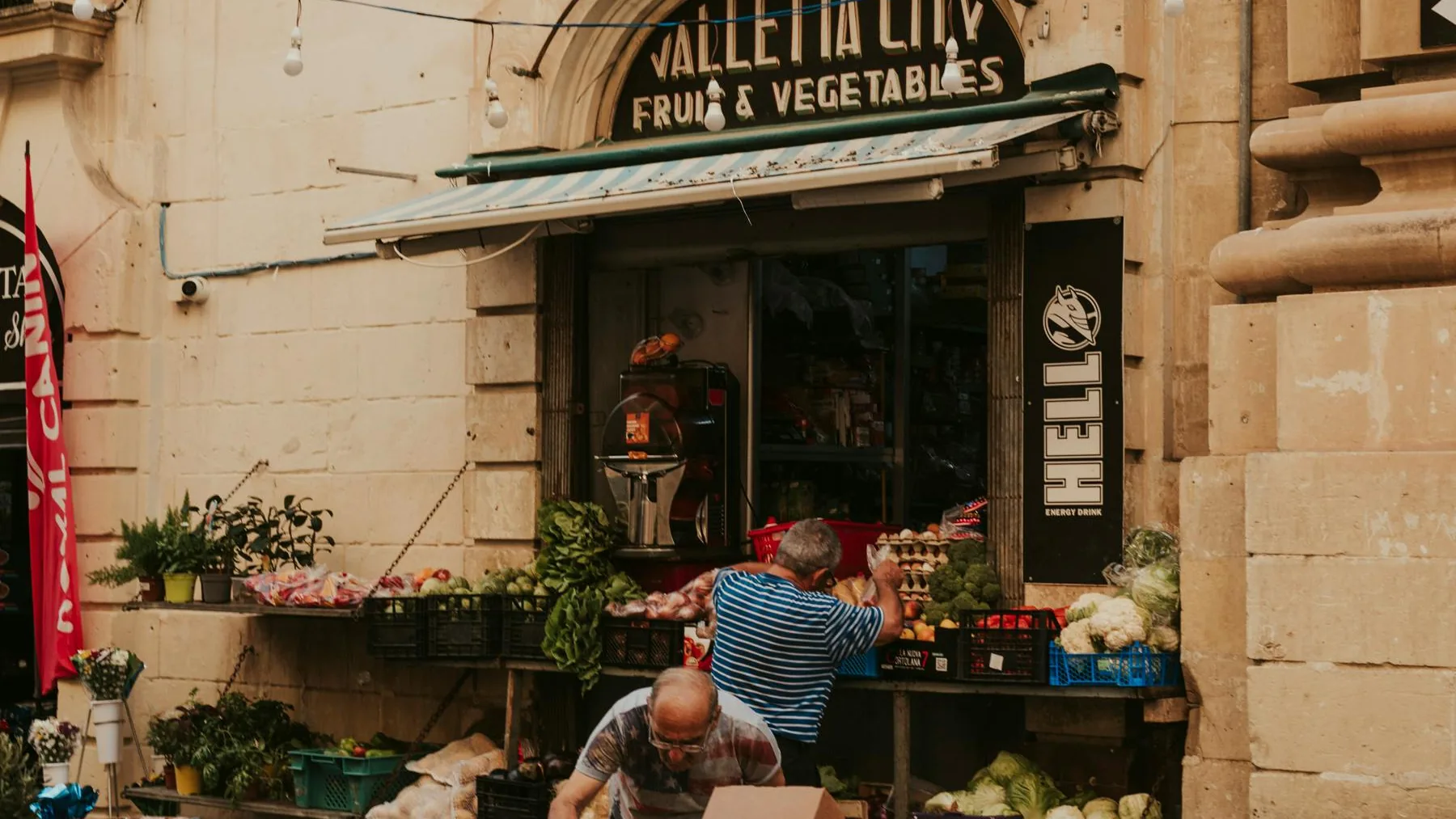
Anyone who lives in Malta knows the routine. A bag of empty water bottles and beer cans goes back to the supermarket, the bottles are fed into a reverse vending machine one by one, and a paper voucher comes out at the end. Ten cents per container does not sound like much, but a family that drinks bottled water can easily have several euro a week sitting in the cupboard under the sink.
The rules behind that routine changed at the start of October. The Government Gazette of 2 October 2026 carried Legal Notice 256 of 2026, the Beverage Containers Recycling (Amendment) Regulations, 2026. It runs to ten pages and amends fourteen regulations of the Beverage Containers Recycling Regulations, S.L. 549.134, the law that set up the beverage container refund scheme. Most of the changes deal with how the scheme operator is licensed, how it handles data and how it sets the fees it charges to producers. A handful of them, however, change what happens when you walk into a shop with a bag of empties. The consolidated text on legislation.mt already shows the regulations as amended by L.N. 256 of 2026.
The scheme in brief
The regulations were made under the Environment Protection Act, Cap. 549. Their stated purpose is to set up and run a beverage container refund scheme, raise collection and recycling rates and reduce litter. The scheme is run by a licensed operator and overseen by the Agency, which the regulations define as Circular Economy Malta.
What is covered is set out in the schedules. The First Schedule lists the drinks: water and flavoured water, still and carbonated soft drinks, ciders, beers and other malt beverages, ready-to-drink coffee, flavoured alcoholic drinks of up to 5% alcohol, and dilutables. The Second Schedule sets the containers: bottles or cans made of steel, aluminium, glass or PET, with a capacity of 0.1 to 3 litres. Cartons, foil pouches, HDPE and composite materials are expressly excluded. Wine and spirits are not on the list, so the bottle of red from the weekend is not part of the scheme.
The Third Schedule fixes the deposit. Every beverage container in the scheme carries a deposit of at least ten euro cents. You pay it at the till when you buy the drink and you get it back when you return the empty container.
Your right to the refund, and when you lose it
Regulation 16(1), which L.N. 256 does not change, is the core consumer right. Any person, including a consumer, who returns a single use container on which a deposit was paid is entitled to a refund of the deposit from the redemption location. The operator may issue instructions on returns, in particular for people returning large quantities.
The same regulation lists the cases in which no refund is due. They are worth knowing, because they explain most of the bottles that a machine rejects:
- The barcode or the specific markings on the empty container are not registered with the operator.
- The barcode, the markings or the deposit logo are damaged so badly that the refund cannot be processed.
- The container itself is damaged so badly that the refund cannot be processed.
- The container holds or is contaminated by something other than the residue of the drink or ordinary dust.
- More than 24 months have passed since the consumer acquired the container.
In practice the advice is simple. Do not crush cans or bottles before returning them, keep the label intact, and do not use empty bottles to store anything else. Regulation 16(2) adds a second time limit that catches many people out: deposit redemption vouchers that are not redeemed within 12 months of their date of issue become revenue of the operator. A voucher forgotten in a coat pocket since last autumn may already be worthless.
What L.N. 256 changes at the counter
Manual return points: 25 containers at a time
Not every shop has a reverse vending machine. Many smaller retailers take containers back by hand. Regulation 18(4) has always allowed those shops to limit how many containers they must accept in one go. Before L.N. 256 the limit was fifty containers. The amending regulations cut it to twenty-five. A retailer operating a manual system is not obliged to accept a return of more than 25 beverage containers from a consumer or anyone else at any one time.
For a household that collects a month of water bottles and takes them to the corner shop, that is a real change. Larger quantities belong at a reverse vending machine, or need to be split across several visits.
A second limit for manual return points was already in the law and remains: under the first proviso to regulation 18(1), a retailer with a manual system does not have to accept containers whose barcode differs from the barcodes of the drinks that retailer sells. Shops with a machine have to accept any container in the scheme, even if they never sold that drink.
Shops under 50 m² no longer need a return point
Regulation 18(1) obliges every retail establishment to have a system for the return of single use containers and to refund the deposit. L.N. 256 adds a new proviso: retail operators with a licensed footprint smaller than 50 square metres are not obliged to have a redemption location on their premises.
Malta's town centres are full of small grocers, kiosks and convenience stores well under that size. They will continue to sell drinks carrying the deposit, but they no longer have to take the empties back. The practical effect for residents is that the nearest shop may not be the place to return containers, and the right to the refund has to be exercised at a larger shop, a shared redemption location set up by the operator under the second proviso to regulation 18(1), or a reverse vending machine.
Who decides whether a shop gets a machine
The new regulation 18(2) gives the operator the decision on which return system each retail establishment uses and whether it is provided with a reverse vending machine. The decision has to rest on objective and non-discriminatory criteria, and the operator must observe the service levels set in its licence agreement. A new regulation 4(2a) requires the operator to ensure that machines are placed throughout the whole territory after consultation with the Agency, and the Agency may itself designate locations where machines are to be placed, on objective criteria, with the operator to endeavour to install them.
Machines run by third parties, including councils
The most visible change may come from a new category of player. L.N. 256 defines a third party RVM operator as any person, expressly including the Government of Malta, its ministries, departments, local authorities and agencies, that buys, installs and operates a reverse vending machine. Under the new regulation 18(9) to (16), such operators may place machines anywhere in the territory, subject to permits, provided the machines are fully integrated into the scheme's system.
The conditions are detailed:
- The third party must inform the operator in writing before installing a machine and sign an agreement with it.
- The third party remains responsible for operating, repairing and maintaining the machine and for keeping the return location clean.
- Machines must come from an approved list kept by the operator; a model outside that list needs an approval process, for a fee.
- Data generated by third-party machines belongs to the scheme operator.
- The operator may charge on-boarding costs and yearly licences.
- A third party that fails to meet the licence requirements can be temporarily or permanently disconnected from the system, and breaches of the regulation are offences.
Third-party operators may also receive the handling fee that the operator pays for each return system, which until now regulation 18(3) reserved for retailers. For residents this opens the door to machines outside supermarkets: at a local council office, a sports ground or a public car park, depending on who decides to buy one.
Gated events
Regulation 18(5) used to apply to "events such as festivals, concerts, markets, fairs, sports events and any other event". It now applies to gated events, a newly defined term: events organised by any private organiser, including profit-making and non-profit bodies and governmental bodies, where drinks are sold in single use containers, held in an area designated for the event and accessible through one or more designated entrances. The organiser must have a system for returning containers and must register the event with the operator, which decides how empties are collected.
The narrower wording matters for anyone who spends summer evenings at village feasts and open-air markets. Open public events without controlled access are no longer named in the regulation; ticketed concerts and festivals with fenced grounds clearly are.
Where the unclaimed deposits go
Not every container comes back, and the money left over has always raised questions. The new regulation 10(2) sets out what happens to unclaimed deposits at the end of the operator's financial year. They are posted as revenue of the operator, but the operator must first provide for future deposit claims and for amounts due to the Agency, and must use the remainder for the better management and operation of the scheme. At the end of each fiscal year the operator must disclose how the surplus was allocated and project the expected surplus for the following year and its intended use.
The same logic runs through the rest of the amendments. The administration fee the operator charges producers per container is now tied to an Administrative Fee Adjustment Model set by the Agency, changes require an independent report and ninety days' notice, and the fee cannot be adjusted again for two years except after a substantial, long-term market change (regulation 13(4)). Producers who use non-market-specific barcodes without separate markings pay an additional per-container fee, again only after an independent study (regulation 17(1)). The operator has to supply placement data to the Agency every month (regulation 11(5)), commission an independent systems audit every two years (regulation 12(2)(f)), and keep commercially sensitive data, such as which producer places which barcode on the market in which quantities, away from its own shareholders (regulations 7 and 8). The operator's licence no longer runs for a fixed period; it stays valid until renewed by the Agency after an evaluation (regulation 6(1)).
None of these provisions changes the ten-cent deposit itself. They do, however, determine what producers pay into the scheme, and producer costs tend to show up on shelf prices. Anyone tracking the cost of living in Malta will recognise the deposit as one of the small line items on every receipt that most people only notice when they forget to claim it back.
What residents should do now
For households, the practical checklist after L.N. 256 is short:
- Keep containers intact. Uncrushed, with label and barcode readable, and empty apart from the drink's own residue.
- Take large bags to a machine. Manual return counters only have to accept 25 containers at a time.
- Do not rely on the smallest shops. Retailers under 50 m² no longer have to take containers back.
- Redeem vouchers promptly. They expire after 12 months; containers themselves stop qualifying 24 months after purchase.
- Watch for new machines. Councils and other third parties may now install their own reverse vending machines, as long as they are connected to the scheme.
For newcomers, the scheme is one of the small things that make daily life in Malta different from home, alongside the many other practicalities covered in the 2026 moving checklist. For anyone who organises or regularly attends summer events, the new gated-events rule fits into the season described in the August survival guide. And on an island where so many people live in so little space, as the look at population density shows, how and where empties are collected is not a trivial detail of street life.
The amending text is L.N. 256 of 2026; the full rulebook it amends, including the deposit, the list of covered drinks and the refund conditions, is the consolidated S.L. 549.134.
Work with Sebastian
If you are moving to Malta and want the practical, legal and tax side of settling in planned together, book a consultation.