On 9 September 1976, the President of the United States signed a letter of condolence to Beijing. Gerald Ford wrote to Premier Hua Guofeng that "few men in any era achieve historic greatness" and that Chairman Mao had been one of them. The letter is preserved in the State Department's Foreign Relations of the United States series, dated the same day Mao Zedong died.
Fifty years later, the most useful thing to say about that day is not about the man. It is about what happened to the roughly 930 million people he left behind, who numbered almost a billion five years later.
In 1976, China's output per person, measured in constant 2015 dollars, stood at about 331 dollars, according to the World Bank. In 2025 it was about 13,793 dollars. That is a multiple of more than forty in half a century, for a population that grew from 931 million to 1.41 billion over the same period by the World Bank's count.
No government programme produced that result on its own. What the record shows is something plainer and more interesting: a series of permissions. Permission to keep what you grew. Permission to leave your village. Permission to trade with the world. Each one looked small at the time. Together they produced what the World Bank counts as close to three-quarters of the world's entire reduction in extreme poverty over four decades.
The Country He Left Behind
It helps to be precise about the starting point, because it is easy to romanticise or to caricature.
The World Bank's 2022 study with China's own Development Research Center describes the rural system in place since 1953. Land that had been distributed among farming households was transferred to the collective. All inputs came from the collective, all output went to it, and adult agricultural workers were paid equally regardless of their actual contributions. The study's verdict is blunt: incentives to produce were suppressed, agricultural productivity stagnated for a long time, and food shortages were widespread.
The other numbers from 1976 tell the same story from different angles. Only about 17 percent of Chinese people lived in cities, according to the World Bank's urbanisation series. Life expectancy at birth was about 61 years. The earliest year for which the World Bank reports China's poverty rate at its current line of three dollars a day is 1981, and in that year the figure was 97 percent. Almost the entire population was poor by the standard the world uses today.
This was not a country short of labour, land or intelligence. It was a country where effort and reward had been deliberately disconnected. That distinction matters, because it explains why the recovery, when it came, came so fast.
A Quiet Contract in Anhui
The first permission was agricultural, and it began as a local experiment rather than a national decree.
In late 1978, according to the same World Bank study, Anhui province piloted a new arrangement. The collective would contract individual farm households to deliver a fixed production quota from their allocated land. Everything above the quota stayed with the household, to eat or to sell freely on the market.
That is the whole idea. It fits in a sentence. And it changed behaviour quickly. The study reports that the pilot's success led to rapid nationwide adoption of what became known as the household responsibility system. By the end of 1983, about 94.2 percent of rural households were working under it. Research summarised in the report attributes between 30 and 50 percent of the total rise in agricultural output between 1978 and 1984 to that single change.
Prices moved in the same direction. Under a dual-track system, the state bought a minimum quota at a fixed price and the rest could be sold at the much higher market price. From 1978 to 1995, the report notes, the procurement price index for agricultural products rose by 428.1 percent, far ahead of the 174.7 percent increase in the retail price index for the industrial goods farmers bought. In the report's words, the two changes together dramatically improved farmers' terms of trade.
Notice what the contract itself did not do. It handed out no capital and created no new ministry for rural prosperity. The state stepped back from one specific thing it had been doing, which was taking the surplus, and hundreds of millions of people did the rest.
Permission to Leave the Village
The second permission was about movement, and it is the one most relevant to anyone who has ever changed countries for a better life.
As farms became more productive, fewer hands were needed on them. Those people went somewhere. At first, many went into township and village enterprises, small rural firms producing goods in short supply. The World Bank study counts 1.5 million such enterprises in 1978 and 23 million in 1996, generating more than 130 million jobs over the period.
Then people began to move to the cities, even though the household registration system, the hukou, tied them legally to their place of origin. The study records that from 1988, guest worker permits became widely available to migrants who applied at the local public security bureau. Without such a permit, their presence in the cities would have been illegal under strict hukou rules.
In other words, millions of people spent years living and working in places where they had permission to be, but not the right to belong. By 2000, the report notes, more than half of poor families had members working as migrant workers. By the 2020 census, China's floating population, people living somewhere other than where they are registered, stood at 492.8 million.
The share of the population living in cities went from 17 percent in 1976 to about 66 percent in 2025, according to the World Bank. The scale is hard to grasp. It happened within one country, but it had every feature of international emigration: separation from family, a lower legal status at the destination, a wage gap that made the sacrifice worth it, and remittances flowing home.
Permission to Trade
The third permission connected China to the rest of the world.
In the mid-1980s, the World Bank study explains, special economic zones and a coastal development strategy were used to bring the more prosperous coastal provinces into international trade and foreign investment. The reforms aimed to exploit China's comparative advantage in labour-intensive light industry, using export demand as a driver for investment.
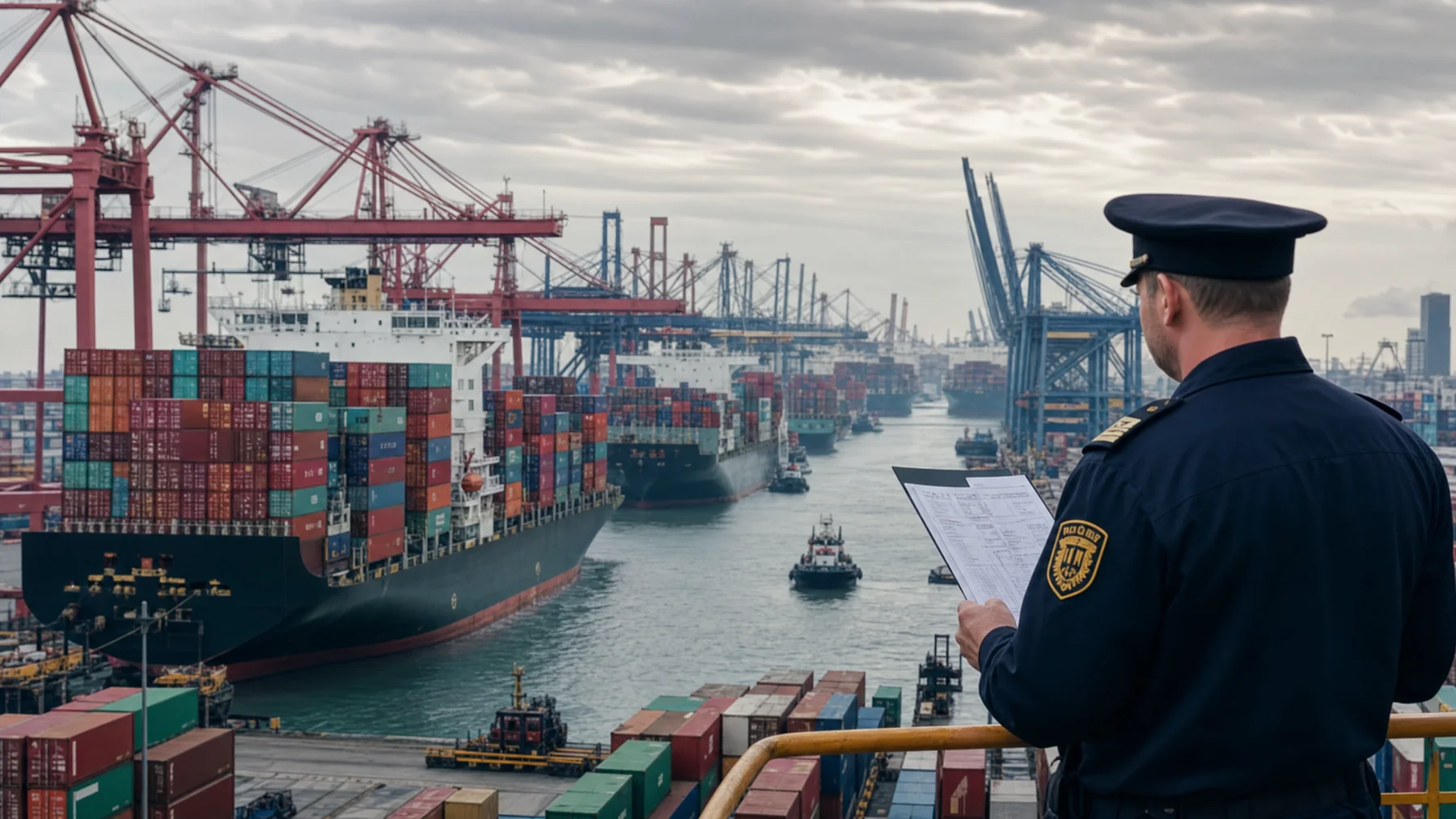
The result is visible in the composition of what China sold. Manufactured goods made up 46.5 percent of exports in 1978 and 96 percent in 2018, when total goods exports reached 16.4 trillion yuan, about 2.49 trillion dollars, according to the figures cited in the report. The same export machine is the reason Europe now worries about Chinese overcapacity, a subject the Brief took up in "China Is Flooding Europe With Cheap Goods".
Openness also sorted regions. By 1999, the study notes, GDP per person in the eastern region was twice as high as in the rest of the country. The coast got rich first because the coast was allowed to trade first.
The Arithmetic of 800 Million
Add the three permissions together and the numbers become almost abstract.
In April 2022, the World Bank reported that over the previous 40 years, the number of people in China living on less than 1.90 dollars a day had fallen by close to 800 million. China accounted for close to three-quarters of the entire global reduction in extreme poverty over that period. At China's own national poverty line, the fall was 770 million.
The World Bank's current series tells the same story on the new three-dollar line: 97 percent poor in 1981, 83.1 percent in 1990, 20.6 percent in 2010, and zero by 2019. Life expectancy at birth reached about 78 years.
It is worth pausing on what these figures mean in human terms. The World Bank describes two pillars behind them: broad economic transformation that opened new opportunities and raised average incomes, and targeted support for people and places that transformation left behind. The first pillar is the story of the three permissions. The people it reached were not handed a transfer that lifted them over a line; they crossed it through work, first on their own plots, then in rural workshops, then in factories hundreds of kilometres from home.
What the Numbers Do Not Say
Any honest account of the anniversary has to include the limits, and the same sources supply them.
The freedom that followed 1976 was economic, not political. The permissions were granted and could, in principle, be withdrawn. The hukou system that made hundreds of millions of people second-class residents in their own cities still exists; the World Bank study treats its merits as an open question and lists better social protection for migrant workers as unfinished business. Its chapter on urbanisation speaks openly of persistent inequality of opportunities.
Growth has also changed character. The same study concludes that China probably reached the so-called Lewis tipping point around 2007, when the pool of surplus rural labour stopped being effectively unlimited and wages began to rise. The easy gains from moving people out of low-productivity farming are largely taken. And the World Bank's population series shows China's population peaking in 2021 at about 1.412 billion and falling to about 1.407 billion by 2025.
None of this cancels the achievement. It does explain why the next fifty years cannot look like the last fifty. The Brief's essay on "The Next Singapore" follows a related pattern in a much smaller place: radical openness chosen at a moment when the prevailing orthodoxy recommended the opposite, and the wealth that followed.
The Lesson for Anyone Who Moves
Why should someone planning a move to Portugal, Panama or the Philippines care about a Chinese village contract from 1978?
Because the mechanism is universal. Prosperity followed permission. When a household could keep its surplus, it produced more. When a worker could move to where the wages were, the worker moved and the family back home ate better. When a region could trade, it got rich first. The same three questions decide how any country will treat you as a resident, a founder or an investor: what may you keep, where may you go, and with whom may you do business.
Those questions also run in reverse. The history of the twentieth century is full of places where the permissions went the other way: where the surplus was taken, where movement required a document that could be refused, where trade was a privilege of the connected. The Brief's piece on why East Germans see it coming first is about people who survived one such system and learned to recognise the next. The warning signs are rarely dramatic. They look like a new form, a new quota, a new permit that is easier to lose than to get.
The practical discipline follows from this. When you assess a country, do not stop at the tax rate. Look at the direction of travel of its rules. Is the state loosening its grip on what people earn, where they live and whom they trade with, or tightening it? A low rate in a country that is closing doors is worth less than a moderate rate in a country that is opening them. That is also why the Brief keeps returning to long horizons, as in the ten year test: rules, not rates, are what compound.
Fifty years ago today, a letter left Washington to mark the death of a man who had held a quarter of humanity in a system built on the idea that individual reward was the problem. The half-century since has been the most expensive and most convincing experiment ever run on that idea. The verdict is in the World Bank's tables. Give people back the right to keep, to move and to trade, and they will do the rest.
Work with Sebastian
If you are weighing where to live, invest or build a business, the question of which way a country's rules are moving belongs at the start of the analysis, not at the end. Book a consultation.