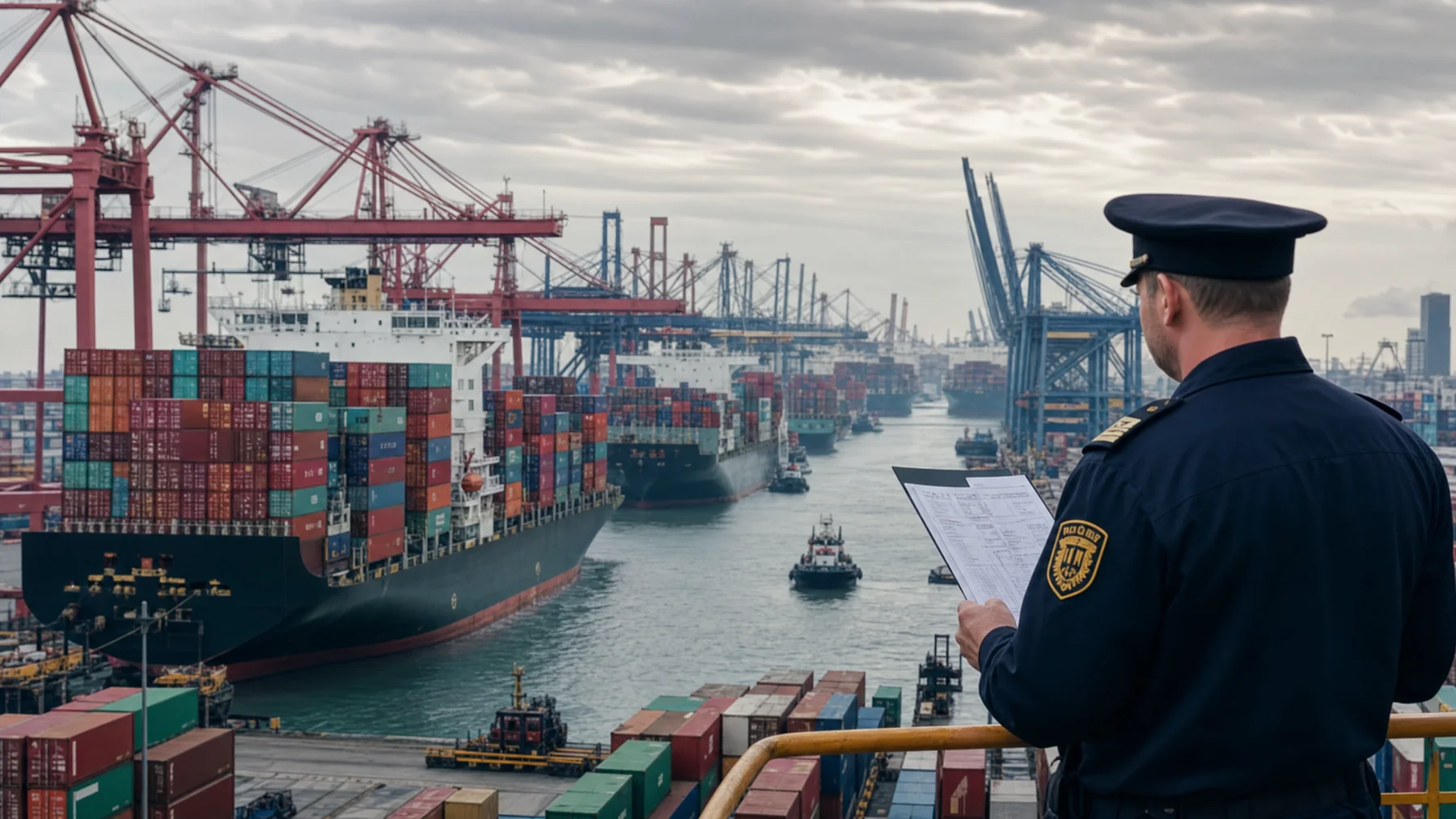
The European Commission this week published its updated assessment of Chinese industrial overcapacity — concluding that Chinese state subsidies in electric vehicles, solar panels, wind turbine components, and advanced semiconductors are creating conditions of unfair competition that threaten European industrial capacity.
This is not news. It has been the dominant European economic story for three years. What is new is the Commission's proposed response: expanded carbon border adjustment tariffs, new state aid authorisations for European manufacturers, and accelerated talks with the United States about coordinating trade defence measures.
Let me give you my honest assessment of whether this will work.
The Problem, Clearly Stated
China has spent twenty years building industrial capacity that exceeds domestic demand in several critical sectors. The excess capacity is exported. The prices are possible because Chinese companies receive state subsidies — cheap land, cheap capital, cheap energy from the state, which offsets costs that market competitors must pay commercially.
This is not free trade. It is state capitalism competing against market capitalism, with the state absorbing losses that the market would not tolerate.
The result is that European manufacturers of solar panels, electric vehicle components, and certain categories of steel and aluminium cannot compete on price with Chinese equivalents, not because the Chinese product is inherently better or the Chinese company inherently more efficient, but because the Chinese state is absorbing the difference.
Why Europe's Response Has Been Inadequate
The Commission's response — carbon border adjustment tariffs, expanded state aid, regulatory investigations — is legitimate in principle. It is inadequate in practice for several reasons.
Speed. Regulatory investigations take years. The industrial damage from Chinese overcapacity accumulates monthly. By the time tariffs are imposed and state aid is approved, significant manufacturing capacity has already left Europe.
Scope. The Commission's measures focus on specific sectors. Chinese overcapacity is broader than the sectors being targeted and will shift into adjacent areas as tariffs close specific channels.
Political coherence. EU trade policy requires consensus among twenty-seven member states with very different economic interests. Germany, historically the strongest advocate for open trade with China, has been slower to endorse protective measures than France and the southern European states. The resulting policy is always a compromise that satisfies no one fully.
China's leverage. China is Europe's largest trading partner. Any serious escalation of trade conflict carries real economic costs for European exporters. Agricultural products, luxury goods, aviation — all of these have Chinese market exposure that European business lobbies use to argue for moderation.
What This Means for European Entrepreneurs
For my clients running manufacturing businesses in Germany, Austria, or Switzerland, the Chinese competition story is not abstract. It is arriving in their order books and their pricing power.
The strategic responses available are limited and none is without cost. Compete on quality and service rather than price — sustainable in premium segments, difficult in commoditised ones. Move manufacturing to lower-cost jurisdictions — possible but complex. Partner with Asian manufacturers rather than competing — available in some sectors. Accept contraction and reinvest in adjacent areas — painful but sometimes necessary.
There is no magic answer. But the worst answer is to wait for European policy to solve the problem, because European policy is not moving fast enough.
If Chinese competition is a strategic variable in your business planning and you want to think through how your structures, pricing, and geographic positioning should respond, let's talk. Book a consultation.