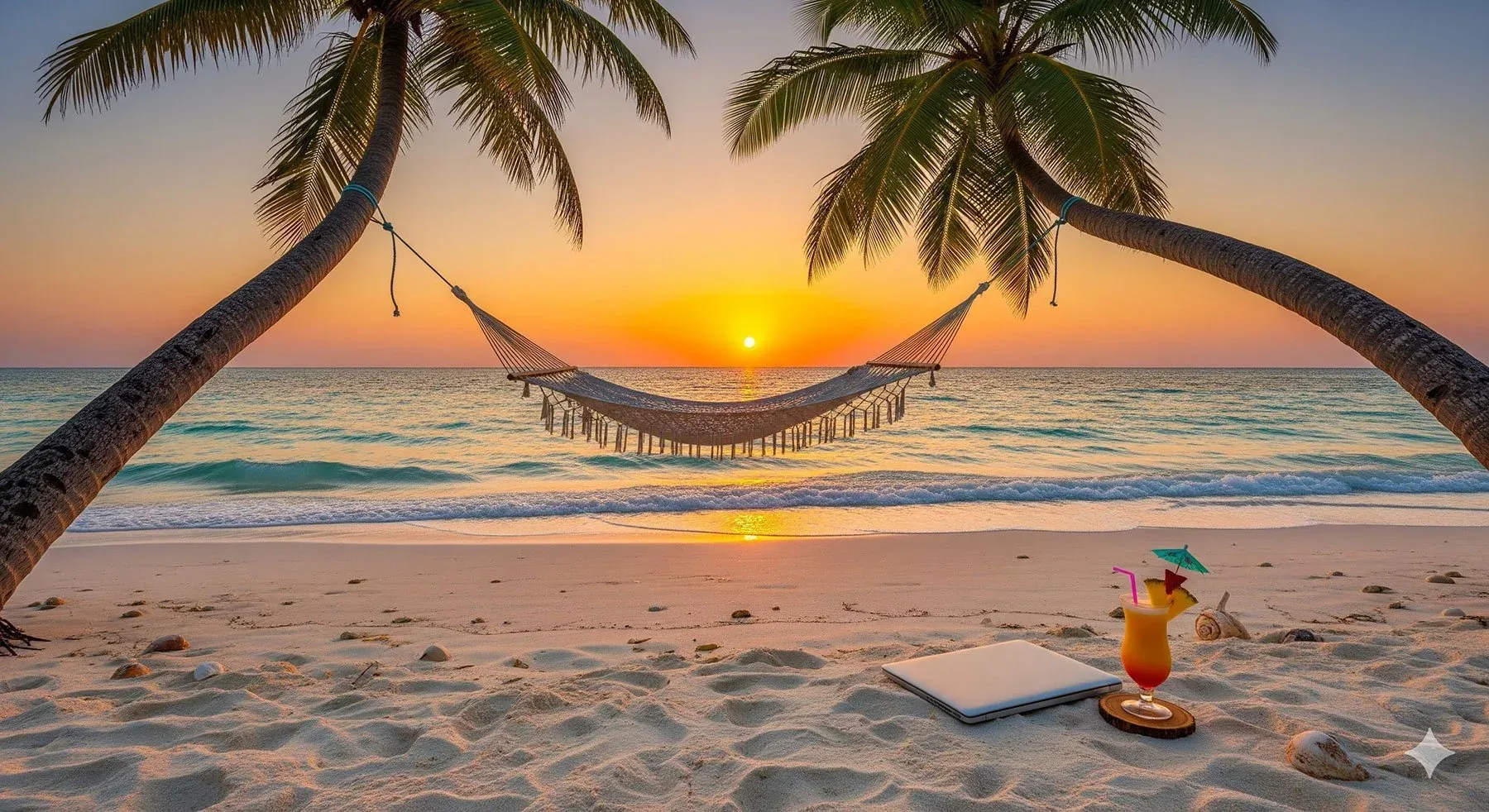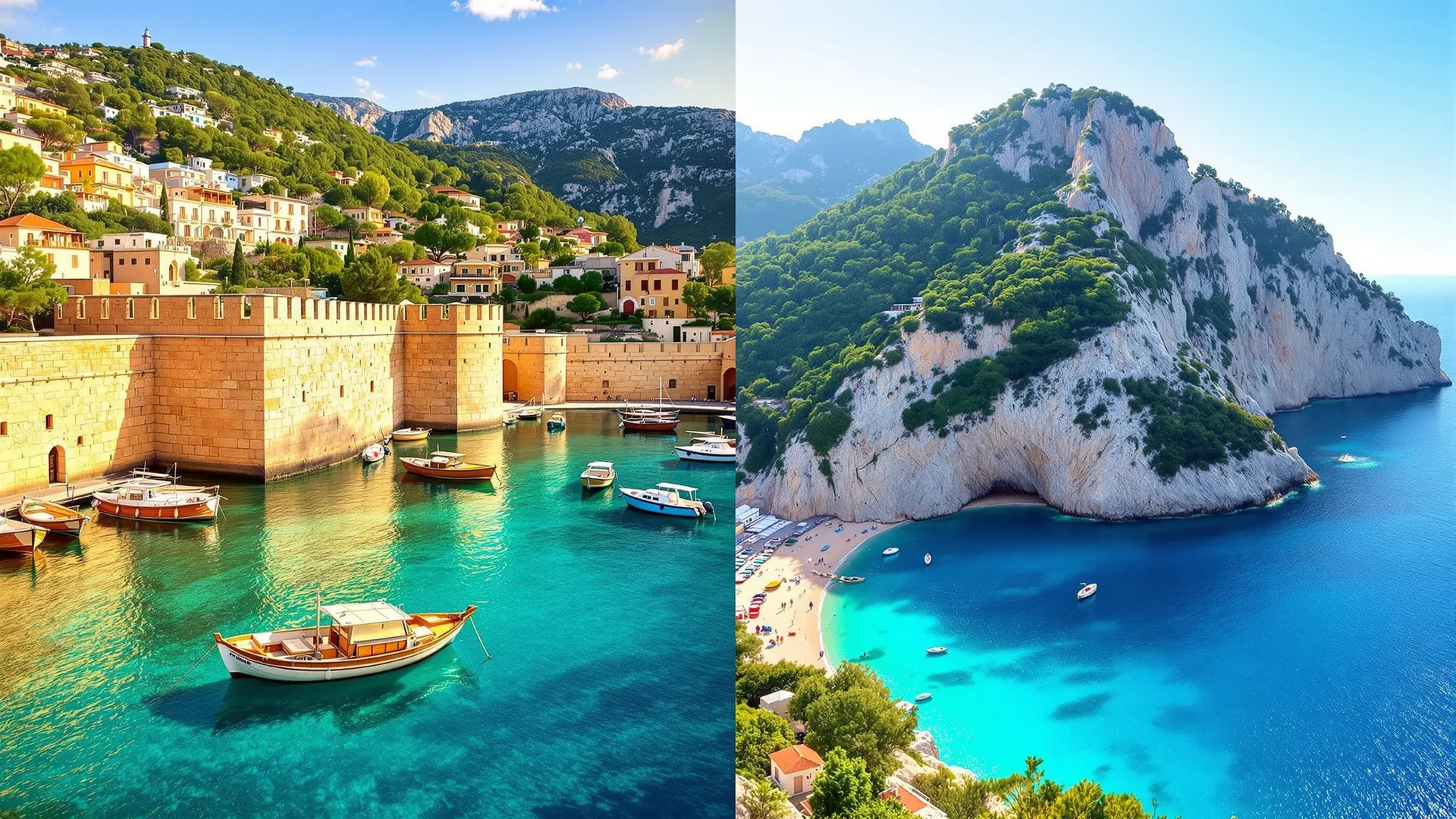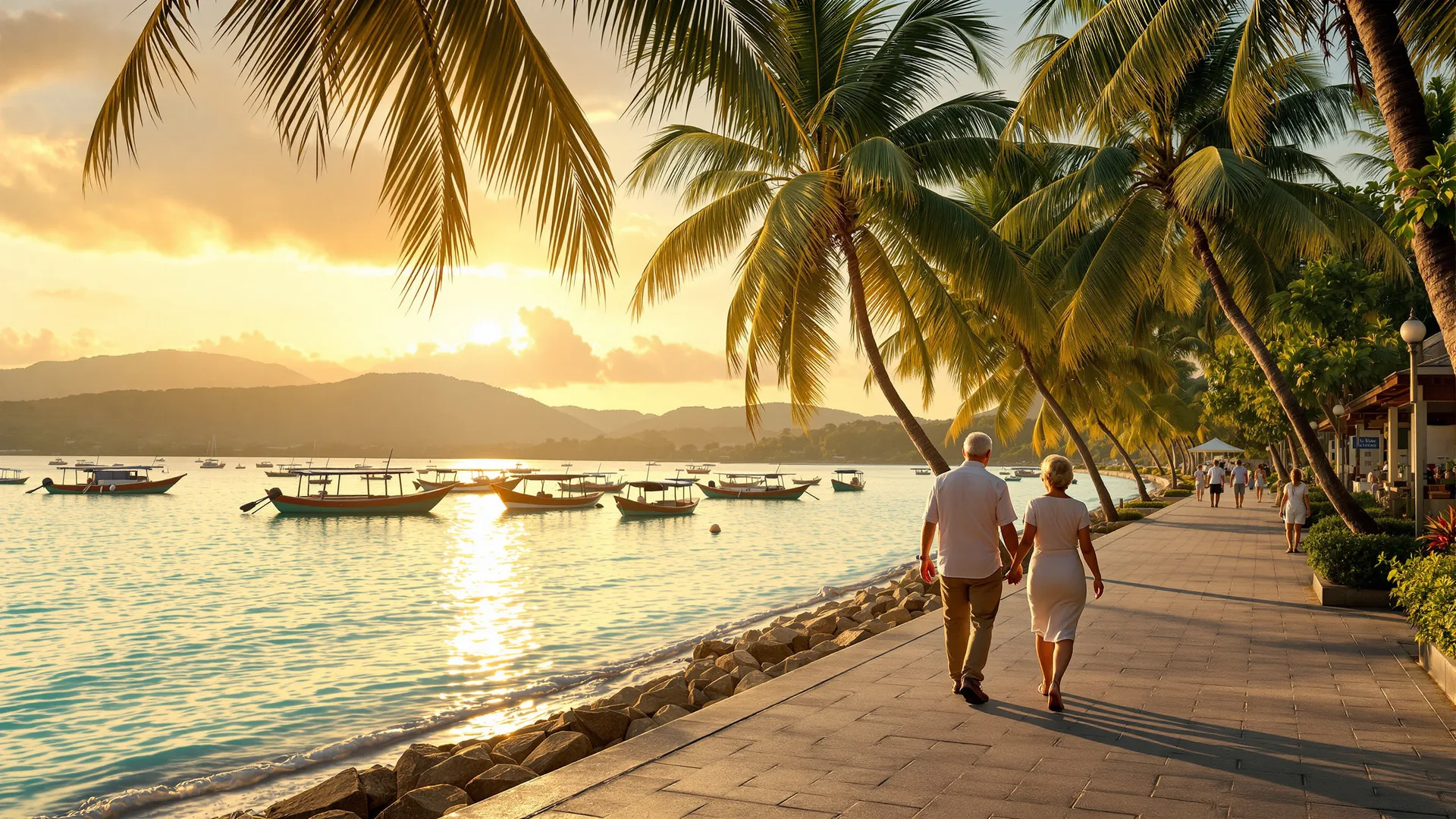
Every summer brings a new round of lists naming the best beaches in the world. They are fun to read and easy to agree with. Powder sand, clear water, a headland at the right angle to the sunset. Last year the Brief made its own list of ten, from Elafonissi in Crete to Praia da Falésia in the Algarve, in The Call of the Shore.
This year the question is harder and more useful. Not which beach is the most beautiful for a week, but which beaches you can actually live beside, legally, for a year or longer, with your family and your income intact. That test removes a surprising number of famous names and promotes some quieter ones.
Two filters do most of the work. The first is the law: does the country give a foreigner like you a right to stay beyond a tourist visit, and on what conditions? The second is the place itself: is the beach part of a living community, or a protected shore that allows visitors but not residents? Run the world's best-known beaches through both filters and the list for 2026 looks very different from the brochures.
A Quality Marker That Is Not a Ranking
Most beach rankings are opinion. There is one widely used marker that is not: the Blue Flag, a voluntary sustainability programme run by the Foundation for Environmental Education for beaches, marinas and tourism boats. Sites must meet criteria on environmental education, bathing water quality, safety and accessibility, and keep meeting them during the award period. According to the Blue Flag programme, 5,274 sites in 52 countries held the award as of May 2026.
A Blue Flag tells you nothing about whether you can live there. It does tell you that a beach is monitored and managed to a published standard, which is a useful sign that someone looks after it outside the holiday weeks. For someone thinking about a life by the sea rather than a holiday, that is a better starting point than any top ten.
Shores Where the Law Lets You Stay
The Algarve: Portugal's retiree and passive income route
Praia da Falésia made last year's list, and the Algarve coast around it is a realistic place to turn a beach holiday into a residence. Portugal's Ministry of Foreign Affairs lists a residency visa for retirement or for people living from passive income. The documentation it asks for is proof of a pension, or proof of income from property, intellectual property or financial assets.
The route is designed for people who bring their own income rather than seek local work. The beach is the easy part of the Algarve; the income that funds the other eleven months is the part the visa actually tests.
Mallorca and the Canaries: Spain's non-lucrative residence
Playa de Muro in the north of Mallorca was also on last year's list. For non-EU citizens, Spain's classic route to living beside it is the non-lucrative residence visa. According to the Spanish consulate's current guidance, applicants must show financial means of 400% of IPREM, Spain's public income indicator, plus 100% of IPREM for each family member in their care. The visa is valid for one year and explicitly does not allow gainful work.
The same national route covers the Canary Islands, since the visa is issued for Spain as a whole. The trade-off between island life and mainland access in the Spanish case was weighed in Malta vs Mallorca.
Mauritius: the one-year Premium Visa
Mauritius combines lagoon beaches with a residence route built for exactly this question. The Economic Development Board describes its Premium Visa as valid for one year and renewable, and pitches it at travellers who want to prolong their stay on the island.
A renewable one-year visa is not permanent residence, and anyone planning a family life there should read the full conditions on the island's residency portal before booking a container. The broader case for the island was made in Buy Back Your Time.
Barbados: twelve months with the children
In Barbados, the official scheme answers the family question directly. The Barbados Welcome Stamp lets remote workers live on the island for up to 12 months if they earn at least US$50,000 a year. The fee is US$2,000 for an individual and US$3,000 for a family. Holders are not liable to Barbados income tax on their remote work earnings, though they pay the island's 17.5% VAT on what they buy locally.
The part most people miss: school-age children can come too, without a separate student visa once the family is approved. They can attend private schools, public schools where places are available, or be homeschooled. Education on the island is compulsory from 5 to 16.
Twelve months is still twelve months. The Welcome Stamp is a way to test island life properly, not a path to settling for good, and whether you remain taxable in your home country during that year depends on your home country's rules, not Barbados'.
The Philippines: a retiree visa built for long stays
The Philippines has some of Asia's best-known island beaches, and it has a residence route that most beach countries lack: a dedicated retirement visa, the SRRV, administered by the Philippine Retirement Authority. The current terms, the alternatives and the tax picture were covered in Retirement Visa Philippines 2026. For beach lovers, the practical point is that the visa is issued for the country, not for a resort, so you can choose a coast that also has hospitals, flights and schools.
Shores You Can Visit but Not Really Live Beside
Some of the most celebrated beaches in the world sit on protected land, on tiny islands with capped visitor numbers, or on territory where residence is controlled separately from immigration. They make wonderful holidays and poor relocation plans.
Brazil's Fernando de Noronha archipelago is the textbook case. Its beaches are fixtures of international rankings. Its own administration, the Distrito Estadual de Fernando de Noronha, charges visitors an environmental preservation fee, the TPA, and runs its own registration of residents alongside it. In other words, the island manages who counts as a resident separately from the question of whether you may be in Brazil at all. A Brazilian visa gets you to the beach. It does not make you a local.
The same logic applies to many beaches inside national parks and marine reserves around the world. The protection is what keeps them beautiful, and it is also what keeps them free of year-round neighbours. If the beach you love is only reachable by boat, has no village behind it and sits inside a protected area, assume it will remain a place you visit.
What Living Beside a Beach Actually Requires
Once the legal filter is passed, a second set of questions decides whether a beach life works. None of them has anything to do with sand.
A reason to be there in February. Many beach towns in Europe empty out in winter. The same shore that is lively in August can be shuttered for months. That is not a reason to avoid it, but it is a reason to visit in the off season before committing.
Income that does not depend on the beach. Every route above, from Portugal's passive income visa to Spain's non-lucrative residence to the Barbados Welcome Stamp, is built on the assumption that your money comes from elsewhere. Spain's visa explicitly rules out local work. Plan accordingly.
Schools, hospitals and an airport within reach. A beach village two hours from the nearest international airport is a holiday destination for most families. For daily life, distance to services matters more than the colour of the water.
Health cover that works where you live. Where a permit asks for proof of health insurance, a travel policy bought for a two-week holiday is rarely what the consulate has in mind, and it is rarely built for a year of ordinary life either. Check what the permit demands and what the policy actually covers before the move, not after the first hospital visit.
A clear line between residence and tax. A residence permit tells you where you may live. It does not by itself tell you where you pay tax. Barbados states outright that Welcome Stamp holders owe no Barbados income tax on remote earnings, but your home country may see things differently. Every move to the coast needs both questions answered separately.
There is also a softer point, made in A Second Home Is Not a Second Life: a beach you visit for three weeks a year and a beach you live beside are different things. The first is an escape. The second is an address, with neighbours, bureaucracy, bad weather and ordinary Tuesdays.
The 2026 List, Sorted by the Harder Test
So here is the list for 2026, sorted not by beauty but by how realistic it is to live beside:
- Realistic with your own income: the Algarve under Portugal's retirement and passive income visa; Mallorca and the Canary Islands under Spain's non-lucrative residence.
- Realistic for a trial year: Barbados under the Welcome Stamp, with children in school; Mauritius under the renewable Premium Visa.
- Realistic for retirees in Asia: the Philippine coast under the SRRV.
- Holiday only: protected islands and reserves such as Fernando de Noronha, where the right to reside is controlled separately and deliberately kept scarce.
The most beautiful beach in the world is the one you can wake up beside on an ordinary weekday without breaking the law or your budget. Start with the visa, then choose the sand.
Work with Sebastian
If you want to test a coastline against your passport, income and family before you fall in love with it, book a consultation.