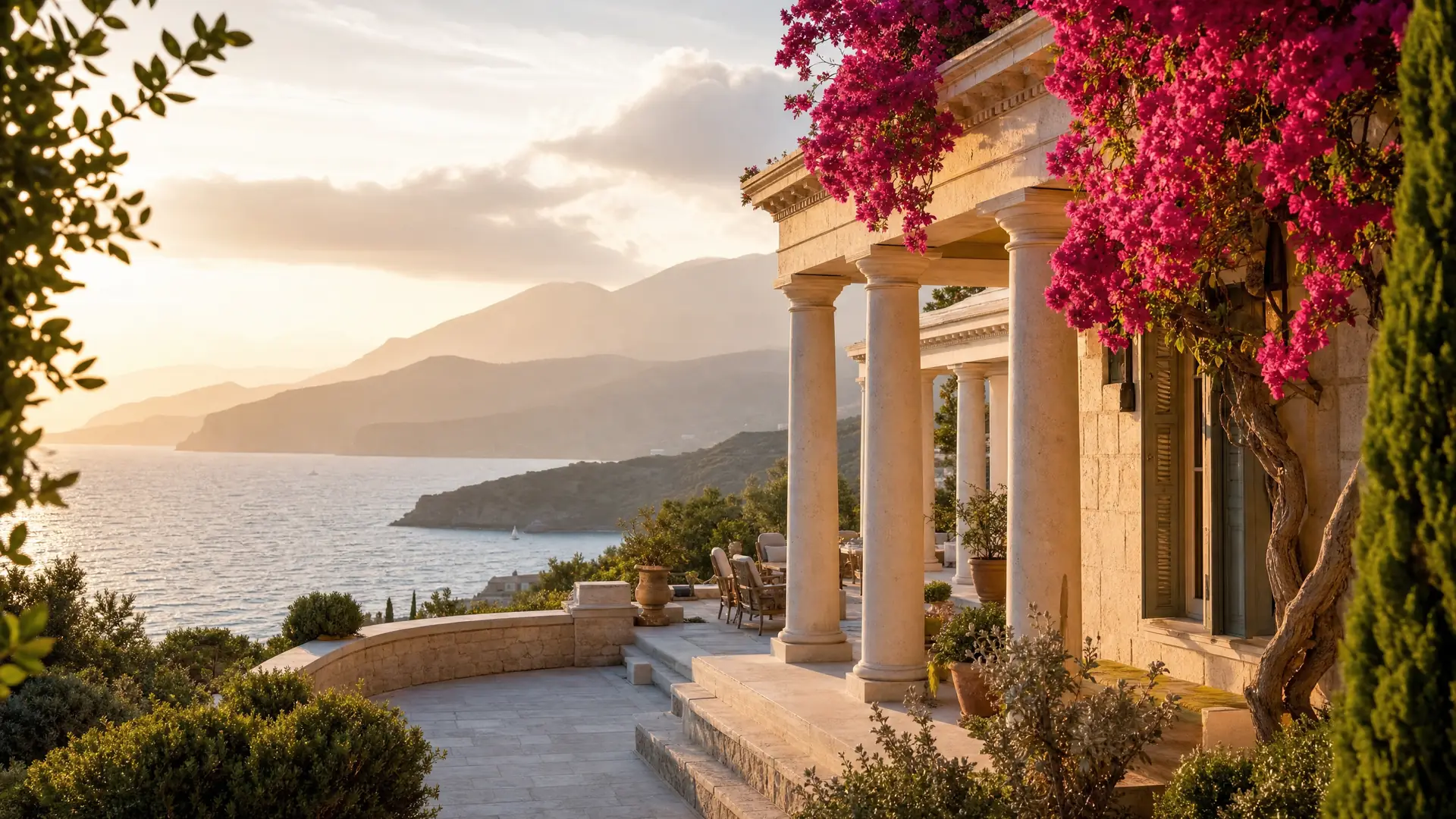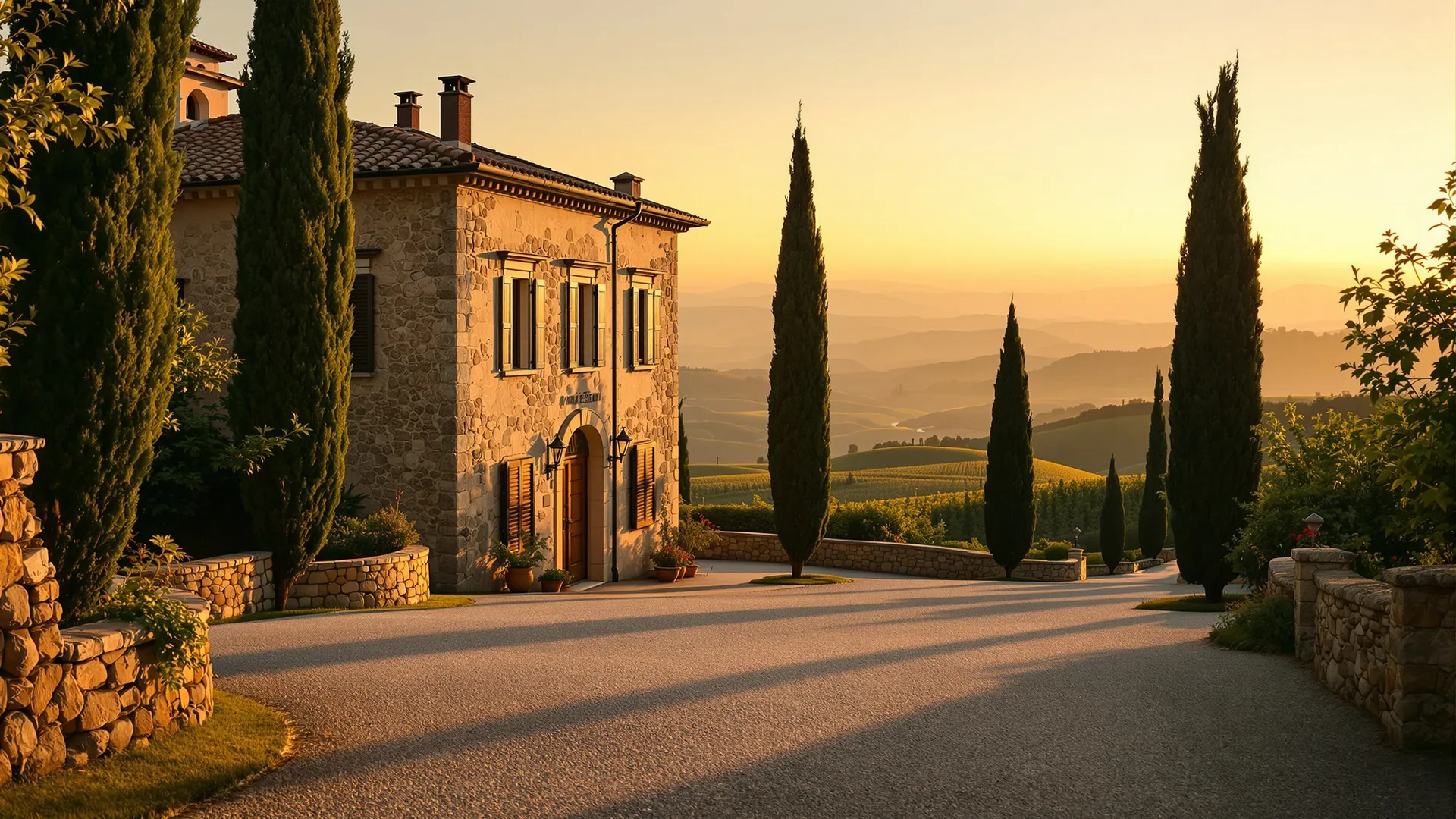
There is a sentence I hear so often in consultations that I could set my watch by it. It usually arrives about twenty minutes in, delivered with quiet satisfaction: "And if things ever get really bad here, we have the house in Tuscany."
Sometimes it is Tuscany. Sometimes it is the Algarve, or Mallorca, or a chalet in the Alps. The details vary. The belief underneath is always the same: the family already owns property abroad, therefore the family already has a Plan B.
I want to be direct about this, because it is probably the most common expensive thinking error I encounter among wealthy clients. A second home is not a second life. A holiday house is not an escape plan. In most cases it is not even the beginning of one.
Let me explain why, and then let me explain what actually would constitute a second life, and finally when the second home is still the right purchase anyway.
The Deed Gives You Walls, Not Rights
Start with the legal reality that surprises people the most. Owning property in a country gives you essentially no right to live there.
If you are an EU citizen with a house in Italy or Portugal, you have free movement rights, but those rights come from your passport, not from your deed. They also come with conditions people forget: register your residence, show sufficient resources, and above all accept everything that becomes legally true of you the moment you genuinely move. If you are not an EU citizen, the situation is starker still. A British client with a villa near Lagos can spend 90 days in any 180 day period in the Schengen area. That is not a Plan B. That is a tourist allowance.
For years, the standard answer to this gap was the golden visa: buy the property, receive the residence permit. That era is closing in front of our eyes. Spain abolished its investor visa outright. Organic Law 1/2025 repealed the relevant articles of the 2013 investor framework, and since 3 April 2025 no new applications are possible. Portugal acted even earlier: Law 56/2023, the Mais Habitação package in force since October 2023, struck real estate purchases and passive capital transfers from the list of qualifying golden visa investments. The Portuguese programme survives through funds and a few other routes, but the classic move, buy the apartment in Lisbon and collect the permit, is gone. Greece still runs a property route, at sharply higher thresholds than a few years ago, and Brussels is openly hostile to the whole category.
The direction of travel is unambiguous. European governments have decided that foreign property buyers push up housing costs for voters, and residence rights are being decoupled from bricks. Anyone whose Plan B rests on the assumption that ownership can be converted into residence later is planning on the basis of a legal regime that is being dismantled.
A residence right is a legal status granted by a state. A house is a thing you bought. The first can save you. The second cannot, and increasingly cannot even be exchanged for the first.
No Tax Effect Without a Real Move
The second half of the fantasy is fiscal. Clients imagine that the house abroad somehow softens their exposure at home, or that it would let them "switch" their tax residence quickly if a wealth tax or something worse arrived.
Neither is true. Tax residence follows your life, not your property portfolio. As long as you live in Germany, Austria or wherever you live now, you are taxable there on your worldwide income, and the Tuscan farmhouse changes nothing about that. If anything it adds obligations: foreign property to declare, foreign rental income in your return, a second tax authority in your life.
And if the day comes when you genuinely want to leave, the house does not spare you a single step of the real work. You still have to deregister, sever the ties that keep you resident, and survive the exit taxation rules that most high tax countries now apply to departing entrepreneurs and investors. You still have to establish genuine residence somewhere else, with all the substance that requires. A client who owns a holiday home in Spain and moves there in a hurry does not step into a tax paradise. He steps into Spanish worldwide taxation, a wealth tax, and a set of traps that catch precisely the people who arrive without planning. Portugal scrapped the old NHR regime and replaced it with something far narrower. Italy will happily tax a new resident on everything, unless he qualifies for and actively elects a special regime with its own price tag.
The point is not that these countries are bad choices. Several of them can be excellent choices, properly planned. The point is that the planning is the Plan B. The house is furniture.
The Running Bill Nobody Adds Up
Now to the part that is merely expensive rather than dangerous. A second home is a standing cost centre, and very few owners ever total the bill honestly.
There are the obvious items: maintenance, insurance, utilities, a gardener, a pool company, someone to check the place after storms. There are local property taxes, which exist in some form almost everywhere and which municipalities under fiscal pressure adjust in one direction only. Spain adds a wealth tax that includes non residents' Spanish assets. Several countries impose extra charges or higher rates on non resident owners, and the political appetite for taxing foreign owned second homes is growing, not shrinking.
Then comes the favourite self deception: "We rent it out when we are not there, so it pays for itself." Occasionally true. Usually not. Short term rental has become one of the most regulated activities in southern Europe: licences, registration numbers, caps and outright bans in city centres, tourist taxes to collect, platforms reporting your income automatically to tax authorities under EU rules. You now run a small cross border hospitality business with a compliance file in a foreign language. I have watched clients spend more hours on a four bedroom house in the Algarve than on a seven figure securities portfolio.
None of this is a reason never to own such a house. It is a reason to price it as what it is: consumption, with a running cost, like a boat. I have written before about boats. The house is the boat that cannot leave the harbour.
Concentration, in the Worst Possible Shape
Look at the same house through an asset protection lens and it gets worse. A second home is a large, illiquid, immovable, highly visible asset registered in a public land registry in a single foreign jurisdiction. It cannot be moved, cannot be hidden, cannot be sold quickly at a fair price, and sits fully exposed to every future decision of one legislature.
For a family whose wealth is already concentrated in European real estate and a European business, the Tuscan house is not diversification. It is more of the same risk in a prettier wrapper: same currency, same regulatory bloc, same direction of political travel, same demographic headwinds. A genuine Plan B is supposed to give you assets and rights that do not all answer to the same set of capitals. A second EU property does the opposite. And in the truly bad scenarios that clients themselves invoke when they mention the house, capital controls, confiscatory taxation, war on the continent, an immovable asset inside the affected zone is the last thing that will help you.
The House That Makes Your Decisions for You
The subtlest cost is psychological. I have seen it derail more relocations than any tax rule.
A family owns a house in a place they love. When the moment comes to actually design an exit, the analysis is quietly rigged from the start. The question is no longer "which jurisdiction fits our tax position, our passports, our children, our business?" It is "how do we justify moving to the place where we already own the house?" Twenty years of summers, the village restaurant, the neighbours: all of it votes. Sunk costs wearing a linen shirt.
So the family with the perfect profile for a residence and citizenship strategy built on jurisdictions that actually want them instead spends two years trying to force a plan through a country whose tax system punishes exactly their structure, because the house is there. The house has become the client. An asset that narrows your options is not an asset in a crisis. It is an anchor, and anchors hold you in place. That is what they are for.
What a Second Life Actually Looks Like
If the house is not a Plan B, what is? I have described the full architecture elsewhere; here is the skeleton. A second life is built from rights and relationships, not square metres.
Rights first. A residence permit that does not depend on the goodwill of the moment, ideally one that matures into permanent residence or citizenship. A second passport where the family profile supports it. These are the things that let you cross a border when crossing a border matters.
Financial infrastructure. Bank and brokerage relationships outside your home country, opened and tested while everything is calm, in more than one currency. Liquid assets where your home legislature cannot reach them by simple majority.
Network and language. A lawyer, a tax adviser, a doctor, a handful of genuine friendships in the second country. Enough of the language to handle a government office without an interpreter. In a real emergency you do not need a terrace. You need someone who answers the phone.
Documented presence. Days counted and provable, registrations done, tax filings made where required. If your second residence ever has to stand up to a challenge from your old tax authority, it will live or die on the paper trail, not on the quality of your sea view. The flags have to be real, planted and maintained, or they are decoration.
Notice that a rented apartment can anchor every single element on that list. Renting is not a failure of commitment. In the early years of a relocation it is usually the professional choice: full flexibility, full deductibility of error.
When the Second Home Is Still Right
Am I telling you never to buy the house? No. I am telling you to buy it honestly. There are two honest versions.
The first is the lifestyle purchase with a real price tag. You love the place, you will use it for decades, your family gathers there, and you can carry the full running cost without the rental fairy tale. Wonderful. Buy it, enjoy it, and write "consumption" next to it in the family balance sheet rather than "Plan B". A thing correctly labelled does no harm.
The second is the residence anchor bought after the residence decision, not before it. Once you have chosen your jurisdiction on the merits, tax, law, passports, family, and once your permits and structure are in place, buying a home there can strengthen your position: it evidences intent, deepens ties, and roots the life you are actually building. That is the correct order of operations. Decide, then buy. The error is buying and then letting the purchase decide.
The families who get this right own fewer romantic ruins and sleep considerably better. The house in Tuscany is a beautiful thing to have. It is a dangerous thing to believe in.
Work with Sebastian
If your Plan B currently consists of a property deed and a feeling, it deserves an honest stress test before you need it to work. I help clients build second lives that hold up: rights, structures, banking, presence. Book a consultation.