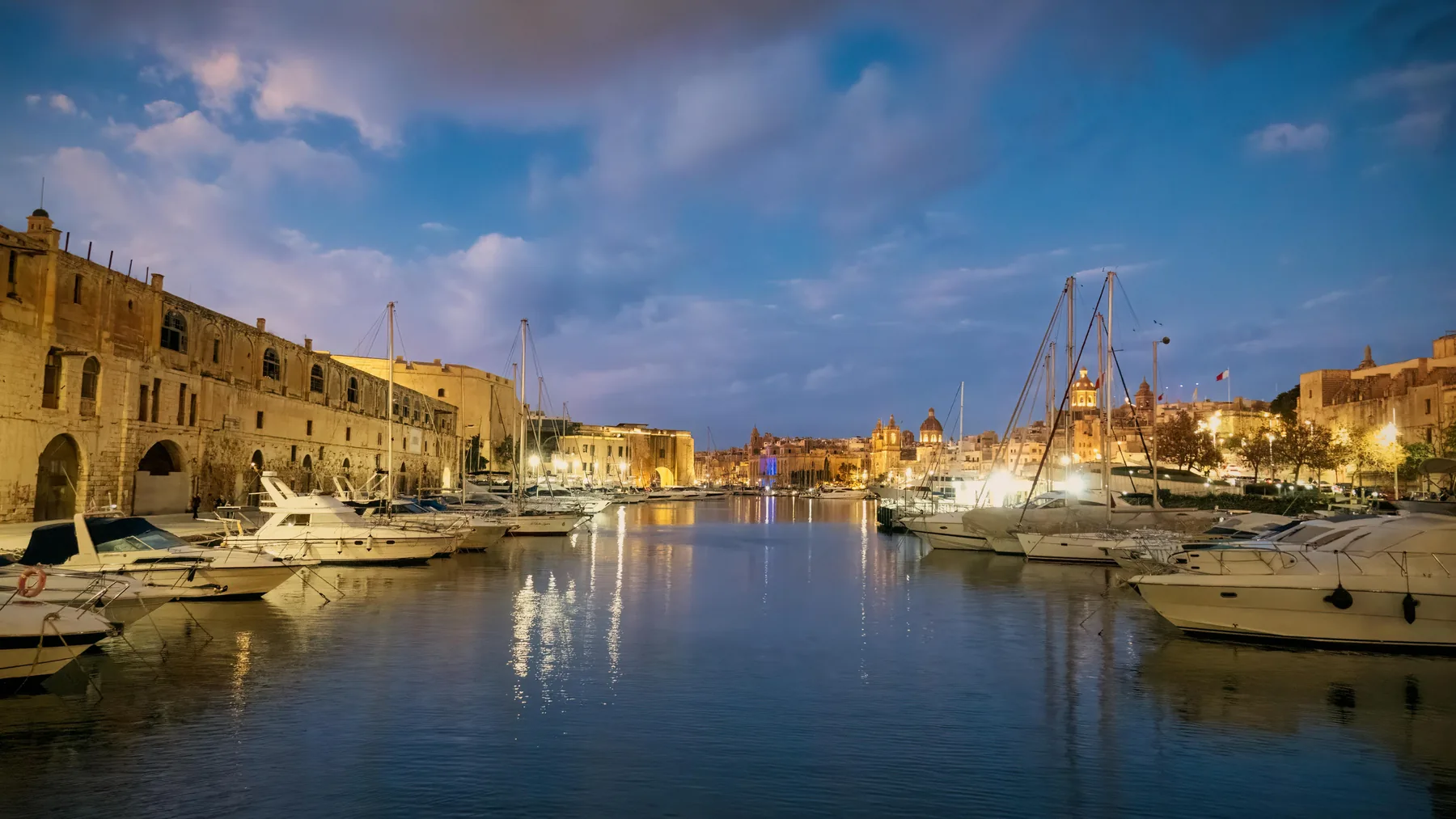
Malta is the largest ship registry in Europe. The Malta Ship Registry — administered by Transport Malta — holds approximately 90 million gross tonnes of shipping, making it one of the top ten flag states globally by tonnage. For commercial shipping, it is a major international flag. For high-net-worth individuals with yachts, it offers something more specific: a full EU flag on one of the world’s most respected maritime registers.
Here is what Maltese yacht registration actually delivers — and how it works.
Why Flag State Matters for a Yacht
A yacht must be registered somewhere. The flag state determines:
- Which waters the yacht can access without bureaucratic friction. A Maltese-flagged yacht — as an EU flag — can sail freely throughout EU waters, use EU marinas, and transit between EU ports without the import VAT complications that affect non-EU flagged vessels.
- The legal framework governing the yacht’s ownership, mortgages, and crew employment.
- How the yacht is perceived by port authorities, customs, and charterers. The Maltese flag is internationally recognised and respected — not a flag of convenience in the pejorative sense, but a genuine, high-standard maritime jurisdiction.
The EU VAT Advantage
This is the most practically significant point for most buyers.
A yacht purchased within the EU and intended for use within EU waters must have EU VAT paid on its value. This is typically charged at the point of purchase or on import to EU waters. For a €2 million yacht, EU VAT at Malta’s standard rate of 18% represents €360,000 — a significant sum.
Yachts in commercial use — on charter — can access VAT deferral and, in certain circumstances, VAT mitigation schemes. Malta has a yacht leasing scheme that has been used historically to manage VAT on yacht acquisitions, though this scheme has been tightened in recent years in response to EU scrutiny. Specific, current legal advice is essential before relying on any VAT planning structure.
The bottom line on VAT: A Malta-flagged yacht used for private purposes in EU waters must have EU VAT paid on its value — there is no permanent exemption. The advantage of Maltese registration is the quality and recognition of the flag, the legal framework, and the integration with Malta-based ownership structures — not a VAT elimination.
The Registration Process
Yacht registration in Malta is handled through Transport Malta’s Merchant Shipping Directorate. The process involves:
1. Eligibility: The yacht must be owned by a qualifying person or entity. Individual owners must be EU/EEA nationals or nationals of countries that have bilateral agreements with Malta. Corporate owners (including Maltese companies) qualify automatically — and this is the common route for private yacht ownership structures.
2. Ownership structure: Most sophisticated yacht owners hold the vessel through a Malta company — a Maltese Ltd with the yacht as its primary asset. This provides:
- Limited liability (the company, not the owner personally, owns the yacht)
- Integration with the wider Malta corporate and tax structure
- Flexibility to transfer ownership of the yacht by selling the company rather than the vessel (avoiding some transaction costs)
- The ability to use the yacht commercially under a charter arrangement from the company
3. Survey and certification: The yacht must meet Malta’s technical standards, which align with international maritime conventions. A survey by a recognised classification society (Bureau Veritas, Lloyd’s Register, RINA, etc.) is required. Existing class certificates from recognised societies are generally accepted.
4. Registration documents: The application requires proof of ownership, the yacht’s plans and specifications, the survey certificate, evidence of insurance, and the fee.
Registration fees: Based on the yacht’s gross tonnage. For a typical private sailing yacht of 20–50 gross tonnes, registration fees are in the range of €500–€2,000. Annual renewal fees apply.
Processing time: For straightforward applications with complete documentation, 2–4 weeks.
The Commercial Charter Structure
For owners who want to offset running costs through charter income, the structure becomes more complex. A Maltese company owning a yacht and chartering it to third parties is providing a service — subject to Maltese VAT (at 18%) on the charter fee, with input VAT recovery available on the vessel’s running costs.
The employment of crew through a Maltese company also triggers Maltese employment law and social security obligations — manageable but requiring proper compliance.
Professional crew: Malta is a signatory to the Maritime Labour Convention. Crew employed on Maltese-flagged yachts above a certain size must be employed under MLC-compliant contracts. For smaller private yachts with informal crew arrangements, this is less of a daily concern — but owners of commercially operated yachts with paid crew must take this seriously.
The Malta Superyacht Register
For superyachts (typically over 24 metres), Malta operates a specific superyacht track within the Ship Registry. Malta is one of the leading superyacht flag states — alongside the Cayman Islands, British Virgin Islands, and British flag — and the local industry of superyacht management companies, maritime lawyers, and chandlers is well-developed.
For very large vessels: The interaction between Maltese registration, commercial charter, and the ownership structure (often involving a Special Purpose Vehicle in Malta or an offshore holding structure) is a specialist area. The firms with this expertise are based primarily in Valletta and St. Julian’s.
The Integration with Malta Residency
A Malta-resident individual who owns a yacht through a Maltese company has an entirely integrated structure: personal residency, corporate ownership, and vessel registration all within the same jurisdiction. The yacht’s running costs are deductible against the company’s income (if commercially operated). The management of the yacht — decisions about charter, crew, maintenance — is a natural part of the director’s activity in Malta, contributing to the substance position.
For the right client — a Malta-resident HNWI with a yacht as part of their lifestyle and asset portfolio — this integration is genuinely elegant.
Book a consultation to discuss yacht ownership structures in Malta.