Contents
- 1. Vanuatu: Country Overview
- 2. Putting Vanuatu on the Map
- 3. What Others Say About Vanuatu
- 4. Tax Benefits: What Vanuatu Has to Offer
- 5. Tax Rates at a Glance
- 6. Tax Residency: What Triggers It
- 7. Double Tax Treaties
- 8. Avoid Remaining Tax Resident at Home
- 9. Tax Considerations When Leaving Your Home Country
- 10. Company Setup & Corporate Tax
- 11. Who Should (and Shouldn't) Move to Vanuatu
- 12. Visas and Residence Permits
- 13. Path to Citizenship
- 14. Banking in Vanuatu
- 15. What Makes Vanuatu Genuinely Attractive
- 16. Cost of Living in Vanuatu
- 17. Buying Real Estate in Vanuatu
- 18. Retiring in Vanuatu
- 19. US Citizens: What You Need to Know
- 20. Correct Preparation
- 21. Automatic Exchange of Information (OECD CRS)
- 22. Further Relocation Formalities
- 23. How We Help With Your Move to Vanuatu
I.
Vanuatu: Country Overview
Vanuatu is a South Pacific island nation in Melanesia, an archipelago of 83 volcanic islands stretching over 1,300 km from north to south, located approximately 1,750 km east of Australia, 500 km northeast of New Caledonia, west of Fiji, and south of the Solomon Islands. It covers approximately 12,200 km² of land area across a vast 680,000 km² maritime exclusive economic zone, with a population of approximately 320,000. The capital, Port Vila, sits on the island of Efate (the third-largest island) and is home to about 50,000 people — the country's only meaningful urban centre, principal port, and main international airport.
The country recognises three official languages: Bislama (a Melanesian creole), English, and French — a legacy of the unique Anglo-French Condominium administration that governed Vanuatu (then the New Hebrides) from 1906 until independence in 1980. Today the legal system is a hybrid drawing from English common law, French civil law, and customary Melanesian law (kastom), with the Supreme Court of Vanuatu providing the principal jurisdiction. The currency is the Vanuatu Vatu (VUV), with approximately VUV 120 to USD 1.
On the tax side, Vanuatu operates one of the cleanest 0% personal-tax frameworks in the world. There is no personal income tax (never introduced — Vanuatu has not had a personal income tax in its history as an independent state). There is no capital gains tax, no inheritance tax, no estate tax, no gift tax, and no annual wealth tax. The country relies on indirect taxation: VAT at 15%, customs duties, business license fees, and stamp duties. Corporate tax is 0% for International Companies (ICs) under the International Companies Act for the first 20 years, with a flat USD 300 annual fee instead. Domestic companies trading within Vanuatu are subject to business licence fees and VAT, but no income or profits tax.
The flagship feature for foreign investors is the Citizenship by Investment Programme — established in 2017, this is the fastest CBI programme in the world, with passports typically issued in 60 days. Investment minimum USD 130,000 through the Development Support Programme (DSP) — non-refundable contribution — or USD 160,000 through the Coffee Impact Fund (with a partially refundable component returning approximately USD 50,000 after 5 years). The programme is fully remote — no requirement to visit Vanuatu before, during, or after the application.
What to be aware of — this is the central honest point about Vanuatu in 2026. On 21 November 2024, the European Parliament voted to permanently suspend visa-free access for Vanuatu passport holders to the EU Schengen Area — citing concerns about insufficient background checks, lack of information sharing, and the absence of residence requirements. The United Kingdom and Ireland also withdrew visa-free access. The United States reduced Vanuatu passport B1/B2 visas from 5-year multiple-entry to 3-month single-entry. The current Vanuatu passport now provides visa-free or visa-on-arrival access to approximately 95 countries — significantly fewer than its pre-2022 peak of 130+, and significantly fewer than current Caribbean CBI passports (Saint Kitts 148, Antigua 144, Grenada and Saint Lucia 140). The Vanuatu CBI is now best understood as a fast Plan-B mobility tool and a Pacific-region presence, not as a Europe-travel solution. Clients prioritising EU/UK travel should consider Caribbean CBI alternatives (Saint Kitts, Antigua, Grenada, Saint Lucia, Dominica) which retain Schengen visa-free access. Vanuatu is also classified as a low-tax country under §2 AStG (Germany's extended-tax framework). The country participates in OECD CRS with automatic exchange.
II.
Putting Vanuatu on the Map
Vanuatu — South Pacific archipelago, between New Caledonia and Fiji
Vanuatu arrives in the smell of the sea, the bright equatorial sun, the smoke of cooking fires from the village over the hill, and the distinctive flame-of-the-forest trees that line every road on Efate. The country is genuinely remote — five hours from Sydney, three hours from Auckland, eight hours from Hong Kong. There is no quick weekend trip from London or Frankfurt; reaching Port Vila from Europe takes 25–30 hours minimum via Singapore or Sydney. This remoteness is part of what defines the country and what makes it different from Caribbean alternatives.
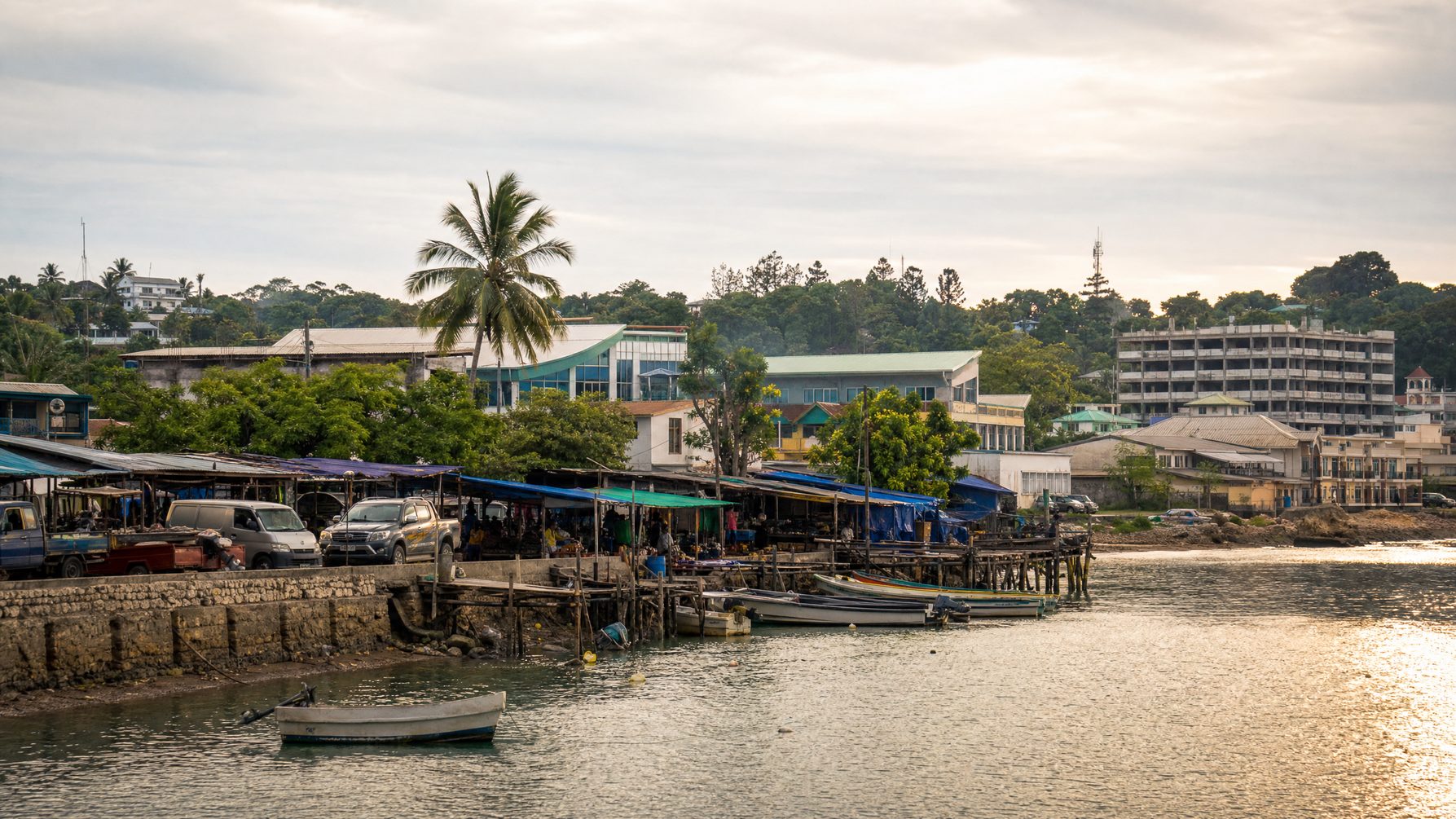
Port Vila, on the island of Efate, is the only meaningful urban centre — a small Pacific capital city of 50,000 people built around a beautiful natural harbour. The Mama's Market in the centre of town, the Kava bars in the late afternoon, the Friday-night barbecues at the seafront — these are the rhythms of Pacific life at scale. Most expats live in the residential areas around the harbour or further out near Mele Bay; the international schools, the few private medical clinics, and the principal banks are all in or near central Port Vila.
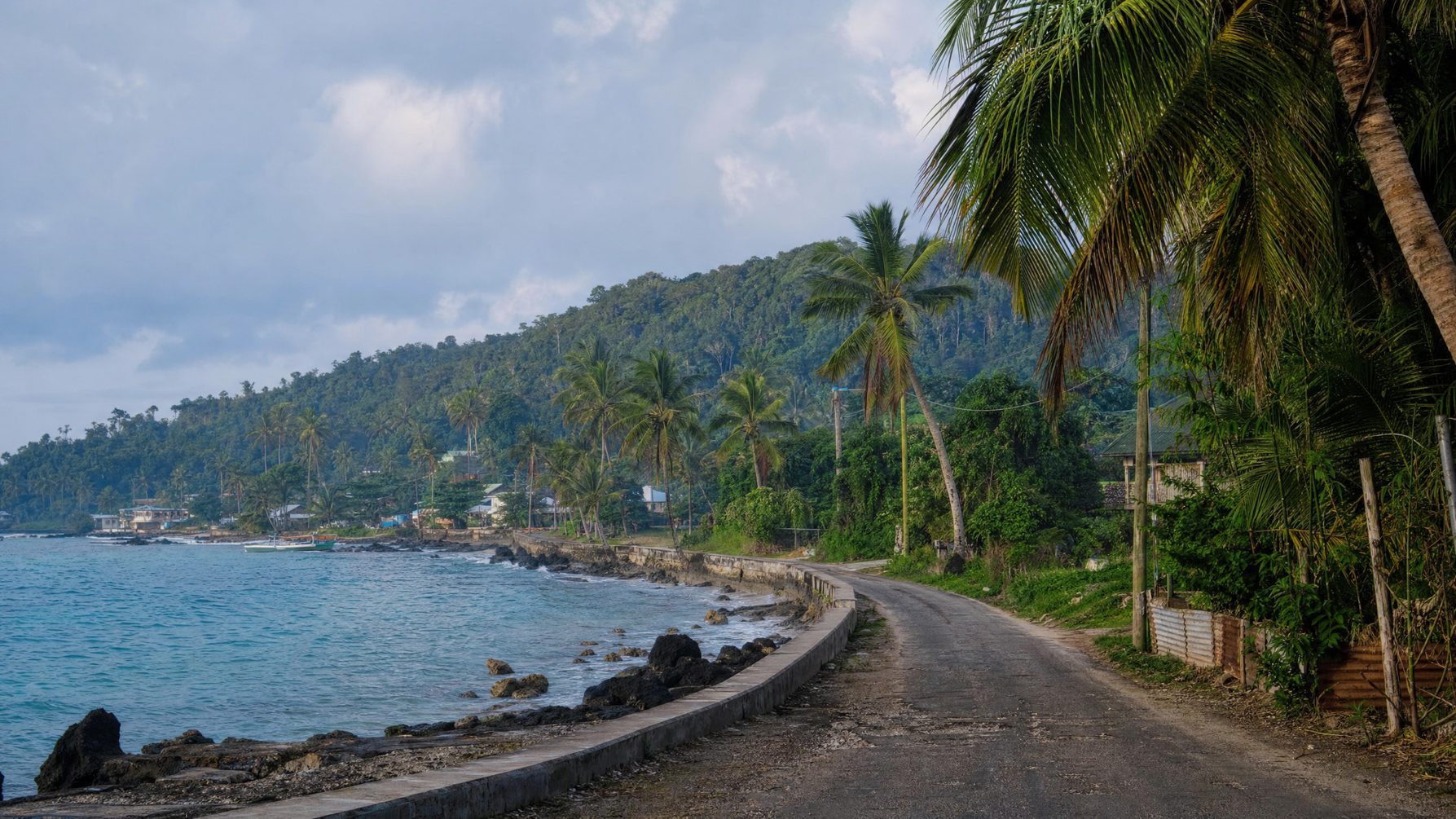
Efate Island, the country's third-largest, contains Port Vila and the main road infrastructure. The southwest coast hosts the Hideaway Island marine reserve, the Ekasup village, and several resort developments. The east coast (driving 90 minutes from Port Vila) is more rural and less developed. The Round Island Road, completed in 2010, allows you to circumnavigate Efate in 4–5 hours of comfortable driving.
Espiritu Santo, the largest island, is dominated by Mount Tabwemasana (1,879 m, the country's highest peak) and the Champagne Beach — frequently cited as one of the most beautiful beaches in the Pacific. Santo was a major US military base during World War II; the wreck of the USS President Coolidge (a sunken liner) is one of the world's great wreck dives. Tanna Island is famous for Mount Yasur, an active volcano that erupts continuously and is among the most accessible active volcanoes in the world (you can drive to its rim and watch lava fountains from a few hundred metres).
The Pentecost Island land-diving (Naghol) ceremony — the original from which bungee jumping was derived — takes place in April-June each year. Ambrym is the country's most active volcanic island, with twin lava-lake caldera systems. Malekula has some of the most preserved Melanesian indigenous cultural traditions in the country.
Connectivity is the practical issue. Bauerfield International Airport (VLI) in Port Vila handles direct flights to Sydney (3 hours), Brisbane (3 hours), Auckland (3 hours), Nadi (Fiji, 1 hour), and seasonal direct service to Noumea (New Caledonia, 1 hour). Air Vanuatu, Fiji Airways, Air New Zealand, Qantas, and Virgin Australia operate scheduled services. There are no direct flights between Vanuatu and the United States, Europe, or most of Asia. Reaching Vanuatu from Europe requires connections via Singapore, Sydney, or Auckland — typically 25–30 hours of total travel time.
For HNW clients accustomed to the Caribbean's 8-hour-from-London flight times, the Pacific equivalent is significantly more challenging. This is part of why Vanuatu is best understood as a passport tool and Pacific Plan-B option rather than a primary residence destination for clients with global business commitments requiring frequent inter-continental travel.
III.
What Others Say About Vanuatu
"Vanuatu is what the Caribbean was in the 1970s — small, quiet, real, and not yet entirely processed by the international tourism machine. The trade-off is that it takes you 30 hours to get there from London."
— Travel writer, Port Vila, 2023
"The Vanuatu passport solved a specific problem for me: I needed a fast Plan B that I could obtain remotely without committing to relocation, and Vanuatu delivered that in 60 days. The Schengen issue is real, but I have other passports for that."
— CBI investor, Hong Kong, 2024
"Mount Yasur on Tanna is the closest you will ever get to the molten centre of the earth. You stand at the rim, the wind blows ash in your face, and you watch lava fountains rise 50 metres into the night sky. Then you walk back down the volcano in the dark. There are very few experiences left in the world like this."
— Tour operator, Tanna, 2025

IV.
Tax Benefits: What Vanuatu Has to Offer
Vanuatu is one of the cleanest 0% personal-tax jurisdictions in the world. The combination of zero personal taxation, the world's fastest CBI process, zero corporate tax for International Companies, and full remote application makes the Vanuatu passport a credible Plan-B mobility tool — particularly for clients who already have strong OECD passports providing EU/UK access and need a second citizenship as backup or for non-Europe travel.
- ›0% personal income tax — for residents and non-residents — Vanuatu has never imposed a personal income tax in its history as an independent state. No tax on local or worldwide salary, dividends, interest, rental income, foreign pensions, or capital gains.
- ›0% capital gains tax — no general CGT on disposals of shares, businesses, real estate, or other assets.
- ›0% inheritance, estate, gift, and wealth tax — no inheritance tax, no estate tax, no gift tax, no annual wealth tax. Wealth transfers between generations are entirely outside the Vanuatu tax net.
- ›Corporate tax — 0% for International Companies (ICs) for 20 years — under the International Companies Act, ICs incorporated in Vanuatu are exempt from corporate income tax, dividend distribution tax, capital gains tax, and withholding tax for 20 years from incorporation. Annual government fee of USD 300. Domestic companies (operating within Vanuatu) are subject to business licence fees and VAT but no income tax.
- ›Citizenship by Investment from USD 130,000 — world's fastest — passports typically issued in 60 days from a USD 130,000 minimum contribution to the Development Support Programme (DSP). No requirement to visit Vanuatu. No language test. No prior business experience required. Family inclusion (spouse, children to age 25, parents and grandparents 50+).
- ›Coffee Impact Fund alternative — partially refundable — USD 160,000 contribution (USD 110,000 citizenship fee + USD 50,000 redeemable investment unit). After 5 years, the investment unit can be redeemed, reducing the net cost to approximately USD 110,000.
- ›Dual citizenship permitted — Vanuatu does not require renunciation of existing citizenship. Citizens can hold one or more other nationalities.
- ›No residency requirements — the CBI does not require physical presence in Vanuatu before, during, or after the application. The passport is maintained without any minimum stay obligations.
- ›English (and French) language framework — three official languages (Bislama, English, French) make business, banking, and government accessible to most international clients.
- ›OECD CRS-compliant, FATCA-cooperative — Vanuatu participates in automatic exchange of information; the historical "secrecy jurisdiction" reputation has been substantially reformed since 2018.
- ›VAT 15%, no other significant taxes — the only meaningful indirect tax is VAT at 15% on goods and services (down from earlier rates). Customs duties on imports. Stamp duty on real estate transactions (2% registration + 5% on unimproved capital value).
V.
Tax Rates at a Glance
The most important tax rates in Vanuatu are as follows. Note that these have been simplified and should be used as general guidance only.
| Tax | Rate | Notes |
|---|---|---|
| Personal Income Tax | 0% | None — never introduced |
| Capital Gains Tax | 0% | None |
| Inheritance Tax | 0% | None |
| Estate Tax | 0% | None |
| Gift Tax | 0% | None |
| Wealth Tax | 0% | None |
| Corporate Income Tax — International Companies | 0% | First 20 years; USD 300 annual fee |
| Corporate Income Tax — Domestic Companies | 0% | No corporate tax; business licence fees + VAT apply |
| Dividend Distribution Tax | 0% | None |
| Withholding Tax | 0% | None |
| Rental Income Tax — individuals | 0% | If 6-month rental income < VUV 200,000 (~USD 1,800) |
| Rental Income Tax — individuals | Charged | If rental income exceeds VUV 200,000 over 6 months |
| VAT — standard | 15% | Goods and services |
| Customs Duty | Varies | On imports; significant given import-heavy economy |
| Stamp Duty — land lease registration | 2% | Of unimproved capital value |
| Stamp Duty — land lease | 5% | Of unimproved capital value |
| Property Transfer Tax | 2–12% | Depending on transaction type |
| Property Tax (annual) | 0% | None on ownership |
| Business Licence Fee | Varies | For domestic businesses |
| Social Security (VNPF) | 4% | Employer + 4% employee on local employment |
| CBI — Development Support Programme (DSP) | USD 130,000 | Single applicant; non-refundable |
| CBI — Coffee Impact Fund (partial refund) | USD 160,000 | Includes USD 50,000 redeemable after 5 years |
| Tax residency threshold | 183+ days | In any 12-month period |
| DTAs | 0 | No double taxation treaties |
| CRS exchange | Since 2018 | Annual automatic exchange |
| EU Schengen visa-free | NO (suspended Nov 2024) | Permanent suspension |
| UK visa-free | NO (withdrawn) | Visa now required |
| Ireland visa-free | NO (withdrawn) | Visa now required |
| US B1/B2 visa | 3-month single-entry | Reduced from 5-year multiple-entry |
| Visa-free / visa-on-arrival | ~95 countries | Includes Singapore, Hong Kong, Russia, parts of Asia |
Cryptocurrency and Crypto Assets
Vanuatu has no specific cryptocurrency taxation regime — and given the absence of personal income tax, capital gains tax, and wealth tax in the country, cryptocurrency disposals by Vanuatu tax residents are entirely outside the Vanuatu tax net. The country has been positioning itself as a crypto-friendly jurisdiction; the Financial Markets Authority (Vanuatu) provides licensing for crypto-asset service providers. For HNW crypto investors with substantial unrealised gains seeking a low-friction tax-free jurisdiction with fast citizenship, Vanuatu is genuinely competitive — particularly for clients who have already secured EU/UK travel mobility through other means and only need Vanuatu as a second-passport tax tool.
VI.
Tax Residency: What Triggers It
Under Vanuatu tax law, an individual is considered a tax resident if they meet either of the following criteria:
- ›183-day rule: Physical presence in Vanuatu for 183 or more days in any 12-month period that starts or ends in the calendar year.
- ›Public service rule: Vanuatu citizen working as an officer or employee of the Government or a public authority.
- ›CBI citizenship does NOT automatically confer tax residency. A Vanuatu passport holder who does not physically live in the country is treated as a non-resident for tax purposes. Since Vanuatu has no personal income tax for residents OR non-residents, the practical distinction is largely administrative — but it matters for international tax planning purposes (DTA invocation in countries that have such treaties with Vanuatu, which is none; CRS reporting; "genuine link" assessments by other jurisdictions).
- ›Tax residence in Vanuatu does not by itself create tax exposure — there is no income tax to apply. The relevance of Vanuatu tax residence is principally negative: it documents the absence of tax residence elsewhere, supporting claims that high-tax home-country residence has been severed.
- ›Documentation matters. Establishing Vanuatu tax residency requires evidence: a registered lease agreement (Vanuatu lands are not freehold for foreigners — only leasehold up to 50 years residential / 75 years commercial), passport stamps demonstrating physical presence, utility bills, banking, the Self-Funded Visa (where applicable), and ideally a Tax Identification Number issued by the Department of Customs and Inland Revenue.
For most CBI passport holders, the practical structure is:
- ›Pure CBI passport (no presence): Citizenship and travel benefit, no Vanuatu tax filing, taxed in country of actual residence.
- ›CBI passport + Self-Funded Visa + 183+ days: Full Vanuatu tax residence in a 0% jurisdiction. Useful for documenting departure from high-tax home country.
- ›Genuine relocation: Living in Vanuatu year-round. Practical for HNW retirees or specific lifestyle choices, but rare given the remoteness and limited infrastructure.
VII.
Double Tax Treaties
Vanuatu has no double tax treaties (DTAs) in force — the country's policy of zero personal and corporate income taxation has historically meant there was no need for treaty-based relief mechanisms (no Vanuatu tax = no double taxation to relieve).
This is a significant practical limitation for HNW planning purposes:
- ›No reduced source-country withholding rates — income flowing from treaty-network jurisdictions (US, UK, Germany, Australia, Canada, France, Switzerland) to Vanuatu-resident persons or entities is subject to standard non-treaty withholding rates in the source country. There is no treaty-based reduction.
- ›No tie-breaker mechanism — for clients who may be tax resident in multiple jurisdictions, there is no Vanuatu DTA to invoke for residence tie-breaker analysis.
- ›No treaty-based information exchange — although Vanuatu does participate in the OECD CRS framework (since 2018) and has signed multiple Tax Information Exchange Agreements (TIEAs), there is no DTA-based cooperation.
Vanuatu has signed Tax Information Exchange Agreements with several jurisdictions including: Australia, Denmark, France, Germany, Greenland, Iceland, Ireland, New Zealand, Norway, San Marino, South Korea, and the United Kingdom. TIEAs provide for exchange of information but not treaty relief from withholding.
The country has implemented OECD CRS (since 2018) and is a signatory to the Multilateral Convention on Mutual Administrative Assistance in Tax Matters.
For HNW planning purposes, the absence of a DTA network is the single most significant structural limitation of Vanuatu. Combined with the small population, the reduced visa-free travel network post-2024, and the geographic remoteness, this makes Vanuatu fundamentally a passport-tool jurisdiction rather than an integrated tax-planning jurisdiction.

VIII.
Avoid Remaining Tax Resident at Home
Relocating to Vanuatu — whether through pure CBI passport acquisition or genuine physical relocation — does not automatically end your tax obligations elsewhere. The critical question is whether you have genuinely severed tax residency in your country of origin.
This is particularly important for Vanuatu because the CBI requires no physical presence at all to maintain citizenship. Many CBI holders treat the passport purely as a mobility document while continuing to live and pay tax in their previous high-tax country. For German nationals in particular, this approach is highly problematic — Vanuatu is classified as a low-tax country under §2 AStG, meaning Germany's extended unlimited tax liability framework (up to 10 years post-departure) applies in full.
The most common triggers that can keep you tax-resident at home:
- ›Available dwelling: Any long-term residence that remains available for your use is sufficient to maintain a taxable domicile in many countries. Surrendering it before departure is a precondition of a clean exit in Germany, Austria, Switzerland, and many other jurisdictions.
- ›Centre of vital interests: If your family, your business, your social connections, and your financial affairs remain in your home country, most tax authorities will argue that your centre of life has not genuinely moved.
- ›183-day rule (home country): Spending more than 183 days in your home country in a calendar year will typically trigger residency there.
- ›Extended unlimited tax liability (Germany): Germany's erweiterte unbeschränkte Steuerpflicht under §2 AStG keeps German nationals taxable in Germany for up to ten years after departure if they move to a low-tax country. Vanuatu is unambiguously classified as a low-tax country under §2 AStG (zero personal income tax). The framework genuinely applies.
A genuine relocation requires that you actually live somewhere other than your previous country. The CBI passport alone is NOT sufficient to demonstrate severance of home-country tax residence. For tax-residency purposes, the 183-day rule is the operative threshold — and the receiving country must be a credible alternative residence (not just the issuer of a passport).
The test is not where you are registered. The test is where you live. Proper advice before you move — not after — is essential. This is particularly important for German nationals given the §2 AStG framework.
IX.
Tax Considerations When Leaving Your Home Country
Before you relocate, you need to understand what tax consequences arise in your current country of residence at the point of departure. These rules vary significantly by country and must be assessed individually — there is no universal answer.
Many countries impose an exit tax or deemed disposal charge when a tax resident leaves. This typically applies to unrealised capital gains on shares, business interests, real estate, or other assets — taxing you as if you had sold everything on the day you departed.
Among the countries that levy a meaningful exit tax or deemed-disposal charge:
- ›Germany. Applies an exit tax on unrealised gains in shareholdings of 1% or more under §6 AStG. Vanuatu is treated as a low-tax country under §2 AStG, so Germany's "extended unlimited tax liability" applies for up to 10 years after departure — taxing ongoing German-source income and certain foreign-source income flows. There is no Germany-Vanuatu DTA, so no treaty relief is available. Pre-departure planning is essential.
- ›United States. The "expatriation tax" under IRC §877A treats long-term residents and citizens as having sold all worldwide assets at fair market value on the day they relinquish citizenship or residency. There is no US-Vanuatu DTA. The US has reduced Vanuatu B1/B2 visas to 3-month single-entry following the 2024 reforms.
- ›United Kingdom. Statutory Residence Test (SRT) exit-date analysis required. Note: the UK withdrew visa-free access for Vanuatu passport holders in 2024.
- ›Australia. Departing residents are treated as having disposed of most assets at market value on the date they cease to be Australian tax residents. CGT Event I1 applies. Australia is the closest major OECD partner geographically (3-hour direct flight), and the most relevant departure jurisdiction for Australian Vanuatu CBI applicants.
- ›France. Exit tax applies to unrealised gains on securities and company rights above €800,000 when a French tax resident relocates abroad. Vanuatu is non-EU/EEA, so the deferral mechanism available for moves within the EU does not apply.
- ›Netherlands. Deemed disposal applies to substantial shareholdings (5% or more) at the point of emigration.
- ›Canada. The "departure tax" deems most property to have been disposed of at fair market value on the date of emigration.
- ›New Zealand. No general exit tax for individuals, but specific anti-avoidance rules may apply.
Beyond exit tax, you may remain subject to limited tax liability in your home country after the move — for example, on rental income, dividends from domestic companies, or pension payments. Severing tax residency does not necessarily sever all tax obligations.
⚠ Obtain Local Tax Advice in Your Home Country. The information above provides a general overview of the departure tax rules that commonly apply when leaving high-tax jurisdictions. It is not legal or tax advice. The rules in your specific home country are complex, change frequently, and depend entirely on your personal circumstances. Before you take any steps to relocate, obtain written advice from a qualified tax adviser who is licensed in your home country and experienced in international relocations. A consultation with us is a good starting point — but it does not substitute for country-specific legal advice from a practitioner in your jurisdiction of departure. The cost of getting this wrong is almost always greater than the cost of getting proper advice upfront.
X.
Company Setup & Corporate Tax
Vanuatu offers two main corporate vehicles, with the International Company (IC) under the International Companies Act being the principal structure for foreign investors and offshore business.
The most common structures:
- ›International Company (IC): Offshore vehicle under the International Companies Act. 0% corporate income tax for the first 20 years from incorporation. Annual government fee USD 300. No requirement to file accounts publicly. Cannot do business with Vanuatu residents (export-oriented or international focus only). Single shareholder permitted; nominee directors permitted (subject to beneficial ownership disclosure under post-2018 reforms). Used for international holding, trading, IP, and offshore financial services.
- ›Local Company (Vanuatu Company): Domestic corporation under the Companies Act. Can do business locally. No income tax — but subject to business licence fees and VAT (15%). Used by businesses operating within Vanuatu (resorts, retail, professional services).
- ›Branch / Permanent Establishment: Foreign companies can register a branch in Vanuatu. Branch taxation similar to local company structure.
The Vanuatu IC has historically been a popular offshore vehicle, but the post-2018 BEPS and CRS reforms have significantly tightened compliance requirements:
- ›Beneficial Ownership Registry under the Financial Action Task Force (FATF) framework — beneficial owners must be disclosed to the Vanuatu Financial Services Commission (VFSC), though the registry is not publicly accessible.
- ›Economic Substance Requirements (since 2019) — ICs engaged in "relevant activities" (banking, insurance, fund management, finance & leasing, headquarters business, distribution & service centre business, shipping, holding company business, intellectual property business) must demonstrate adequate substance in Vanuatu.
- ›Country-by-Country Reporting (CbCR) for large MNE groups under OECD BEPS Action 13.
- ›For pure investment holding purposes (passive holding of shares or other portfolio assets), economic substance requirements are limited — but for active operating businesses, genuine Vanuatu substance is required. This raises the practical bar for using ICs as operating vehicles.
- ›For HNW planning purposes, the Vanuatu IC remains useful for specific structures — particularly intermediate holding of non-EU / non-US assets where the 0% Vanuatu rate combined with the source-country treatment is acceptable. For clients seeking treaty-network access, more conventional jurisdictions (Singapore, Hong Kong, the UAE, Mauritius, Cyprus) are typically more efficient.
XI.
Who Should (and Shouldn't) Move to Vanuatu
Section 11 is where the decision becomes practical. Vanuatu can be useful for some profiles and entirely wrong for others.
Good Fit
- › HNW investors seeking a fast Plan-B passport — the 60-day processing time is genuinely faster than any Caribbean alternative.
- › Clients who already have strong OECD passports providing EU/UK travel mobility (US, EU, UK, Australian, Canadian, etc.) and need a second citizenship purely as a tax tool or backup, not for European travel.
- › Crypto investors and digital-economy entrepreneurs seeking a clean 0% tax jurisdiction with minimal compliance friction and rapid passport issuance.
- › Genuine retirees attracted to Pacific lifestyle who want to physically relocate to Vanuatu — a rare profile but a real one.
- › Clients seeking the Vanuatu IC structure for specific offshore holding purposes (with appropriate substance).
- › Clients from politically unstable jurisdictions seeking the fastest possible second-passport solution.
Poor Fit
- × Anyone who needs visa-free access to the EU Schengen Area, the UK, or Ireland. This is the structural change post-November 2024. Vanuatu CBI no longer delivers Europe-travel mobility. Clients prioritising Europe should choose Caribbean CBI alternatives.
- × Anyone seeking US visa-free access — Vanuatu has never had US visa-waiver status, and US visas have been reduced to 3-month single-entry post-2024.
- × Clients seeking a treaty-network jurisdiction — Vanuatu has no DTAs.
- × German nationals without proper §2 AStG planning — Vanuatu is unambiguously a low-tax country, so the 10-year extended liability framework applies in full.
- × Clients who actually want to live in their CBI country — Vanuatu is genuinely remote, with limited international school options, limited healthcare specialist access, and 25–30 hour travel times to Europe and the US.
- × US citizens expecting Vanuatu status to eliminate US tax filing — US worldwide taxation continues regardless of residence.
- × Clients who need a passport that opens substantive doors with major OECD partners — the Vanuatu passport's standing has weakened substantially since 2024.
- × Clients seeking absolute privacy — Vanuatu is now CRS-compliant, FATCA-cooperative, and beneficial-ownership-transparent. The "secrecy jurisdiction" reputation is historical.
XII.
Visas and Residence Permits
Vanuatu offers several pathways for foreign nationals — though the country is genuinely remote and most foreign visitors arrive by direct flight from Australia, New Zealand, or Fiji.
- ›Visa-free entry (visitor): Citizens of EU/EEA, UK, US, Australia, New Zealand, and most Commonwealth countries can enter visa-free for stays up to 30 days (extendable in country to 4 months). Sufficient for short-term visits and CBI biometric collection.
- ›Citizenship by Investment (flagship route): Established 2017, the world's fastest CBI programme. Granted by the Citizenship Office under the Vanuatu Investment Migration Bureau. Two investment routes:
- ›Development Support Programme (DSP): USD 130,000 minimum (single applicant); non-refundable contribution to the National Development Fund.
- ›Coffee Impact Fund (CIF) / Capital Investment Immigration Programme (CIIP): USD 160,000 (USD 110,000 citizenship fee + USD 50,000 redeemable investment unit). After 5 years, the unit can be redeemed for approximately USD 50,000 return.
- ›Self-Funded Visa (residence permit): For foreigners with sufficient income to support themselves. Minimum monthly income VUV 250,000 (~USD 2,200) for single applicant, VUV 500,000 (~USD 4,400) including spouse. Annual fee VUV 20,000. 1-year visa, renewable.
- ›Investor Permit: For foreign investors making significant business investments in Vanuatu. Requires Foreign Investment Certificate from the Vanuatu Investment Promotion Authority.
- ›Employment Visa: For foreigners employed by Vanuatu employers. Tied to specific employer.
- ›Long-term residence based on family ties or sponsored employment.
Family inclusion under CBI is broad: main applicant, spouse, children to age 25 (financially dependent), parents and grandparents 50+, future spouse and future children (subject to additional fees).
The CBI minimum stay: Zero. There is no requirement to visit Vanuatu before, during, or after the application. The full process can be completed remotely. Some agents now require biometric data submission at one of the Vanuatu Immigration Service offices in Port Vila or at consulates in Hong Kong, Dubai, or New Caledonia.
The 2024 EU Schengen suspension is the structural change. Vanuatu CBI was previously marketed primarily for its Schengen access; that benefit has now permanently disappeared. The current value proposition is speed, simplicity, family inclusion, and Pacific-region access — not European travel mobility.
The clean planning order is: (1) confirm whether Vanuatu's reduced post-2024 travel access is acceptable for your purposes; (2) select investment route — DSP or CIF; (3) handle the application through a licensed government-authorized agent; (4) plan for biometric submission at one of the designated centres.
XIII.
Path to Citizenship
Vanuatu offers two paths to citizenship: standard naturalisation (long-term legal residence) and the Citizenship by Investment programme.
Standard Naturalisation requires:
- ›10 years of legal residence in Vanuatu under a residence visa
- ›Knowledge of Bislama, English, or French
- ›Good character (clean criminal record)
- ›Renunciation of previous citizenship is NOT required
- ›Approval at the discretion of the Citizenship Commission
Standard naturalisation is rarely used by HNW clients given the 10-year requirement and the much faster CBI alternative.
Citizenship by Investment Programme — established in 2017 under the Citizenship Act (Chapter 112). Administered by the Vanuatu Investment Migration Bureau.
Two investment routes (current 2026):
- ›Development Support Programme (DSP): USD 130,000 (single applicant); USD 150,000 (couple); USD 165,000 (family of three); USD 180,000 (family of four). Plus due diligence fees (USD 5,500), biometric fees (~USD 1,000), and other government fees. Non-refundable.
- ›Coffee Impact Fund / Capital Investment Immigration Programme: USD 160,000 total (USD 110,000 citizenship fee + USD 50,000 redeemable investment unit held for 5 years).
Family inclusion:
- ›Main applicant
- ›Spouse
- ›Dependent children to age 25 (financially dependent)
- ›Dependent parents and grandparents 50+
- ›Future spouse (additional USD 45,000)
- ›Future child (additional USD 15,000)
- ›Processing time: Typically 60 days from initial submission to passport issuance. Can extend to 4–6 months in complex cases.
- ›Minimum-stay requirements: None. Vanuatu CBI requires no physical presence before, during, or after the application.
- ›Dual citizenship is permitted. Vanuatu citizens can hold one or more other nationalities. No requirement to renounce existing citizenship.
- ›The Vanuatu passport currently provides visa-free or visa-on-arrival access to approximately 95 countries as of 2026 — including Singapore, Hong Kong, Russia, Israel, parts of Asia, the Pacific, and some Caribbean and African countries. Critical 2024 change: the EU Schengen Area, the United Kingdom, and Ireland have suspended/withdrawn visa-free access. The US also reduced Vanuatu B1/B2 visas to 3-month single-entry.
The passport is renewable every 10 years, with biometric submission required for renewal. Vanuatu has been improving passport security and document quality in response to international concerns about CBI integrity.
For HNW clients prioritising EU/UK travel, Vanuatu is no longer the right CBI choice — Caribbean CBI programmes (Saint Kitts 148 visa-free, Antigua 144, Grenada 140) retain Schengen access. Vanuatu remains useful for clients with other strong OECD passports providing Europe access who need fast Plan-B citizenship for tax, business diversification, or political-instability reasons.
XIV.
Banking in Vanuatu
Vanuatu's banking sector is small and Pacific-regional in character. The country has a mix of local and Australian-affiliated institutions, all under the supervision of the Reserve Bank of Vanuatu (RBV).
Major banks operating in Vanuatu:
- ›National Bank of Vanuatu (NBV): Government-owned, full retail and commercial services
- ›Bank South Pacific (BSP) Vanuatu: Pacific regional bank with full services
- ›ANZ Bank (Vanuatu): Australian ANZ presence; HNW services available
- ›BRED Bank (Vanuatu): French BRED Banque Populaire group
- ›Wan Smolbag Theatre Cooperative Bank and microfinance institutions
Account opening for non-residents is possible but requires personal presence at the bank. Documentation: passport, proof of address, source-of-funds, and bank reference. Multi-currency accounts (USD, AUD, NZD, EUR, VUV) are available at major banks.
The Vanuatu offshore banking sector has been substantially scaled back since the 2017–2018 reforms responding to international transparency concerns. Several offshore banks have closed or merged. The remaining international banking activity is conducted under the Vanuatu Financial Services Commission (VFSC) framework with strict CRS and FATCA compliance.
For Vanuatu CBI passport holders and tax residents, the typical banking architecture is:
- ›Local Vanuatu account — for the CBI investment transfer (during application), local property and lifestyle expenses (if relocated), and proof of operational presence.
- ›Primary international booking centre — Singapore, Hong Kong, Australia, the UAE, Switzerland, the UK, or the US — for the bulk of investment portfolios. Singapore is the natural complement for Pacific-region clients given the geographic proximity (~9-hour flight) and the deep private banking sector.
Important: not all banks are compatible with all residencies. Some Swiss and Singaporean private banks have explicit restrictions on or enhanced due diligence for Vanuatu CBI passport holders. Source of wealth documentation must be impeccable. Several private banks impose minimum asset thresholds (typically USD 1–5 million) and may have specific Vanuatu-CBI exclusion lists.
Important: not all banks are compatible with all residencies. Some Swiss and Singaporean private banks have restrictions on clients resident in certain jurisdictions, and compliance requirements vary. Residency status, income profile, source of wealth, and business type all affect which institutions will accept you and on what terms. We help clients navigate this before they commit to any banking structure.
XV.
What Makes Vanuatu Genuinely Attractive
Vanuatu is attractive for a specific, narrow profile in 2026 — and the honest framing matters more than for most CBI jurisdictions, given the post-2024 changes.
- ›The world's fastest CBI process. 60 days from start to passport issuance is faster than any Caribbean alternative. For clients with urgent Plan-B requirements, this speed advantage is real.
- ›Genuine 0% personal tax architecture. No personal income tax, no capital gains tax, no inheritance tax, no estate tax, no gift tax, no wealth tax. One of the cleanest 0% jurisdictions globally. The fiscal framework has been stable since independence in 1980.
- ›Lowest CBI minimum among major programmes. USD 130,000 (DSP) or USD 160,000 (CIF, with partial refund) is materially below Saint Kitts (USD 250,000), Antigua (USD 230,000), Grenada (USD 235,000), and Dominica (USD 200,000).
- ›Fully remote application. No travel required (other than biometric submission at designated centres). The full process can be completed from anywhere in the world.
- ›Broad family inclusion. Spouse, children to 25, parents/grandparents 50+, future spouse and future children all eligible — among the most inclusive frameworks of any CBI programme.
- ›It rewards a specific profile. It suits HNW clients who already have strong OECD passports providing EU/UK access, crypto investors seeking clean tax positioning with rapid passport access, and clients with urgent Plan-B requirements. It suits less well clients prioritising European travel mobility, those needing treaty-network access, or those expecting a fully integrated tax-planning jurisdiction.
- ›The honest framing matters. This is a fast Plan-B passport tool with a 0% tax framework, not a comprehensive relocation jurisdiction or a Europe-travel solution. The 2024 EU/UK/Ireland visa-free access loss is permanent and structural. The geographic remoteness is real (25–30 hours from Europe). The DTA absence is real. The infrastructure (international schools, specialist healthcare, commercial banking depth) is genuinely limited compared to Caribbean alternatives. Vanuatu rewards clients who need exactly what Vanuatu provides — and is structurally suboptimal for those expecting more than that.
XVI.
Cost of Living in Vanuatu
Vanuatu is significantly cheaper than the Caribbean alternatives for resident lifestyle, but the small market means specific imported goods and Western-quality services are limited. For internationally mobile clients, the question is the budget required for Western-level housing, healthcare, and lifestyle in a remote Pacific setting.
Typical monthly costs for an internationally mobile professional or family in Vanuatu (2026 planning ranges):
| Category | VUV/month | GBP/month | USD/month |
|---|---|---|---|
| 1-bed apartment, central Port Vila | VUV 90,000–180,000 | £590–1,180 | $750–1,500 |
| 2-bed villa / townhouse, Port Vila | VUV 180,000–400,000 | £1,180–2,630 | $1,500–3,330 |
| Premium villa, Mele Bay / Pango | VUV 350,000–800,000 | £2,300–5,260 | $2,920–6,670 |
| International school (annual per child) | VUV 1,500,000–2,800,000 | £9,860–18,400 | $12,500–23,330 |
| Private health insurance (annual individual) | VUV 350,000–950,000 | £2,300–6,250 | $2,920–7,920 |
| Restaurant meal, mid-range (per person) | VUV 2,500–6,500 | £16–43 | $21–54 |
| Monthly groceries, single person | VUV 50,000–95,000 | £330–625 | $420–790 |
| Utilities and internet, apartment | VUV 25,000–50,000 | £165–330 | $210–420 |
- ›Comfortable single professional (no children): VUV 320,000–550,000/month (£2,100–3,610 / $2,670–4,580)
- ›Family of four with private schooling: VUV 600,000–1,300,000/month (£3,950–8,540 / $5,000–10,830)
These figures are planning ranges, not promises. The actual budget depends heavily on housing quality, school choice (limited international school options), healthcare needs, and travel frequency.
- ›Travel costs are a major factor. Travel from Vanuatu to Europe takes 25–30 hours and costs USD 3,500–8,000+ in business class. To the US: 24+ hours, USD 4,000–9,000+ business. To Asia (Singapore, Hong Kong, Tokyo): 9–12 hours, USD 1,500–4,000+ business. For HNW clients with frequent global business commitments, Vanuatu's travel-cost burden is a serious practical issue — and a significant disadvantage compared to Caribbean CBI alternatives that are 8 hours from London and 3 hours from Miami.
- ›Healthcare: Routine and primary care available in Port Vila (Vila Central Hospital, several private clinics). For complex specialist treatment, residents typically travel to Australia (3 hours direct to Sydney/Brisbane) or New Zealand (3 hours to Auckland). Comprehensive international health insurance is essential — Bupa Global, Cigna Global, with premiums USD 3,000–8,000+ per individual annually given the medical-evacuation cost exposure.
XVII.
Buying Real Estate in Vanuatu
Buying real estate in Vanuatu is subject to a fundamental legal constraint: foreigners cannot own land freehold. All land in Vanuatu is owned by indigenous Melanesian custom-owners (kastom), the Government, or under specific Crown grants — and foreign acquisition is exclusively through long-term leases.
For internationally mobile buyers, the main points are:
- ›Lease-only ownership: Foreigners can take leasehold interests up to 50 years for residential land and up to 75 years for commercial land. Lease can be renewed at the end of the term subject to negotiation with the lessor. There is no path to freehold ownership for non-citizens.
- ›Lease registration: Land leases must be registered with the Vanuatu Department of Lands. 2% registration fee plus 5% stamp duty on the unimproved capital value of the lease.
- ›Property purchase costs: Lease assignment fees, stamp duty 2–12% on transactions, legal fees ~2%, agent commission 5–7%. Total transaction costs typically 10–15% of purchase price.
- ›Market and rental profile: Port Vila (central, harbour-front, Mele Bay) is the prime market. Espiritu Santo (Luganville) is the secondary market. Rental yields run 4–7% gross; the short-term holiday rental market is regulated and subject to licensing.
- ›Cyclone exposure: Vanuatu sits in the Pacific cyclone belt. Cyclone Pam (2015) and Cyclone Harold (2020) caused significant damage. Properties must be built to modern cyclone codes and insured comprehensively.
- ›Custom-land disputes: Some lease arrangements have been complicated by indigenous custom-ownership disputes. Title due diligence is critical; a Vanuatu-licensed lawyer should review every lease before commitment.
- ›No path to freehold via CBI: Unlike Saint Kitts and Antigua, Vanuatu CBI does not provide a route to freehold property ownership. Real estate purchase is not a CBI investment route.
The practical approach is to rent rather than buy in the first phase, with property leasehold acquisition only considered after an extended period of in-country residence and clear understanding of the leasehold mechanics.
Transaction cost table (Vanuatu):
| Cost item | Typical amount | Notes |
|---|---|---|
| Registration fee (lease) | 2% | Of unimproved capital value |
| Stamp duty (lease) | 5% | Of unimproved capital value |
| Property transfer tax | 2–12% | Depending on transaction type |
| Legal fees | ~2% | Buyer's solicitor |
| Real estate agent | 5–7% | Typically split |
| Annual property tax | 0% | None on ownership |
| Cyclone insurance | 2–4% | Annually, of replacement cost |
XVIII.
Retiring in Vanuatu
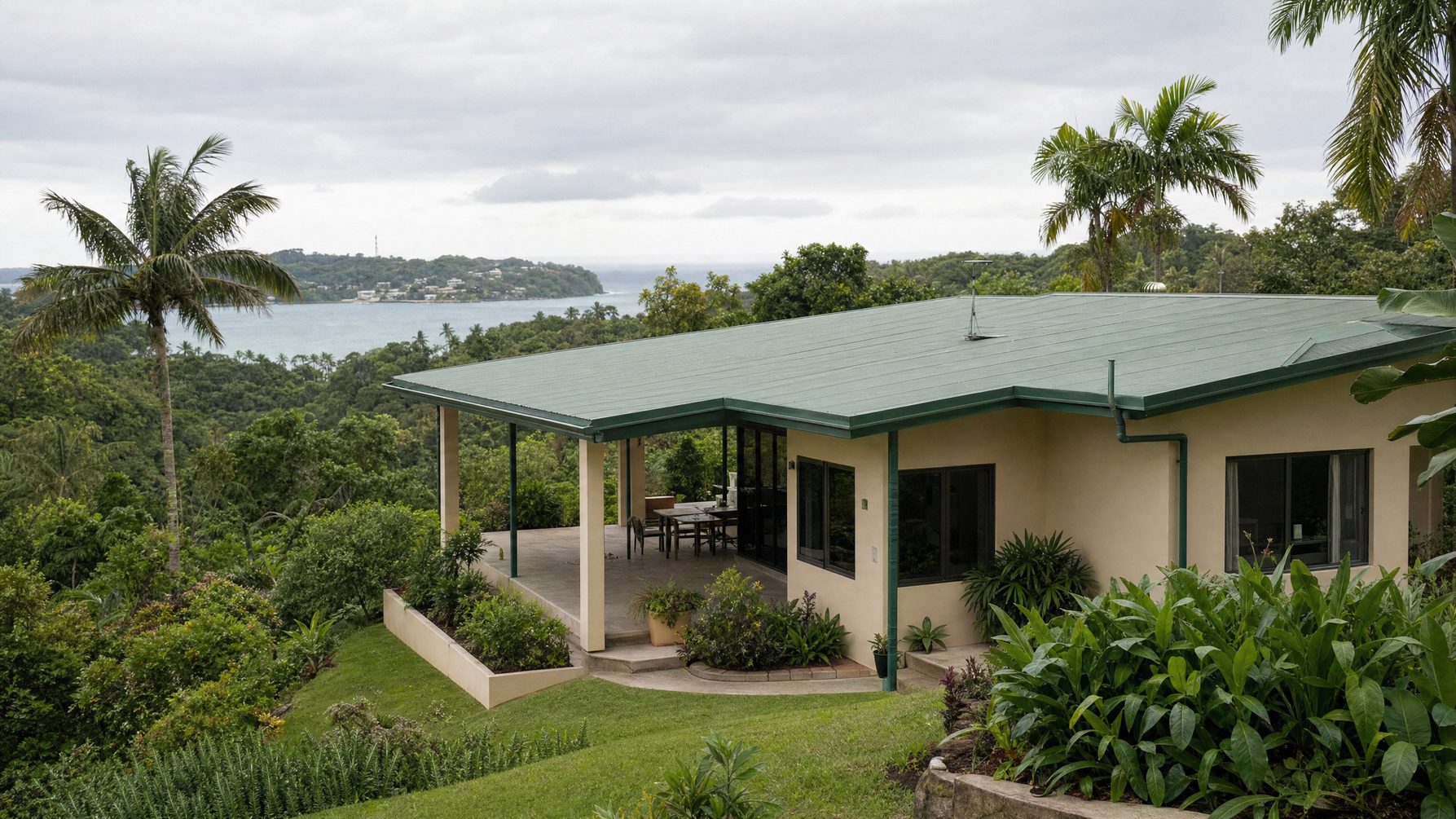
Vanuatu is a credible retirement destination only for a specific profile of HNW retirees attracted to Pacific lifestyle, accepting of the geographic remoteness, and not requiring frequent travel to Europe or North America.
There is no specific retirement visa in Vanuatu. Retirees typically use the Self-Funded Visa combined with eventual CBI naturalisation:
- ›Self-Funded Visa requirements: Monthly income VUV 250,000 (~USD 2,200) for single applicant, VUV 500,000 (~USD 4,400) including spouse. Annual fee VUV 20,000. 1-year visa, renewable indefinitely. After 10 years on residence visa, eligible for citizenship by naturalisation.
- ›Citizenship by Investment: Many HNW retirees combine the CBI passport (immediate citizenship) with the Self-Funded Visa or genuine relocation for tax-residence purposes.
For retirees with foreign pension income, the tax treatment is straightforward:
- ›Vanuatu imposes 0% tax on pension income — local or foreign, remitted or unremitted.
- ›No DTAs, so source-country pension taxation continues under domestic rules without treaty relief:
- ›UK state pension and most UK private pensions: Subject to UK tax under domestic rules.
- ›US Social Security: Subject to US tax (citizens taxed worldwide); FEIE does not apply to pensions.
- ›German Rente: Subject to German tax under §49 EStG; no Germany-Vanuatu DTA.
- ›Australian superannuation pensions: Treaty-specific rules under Australia-Vanuatu TIEA.
- ›Climate: Tropical — 22–30°C year-round, two distinct seasons (cooler May–October, hot and rainy November–April), cyclone season November–April. Generally pleasant but cyclone risk is real.
- ›Healthcare: Limited specialist care locally. Most complex medical issues require evacuation to Australia (3 hours) or New Zealand (3 hours). Comprehensive international health insurance with medical evacuation cover is essential — minimum USD 3,000–8,000+ per individual annually.
- ›Cost of living: see Section XVI. Comfortable single retiree budget USD 3,000–5,500/month; couple USD 5,000–9,000/month including private healthcare and travel. Significantly cheaper than Australia, New Zealand, or most Western retirement destinations — but the medical-evacuation insurance burden and high travel costs to Europe/US add meaningful expense.
- ›Community: The expat retirement community in Vanuatu is small (a few hundred) but established, with Australian, New Zealand, French, and a smaller community of Northern European retirees. Most expats live in or near Port Vila on Efate. Social life centres on the local clubs (Vanuatu Yacht Club, the Cercle), restaurants, and the small but active expat networks.
XIX.
US Citizens: What You Need to Know
US citizens and long-term green card holders are taxed by the United States on their worldwide income, regardless of where they live. Relocating to Vanuatu does not end US tax obligations.
Key considerations for US citizens in Vanuatu:
- ›Foreign Earned Income Exclusion (FEIE): US citizens who qualify as bona fide residents of Vanuatu can exclude up to US$132,900 of foreign earned income from US federal income tax for 2026. Applies to wages and self-employment — not passive income.
- ›Foreign Tax Credit: Vanuatu has 0% personal income tax — so there is no Vanuatu tax to credit against. US citizens pay full US tax on non-FEIE-excluded income.
- ›No US-Vanuatu DTA: No comprehensive double tax agreement. The two countries have a limited TIEA (Tax Information Exchange Agreement, signed 2010) but no income tax treaty.
- ›FBAR (FinCEN Form 114): US persons with Vanuatu bank accounts exceeding US$10,000 must file FBAR annually.
- ›FATCA (Form 8938): Vanuatu has FATCA cooperation. US persons must file Form 8938.
- ›PFIC: US citizens holding non-US mutual funds, ETFs, or pooled investments face the punitive PFIC regime.
- ›CFC and Subpart F: US citizens holding majority stakes in Vanuatu International Companies face CFC reporting and Subpart F passive-income inclusion. Form 5471 required.
- ›Self-Employment Tax: No US-Vanuatu totalization agreement. US self-employment tax applies regardless.
- ݤ877A Expatriation: US citizens who renounce citizenship and meet "covered expatriate" tests face mark-to-market deemed sale of worldwide assets.
- ›OBBBA (One Big Beautiful Bill Act, July 2025): Made TCJA brackets permanent; raised QSBS Section 1202 cap to US$15M; raised federal estate tax exemption permanently to US$15M from 2026.
- ›US visa change: Vanuatu B1/B2 visas were reduced from 5-year multiple-entry to 3-month single-entry following 2024 reforms. US citizens already hold US passports so this affects only their Vanuatu passport when used to enter the US.
For US citizens, Vanuatu is primarily a passport tool, not a US tax-elimination tool. The CBI passport provides a fast Plan-B citizenship. The 0% Vanuatu personal tax is real but irrelevant to US citizens facing full US worldwide taxation. Vanuatu IC structures may serve specific offshore purposes — but require careful US tax-compliance planning given CFC, PFIC, and substance rules.
US citizens considering Vanuatu should work with a qualified US international tax adviser alongside local Vanuatu counsel.
XX.
Correct Preparation
Before your move to Vanuatu, a number of important questions need to be answered.
Do I need to give up my home country property?
To genuinely shift your centre of life to Vanuatu, surrendering your principal residence in your home country is generally non-negotiable for tax-residence purposes. Particularly important for German nationals — Vanuatu is unambiguously a low-tax country under §2 AStG, and the 10-year extended liability framework applies in full.
Should I pursue DSP or CIF investment route?
The Development Support Programme (DSP) is non-refundable — USD 130,000 single applicant, USD 180,000 family of four. The Coffee Impact Fund (CIF) is partially refundable — USD 160,000 includes USD 50,000 redeemable after 5 years, reducing net cost to approximately USD 110,000 plus due diligence and biometric fees. CIF is generally more economical for clients with the patience for the 5-year hold; DSP is faster and simpler.
Should I pursue Vanuatu CBI for Europe travel?
No. The November 2024 EU Schengen visa-free access suspension is permanent. The UK and Ireland have also withdrawn visa-free access. Clients prioritising Europe travel should consider Caribbean CBI alternatives (Saint Kitts, Antigua, Grenada, Saint Lucia, Dominica) which retain Schengen visa-free access. Vanuatu is now best understood as a fast Plan-B tool and Pacific-region presence, not as a Europe-travel solution.
How quickly can I open a bank account?
Account opening typically requires personal presence in Vanuatu. Process takes 2–6 weeks once on-island. Multi-currency accounts (USD, AUD, NZD, EUR, VUV) available at major banks. Have lease agreement, source-of-funds documentation, and bank reference ready.
What happens to my existing company?
A relocation abroad has consequences for your existing business. For German nationals, §6 AStG exit tax applies on departure for shareholdings ≥1%. Discuss with your adviser before moving.
Do I need to set up a Vanuatu company?
For most CBI passport holders, no. The Vanuatu IC becomes relevant only for specific offshore holding purposes — and post-2019 substance rules raise the bar significantly. For pure passport and tax-residence purposes, no Vanuatu company is required.
How much money should I transfer in advance?
You can transfer unlimited funds to a Vanuatu bank account, subject to bank source-of-funds documentation. The CBI investment itself (USD 130K+) must be transferred to designated escrow accounts as part of the application.
What is the language situation?
Three official languages: Bislama, English, and French. Government, banking, and professional services operate primarily in English (and to a lesser degree French). Bislama is the everyday lingua franca. There is no language test for the CBI or Self-Funded Visa.
What about the post-2024 EU/UK/Ireland visa-free access loss?
This is permanent. Plan accordingly — if you need EU/UK travel, do not rely on the Vanuatu passport for it. Use your other strong-passport citizenship for European travel.
Deregistering from your home country
Standard deregistration with the residents' register and tax authority. For German nationals, the Abmeldung is mandatory. Given §2 AStG, timing must be handled carefully. For US citizens, no deregistration is possible — citizenship-based taxation continues.
XXI.
Automatic Exchange of Information (OECD CRS)
Vanuatu participates in the OECD Common Reporting Standard (CRS), with automatic exchange of financial account information since 2018. This represented a significant reform — Vanuatu was historically perceived as a secrecy jurisdiction, but post-2018 the country has fully integrated into the international transparency framework.
In practical terms: Vanuatu financial institutions identify account holders and report account details to the Vanuatu Department of Customs and Inland Revenue, which automatically shares this information with the tax authority of the account holder's country of tax residence on an annual basis.
The key point is that CRS follows tax residence, not nationality or citizenship. A Vanuatu CBI passport holder who is tax-resident in Germany is reported to the German Finanzamt as a German resident. CRS reporting confirms the actual tax-residence position; it does not create new tax liabilities.
Vanuatu has signed the Multilateral Convention on Mutual Administrative Assistance in Tax Matters and multiple bilateral TIEAs. Beneficial ownership transparency has been substantially upgraded since 2018; Vanuatu maintains a Beneficial Ownership Registry under the FATF framework.
The country has been removed from the EU AML "high-risk third countries" list as of 2022 after demonstrated compliance with international standards. However, the country remains on the FATF "grey list" for ongoing enhanced monitoring (as of late 2024) — and this was a contributing factor in the EU/UK/Ireland 2024 visa-free access decisions.
US citizens are different. Affected by FATCA instead. Vanuatu financial institutions identify US persons under FATCA procedures and report through a Model 1 IGA framework. US citizens with Vanuatu accounts must additionally file FBAR and Form 8938 directly with US authorities.
Key point: CRS and FATCA are not problems for those who have relocated correctly. They are problems for those who have not.
XXII.
Further Relocation Formalities
Upon establishing residence in Vanuatu (whether through CBI + genuine relocation, or under Self-Funded Visa):
- ›Immigration registration: Standard registration with the Vanuatu Immigration Service on arrival. CBI passport holders can use their Vanuatu passport directly.
- ›Tax registration: Tax Identification Number issued by the Department of Customs and Inland Revenue for any limited tax filings. Required for VAT-registered business activity.
- ›Vanuatu National Provident Fund (VNPF): Mandatory for those in formal local employment. Limited application for self-funded retirees and CBI holders without employment.
- ›Driving licences: International driving permits valid for short stays. After residence is established, exchange for a Vanuatu licence (subject to country-specific exchange agreements). Vanuatu drives on the right.
- ›Health insurance: Comprehensive international cover with medical evacuation essential. Bupa Global, Cigna Global, AXA Global Healthcare — premiums USD 3,000–8,000+ per individual annually.
- ›Importing personal effects: Household goods imported within 6 months of taking up residence may qualify for duty relief. Cars typically purchased locally given import duty levels.
- ›Schools: International school options in Port Vila — Lycée Français, Port Vila International School, several private institutions. Annual fees USD 8,000–25,000+ per child. Limited compared to Caribbean alternatives.
- ›Annual compliance calendar: Calendar reminders for any limited Vanuatu filings, residence visa renewals (for Self-Funded Visa holders), CBI passport renewal (every 10 years), health insurance renewals.
XXIII.
How We Help With Your Move to Vanuatu
We offer comprehensive tax and legal support for your relocation to Vanuatu. We follow a proven process — and where Vanuatu requires specialist local input, we coordinate with our network of government-authorized agents, local lawyers, and bankers.
The results speak for themselves: we have helped over 100 entrepreneurs and business owners significantly reduce their tax burden through carefully planned relocations. Legally sound structuring within the framework of international tax law is our highest priority.
Our services typically include:
- →Tax advice on the consequences of relocating abroad: analysis, projections, assessments
- →Honest assessment of whether Vanuatu is the right choice for your specific objectives — particularly important given the post-2024 EU/UK/Ireland visa-free access loss; for clients prioritising Europe travel, we recommend Caribbean CBI alternatives
- →CBI route selection: DSP vs Coffee Impact Fund — based on your goals, budget, and time horizon
- →Self-Funded Visa application for clients pursuing residence rather than (or in addition to) CBI
- →Home-country departure tax analysis BEFORE relying on Vanuatu residence — particularly for German nationals (§6 AStG, §2 AStG 10-year extended liability), Australian departers (CGT Event I1), and US citizens
- →Banking strategy: local Vanuatu accounts plus primary international private banking; source-of-wealth documentation file
- →Vanuatu IC formation where genuinely useful for offshore holding purposes (with appropriate substance)
- →Coordination with home-country tax adviser, US international tax counsel (where relevant), and Vanuatu Department of Customs and Inland Revenue
- →Schooling, healthcare, insurance coordination for relocating families (limited international school options should be planned for honestly)
- →Annual compliance management
Our fees are generally billed on a time basis; fixed prices apply for certain services such as CBI application coordination.
As a first step, we recommend booking a consultation to discuss your plans — by phone, Zoom, or Signal. We will be honest with you about whether Vanuatu fits your needs or whether a Caribbean CBI alternative would serve you better.