Contents
- 1. Poland: Country Overview
- 2. Putting Poland on the Map
- 3. What Others Say About Poland
- 4. Tax Benefits: What Poland Has to Offer
- 5. Tax Rates at a Glance
- 6. Tax Residency: What Triggers It
- 7. Double Tax Treaties
- 8. Avoid Remaining Tax Resident at Home
- 9. Tax Considerations When Leaving Your Home Country
- 10. Company Setup & Corporate Tax
- 11. Who Should (and Shouldn't) Move to Poland
- 12. Visas and Residence Permits
- 13. Path to Citizenship
- 14. Banking in Poland
- 15. What Makes Poland Genuinely Attractive
- 16. Cost of Living in Poland
- 17. Buying Real Estate in Poland
- 18. Retiring in Poland
- 19. US Citizens: What You Need to Know
- 20. Correct Preparation
- 21. Automatic Exchange of Information (OECD CRS)
- 22. Further Relocation Formalities
- 23. How We Help With Your Move to Poland
I.
Poland: Country Overview
Poland is an EU member state of approximately 38 million people in Central Europe, bordered by Germany to the west, Czech Republic and Slovakia to the south, Ukraine and Belarus to the east, and the Baltic Sea to the north. The capital is Warsaw; other major cities include Kraków, Wrocław, Gdańsk, and Poznań. Poland joined the EU in 2004, NATO in 1999, and the Schengen Area in 2007. It has not yet adopted the Euro — the currency is the Polish Złoty (PLN). GDP per capita has grown rapidly since EU accession; Poland is now a high-income economy and the largest economy in Central Europe.
The standard Polish tax headline — PIT 12%/32%, CIT 19%/9% — is correct but incomplete. The 2026 planning case rests on three under-marketed regimes. First, Ryczałt gives sole proprietors a turnover-based tax at 2%–17% by activity, including 12% for IT/programming and 8.5% for many general services. Second, Article 30j gives qualifying new residents a PLN 200,000 annual cap on all foreign-source income for up to 10 years, plus a PLN 100,000 public-benefit donation. Third, the Polish Family Foundation allows 0% CIT on retained income from permitted activities and 15% CIT only on distributions, with 0% PIT for founder and immediate family beneficiaries.
Poland has no annual wealth tax. Inheritance and gift tax is 0% for Group 0 family members if filing requirements are met. Capital gains and most investment income are taxed at 19%. Poland also has a comprehensive 90+ DTA network, Pillar Two QDMTT in force for large MNEs, and mandatory KSeF e-invoicing rolling out from 2026.
What to be aware of: Poland remains a worldwide-tax jurisdiction for ordinary tax residents, and it has a 19% individual exit tax on unrealised gains above PLN 4M when leaving Poland. ZUS and health-insurance contributions must be modelled for entrepreneurs. Ryczałt activity classification matters, Article 30j excludes CFC income, and the 2026 Family Foundation amendments add a 36-month lock-up, CFC rules, and exit-tax exposure. Proper Polish advice is essential before relying on any of the regimes.
2026 Poland structuring correction: Poland should be read through three under-marketed regimes, not only the standard 12%/32% PIT and 19%/9% CIT headline. The Ryczałt turnover-tax regime, the Article 30j lump-sum tax for new residents, and the Polish Family Foundation materially change the calculus for solo entrepreneurs, HNW relocators, and dynastic wealth planning within an EU/NATO jurisdiction using PLN rather than the euro.
II.
Putting Poland on the Map
Poland — Central Europe; EU and Schengen member; Warsaw capital; Kraków, Wrocław, Gdańsk major cities
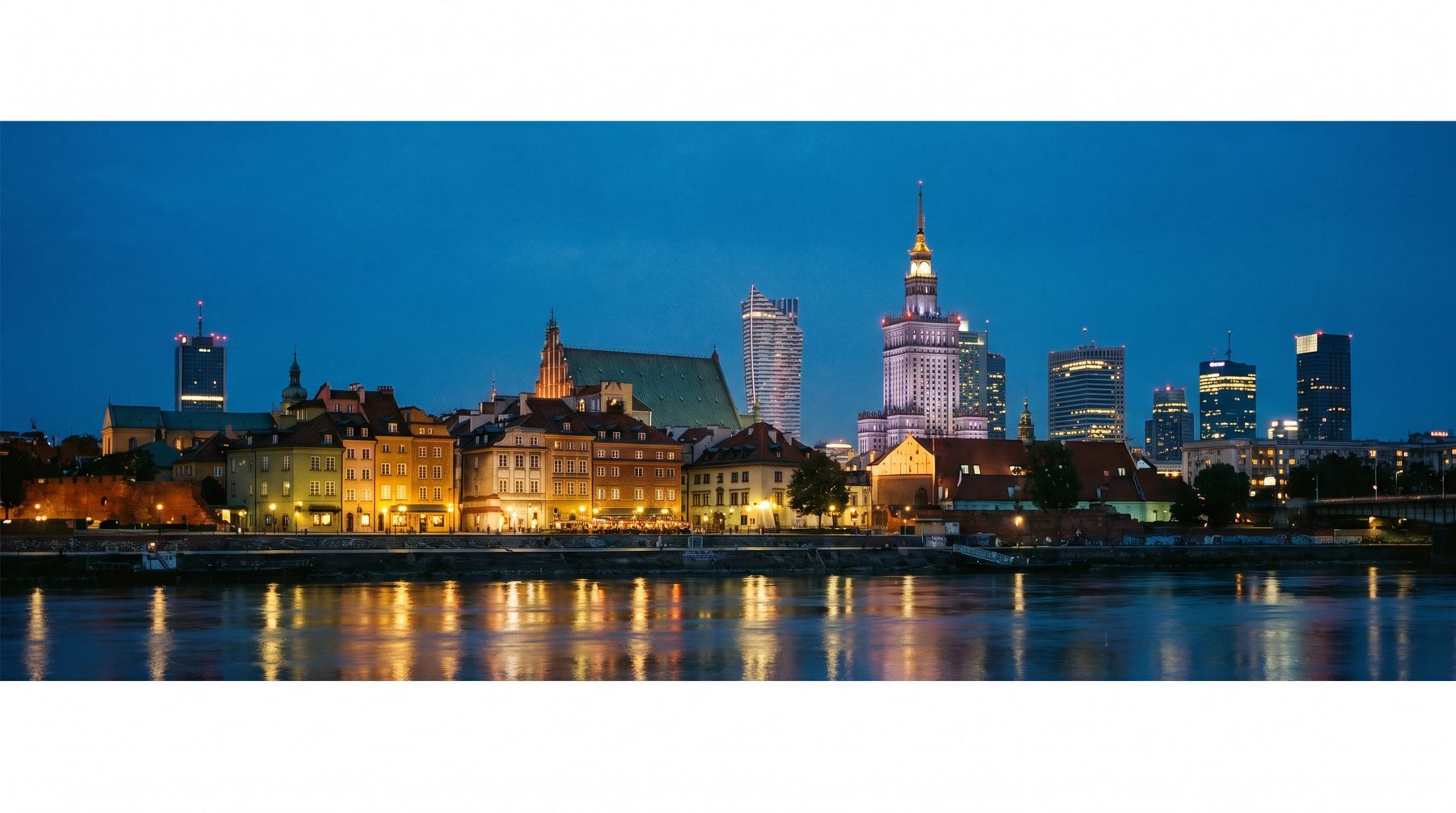
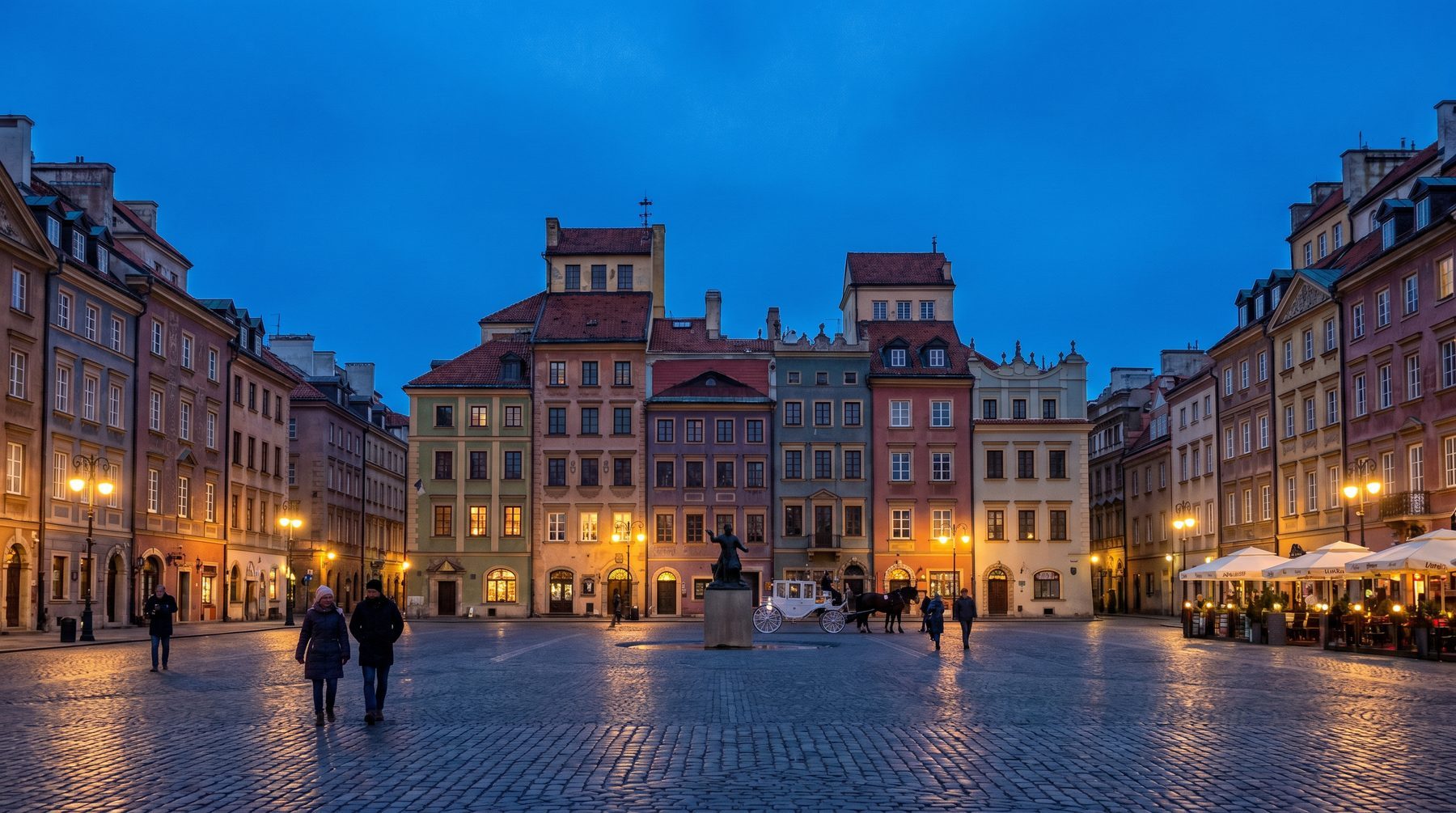
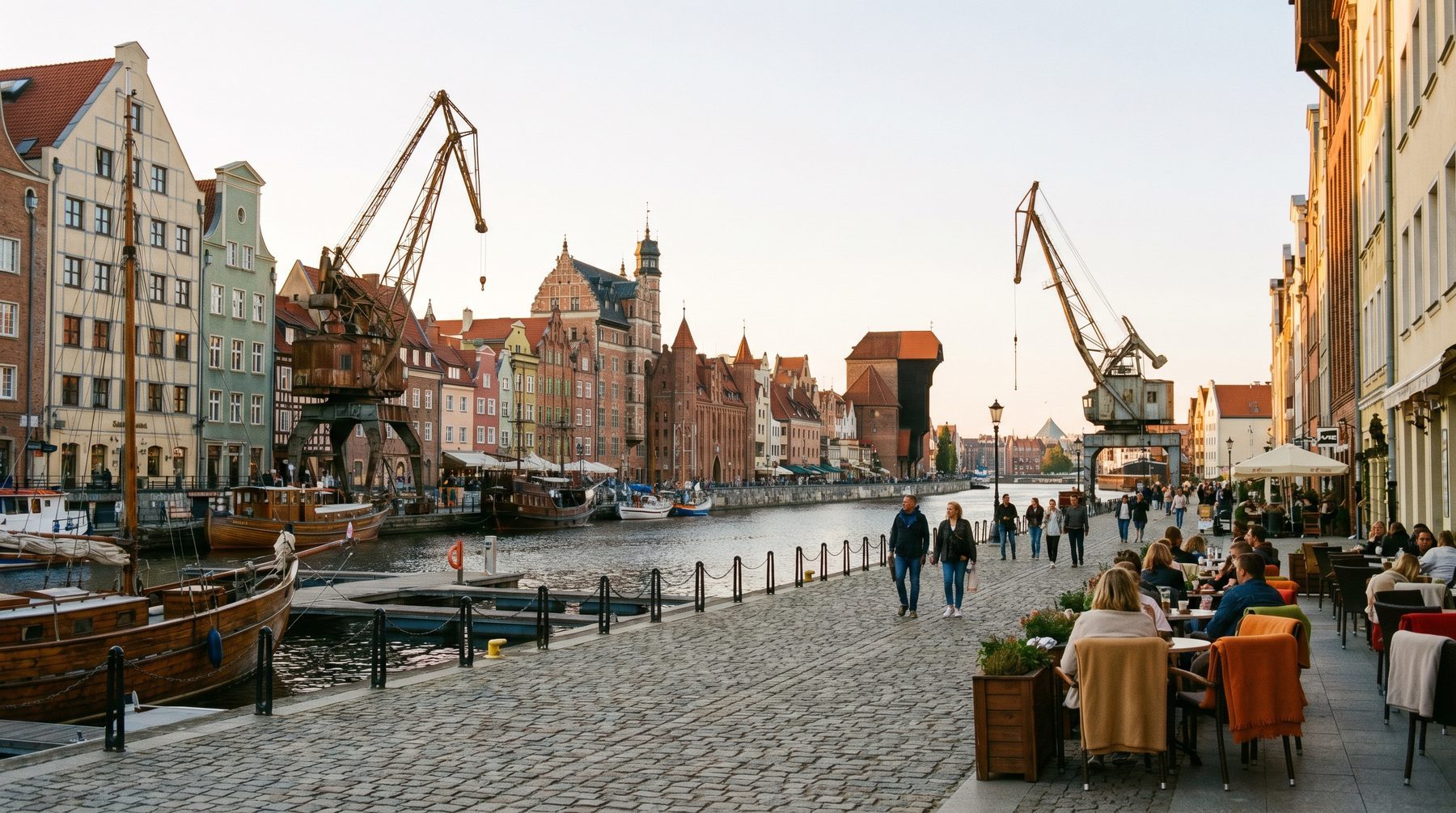
Warsaw was almost entirely destroyed in World War II — the Germans systematically demolished it after the 1944 Warsaw Uprising, street by street and building by building, until 85% of the city was in ruins. What exists today is largely reconstruction, and knowing this changes the experience of it: the Old Town (Stare Miasto) with its colourful market square and medieval walls was rebuilt from rubble using paintings and photographs and the memories of survivors, completed in the 1950s, and declared a UNESCO World Heritage Site in 1980 in recognition of the act of reconstruction itself. The Warsaw that emerged from this history is a city of considerable resilience and some scepticism — sceptical of easy things, of comfort that comes too quickly, of permanence.
The modern city is a glass-tower financial capital with a thriving tech sector, a restaurant scene that has developed rapidly since 2015, and a quality of life that consistently surprises visitors who arrive expecting something between Budapest and Minsk and find something closer to Amsterdam at half the price. The Praga district on the east bank of the Vistula, once the grittier neighbour of the centre, is where the galleries, bars, and creative studios have moved — a process of gentrification so recent that it is still interesting.
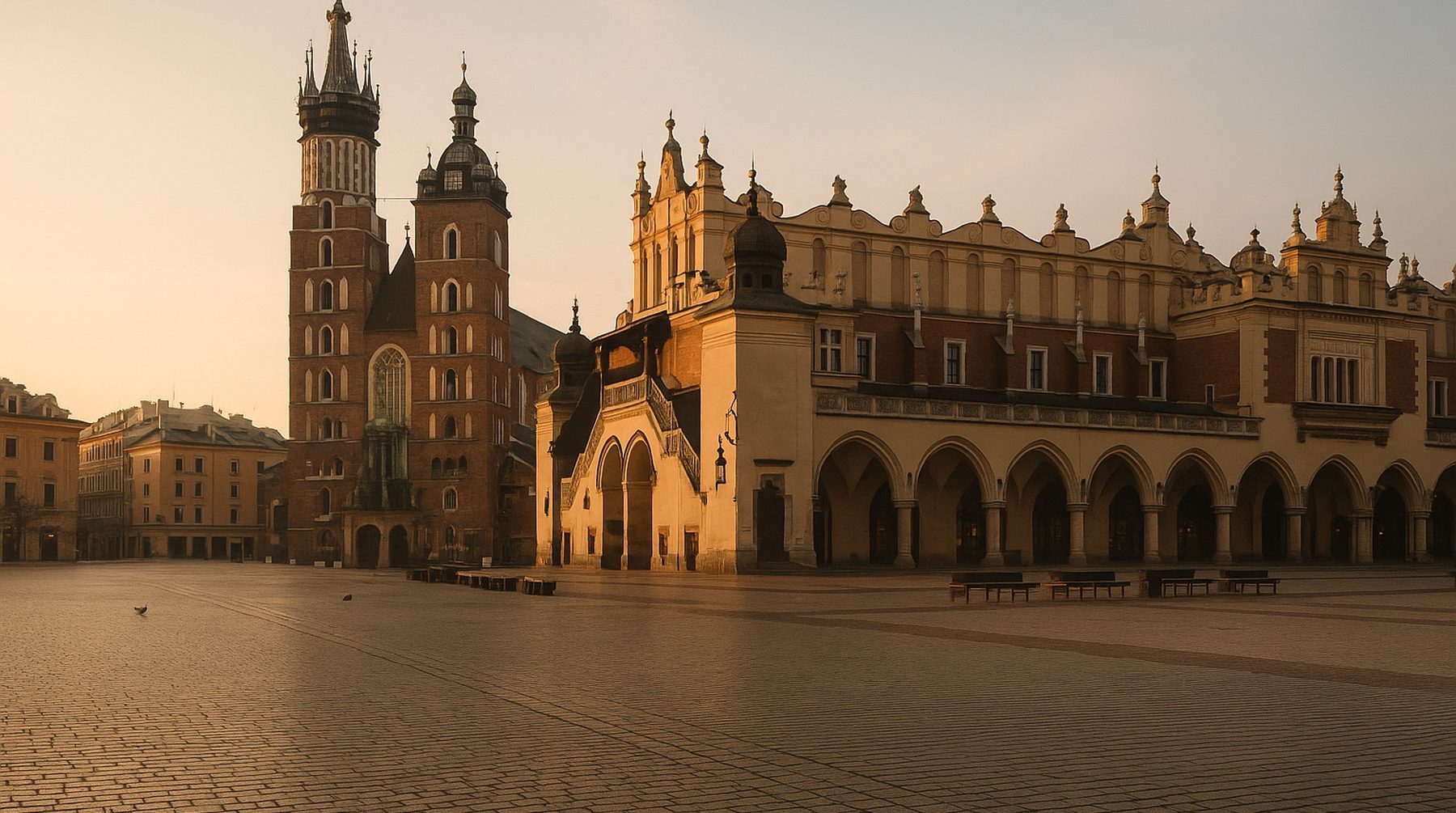
- ›Kraków is what Warsaw might have been without the war — a complete, preserved medieval city with a Wawel Castle that has housed Polish kings since the 11th century, a Jewish Quarter (Kazimierz) whose synagogues and cafés carry the weight of a community nearly extinguished by the Holocaust, and a Rynek Główny (main market square) that at 200 metres wide is the largest medieval square in Europe. The Wieliczka Salt Mine, 15 kilometres from the city centre, has been worked since the 13th century: 300 kilometres of underground chambers including a cathedral carved entirely from salt, its chandeliers made of salt crystals, its walls carved with biblical scenes. It is a UNESCO World Heritage Site and one of the strangest and most extraordinary places in Central Europe.
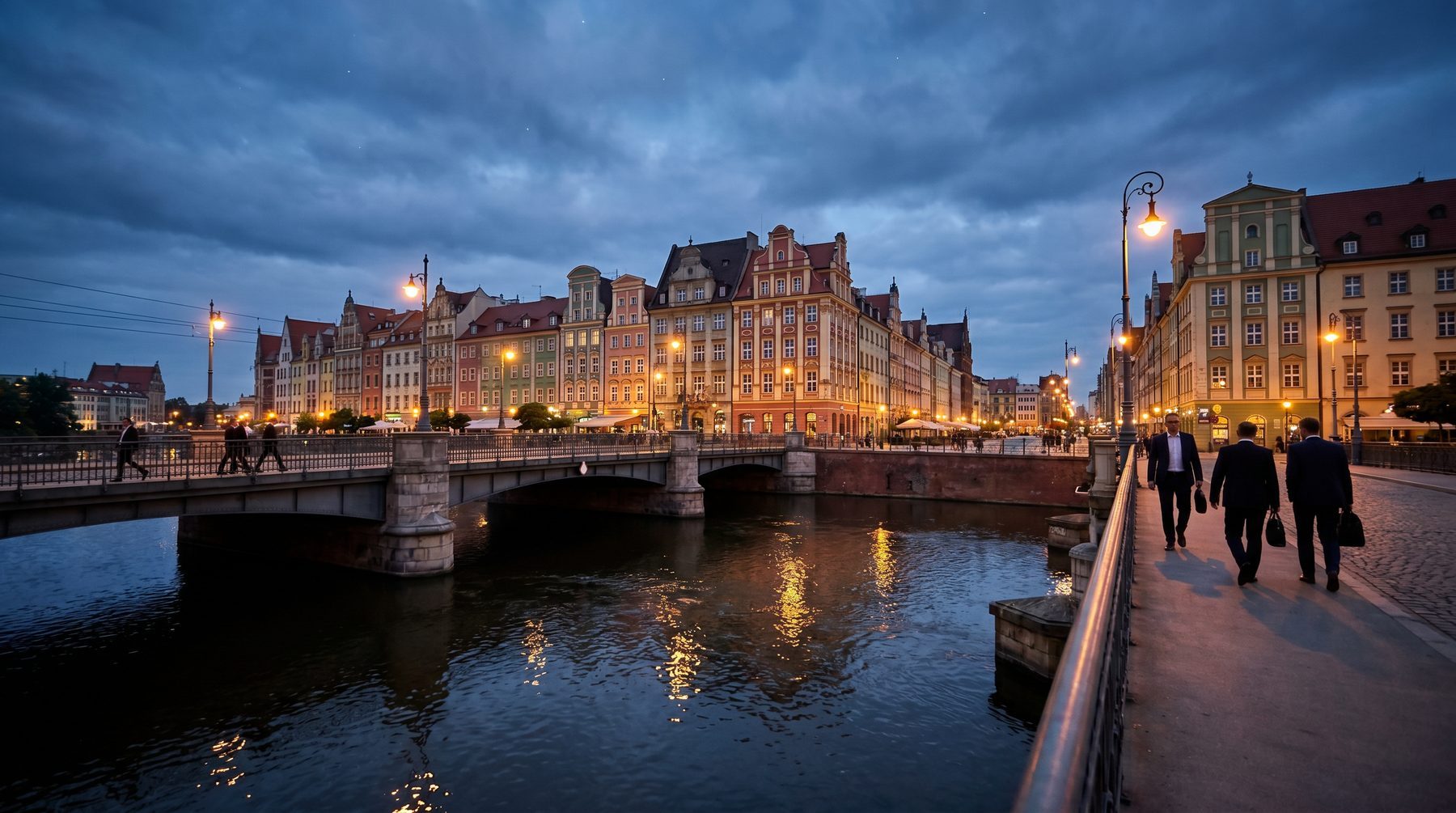
- ›Wrocław in Lower Silesia has been German (as Breslau), Czech, Bohemian, Habsburg, and Polish in its history and shows all of them in its architecture — Gothic churches, Baroque palaces, Art Nouveau apartment blocks, and a network of islands in the Oder River connected by 100+ bridges. The Rynek is one of the finest market squares in Central Europe; the gnome statues scattered throughout the city number over 400 and are a specifically Wrocław absurdity that locals take seriously.
Berlin is 90 minutes by ICE from Warsaw. Prague is 4.5 hours from Kraków. Vienna is 5.5 hours. Warsaw's Chopin Airport connects to most major European cities.
III.
What Others Say About Poland
"Poland has the most underrated food culture in Europe. The bigos, the żurek, the pierogi, the barszcz — these are dishes of genuine complexity and historical depth, and they cost four euros."
— Anthony Bourdain, Parts Unknown, Poland episode, 2018
"Kraków is the most beautiful city in Central Europe. Warsaw is the most interesting."
— Patrick Leigh Fermor, from correspondence, 1990s
"Warsaw was destroyed and rebuilt by people who loved it. You can feel that in the city. It is not the love of the comfortable — it is the love of people who had everything taken and chose to rebuild it anyway."
— Olga Tokarczuk, Nobel Prize Lecture, Stockholm, 2019
IV.
Tax Benefits: What Poland Has to Offer
Poland is one of Europe's most under-marketed structuring jurisdictions, and the reason is that three of its most useful regimes operate outside the standard 12%/32% PIT headline. The Ryczałt regime gives sole proprietors a turnover-based tax at 2%–17% depending on activity (IT/programming 12%, most general services 8.5%, healthcare/engineering 14%, consulting 15%, liberal professions 17%) — available up to ~€2M revenue, with no expense deduction but extraordinarily simple compliance and favourable flat-amount health insurance. The lump-sum tax for new residents (since 2022) caps tax on ALL foreign-source income at PLN 200,000/year regardless of amount for 10 consecutive years — at PLN 10M of foreign income the effective rate is 2%, at PLN 20M it is 1% — in exchange for a PLN 100,000 annual public-benefit donation; family members can join at PLN 100,000 each. The Polish Family Foundation (Fundacja Rodzinna) — introduced May 2023 — provides 0% CIT on retained income from permitted activities (dividends, interest, capital gains on shares/securities, real estate rental); 15% CIT only on distributions; founder and immediate family exempt from PIT on distributions. EU and NATO member, 90+ DTAs, EUR-pegged-loose Złoty. Note: 2026 amendments tighten Family Foundation rules with a 36-month asset lock-up.
- ›Ryczałt (lump-sum on recorded revenue) — turnover tax 2%–17% for sole proprietors up to ~€2M annual revenue — IT/programming 12%, most general services 8.5%, healthcare/architecture/engineering 14%, consulting/financial intermediation/management services 15%, liberal professions 17%, manufacturing/construction 5.5%, retail trade and gastronomy 3%. No expense deduction (revenue-based) but materially simpler compliance and favourable flat-amount health insurance (~PLN 498–1,495/month depending on revenue tier). Effective total tax + ZUS for IT freelancers commonly 15%–18% — among Europe's most efficient regimes for solo entrepreneurs with low operating costs.
- ›Lump-sum tax for new residents — PLN 200K flat on ALL foreign income for 10 years (Beckham-style HNW regime since 2022) — Article 30j PIT Act: foreign-source income (foreign dividends, foreign interest, foreign capital gains, foreign business profits, foreign rental, foreign salaries, foreign pensions) capped at PLN 200,000/year regardless of amount, for 10 consecutive tax years. Requires non-residence in Poland for at least 5 of the 6 prior years. Family members at PLN 100,000/year each (no donation obligation). Polish-source income still taxed under standard rules (12%/32%, 19% flat tax, or Ryczałt). CFC income explicitly excluded.
- ›Lump-sum new residents — PLN 100K annual public-benefit donation requirement — taxpayers under the lump-sum regime must annually allocate at least PLN 100,000 (~EUR 23,500) to economic growth, science, education, cultural heritage protection, public-benefit organisations, alternative investment companies, immovable monuments, or sports promotion in Poland. List designated by Minister of Finance executive regulation. Donation obligation does NOT apply to family members joining at PLN 100,000/year.
- ›Polish Family Foundation (Fundacja Rodzinna) — 0% CIT on retained income, 15% CIT only on distributions, 0% PIT for immediate family — introduced 22 May 2023 under the Family Foundation Act. Founder contributes assets tax-neutrally (0% PCC, CIT, PIT); Foundation invests within permitted activity scope (dividends, interest, capital gains on shares/securities, real estate rental, lending) at 0% CIT; 15% CIT applies only when distributions are made to beneficiaries; founder and immediate family ("Group 0": spouse, descendants, ascendants, stepchildren, siblings, stepfather, stepmother) are exempt from PIT on distributions and dissolution proceeds. Minimum founding capital PLN 100,000.
- ›Family Foundation — 2026 tightening (effective 1 January 2026): 36-month asset lock-up + CFC + exit tax — new amendments make the Foundation more clearly a long-term succession vehicle: assets contributed after 31 December 2025 must remain in the Foundation for at least 36 months (early sale = 19% CIT, creditable against later 15% CIT on distributions); CFC rules now apply to foreign-controlled entities of the Foundation; exit tax applies on cross-border asset/residency transfers; expanded "hidden profits" catalogue (forgiven/time-barred/uncollectible loans = 15% CIT). The headline 0% CIT on permitted activities + 15% CIT on distributions remains.
- ›Standard PIT 12% / 32% with PLN 30K tax-free amount; CIT 19% / 9% small taxpayer — standard PIT 12% to PLN 120K, 32% above; PLN 30,000 annual tax-free; 4% solidarity surcharge above PLN 1M. CIT 19% standard, 9% for small taxpayers (revenue ≤€2M). Banking sector permanently elevated to 23%/21%/11% from 2026 (transitional 30%/27%/17% in 2026, 26%/23%/13% in 2027).
- ›19% individual exit tax on unrealised gains above PLN 4M — Poland has a Wegzugsbesteuerung-style exit tax for individuals: 19% on the surplus of market value over tax base on certain assets (including company shares, securities, derivatives, IP rights) when changing tax residency from Poland; payment in instalments up to 5 years available; exemption threshold PLN 4,000,000.
- ›Inheritance and gift tax — Group 0 EXEMPT (subject to filing); progressive 3%–20% for others — spouse, descendants, ascendants, stepchildren, siblings, stepfather, stepmother are completely exempt (Group 0) provided they file the SD-Z2 form within 6 months. Other relatives and unrelated parties pay 3%–20% based on relationship group and amount.
- ›EU member, NATO member, 90+ DTAs, EUR-pegged-loose Złoty; Pillar Two implemented — full EU/NATO membership; 90+ active DTAs including all major OECD economies, US, UK, Germany, France, Switzerland, Singapore, UAE; Polish Złoty (PLN) on managed float (~PLN 4.20/EUR; not in Eurozone); Pillar Two domestic top-up tax in force from 1 January 2025 for MNEs ≥€750M; mandatory KSeF e-invoicing rolling out from February 2026.
V.
Tax Rates at a Glance
| Tax | Rate (2026) | Notes |
|---|---|---|
| Tax basis — residents | Worldwide | |
| Tax basis — non-residents | Polish-source only | |
| Personal Income Tax — bottom bracket | 12% | PLN 30K tax-free; up to PLN 120K |
| Personal Income Tax — top bracket | 32% | Above PLN 120K |
| Solidarity surcharge | 4% | Above PLN 1M annual income |
| Capital Gains (general) | 19% flat | "Podatek Belki"; no PLN 30K allowance |
| Health insurance (standard PIT) | 9% | Of income; non-deductible |
| Ryczałt (lump-sum on recorded revenue) — IT/programming | 12% | PKD 62.0x activities; up to ~€2M revenue |
| Ryczałt — general services | 8.5% | Most service activities |
| Ryczałt — healthcare, architecture, engineering | 14% | |
| Ryczałt — consulting, financial, management | 15% | |
| Ryczałt — liberal professions | 17% | Lawyers, doctors, notaries, tax advisors |
| Ryczałt — manufacturing, construction | 5.5% | |
| Ryczałt — retail trade, gastronomy | 3% | |
| Ryczałt — health insurance (flat amounts) | PLN 498/830/1,495/month | By revenue tier |
| Lump-sum tax for new residents — annual flat | PLN 200,000 | On ALL foreign income; 10 years; family at PLN 100K each |
| Lump-sum new residents — donation requirement | PLN 100,000/year | Public-benefit purposes |
| Lump-sum new residents — eligibility | Non-resident 5 of 6 prior years | |
| Family Foundation — CIT on retained income | 0% | Permitted activities only |
| Family Foundation — CIT on distributions | 15% | At Foundation level |
| Family Foundation — PIT on distributions to Group 0 | 0% | Spouse, descendants, ascendants, stepchildren, siblings, stepfather, stepmother |
| Family Foundation — PIT to other relatives | 10% | Group I/II |
| Family Foundation — PIT to unrelated beneficiaries | 15% | |
| Family Foundation — sanctioned CIT (non-permitted activity) | 25% | |
| Family Foundation — minimum founding capital | PLN 100,000 | |
| Family Foundation — 36-month asset lock-up | From 1 Jan 2026 | Early sale = 19% CIT, creditable |
| Corporate Income Tax — standard | 19% | |
| Corporate Income Tax — small taxpayer | 9% | Revenue ≤€2M |
| Corporate Income Tax — banking (NEW 2026) | 23% / 21% / 11% | Permanent; transitional 30%/27%/17% in 2026 |
| Estonian CIT | Deferred until distribution | Optional regime |
| Pillar Two QDMTT | Implemented 1 Jan 2025 | MNEs ≥€750M |
| Diverted profits tax | 19% | Qualified costs to low-tax related parties |
| Exit tax (individual) | 19% | On unrealised gains above PLN 4M |
| Exit tax (corporate) | 19% | |
| Real Estate CGT — residential | 19% / 0% | 5-year holding; primary residence reinvestment exemption |
| Inheritance / Gift Tax — Group 0 | 0% | With SD-Z2 filing within 6 months |
| Inheritance / Gift Tax — Groups I/II/III | 3%–20% | Progressive by relationship/amount |
| Wealth Tax | 0% | None |
| VAT — standard | 23% | |
| VAT — reduced | 8% / 5% / 0% | |
| VAT — registration threshold | PLN 200,000 | Annual turnover |
| KSeF (mandatory e-invoicing) | From Feb 2026 (large) / Apr 2026 (all) | National e-Invoice System |
| Cash-basis PIT (entrepreneurs) | Available | Threshold PLN 2M from 2026 |
| Currency | PLN | Not in Eurozone; managed float |
| DTAs | 90+ | All major OECD economies |
| CRS | Participating | Since 2017 |
| EU member | Yes | Since 2004 |
| NATO member | Yes | Since 1999 |
VI.
Tax Residency: What Triggers It
Polish tax residency is established if the individual either has a centre of vital interests in Poland (personal or economic ties) or spends more than 183 days in Poland during the tax year. Either trigger is sufficient. Residents are taxed on worldwide income unless a special regime such as the Article 30j lump-sum tax for new residents applies to foreign-source income.
Key point: The 2026 planning question is not merely whether Poland taxes residents worldwide. It is whether the client can combine ordinary Polish residency with the right regime: Ryczałt for active sole-proprietor income, Article 30j for foreign-source HNW income, and the Family Foundation for long-term dynastic wealth planning.
VII.
Double Tax Treaties
Poland has approximately 90 active DTAs — one of the most comprehensive networks in Central Europe, covering virtually every significant source-country economy: Germany, UK, US, France, Netherlands, Switzerland, Austria, Sweden, and all EU member states.
- ›The Poland-Germany DTA is the most important for the primary target audience. It governs German-source income paid to Polish residents — dividends, interest, and pension income. German Rente paid to Polish residents is typically taxable in Poland under the DTA. Polish IT sector employees are exempt from Polish personal income tax under a specific domestic exemption — this interacts with the DTA allocation in a beneficial way.
- ›The Poland-UK DTA governs UK-source income for British nationals. UK pension income, UK dividends, and UK interest flowing to Polish residents are governed by the treaty.
- ›The Poland-US DTA is comprehensive and covers the large Polish-American community as well as US professionals in Poland's growing tech and finance sector.
- ›The IP Box DTA interaction: The IP Box at 5% applies to qualifying IP income sourced in Poland. Source-country withholding on royalties and licensing fees flowing from abroad to a Polish IP Box company may be reduced under the relevant DTA — the combination of DTA-reduced source withholding and Poland's 5% IP Box rate can produce very low combined effective rates on qualifying intellectual property income.
2026 treaty update: Poland has 90+ active DTAs including all major OECD economies, the US, UK, Germany, France, Switzerland, Singapore, UAE, and all EU member states. The Germany-Poland DTA is in force and material for DACH clients, and the US-Poland DTA provides standard tie-breaker rules.
VIII.
Avoid Remaining Tax Resident at Home
Poland taxes ordinary residents on worldwide income, so home-country tax residency must still be genuinely severed for the planning benefit to be realised. The Polish advantages — Ryczałt, Article 30j lump-sum for new residents, and the Family Foundation — do not solve a failed exit from Germany, Austria, the UK, the US, or another departure jurisdiction.
For German nationals, the §6 AStG exit tax applies to shareholdings of 1% or more at departure from German tax residency. German dividends paid to Polish residents may benefit from reduced withholding under the Germany-Poland DTA. For British nationals, the SRT exit date must be established. The UK-Poland DTA provides treaty protection. For Austrian nationals, Austrian domestic exit provisions apply and the Austria-Poland DTA governs the bilateral relationship.
IX.
Tax Considerations When Leaving Your Home Country
Before you relocate, you need to understand what tax consequences arise in your current country of residence at the point of departure. These rules vary significantly by country and must be assessed individually — there is no universal answer.
Many countries impose an exit tax or deemed disposal charge when a tax resident leaves. This typically applies to unrealised capital gains on shares, business interests, real estate, or other assets — taxing you as if you had sold everything on the day you departed. The rules differ widely: some countries apply this to all assets above a threshold, others only to substantial shareholdings or business interests. Some have look-back periods that can catch you even after you have left.
The timing of your departure, the structure of your assets, and the sequence of any business disposals all have material consequences. In some cases, restructuring assets before departure — or deferring the move by a few months — can make a significant difference to the tax outcome.
- ›Germany. The §6 AStG exit tax on shareholdings of 1% or more applies at departure from German tax residency. German dividends paid to Polish residents benefit from reduced withholding under the Germany-Poland DTA. German statutory pension income paid to Polish residents is typically taxable in Poland under the DTA.
- ›United Kingdom. SRT exit date must be established. CGT on departure. The UK-Poland DTA provides treaty protection and tie-breaker rules. UK pension income flowing to Polish residents is governed by the DTA.
- ›Austria. Austrian domestic exit provisions apply. The Austria-Poland DTA is in force. Given Poland's eastern border with the Austrian sphere of influence and the significant Austrian professional community active in Poland, bilateral issues are well-documented.
- ›United States. US worldwide taxation applies. The US-Poland DTA is in force. The 5% IP Box rate on qualifying income generates a Foreign Tax Credit against the US liability on that income, though the credit is limited to the Polish tax actually charged.
⚠ Obtain Local Tax Advice in Your Home Country The information above provides a general overview of the departure tax rules that commonly apply when leaving high-tax jurisdictions. It is not legal or tax advice. The rules in your specific home country — Germany, Austria, Switzerland, the UK, the US, or any other jurisdiction — are complex, change frequently, and depend entirely on your personal circumstances: your nationality, the nature and location of your assets, your business structure, your family situation, and the timing of your departure. Before you take any steps to relocate, obtain written advice from a qualified tax adviser who is licensed in your home country and experienced in international relocations. A consultation with us is a good starting point — but it does not substitute for country-specific legal advice from a practitioner in your jurisdiction of departure. The cost of getting this wrong is almost always greater than the cost of getting proper advice upfront.
X.
Company Setup & Corporate Tax
- ›Polish sp. z o.o. (spółka z ograniczoną odpowiedzialnością) is the standard limited-liability vehicle. Corporate tax is 19% standard and 9% for small taxpayers with annual revenue ≤€2M, on income other than capital gains. Registration through the online S24 system can be fast, but banking, accounting, VAT, and substance must be planned properly.
- ›Estonian CIT option: Poland offers a deferred-until-distribution regime for qualifying companies, useful where profits are reinvested rather than distributed.
- ›2026 corporate update: banking-sector CIT is permanently elevated to 23%/21%/11% from 2026; Pillar Two QDMTT is in force from 1 January 2025 for MNEs ≥€750M; mandatory KSeF e-invoicing rolls out from February 2026; and main corporate forms include Sp. z o.o., S.A., and PSA.
Learn more about our company setup services →
Permanent establishment risk: A foreign company is not a magical solution. If the company is effectively managed from your country of residence, or if staff, sales activity, or day-to-day control are located there, local tax authorities may still tax the profits locally. Structure follows substance.
XI.
Who Should (and Shouldn't) Move to Poland
Section 11 is where the relocation decision becomes practical. Poland can be an excellent fit for some profiles and a poor fit for others; the decisive question is whether the tax rules, lifestyle, residence requirements, banking, healthcare, and family situation point in the same direction.
Good Fit
- › International entrepreneurs and investors whose income structure actually benefits from Poland’s tax and residence rules.
- › Remote professionals and business owners who can move their centre of life genuinely, not merely change an address on paper.
- › Families or individuals who value Poland’s lifestyle, geography, safety profile, and cost structure as part of the overall decision.
- › People willing to handle local banking, residency, healthcare, and administration properly rather than improvising after arrival.
- › Those who understand that relocation is a full tax-residency project, not a holiday with a lower tax rate.
Poor Fit
- × Those who cannot genuinely spend enough time in Poland to support a defensible tax-residence position.
- × People who need a zero-friction, Western-European administrative environment from day one.
- × US citizens who expect the move to eliminate US tax filing, FBAR, FATCA, or citizenship-based taxation.
- × Those with income, companies, or family ties that keep them clearly taxable in their previous Poland.
- × Anyone choosing the jurisdiction only because it sounds attractive online, without testing housing, banking, healthcare, and lifestyle fit.

XII.
Visas and Residence Permits
- ›EU/EEA/Swiss nationals: Freedom of movement. Register residence after 3 months.
- ›Non-EU nationals: Work and residence permit required for employment. Business-based temporary residence permit for entrepreneurs and investors. Processing time: 2–4 months.
2026 residence update: EU/EEA citizens use free movement with registration after 90+ days. Non-EU/EEA nationals generally use temporary residence permits tied to employment, family, business, or studies; EU Blue Card is available for highly qualified workers; permanent residence usually follows five years of legal residence; citizenship by naturalisation typically requires permanent residence plus Polish-language proficiency. Tax residency is independent of immigration status and triggers at 183+ days or centre of vital/economic interests.
XIII.
Path to Citizenship
Polish citizenship by naturalisation: 3 years of legal residence for spouses of Polish citizens; 5 years for EU/EEA nationals; 10 years for others. Poland permits dual citizenship. Polish passport: visa-free access to approximately 187 countries — one of the strongest in this hub.
XIV.
Banking in Poland
Major banks: PKO Bank Polski (largest), Bank Pekao, mBank, ING Bank Śląski, Santander Bank Polska, Millennium Bank. All well-capitalised, EU-regulated, SEPA-compliant. Account opening for residents is accessible; for non-residents it requires more documentation.
For a relocation to Poland, the local account is normally the operational account: rent, utilities, cards, domestic transfers, local tax or residence registrations, and evidence that the move is real. It should not automatically become the main wealth-management account unless the local banking system offers the depth, multi-currency capability, private-banking service level, and long-term stability required for the client's assets.
Account opening in Poland should be treated as a compliance exercise, not as an administrative formality. Expect passport checks, proof of address, residence or visa documentation where applicable, tax-identification details, source-of-funds evidence, and sometimes in-person attendance or a local phone number. The easiest applications are those where the residence story, income source, and banking purpose are consistent before the first form is submitted.
Where to hold your main accounts
For Polish residents with primarily Polish-source IP income, Polish banking for local operations and EU SEPA transactions is appropriate. Complementary international banking for significant wealth:
- ›Switzerland — private banking for HNW clients
- ›Germany — for German nationals with ongoing German financial ties
- ›Georgia (Caucasus) — secondary account for digital entrepreneurs
Learn more about our offshore banking services →
Important: not all banks are compatible with all residencies. Some Swiss and Singaporean private banks have restrictions on clients resident in certain jurisdictions, and compliance requirements vary. Residency status, income profile, source of wealth, and business type all affect which institutions will accept you and on what terms. We help clients navigate this before they commit to any banking structure.
XV.
What Makes Poland Genuinely Attractive
Poland is attractive when it is judged as a complete relocation platform, not as a slogan. The point is not that Poland is perfect for everyone. The point is that, for the right person, the combination of tax position, residence practicality, lifestyle, geography, banking, language, and long-term stability can produce a genuinely coherent base.
- ›Large EU economy with still-reasonable costs. Poland is attractive because it is a large, serious EU economy with improving infrastructure, strong human capital, and costs below Western Europe.
- ›The lifestyle case is not cosmetic. Warsaw, Kraków, Wrocław, Gdańsk, and Poznań each offer a different version of modern Central European life, with culture, safety, and growing international communities.
- ›It can function as a real operating base. For entrepreneurs, manufacturers, technology businesses, and families, Poland offers a real domestic market and EU access without Paris or Berlin cost levels.
- ›It rewards the right profile. It suits people who want substance, scale, and European integration rather than boutique tax residency.
- ›The attraction has to be handled honestly. Tax rules and bureaucracy require careful handling, and winters are real. Poland is attractive because it is serious, not because it is effortless.
XVI.
Cost of Living in Poland
Poland remains affordable relative to Western Europe, but Warsaw, Kraków and Wrocław have become materially more expensive. The professional-class budget is now closer to Central European norms.
Typical monthly costs for an internationally mobile professional or family in Poland (2026 planning ranges):
| Category | PLN/month | GBP/month | USD/month |
|---|---|---|---|
| 1-bed apartment, desirable area | PLN 3,860–8,280 | £750–1,600 | $950–2,050 |
| 2-bed apartment / small house | PLN 7,480–15,200 | £1,450–2,950 | $1,850–3,800 |
| International school (annual per child) | PLN 12,100–38,000 | £2,350–7,400 | $3,050–9,500 |
| Private health insurance (annual individual) | PLN 2,300–8,100 | £450–1,600 | $600–2,000 |
| Restaurant meal, mid-range (per person) | PLN 80–220 | £0–50 | $0–50 |
| Monthly groceries, single person | PLN 1,660–3,960 | £300–750 | $400–1,000 |
| Utilities and internet, apartment | PLN 740–2,160 | £150–400 | $200–550 |
- ›Comfortable single professional (no children): PLN 9,200–18,000/month (£1,800–3,500 / $2,300–4,500)
- ›Family of four with private schooling: PLN 22,000–40,000/month (£4,300–7,800 / $5,500–10,000)
These figures are planning ranges, not promises. The actual budget in Poland depends heavily on housing quality, neighbourhood, school choice, healthcare needs, car ownership, travel frequency, and whether you are trying to live like a local or maintain a Western expatriate standard.
XVII.
Buying Real Estate in Poland
Buying real estate in Poland can be useful for lifestyle, residence planning, and long-term anchoring, but it should not be treated as a simple shortcut to tax residence. Property is a factual tie; it can support a relocation story when used properly, but it can also create tax, inheritance, financing, and exit issues if bought before the wider plan is clear.
For internationally mobile buyers, the main points in Poland are:
- ›Ownership rules: EU citizens can generally buy property, while non-EU buyers may need a permit for land or certain houses; apartments are often easier.
- ›Transaction costs: Transaction costs include civil-law transaction tax or VAT, notary fees, land-register fees, and agent commission.
- ›Market and rental profile: Warsaw, Kraków, Wrocław, Gdańsk, and regional cities have different rental and appreciation profiles.
- ›Residence and tax angle: Buyers should check building condition, cooperative ownership forms, condominium funds, zoning, and whether acquisition permits are required.
The practical approach is to decide first whether the property is primarily for living, residence support, rental yield, asset protection, or lifestyle. Those are different purchases. A good real estate decision in Poland begins with title due diligence, tax-residence planning, inheritance review, and a realistic exit strategy — not with glossy developer brochures.
Transaction cost table (Poland):
| Cost item | Typical amount | Notes |
|---|---|---|
| Transfer tax / PCC | 2% | On ordinary resale property |
| Notary fees | 0.5–1% | Approximate |
| Agent commission | 2–3% | Typical |
| Typical total buyer costs | 5–7% | Indicative total |
XVIII.
Retiring in Poland
Retiring in Poland can make sense for the right profile, but it should not be reduced to a simple tax headline. The real question is whether the country gives you the right combination of residence security, pension treatment, healthcare access, cost of living, climate, and day-to-day comfort. A retirement move is harder to reverse than a business relocation, so practical quality of life matters as much as tax.
For retirees considering Poland, the main points are:
- ›Residence route: The practical route is usually the EU citizens can register residence; non-EU retirees need a residence permit based on income, insurance, and accommodation. This should be confirmed before making property commitments or moving assets, because a pleasant destination is not useful if the residence basis is weak.
- ›Pension income: Foreign pensions may be taxable in poland depending on treaty allocation; eu and bilateral pension rules matter. The decisive point is often not only local tax, but whether the pension-paying country continues to tax the pension at source.
- ›Healthcare: Private healthcare is affordable and good in major cities; public healthcare can involve waiting times. Retirees should arrange private insurance or a clear local healthcare pathway before arrival, especially where pre-existing conditions are involved.
- ›Cost of living and lifestyle: Safe cities, rich culture, low costs by western standards, and good european connectivity. The country can work well where the retiree’s lifestyle expectations match the local rhythm rather than an imagined expatriate brochure.
- ›Climate and practical fit: Continental climate with cold winters and warm summers. Climate, language, bureaucracy, transport, and access to family often decide whether the move remains attractive after the first year.
Poland should therefore be assessed as a full retirement platform, not merely as a tax jurisdiction. The best candidates are retirees who have stable foreign income, good health coverage, a realistic view of local bureaucracy, and a clear plan for where they will live, how they will receive care, and how their pension will be taxed both locally and at source.
XIX.
US Citizens: What You Need to Know
US citizens and long-term green card holders are taxed by the United States on their worldwide income, regardless of where they live. Relocating to Poland does not end US tax obligations — it changes the picture, but does not eliminate it.
Key considerations for US citizens in Poland:
- ›Foreign Earned Income Exclusion (FEIE): US citizens who qualify as bona fide residents of Poland or pass the physical presence test can exclude a significant amount of foreign earned income from US federal income tax. This applies to wages and self-employment income — not passive income such as dividends, interest, capital gains, pensions, or rental income.
- ›Foreign Tax Credit: Income tax paid in Poland can generally be credited against US tax on the same income, reducing or eliminating double taxation. The credit is particularly important for income not covered by the FEIE and for taxpayers whose income exceeds the annual FEIE threshold.
- ›Treaty position: Treaty relief between the United States and Poland is limited or fact-dependent. Before relying on any treaty position, US citizens should confirm the current treaty status and the exact income category with a qualified US international tax adviser. A treaty does not automatically remove US filing obligations, and most treaties contain savings-clause rules that preserve US taxation of citizens.
- ›FBAR: US persons with bank accounts in Poland exceeding $10,000 in aggregate must file FinCEN Form 114 (FBAR) annually. Failure to file can carry severe penalties, even when no tax is due.
- ›FATCA: US citizens may also need to report foreign financial assets on Form 8938. Banks in Poland may separately identify US account holders under FATCA procedures and report account information through the relevant channels.
- ›Social Security and self-employment tax: The FEIE reduces income tax but does not automatically eliminate US self-employment tax. Whether US Social Security tax applies depends on employment status, entity structure, and any applicable totalization agreement.
US citizens considering Poland should work with a qualified US international tax adviser alongside local counsel. The interaction between US tax law and Poland tax law is manageable, but it requires careful planning before the move, not after the first filing deadline arrives.
XX.
Correct Preparation
Recommended steps: 1. Home-country departure and exit-tax analysis. 2. Determine whether Ryczałt, Article 30j, Family Foundation, Estonian CIT, or ordinary PIT/CIT is the core Polish regime. 3. Engage a Polish tax adviser for classification and filings. 4. Register residence and obtain PESEL/NIP where required. 5. Establish banking, accounting, substance, and KSeF-ready invoicing. 6. For family-wealth structures, model the Family Foundation’s 36-month lock-up, CFC, exit-tax, and hidden-profit rules before transferring assets.
XXI.
Automatic Exchange of Information (OECD CRS)
Poland participates in the OECD Common Reporting Standard (CRS), the global framework for automatic exchange of financial account information between tax authorities. Poland has been exchanging information with partner jurisdictions since 2017.
In practical terms, this means: if you hold bank accounts or financial assets in Poland, the financial institution in Poland will report your account details — balance, income, and identifying information — to the local tax authority, which will then automatically share this information with the tax authority of your country of tax residence.
The key point is that CRS follows tax residence, not nationality or citizenship. For example, a Swedish citizen who has genuinely become tax resident in Poland is treated, for CRS purposes, as a tax resident of Poland — not as a Swedish reportable person merely because of the passport. The same principle applies to any non-US nationality: the account should be reported to the country of tax residence, not automatically to the country of citizenship.
CRS does not create a tax liability — it creates transparency. If you are properly tax resident in Poland and have correctly severed residency in your home country, CRS reporting simply confirms what should already be declared. The risk arises when individuals attempt to maintain dual residency, leave old tax-residence indicators unresolved, or claim Poland residency without genuinely living there.
US citizens are different. The United States does not participate in CRS in the same way. Americans are affected by FATCA instead: banks outside the United States generally identify US persons and report their account information through FATCA channels to the US authorities, regardless of whether the person is tax resident in Poland or anywhere else.
Key point: CRS is not a problem for those who have relocated correctly. It is a problem for those who have not. Proper tax residency planning — with genuine physical presence and documented ties to Poland — is the only sustainable approach. CRS follows tax residence, not citizenship; FATCA follows US-person status.
XXII.
Further Relocation Formalities
Upon establishing residence in Poland, you will need to obtain a PESEL and NIP where required from the competent local authority. This is required for most financial and legal transactions in Poland, including opening bank accounts, signing contracts, registering with tax authorities, and dealing with public offices.
You will also need to obtain or complete the relevant Polish residence card or EU registration certificate process once your residence status has been approved. This document or registration record becomes your practical proof of residence in Poland and is usually required for banking, telecom contracts, utilities, leases, property transactions, and day-to-day administrative matters.
- ›Driving licences from most countries are accepted only for a limited period after arrival. Once you become resident in Poland, you should verify whether your licence can be exchanged directly or whether a local medical certificate, translation, theory test, or practical test is required.
- ›Health insurance should be arranged before arrival unless you are immediately covered by a local public system. In many cases, private international cover is the safest bridge solution while residence, employment, or social-security registration is still being completed.
- ›Importing personal effects should be planned before shipping anything to Poland. Household goods may qualify for relief when imported shortly after taking up residence, but customs paperwork, inventory lists, timing rules, and vehicle-import duties can make late or informal shipping expensive.
- ›Proof of address and banking are often linked. Banks, telecom providers, and government offices may require a lease, utility bill, local address certificate, or residence registration before they will open an account or complete onboarding.
- ›Ongoing local compliance should not be treated as an afterthought. Calendar reminders for residence renewals, tax registrations, local filings, health-insurance renewals, and address updates help prevent administrative problems that can later undermine the tax-residency position.
XXIII.
How We Help With Your Move to Poland
We offer comprehensive tax and legal support for your relocation to Poland. We follow a proven process — and where Poland requires specialist local input, we involve appropriately qualified local tax, legal, immigration, and banking advisers on the ground, while remaining responsible for overall coordination.
The results speak for themselves: we have helped over 100 entrepreneurs and business owners significantly reduce their tax burden through carefully planned relocations. Careful planning, thorough advice, and comprehensive support are our standard. Legally sound structuring within the framework of international tax law is our highest priority.
Our services typically include one or more of the following:
- →Tax advice on the consequences of relocating abroad: analysis, projections, assessments
- →IP Box eligibility assessment
- →Home-country departure tax analysis
- →Polish tax adviser and accountant introductions
- →Business structure selection — sole trader vs sp
- →z o.o
- →vs Estonian CIT
- →IP Box documentation setup
Our fees are generally billed on a time basis; fixed prices apply for certain services such as company formation.
As a first step, we recommend booking a consultation to discuss your plans — by phone, Zoom, or Signal. Together we find the best approach and establish contact with our local partner. As project coordinator, we keep all the threads in hand that are necessary for the successful implementation of your plans.