Considering a move to Andorra?
Book a Strategy SessionContents
- 1. Andorra: Country Overview
- 2. Putting Andorra on the Map
- 3. What Others Say About Andorra
- 4. Tax Benefits: What Andorra Has to Offer
- 5. Tax Rates at a Glance
- 6. Tax Residency: What Triggers It
- 7. Double Tax Agreements
- 8. Avoid Remaining Tax Resident at Home
- 9. Tax Considerations When Leaving Your Home Country
- 10. Company Setup & Corporate Tax
- 11. Who Should (and Shouldn't) Move to Andorra
- 12. Visas and Residence Permits
- 13. Path to Citizenship
- 14. Banking in Andorra
- 15. What Makes Andorra Genuinely Attractive
- 16. Cost of Living in Andorra
- 17. Buying Real Estate in Andorra
- 18. Retiring in Andorra
- 19. US Citizens: What You Need to Know
- 20. Correct Preparation
- 21. Automatic Exchange of Information (OECD CRS)
- 22. Further Relocation Formalities
- 23. How We Help With Your Move to Andorra
I.
Andorra: Country Overview
Andorra is a sovereign co-principality of 468 square kilometres, landlocked in the eastern Pyrenees between France and Spain. It is governed jointly by two co-princes: the Bishop of Urgell and the President of France — an arrangement that has persisted since 1278 and makes Andorra one of the oldest surviving states in Europe. The capital, Andorra la Vella, is the highest capital city in Europe at 1,023 metres above sea level. The country has a population of approximately 80,000, of whom roughly half are Andorran nationals and the rest are foreign residents — primarily Spanish, Portuguese, and French.
Andorra introduced a personal income tax (IRPF) only in 2015, and it remains one of the lowest in Europe: a flat rate of 10% on income above €40,000, with a reduced rate of 5% on income between €24,000 and €40,000, and zero on the first €24,000. Corporate tax is also capped at 10%. There is no inheritance tax, no wealth tax, and no gift tax. The indirect tax (IGI) is set at 4.5% — the lowest VAT-equivalent rate in Europe. For high earners, the effective tax burden in Andorra is dramatically lower than in any EU member state.
Andorra is not a member of the European Union, though it has a customs union agreement with the EU and uses the euro. It is not part of the Schengen Area, meaning border controls exist at the French and Spanish frontiers — though in practice these are light and rarely cause delays. The official language is Catalan; Spanish and French are widely spoken.
What to be aware of: Andorra is a small country. The capital has a population of around 23,000. Cultural life, dining, and entertainment options are limited compared to Barcelona or Paris, both of which are within a 3-hour drive. The country is landlocked and mountainous — if you need easy access to the sea or an international airport, you will need to factor in travel time. The residence permit requirements are specific and must be met genuinely. And while the tax rates are low, Andorra is not a zero-tax jurisdiction — it is a low-tax jurisdiction, which is a meaningful distinction.
Putting Andorra on the Map
Andorra — Eastern Pyrenees, between France and Spain
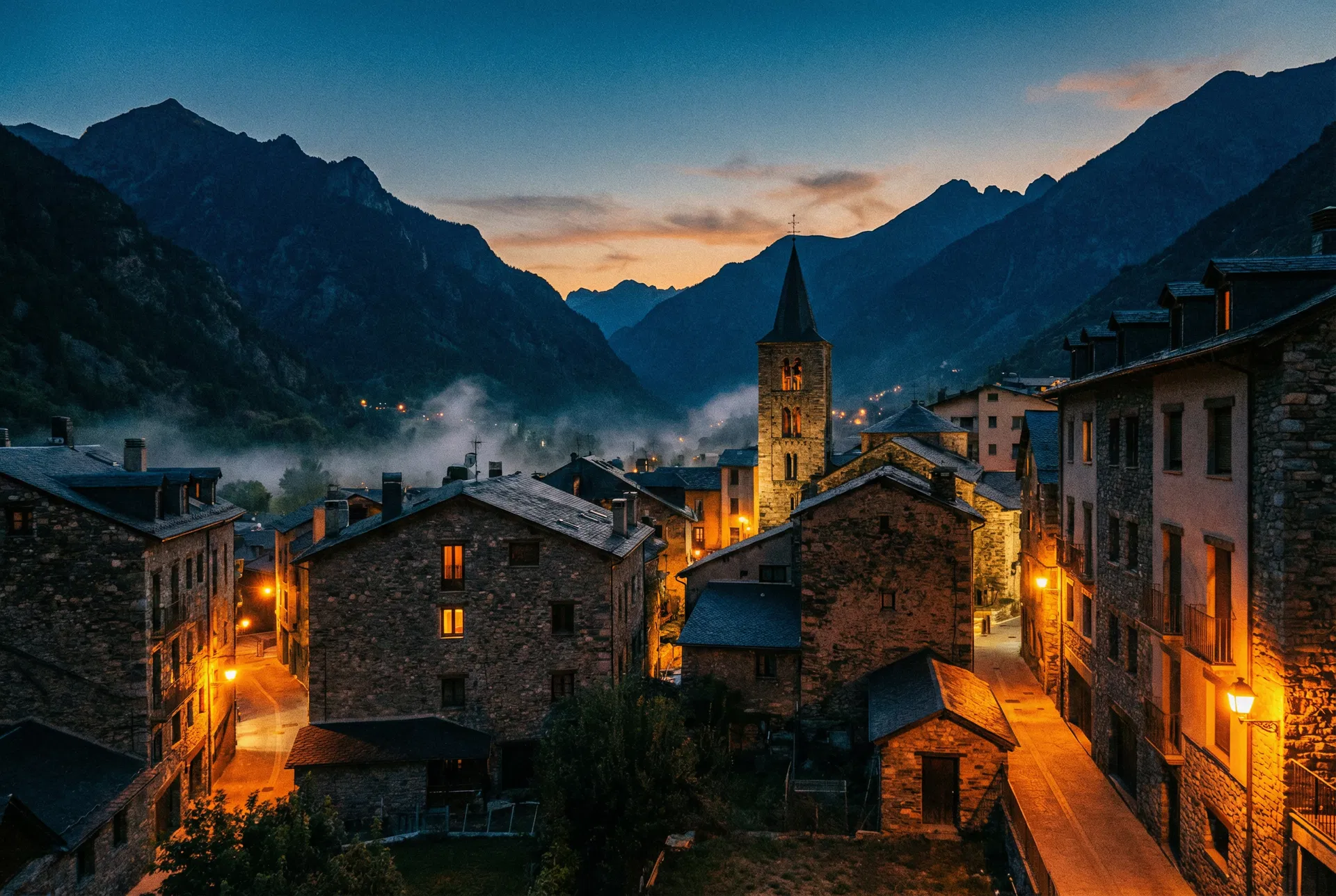
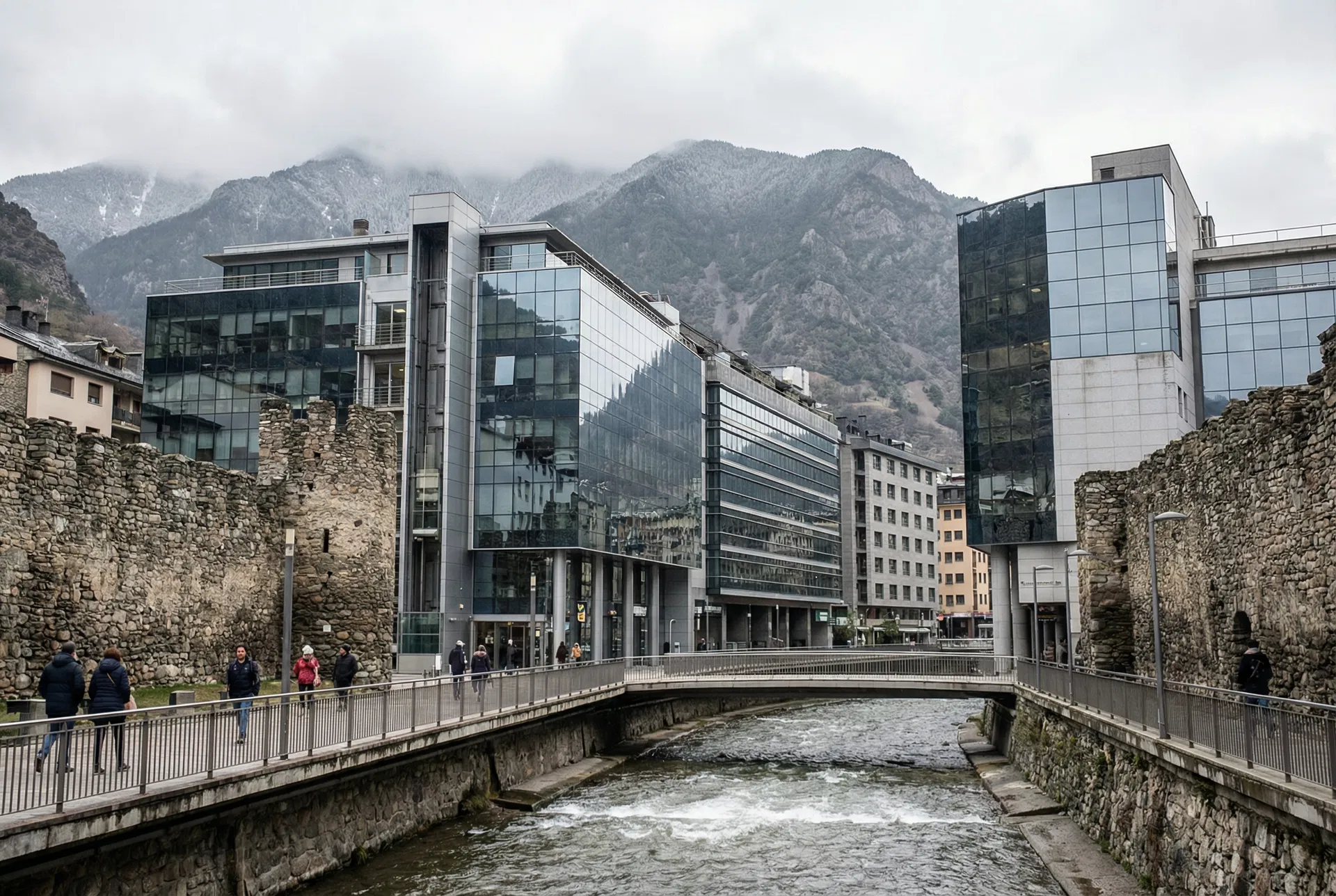
Andorra la Vella is the highest capital city in Europe — 1,023 metres above sea level, built in a valley where the Gran Valira river runs between walls of granite mountain. You drive up from France through the Pyrenees on a road that is also a border crossing, and the country announces itself in the way that most microstates do: abruptly. One moment you are in France; the next you are in Andorra, and the duty-free shops begin immediately.
The landscape is extraordinary and poorly appreciated. Most people who visit Andorra come for the shopping — the tax-free electronics, the spirits, the tobacco — and leave without going more than a kilometre from the commercial strip. They miss everything. The Vallnord ski resort in the north covers 93 kilometres of pistes across terrain that in winter is genuinely world-class at a fraction of the cost of Val d'Isère or Verbier. The Grandvalira area is the largest ski domain in the Pyrenees. In summer, the same mountains become a network of hiking trails and mountain-bike tracks of startling quality. The Casa de la Vall, a 16th-century stone house that served as Andorra's parliament until 2011, sits in the old quarter of Andorra la Vella as a reminder that this has been a functioning polity — however small — for longer than most European nations.
The old quarter of the capital — the Barri Antic — has a medieval Romanesque church (Sant Esteve, 12th century), narrow stone streets, and a pace of life that has nothing to do with the duty-free strip 200 metres away. The Caldea thermal spa in Escaldes-Engordany is the largest spa complex in Southern Europe, built in a glass tower visible from everywhere in the valley — a surreal modernist structure rising from the valley floor, fed by natural hot springs that have been in use since the Roman period. The combination of alpine landscape, thermal bathing, and tax-free commerce is genuinely unusual, and more compelling than it sounds from a distance.
France is one hour by car. Barcelona is three hours. The country has no airport; the nearest international airports are Toulouse-Blagnac and Barcelona El Prat.
III.
What Others Say About Andorra
"I was charmed by Andorra la Vella."
"The guidebooks had it wrong. The historic district is downright lovely, full of cobbled streets and enchanting old buildings, some of which date to the 9th century."
"If I could not walk in the wilderness, I would walk in the city."
IV.
Tax Benefits: What Andorra Has to Offer
Andorra retains the lowest standard tax structure in Europe in 2026: a 10% maximum personal income tax (with the first €24,000 fully exempt), a 10% corporate tax with reduced rates as low as 0% for collective investment vehicles, a 4.5% VAT (IGI) which is the lowest in Europe, and zero wealth, inheritance, or gift tax. Dividends from Andorran companies to Andorran tax residents are completely exempt — eliminating the double taxation problem present in nearly every other European jurisdiction. The principality made significant changes to its passive residency requirements in early 2026 (minimum investment now €1,000,000, raised from €600,000), but the underlying tax framework is unchanged.
- ›0% personal income tax up to €24,000 — the first €24,000 of annual income is fully tax-free.
- ›5% on income from €24,001 to €40,000 — a low intermediate band; this is the only middle bracket.
- ›10% top rate, capped — Andorra's top personal income tax rate is just 10%, applying only to income above €40,000. There are no surcharges, no solidarity contributions, and no progressive bands above 10%. A €120,000 salary produces an effective rate of approximately 7.3%.
- ›0% on Andorran-source dividends to residents — dividends paid by an Andorran company to an Andorran tax resident are fully exempt under the IRPF, eliminating double taxation. Combined with the 10% corporate tax, an entrepreneur extracts post-corporate profits at 0% personal tax.
- ›0% on minority shareholdings; full exemption after 10 years — capital gains on shares are tax-free if you hold less than 25% of the company at any time, or if you hold any percentage for more than 10 years. Holdings of 5–10 years receive a 50% reduction (effective ~5% rate).
- ›0% wealth tax, 0% inheritance tax, 0% gift tax — Andorra has none of these.
- ›10% corporate tax (IS) — among the lowest in Europe, with a reduced 2% rate for qualifying intellectual property income and 0% for Andorran collective investment vehicles. Participation exemption available on dividends and capital gains from subsidiaries.
- ›4.5% IGI (VAT) — the lowest standard VAT rate in Europe; 1% on basic food, 2.5% on transport.
- ›~15 double tax treaties — including with Spain, France, Portugal, and Luxembourg. The DTA network is smaller than larger EU jurisdictions but is expanding.
V.
Tax Rates at a Glance
The most important tax rates in Andorra are as follows. Note that these have been simplified and should be used as general guidance only.
| Tax | Rate |
|---|---|
| Personal Income Tax (IRPF) | 0–10% |
| Capital Gains Tax | 0–10% |
| Inheritance / Estate Tax | 0% |
| Wealth Tax | 0% |
| VAT (IGI) | 4.5% |
| Corporate Tax (IS) | 10% |
| Dividend Withholding | 0% |
Cryptocurrency and Crypto Assets
Andorra applies its standard Personal Income Tax (IRPF) of up to 10% on capital gains from cryptocurrency transactions. There is an annual exemption of €3,000 — gains below this threshold are not taxed. Notably, exchanges between cryptocurrencies are not treated as taxable events. The Digital Assets Law (Law 24/2022) provides a formal legal framework. For crypto investors, Andorra offers a low-rate, legally clear environment.
VI.
Tax Residency in Andorra: What Triggers It
Andorran tax residency is triggered by spending more than 183 days per year in Andorra. This is the primary test. Secondary tests include having your main economic interests in Andorra (i.e., the majority of your income or assets are Andorran) or having your habitual place of residence in Andorra.
The 183-day rule is strictly applied. Andorra tracks entry and exit through the border controls with France and Spain, and the tax authority (ATA) has access to this data. You cannot claim Andorran tax residency without genuinely spending the majority of the year in the country.
Key point: Andorra's tax residency rules are clear and verifiable. The 183-day requirement is not a formality — it is a genuine threshold that must be met. The Andorran tax authority cross-references border crossing data with tax filings.
VII.
Double Tax Agreements (DTAs)
Andorra has a growing network of double tax agreements. The most important for European residents are the treaties with France (2013), Spain (2015), Portugal (2015), Luxembourg (2015), Liechtenstein (2015), and the United Arab Emirates (2015). Andorra has also signed DTAs with the Netherlands, Malta, Hungary, Cyprus, and several other countries.
The DTA with Spain is particularly significant for Spanish nationals and those with Spanish-source income. The DTA with France is critical for French nationals. Both treaties follow the OECD model and provide relief from double taxation on income, dividends, interest, and royalties.
Notably, Andorra does not yet have a DTA with Germany, the United Kingdom, or the United States. For residents with income from these countries, withholding taxes at source will apply at domestic rates unless a treaty is in place. This is a material consideration for German and British nationals with significant domestic-source income.
VIII.
Avoid Remaining Tax Resident at Home
Andorra's proximity to Spain and France makes it a particularly scrutinised jurisdiction for tax purposes. The Spanish and French tax authorities are well aware of Andorra's tax advantages and actively investigate cases where individuals claim Andorran residence while maintaining their economic and social life across the border.
The Spanish tax authority (AEAT) has specific anti-avoidance rules targeting Spanish nationals who claim residence in Andorra. Under Spanish law, a Spanish national who moves to a "tax haven" (and Andorra was on Spain's tax haven list until the DTA came into force in 2015) remains subject to Spanish income tax for the year of departure and the following four years — unless they can demonstrate genuine economic ties to Andorra. This four-year rule is a significant trap for Spanish nationals who do not plan their departure carefully.
What a genuine relocation to Andorra looks like: Your primary residence is in Andorra. You spend more than 183 days per year there. Your family has moved with you. You have deregistered from your previous country of residence. Your economic and social life has genuinely shifted to Andorra.
A sham relocation — registering an address in Andorra while continuing to live, work, and maintain your life in Spain, France, or Germany — does not achieve tax freedom. It creates serious legal risk. We only work with clients who are serious about making a real move to Andorra.
IX.
Tax Considerations Before You Leave Your Home Country
Before you relocate to Andorra, you need to understand what tax consequences arise in your current country of residence at the point of departure. These rules vary significantly by country and must be assessed individually.
- ›Germany — Applies an exit tax on unrealised gains in shareholdings of 1% or more under §6 AStG. A ten-year look-back period can apply even after departure.
- ›Spain — The four-year rule for moves to former tax havens. Exit tax on unrealised gains for substantial shareholdings. Careful planning is essential for Spanish nationals.
- ›France — Exit tax applies to unrealised gains on securities and company rights above €800,000 when a French tax resident relocates abroad.
- ›United Kingdom — Temporary non-residence rules: if you leave the UK and return within 5 years, certain income and gains realised during the absence are taxed on return.
- ›United States — The expatriation tax under IRC §877A treats long-term residents and citizens as having sold all worldwide assets at fair market value on the day they relinquish citizenship or residency.
A tax consultation before you move is not optional — it is essential. The cost of getting this wrong is almost always greater than the cost of getting proper advice upfront.
X.
Company Setup & Corporate Tax in Andorra
Andorra has a 10% corporate income tax rate — one of the lowest in Europe. The main corporate structures are:
- ›Societat de Responsabilitat Limitada (SL) — the Andorran equivalent of a limited liability company. Minimum capital of €3,000. The most common structure for small and medium businesses.
- ›Societat Anònima (SA) — public limited company. Minimum capital of €60,000. Used for larger businesses and holding structures.
- ›Participation exemption — dividends and capital gains from qualifying subsidiaries (minimum 5% shareholding, held for at least 1 year) are exempt from Andorran corporate tax.
Foreign ownership of Andorran companies was historically restricted to 49%, but this limit was removed in 2012. Foreign nationals can now own 100% of an Andorran company. However, the company must have genuine economic substance in Andorra — a registered office, a local director, and real business activity. Brass-plate companies without substance will not satisfy Andorran requirements and may be challenged by foreign tax authorities.
Is a local company always the right answer?
Not necessarily. For many internationally mobile entrepreneurs, the local company is not the most efficient operating vehicle. A local company is useful when you have local staff, local premises, local customers, or regulated local activity. If your business earns income internationally, an international structure may be cleaner.
- ›US LLC — often suitable for non-US owners with non-US income who need simple administration and good payment access.
- ›Singapore company — useful where banking reputation, Asian counterparties, and strong legal infrastructure matter.
- ›UAE company — useful for zero-tax or low-tax operating structures when substance, management, and banking can be handled properly.
Learn more about our company setup services →
Permanent establishment risk matters. A foreign company is not magic. If management, staff, or sales activity are actually in your country of residence, local tax authorities may still tax the profits. Structure follows substance.
XI.
Who Should (and Shouldn't) Move to Andorra
Section 11 is where the relocation decision becomes practical. Andorra can be an excellent fit for some profiles and a poor fit for others; the decisive question is whether the tax rules, lifestyle, residence requirements, banking, healthcare, and family situation point in the same direction.
Good Fit
- ›International entrepreneurs and investors whose income structure actually benefits from Andorra’s tax and residence rules.
- ›Remote professionals and business owners who can move their centre of life genuinely, not merely change an address on paper.
- ›Families or individuals who value Andorra’s lifestyle, geography, safety profile, and cost structure as part of the overall decision.
- ›People willing to handle local banking, residency, healthcare, and administration properly rather than improvising after arrival.
- ›Those who understand that relocation is a full tax-residency project, not a holiday with a lower tax rate.
Poor Fit
- ×Those who cannot genuinely spend enough time in Andorra to support a defensible tax-residence position.
- ×People who need a zero-friction, Western-European administrative environment from day one.
- ×US citizens who expect the move to eliminate US tax filing, FBAR, FATCA, or citizenship-based taxation.
- ×Those with income, companies, or family ties that keep them clearly taxable in their previous Andorra.
- ×Anyone choosing the jurisdiction only because it sounds attractive online, without testing housing, banking, healthcare, and lifestyle fit.
XII.
Visas and Residence Permits in Andorra
Andorra is not part of the EU or Schengen. EU citizens do not have automatic right of residence — they must apply for a residence permit. The main residence permit categories are:
- ›Active Residence Permit — for those who work in Andorra (employed or self-employed). Requires a job offer or proof of business activity. Renewable annually.
- ›Passive Residence Permit — for those who do not work in Andorra but have sufficient income or assets. Requires proof of financial means (minimum €300/month per adult plus €100/month per dependent) and a minimum investment of €400,000 in Andorran assets (real estate, bank deposits, or government bonds). Renewable annually.
- ›Residence for Professional Reasons — for those who work remotely for foreign companies or as freelancers. Requires proof of income and a minimum investment of €400,000.
The passive residence permit is the most commonly used route for high-net-worth individuals. The €400,000 investment requirement can be met through the purchase of Andorran real estate, which also serves as your primary residence. Processing time is typically 3–6 months.
XIII.
Path to Citizenship in Andorra
Andorran citizenship is among the most difficult to obtain in Europe. The standard naturalisation route requires 20 years of continuous legal residence in Andorra. This is not a typo — twenty years. There is no citizenship by investment programme and no accelerated route for high-net-worth individuals.
Spouses of Andorran citizens may apply for citizenship after 3 years of marriage and residence. Children born in Andorra to non-Andorran parents do not automatically acquire citizenship.
Andorra does not permit dual nationality in most cases. Acquiring Andorran citizenship generally requires renouncing your previous nationality. This is a significant deterrent for most applicants and means that citizenship is rarely the goal for foreign residents — long-term residence is the practical objective.
For most people relocating to Andorra for tax purposes, the residence permit is sufficient. Citizenship is a separate question that most residents never pursue.
XIV.
Banking in Andorra
Andorra has a well-developed banking sector with five main banks: Crèdit Andorrà, Banc Sabadell d'Andorra, MoraBanc, Andbank, and Vall Banc. These are well-capitalised institutions with strong reputations for private banking and wealth management. Opening a personal bank account as a resident is straightforward with the right documentation.
Andorra uses the euro and has a monetary agreement with the EU that allows it to issue euro coins. The banking system is regulated by the Autoritat Financera Andorrana (AFA). For residents, this gives access to a small but serious banking sector with a private-banking culture, euro accounts, and practical links to Spain and France.
For private banking clients, Andorra's banks offer a range of wealth management services including portfolio management, trust and estate planning, and structured products. The combination of low taxes and professional banking services makes Andorra an attractive location for managing significant personal wealth.
Where to hold your main accounts
For most internationally mobile clients, the primary banking relationship should not automatically sit in the new country of residence. Local accounts are useful for rent, utilities, daily spending, and domestic administration, but your main wealth and operating accounts should usually remain in stronger international banking centres.
- ›Switzerland — private banking, wealth custody, and long-term capital preservation.
- ›Singapore — strong Asian banking, excellent reputation, and robust multi-currency infrastructure.
- ›United States — practical for USD payments, brokerage access, cards, and global business counterparties.
- ›Georgia (Caucasus) — useful as an accessible banking backup for entrepreneurs and mobile residents.
Important: not all banks are compatible with all residencies. Some Swiss and Singaporean private banks have restrictions on clients resident in certain jurisdictions, and compliance requirements vary. Residency status, income profile, source of wealth, and business type all affect which institutions will accept you and on what terms. We help clients navigate this before they commit to any banking structure.
XV.
What Makes Andorra Genuinely Attractive
Andorra is attractive when it is judged as a complete relocation platform, not as a slogan. The point is not that Andorra is perfect for everyone. The point is that, for the right person, the combination of tax position, residence practicality, lifestyle, geography, banking, language, and long-term stability can produce a genuinely coherent base.
- Low-tax European mountain base. Andorra offers one of the more attractive personal-tax environments in Europe, with a capped income-tax system and no inheritance tax in the ordinary sense. It is not a zero-tax fantasy, but it is a serious low-tax residence inside the European cultural orbit.
- The lifestyle case is not cosmetic. The appeal is privacy, safety, mountains, clean air, skiing, cycling, and a small-community lifestyle between Spain and France. It is not a nightlife capital; it is a place for people who want order, nature, and distance from the noise.
- It can function as a real operating base. Barcelona and Toulouse are close enough for serious travel access, while the country itself remains small, safe, and administratively manageable. For remote business owners, investors, and families who do not require a big-city environment, this is a real advantage.
- It rewards the right profile. Entrepreneurs, investors, and families who want European proximity without full EU tax exposure can find Andorra compelling, especially where the centre of life genuinely moves there.
- The attraction has to be handled honestly. Andorra is small, housing supply is limited, and residence must be real. Anyone who needs major airports, large labour markets, or effortless international schooling should test the lifestyle carefully before relying on the tax case.
XVI.
Cost of Living in Andorra
Andorra is not cheap, but it is also not Monaco or central London. The real cost driver is housing in Andorra la Vella, Escaldes, La Massana and Ordino; day-to-day expenses are more manageable once accommodation is secured.
Typical monthly costs for an internationally mobile professional or family in Andorra (2026 planning ranges):
| Category | EUR/month | GBP/month | USD/month |
|---|---|---|---|
| 1-bed apartment, desirable area | €1,100–2,050 | £900–1,700 | $1,200–2,200 |
| 2-bed apartment / small house | €2,500–4,550 | £2,100–3,850 | $2,700–4,950 |
| International school (annual per child) | €4,050–11,350 | £3,450–9,650 | $4,400–12,350 |
| Private health insurance (annual individual) | €650–2,000 | £550–1,700 | $700–2,150 |
| Restaurant meal, mid-range (per person) | €50–50 | £50–50 | $50–50 |
| Monthly groceries, single person | €450–950 | £400–800 | $500–1,050 |
| Utilities and internet, apartment | €200–550 | £150–450 | $200–600 |
Comfortable single professional (no children): €2,600–4,400/month (£2,200–3,750 / $2,800–4,800)
Family of four with private schooling: €7,350–11,950/month (£6,250–10,150 / $8,000–13,000)
These figures are planning ranges, not promises. The actual budget in Andorra depends heavily on housing quality, neighbourhood, school choice, healthcare needs, car ownership, travel frequency, and whether you are trying to live like a local or maintain a Western expatriate standard.
XVII.
Buying Real Estate in Andorra
Buying real estate in Andorra can be useful for lifestyle, residence planning, and long-term anchoring, but it should not be treated as a simple shortcut to tax residence. Property is a factual tie; it can support a relocation story when used properly, but it can also create tax, inheritance, financing, and exit issues if bought before the wider plan is clear.
For internationally mobile buyers, the main points in Andorra are:
- ›Ownership rules: Foreigners can buy property, but residence planning and property acquisition are closely linked because passive residence usually requires a substantial investment commitment.
- ›Transaction costs: Expect notary, registration, agency, and transfer-tax costs in addition to the purchase price; the total transaction cost is materially lower than in many large European markets but still needs budgeting.
- ›Market and rental profile: Rental demand is strongest around Andorra la Vella, Escaldes, La Massana, and ski-linked parishes, but the market is small and illiquid compared with Spain or France.
- ›Residence and tax angle: Property can support lifestyle and residence planning, but the key risk is overpaying in a narrow market where comparable data is limited.
The practical approach is to decide first whether the property is primarily for living, residence support, rental yield, asset protection, or lifestyle. Those are different purchases. A good real estate decision in Andorra begins with title due diligence, tax-residence planning, inheritance review, and a realistic exit strategy — not with glossy developer brochures.
Transaction cost table (Andorra)
| Cost item | Typical amount | Notes |
|---|---|---|
| Transfer tax / ITP | 4% | On the purchase price |
| Notary and registration | 1–2% | Approximate combined purchase-side costs |
| Typical total buyer costs | 5–6% | Before financing costs; property of €400,000+ may support passive residence planning |
XVIII.
Retiring in Andorra
Retiring in Andorra can make sense for the right profile, but it should not be reduced to a simple tax headline. The real question is whether the country gives you the right combination of residence security, pension treatment, healthcare access, cost of living, climate, and day-to-day comfort. A retirement move is harder to reverse than a business relocation, so practical quality of life matters as much as tax.
For retirees considering Andorra, the main points are:
- ›Residence route: The practical route is usually the passive residence route requiring substantial investment and private health insurance. This should be confirmed before making property commitments or moving assets, because a pleasant destination is not useful if the residence basis is weak.
- ›Pension income: Foreign pensions are generally taxed at low andorran personal income tax rates, but source-country withholding may still apply. The decisive point is often not only local tax, but whether the pension-paying country continues to tax the pension at source.
- ›Healthcare: Excellent local healthcare through cass for contributors and strong private options; complex cases often go to barcelona or toulouse. Retirees should arrange private insurance or a clear local healthcare pathway before arrival, especially where pre-existing conditions are involved.
- ›Cost of living and lifestyle: Mountain villages, safety, skiing, hiking, and a very high quality of life for retirees who prefer order and privacy. The country can work well where the retiree’s lifestyle expectations match the local rhythm rather than an imagined expatriate brochure.
- ›Climate and practical fit: Cool mountain winters and mild summers; not a year-round warm-weather retirement choice. Climate, language, bureaucracy, transport, and access to family often decide whether the move remains attractive after the first year.
Andorra should therefore be assessed as a full retirement platform, not merely as a tax jurisdiction. The best candidates are retirees who have stable foreign income, good health coverage, a realistic view of local bureaucracy, and a clear plan for where they will live, how they will receive care, and how their pension will be taxed both locally and at source.
XIX.
US Citizens: What You Need to Know
US citizens and long-term green card holders are taxed by the United States on their worldwide income, regardless of where they live. Relocating to Andorra does not end US tax obligations — it changes the picture, but does not eliminate it.
Key considerations for US citizens in Andorra:
- ›Foreign Earned Income Exclusion (FEIE): US citizens who qualify as bona fide residents of Andorra or pass the physical presence test can exclude a significant amount of foreign earned income from US federal income tax. This applies to wages and self-employment income — not passive income such as dividends, interest, capital gains, pensions, or rental income.
- ›Foreign Tax Credit: Income tax paid in Andorra can generally be credited against US tax on the same income, reducing or eliminating double taxation. The credit is particularly important for income not covered by the FEIE and for taxpayers whose income exceeds the annual FEIE threshold.
- ›Treaty position: Treaty relief between the United States and Andorra is limited or fact-dependent. Before relying on any treaty position, US citizens should confirm the current treaty status and the exact income category with a qualified US international tax adviser. A treaty does not automatically remove US filing obligations, and most treaties contain savings-clause rules that preserve US taxation of citizens.
- ›FBAR: US persons with bank accounts in Andorra exceeding $10,000 in aggregate must file FinCEN Form 114 (FBAR) annually. Failure to file can carry severe penalties, even when no tax is due.
- ›FATCA: US citizens may also need to report foreign financial assets on Form 8938. Banks in Andorra may separately identify US account holders under FATCA procedures and report account information through the relevant channels.
- ›Social Security and self-employment tax: The FEIE reduces income tax but does not automatically eliminate US self-employment tax. Whether US Social Security tax applies depends on employment status, entity structure, and any applicable totalization agreement.
US citizens considering Andorra should work with a qualified US international tax adviser alongside local counsel. The interaction between US tax law and Andorra tax law is manageable, but it requires careful planning before the move, not after the first filing deadline arrives.
XX.
Correct Preparation
Before your move to Andorra, a number of important questions need to be answered. The following section addresses the most common ones.
When is the right time to move to Andorra?
There is no perfect moment. From a tax perspective, the move to Andorra can happen at any point during the calendar year. Andorra's income tax (IRPF) is assessed on a calendar-year basis, so moving early in the year maximises the benefit for that year. The critical timing question is your departure from your home country — that is where exit tax and residency rules apply.
Do I need a visa to live in Andorra?
Andorra is not a member of the EU or the Schengen Area. EU citizens do not have automatic right of residence in Andorra — they must apply for a residence permit like everyone else. The main routes are the active residence permit (for those working or running a business in Andorra) and the passive residence permit (for those with sufficient passive income or assets). We walk through the options in a personal consultation.
What happens to my existing company when I move to Andorra?
A relocation to Andorra has consequences for your existing business. A limited company can generally continue to operate, potentially with a new director. If you were self-employed, continuation is not straightforward. Discuss the best structure with your adviser — and if you are considering selling the business, it is better to complete the sale before you leave your home country.
Do I need to set up a new company in Andorra?
Not necessarily. If you generate income as a private investor or from foreign sources, a local entity is not required. However, Andorra's 10% corporate tax rate and flexible company law make local incorporation worth considering for active business income. We discuss the options in a personal consultation.
What happens to my current home?
To genuinely shift your centre of life to Andorra, giving up your home in your previous country is non-negotiable. This step is essential for your tax liability in your previous country of residence to be extinguished. Retaining an available dwelling — owned or rented — in your home country is one of the most common triggers for continued tax residency there.
Should I rent a place in Andorra before the official move?
Yes — it makes sense. Andorra la Vella and Escaldes-Engordany have a well-developed rental market. The smaller parishes are quieter but have fewer amenities. Renting before committing to a purchase gives you time to understand which parish and neighbourhood suits your lifestyle.
What do I need to prepare for my family?
The move to Andorra should work for the whole family. Key questions: Which parish suits your lifestyle? Are international schools accessible? How close do you need to be to Barcelona or Toulouse? The answers depend on your specific situation.
Deregistering from your home country
The final step is a proper deregistration — both with the residents' register and with the tax authority in your home country. If you want to be thorough, you can request a tax clearance certificate after settling all outstanding liabilities. This document confirms that all claims have been settled and provides a clean break.
XXI.
Automatic Exchange of Information (OECD CRS)
Andorra participates in the OECD Common Reporting Standard (CRS), the global framework for automatic exchange of financial account information between tax authorities. Andorra has been exchanging information with partner jurisdictions since 2018.
In practical terms, this means: if you hold bank accounts or financial assets in Andorra, the financial institution in Andorra will report your account details — balance, income, and identifying information — to the local tax authority, which will then automatically share this information with the tax authority of your country of tax residence.
The key point is that CRS follows tax residence, not nationality or citizenship. For example, a Swedish citizen who has genuinely become tax resident in Andorra is treated, for CRS purposes, as a tax resident of Andorra — not as a Swedish reportable person merely because of the passport. The same principle applies to any non-US nationality: the account should be reported to the country of tax residence, not automatically to the country of citizenship.
CRS does not create a tax liability — it creates transparency. If you are properly tax resident in Andorra and have correctly severed residency in your home country, CRS reporting simply confirms what should already be declared. The risk arises when individuals attempt to maintain dual residency, leave old tax-residence indicators unresolved, or claim Andorra residency without genuinely living there.
US citizens are different. The United States does not participate in CRS in the same way. Americans are affected by FATCA instead: banks outside the United States generally identify US persons and report their account information through FATCA channels to the US authorities, regardless of whether the person is tax resident in Andorra or anywhere else.
Key point: CRS is not a problem for those who have relocated correctly. It is a problem for those who have not. Proper tax residency planning — with genuine physical presence and documented ties to Andorra — is the only sustainable approach. CRS follows tax residence, not citizenship; FATCA follows US-person status.
XXII.
Further Relocation Formalities
Upon establishing residence in Andorra, you will need to obtain a NIA (Número d’Identificació Administrativa) from the competent local authority. This is required for most financial and legal transactions in Andorra, including opening bank accounts, signing contracts, registering with tax authorities, and dealing with public offices.
You will also need to obtain or complete the relevant Andorran residence card process once your residence status has been approved. This document or registration record becomes your practical proof of residence in Andorra and is usually required for banking, telecom contracts, utilities, leases, property transactions, and day-to-day administrative matters.
- ›Driving licences from most countries are accepted only for a limited period after arrival. Once you become resident in Andorra, you should verify whether your licence can be exchanged directly or whether a local medical certificate, translation, theory test, or practical test is required.
- ›Health insurance should be arranged before arrival unless you are immediately covered by a local public system. In many cases, private international cover is the safest bridge solution while residence, employment, or social-security registration is still being completed.
- ›Importing personal effects should be planned before shipping anything to Andorra. Household goods may qualify for relief when imported shortly after taking up residence, but customs paperwork, inventory lists, timing rules, and vehicle-import duties can make late or informal shipping expensive.
- ›Proof of address and banking are often linked. Banks, telecom providers, and government offices may require a lease, utility bill, local address certificate, or residence registration before they will open an account or complete onboarding.
- ›Ongoing local compliance should not be treated as an afterthought. Calendar reminders for residence renewals, tax registrations, local filings, health-insurance renewals, and address updates help prevent administrative problems that can later undermine the tax-residency position.
XXIII.
How We Help With Your Move to Andorra
We offer comprehensive tax and legal support for your relocation to Andorra. We follow a proven process — and where Andorra requires specialist local input, we involve appropriately qualified local tax, legal, immigration, and banking advisers on the ground, while remaining responsible for overall coordination.
The results speak for themselves: we have helped over 100 entrepreneurs and business owners significantly reduce their tax burden through carefully planned relocations. Careful planning, thorough advice, and comprehensive support are our standard. Legally sound structuring within the framework of international tax law is our highest priority.
Our services typically include one or more of the following:
- → Tax advice on the consequences of relocating to Andorra: analysis, projections, assessments
- → Clarifying location questions for your business in Andorra based on factors such as market access, available workforce, and public subsidies — in collaboration with local experts
- → Recommendations for local estate agents experienced with international clients, for both rental and purchase in Andorra
- → Referrals to specialist immigration lawyers for Andorran residency and permit matters
- → Introductions to local tax advisers who handle the opening of bank accounts for both the company and you personally in Andorra
- → Ongoing tax and administrative management of your Andorran company
- → Tax-efficient structuring and restructuring of assets via foreign companies, holding structures, and trusts
Our fees are generally billed on a time basis; fixed prices apply for certain services such as company formation.
As a first step, we recommend booking a consultation to discuss your plans — by phone, Zoom, or Signal. Together we find the best approach and establish contact with our local partner. As project coordinator, we keep all the threads in hand that are necessary for the successful implementation of your plans.
Key Facts
Compare Countries
Ready to explore your Andorra options?
Let's discuss whether Andorra is right for you.
Book a one-hour strategy session. We'll review your current tax situation, assess whether Andorra fits your income structure, and outline what a realistic relocation would involve.
Book a Strategy Session