Contents
- 1. Curaçao: Country Overview
- 2. Putting Curaçao on the Map
- 3. What Others Say About Curaçao
- 4. Tax Benefits: What Curaçao Has to Offer
- 5. Tax Rates at a Glance
- 6. Tax Residency: What Triggers It
- 7. Double Tax Treaties
- 8. Avoid Remaining Tax Resident at Home
- 9. Tax Considerations When Leaving Your Home Country
- 10. Company Setup & Corporate Tax
- 11. Who Should (and Shouldn't) Move to Curaçao
- 12. Visas and Residence Permits
- 13. Path to Citizenship
- 14. Banking in Curaçao
- 15. What Makes Curaçao Genuinely Attractive
- 16. Cost of Living in Curaçao
- 17. Buying Real Estate in Curaçao
- 18. Retiring in Curaçao
- 19. US Citizens: What You Need to Know
- 20. Correct Preparation
- 21. Automatic Exchange of Information (OECD CRS)
- 22. Further Relocation Formalities
- 23. How We Help With Your Move to Curaçao
I.
Curaçao: Country Overview
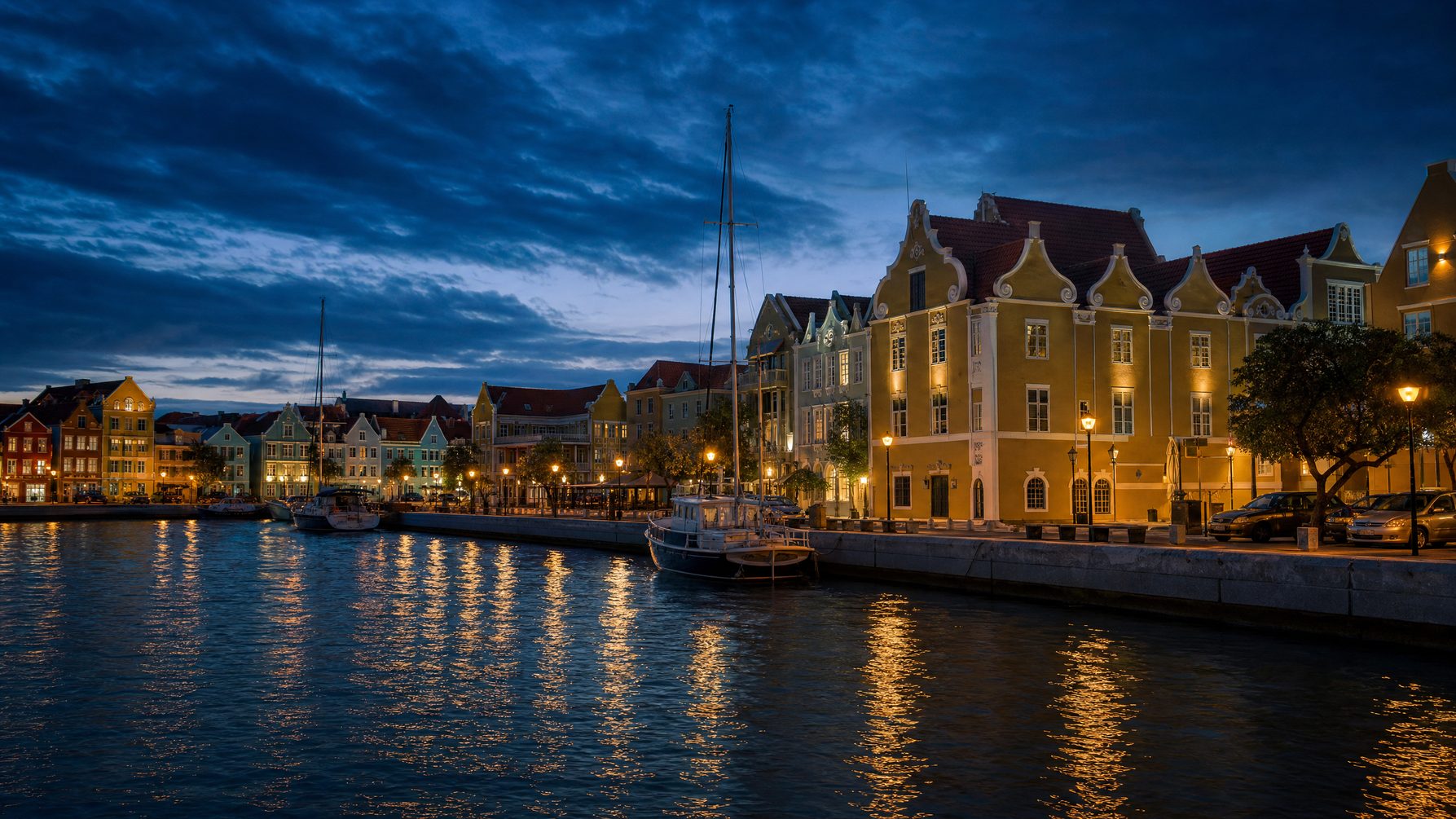
Curaçao is a Dutch Caribbean island in the southern Caribbean Sea, approximately 65 kilometres north of the Venezuelan coast and 70 kilometres east of Aruba. It covers 444 km² with a population of approximately 155,000. The capital, Willemstad, is a UNESCO World Heritage Site — its historic centre with the colourful Dutch colonial buildings of the Handelskade waterfront is one of the most photographed urban scenes in the Caribbean. Curaçao is the largest of the ABC Islands (Aruba, Bonaire, Curaçao) — the southernmost outpost of Dutch territory in the Caribbean.
Politically, Curaçao is an autonomous country within the Kingdom of the Netherlands, with full self-governance over domestic affairs (including taxation, immigration, and economic policy) while remaining under the Kingdom's umbrella for defence and certain external relations. The country dissolved from the Netherlands Antilles in 2010, becoming a constituent country of the Kingdom alongside the Netherlands, Aruba, and Sint Maarten. Curaçao is NOT part of the European Union (it has Overseas Country and Territory / OCT status with the EU rather than EU membership), but Dutch nationality and EU citizenship rights apply.
The country recognises four official languages: Dutch, English, Spanish, and Papiamentu (a Portuguese-Spanish-Dutch-African creole spoken across the ABC Islands). Most business is conducted in Dutch and English; Papiamentu is the everyday language; Spanish is widely understood given Venezuelan proximity. The legal system is based on Dutch civil law (similar to the Netherlands but with local adaptations); the Joint Court of Justice of Aruba, Curaçao, Sint Maarten, and BES provides the principal jurisdiction. The currency is the Caribbean Guilder (XCG), formerly the Netherlands Antillean Guilder (NAF/ANG), pegged to the US dollar at 1.79:1 — meaning effective USD-equivalent banking with a Dutch institutional layer.
On the tax side, Curaçao operates a standard Dutch-influenced tax system at high rates (personal income tax progressive from 9.75% to 46.5%), with the major exception being the Penshonado regime for foreign retirees aged 50+. Under the Penshonado scheme (Landsverordening Inkomstenbelasting Articles 23B/C/D/E), qualifying retirees pay a flat 10% tax on foreign-source income — pensions, foreign dividends, foreign interest, foreign capital gains, foreign rental income, and other passive foreign income. The scheme is unusual in scope: unlike many "retiree visa" regimes elsewhere that limit favourable treatment to pension income only, Curaçao's Penshonado covers most categories of foreign-source income. There is also no capital gains tax under Penshonado.
The Penshonado eligibility conditions are:
- ›Aged 50+ at the time of registration
- ›Lived outside Curaçao for at least 5 consecutive years (60 months) immediately prior
- ›Apply within 2 months of registration in the population register
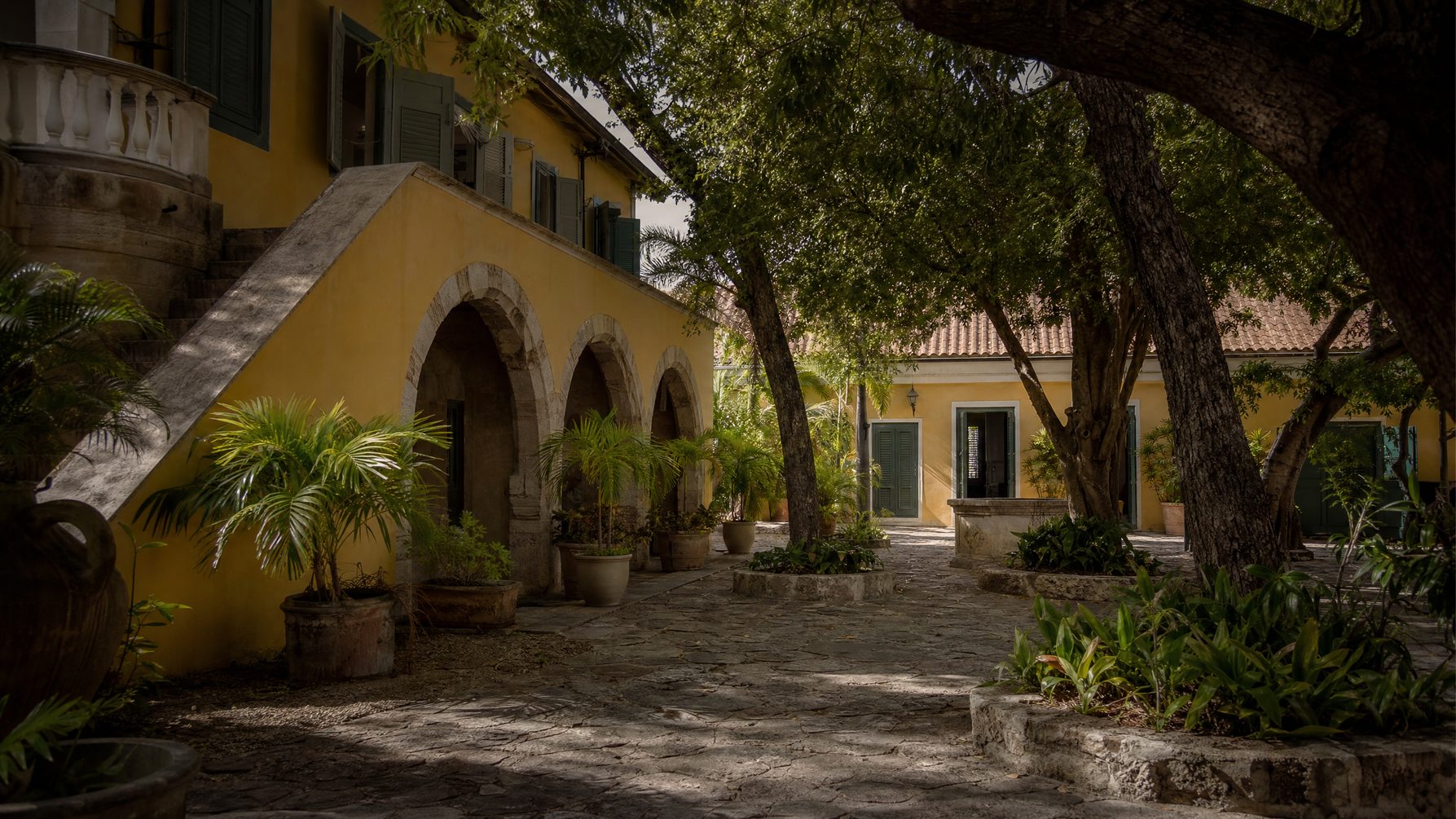
- ›Own a home in Curaçao with a minimum value of XCG 450,000 (~USD 250,000) within 18 months of registration; alternatively, own a protected monument worth XCG 450,000+ (which can be rented out for up to 4 months/year)
- ›Cannot perform any employment, self-employment, or business activity in Curaçao (this also extends to the spouse if married, with limited exceptions)
- ›Foreign-source income is the principal income
What to be aware of. The Penshonado regime is strictly limited to retirees aged 50+ with foreign-source income — it is not a general HNW relocation regime. Working-age clients, those with primarily local-source income, or those needing to operate businesses on Curaçao do not qualify. The 5-year prior absence rule excludes anyone with recent Curaçao or Netherlands Antilles connections. The 2-month application window after registration is short and missed deadlines result in loss of the benefit. Note: the standard Curaçao income tax regime (without Penshonado) is genuinely high — top rate 46.5% plus social insurance contributions — meaning clients who do not qualify for Penshonado are typically better served by other Caribbean alternatives. The country is fully CRS-compliant and FATCA-cooperative.
II.
Putting Curaçao on the Map
Curaçao — southern Caribbean ABC Islands, north of Venezuela
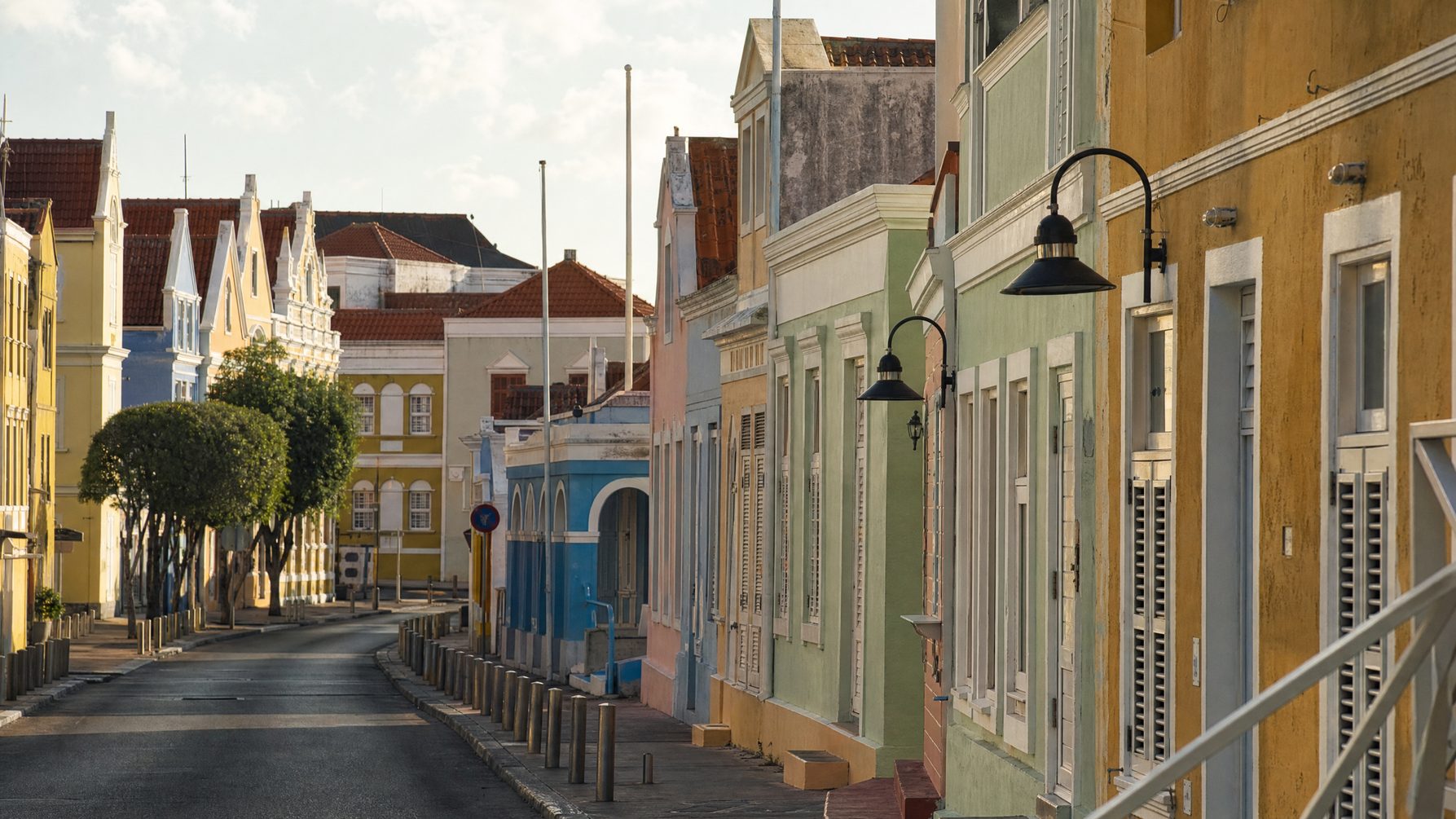
Curaçao arrives in the colours of Willemstad — the Dutch colonial buildings of the Punda waterfront painted in pink, yellow, blue, and green, the Queen Emma pontoon bridge swinging open and closed across the harbour entrance to admit cruise ships, the smell of grilled fish from the Plasa Bieu market in the late afternoon, the mix of Dutch, Spanish, and Papiamentu spoken in the cafés. The island is small enough to drive end to end in 90 minutes, but the cultural depth — Dutch colonial heritage, Sephardic Jewish heritage (the Mikvé Israel-Emanuel Synagogue is the oldest continuously operating synagogue in the Western Hemisphere, established 1651), African heritage from the slave trade, modern multicultural fusion — gives Willemstad a density of history that few Caribbean islands can match.
Willemstad is the capital and the centre of expat life. The historic centre is divided by the Sint Anna Bay into Punda (the old administrative quarter, with the Governor's Palace, the Floating Market where Venezuelan boats sell produce, the colourful Handelskade) and Otrobanda (the artisans' and African quarter, with the Riffort and the Kura Hulanda Museum). The whole historic centre was UNESCO-listed in 1997. Modern residential and commercial development extends along the south coast — Punda, Pietermaai, Saliña, Mahaai — with a substantial expat community in the eastern resort areas (Jan Thiel, Spanish Water, Caracasbaai).
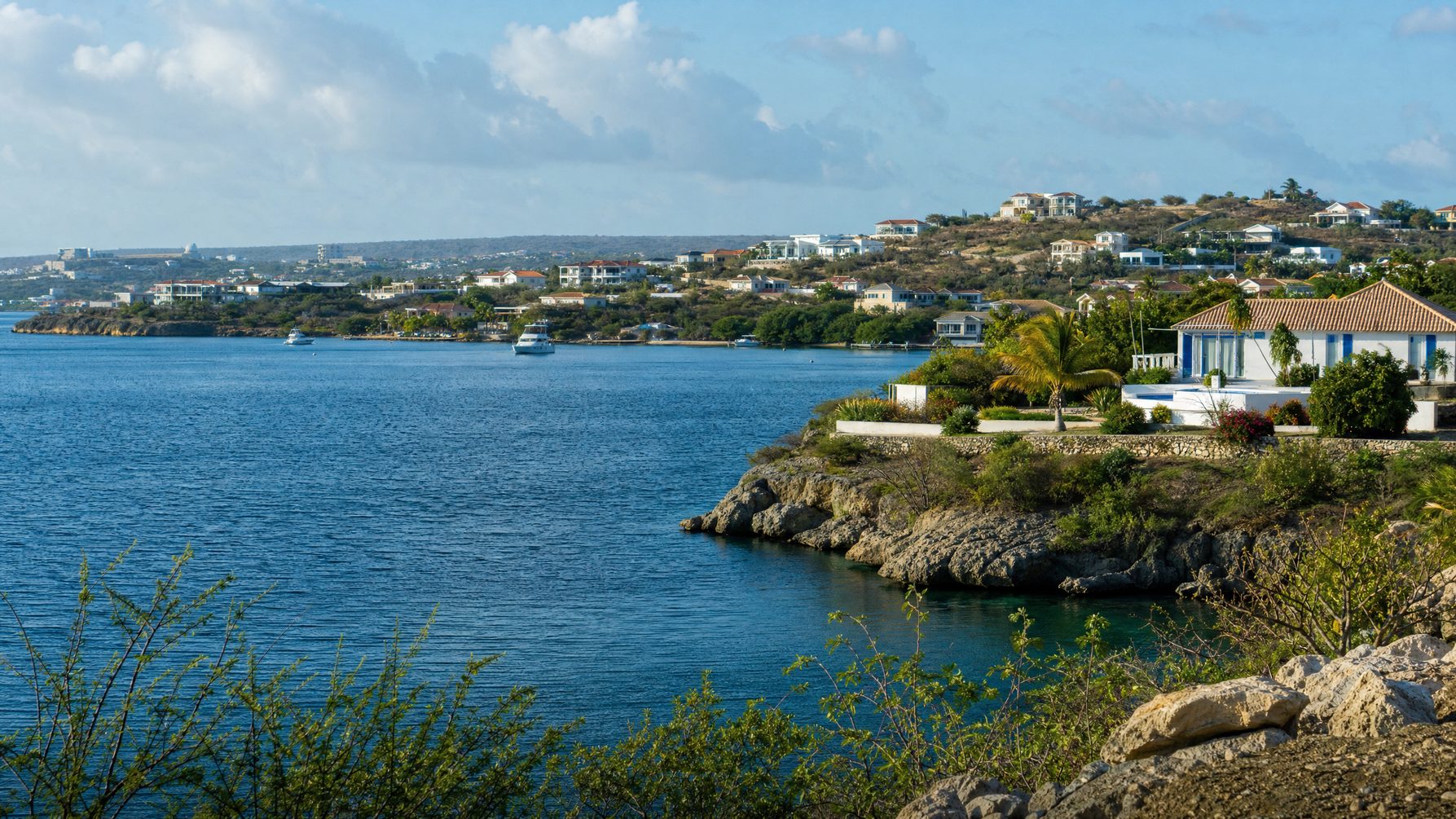
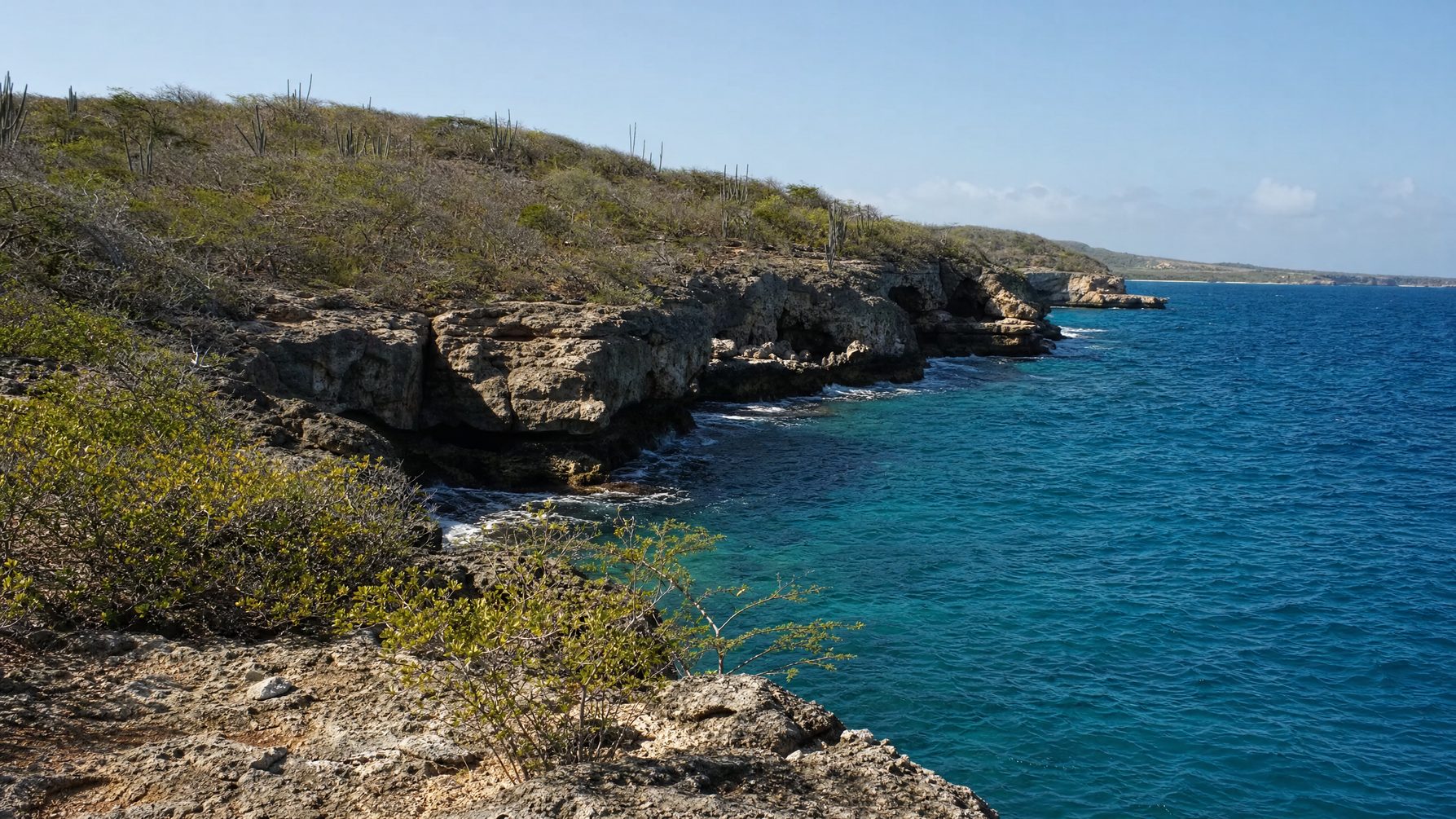
The island has 38 beaches along its 35-kilometre coast, ranging from major resort beaches (Mambo Beach, Sea Aquarium Beach) to remote bays accessed only by 4×4 (Playa Kenepa Grandi, Playa Cas Abao, Playa Lagun, Playa Forti). Diving and snorkelling are world-class — the Curaçao Marine Park runs the entire south coast, with healthy reefs starting just metres from shore. The Christoffel National Park in the northwest contains Mount Christoffel (372 m, the highest point), a network of hiking trails, and significant indigenous and slave-period historical sites.
Klein Curaçao ("Little Curaçao"), an uninhabited island 11 km off the southeast coast, is a famous boat-trip destination — a long white-sand beach, a colonial lighthouse, the wreck of a Greek cargo ship, and shoaling colonies of sea turtles in the surrounding waters.
Bonaire, the eastern sister island and another constituent of the Dutch Caribbean (BES Islands, separate from Curaçao after 2010), is 30 minutes away by air or 4 hours by boat. Aruba, the western ABC island, is 30 minutes by air. Many Curaçao residents make regular weekend trips between the three ABCs.
Connectivity is excellent for a Caribbean island. Hato International Airport (CUR) handles direct flights to Amsterdam (10 hours, KLM and TUI), Miami (3 hours, American Airlines), New York JFK (4 hours, JetBlue and others), Atlanta (4 hours, Delta), Houston, Toronto, Frankfurt (seasonal), and most major South American hubs (Bogotá, Caracas, Lima, Santiago). The KLM/Amsterdam connection in particular makes Curaçao genuinely accessible from Europe — a single direct flight, much more practical than the multi-leg journeys required for many other Caribbean destinations.
For HNW retirees from the Netherlands, Belgium, or Germany, the direct Amsterdam connection plus shared Dutch institutional framework makes Curaçao a particularly natural fit. For Anglophone retirees, the English-language framework, USD-equivalent currency, and 3-hour Miami connection are equally accessible.
III.
What Others Say About Curaçao
"What I love about Willemstad is that it is a real city in a way that most Caribbean island capitals are not. People work here, schools are here, banks function, and the streets are full of locals doing local things. The cruise ship tourists stay in the Punda for three hours and the rest of the city continues as it always has."
— Dutch architect, Pietermaai, 2024
"The Penshonado regime is the most retiree-friendly framework in the Caribbean — 10% on foreign income covers everything, not just the pension. After three years of using it, my effective tax rate on foreign investment income is genuinely 10%. Few jurisdictions deliver what they advertise this cleanly."
— British Penshonado retiree, Jan Thiel, 2024
"Klein Curaçao is what every Caribbean island looked like in 1700 — a long white beach, no buildings, no road, no shade except what you bring. You spend the day there and you understand why Europeans came to the Caribbean and never left."
— Travel writer, Klein Curaçao, 2025
IV.
Tax Benefits: What Curaçao Has to Offer
Curaçao is the most attractive Caribbean retirement-tax framework for clients aged 50+ with substantial foreign-source income — and the only Dutch Caribbean jurisdiction with a formal preferential regime designed specifically for retirees. The combination of the Penshonado 10% flat rate on foreign income, the indefinite residence permit, the Dutch institutional framework, the four-language environment, and the 10-hour direct connection to Amsterdam makes it genuinely useful for retirees from the Netherlands, Germany, Belgium, the UK, and the US.
- ›Penshonado regime — 10% flat tax on foreign-source income (50+ retirees) — Articles 23B/C/D/E of the National Income Tax Ordinance (Landsverordening Inkomstenbelasting). Qualifying retirees pay 10% flat tax on foreign-source income covering: foreign pensions; foreign dividends; foreign interest; foreign capital gains; foreign rental income; and other foreign passive income. Locally-source income is taxed at standard progressive rates.
- ›Alternative: deemed foreign income of XCG 500,000 at normal rates — Penshonado applicants can elect a deemed foreign income of XCG 500,000 (~USD 280,000) taxed at normal progressive rates instead of actual foreign income at 10%. Useful for clients with very high foreign income where the deemed amount is lower than actual income. However, electing this option forfeits double-taxation treaty relief under Curaçao's tax treaty network.
- ›0% capital gains tax under Penshonado — capital gains from foreign sources are not taxed at the Penshonado level beyond the 10% rate (or are entirely outside the deemed-income alternative). Foreign capital gains kept offshore remain outside the Curaçao tax net.
- ›Indefinite residence permit included — Penshonado approval automatically grants an indefinite residence permit (vergunning tot verblijf voor onbepaalde tijd). No need to renew annually. Significant practical advantage over most Caribbean retirement programmes.
- ›Dual citizenship, Dutch nationality framework — Curaçao residents who become Dutch citizens (through naturalisation, typically after 5 years of residence) acquire Dutch nationality and EU citizenship rights — the right to live and work anywhere in the EU/EEA. This is a unique feature of Dutch Caribbean residence, not available in independent Caribbean nations.
- ›Dutch institutional framework — banking, healthcare, courts, professional services — Curaçao operates with Dutch professional standards for banking (under the Central Bank of Curaçao and Sint Maarten), healthcare (Curaçao Medical Center is comparable to Western standards), courts (Joint Court of Justice with appeals to the Hoge Raad in The Hague), and professional services. A higher institutional baseline than most independent Caribbean states.
- ›Limited DTA network but treaty integration with the Netherlands — Curaçao has DTAs with the Netherlands, Norway, and a few other partners; for many clients, the Tax Regulation for the Kingdom of the Netherlands (BRK) governs cross-border situations with the Netherlands directly.
- ›OCT status with EU — Overseas Country and Territory designation gives Curaçao preferential trade access to the EU (for goods originating in Curaçao) without the regulatory burden of EU membership.
- ›English-friendly environment — four official languages including English; nearly universal English fluency in business, banking, healthcare, and tourism; international schooling in Dutch, English, and Spanish.
V.
Tax Rates at a Glance
The most important tax rates in Curaçao are as follows. Note that these have been simplified and should be used as general guidance only.
| Tax | Rate | Notes |
|---|---|---|
| Personal Income Tax — bottom rate | 9.75% | First income bracket |
| Personal Income Tax — top rate | 46.5% | Above XCG 153,000+ |
| Personal Income Tax — typical effective rate (HNW) | 30–40% | Standard regime; without Penshonado |
| Penshonado — flat tax on foreign income | 10% | Retirees 50+; foreign-source pensions, dividends, interest, CG, rentals |
| Penshonado — alternative deemed foreign income | XCG 500,000 | Taxed at normal rates; forfeits DTA relief |
| Penshonado — eligibility age | 50+ | At time of registration |
| Penshonado — required prior absence | 5+ years (60 months) | Outside Curaçao consecutively |
| Penshonado — application window | 2 months | After registration in population register |
| Penshonado — property minimum | XCG 450,000 | Within 18 months of registration |
| Penshonado — work prohibition | Yes | No employment/self-employment/business in Curaçao |
| Capital Gains Tax (Penshonado) | 0% | On foreign-source CG; covered by 10% rate |
| Capital Gains Tax (standard) | Income tax rates | Treated as ordinary income |
| Inheritance Tax | Yes (progressive) | Up to 14% depending on relationship and amount |
| Gift Tax | Yes (progressive) | Tied to inheritance tax framework |
| Wealth Tax | 0% | None |
| Corporate Income Tax | 22% | Standard rate |
| Corporate Income Tax — small companies | 0% / lower | Specific incentives |
| Free Zone Companies | 2% | Specific Free Zone regime |
| E-Zone Companies | 2% | Curaçao E-Zone regime |
| Curaçao Investment Companies | 0% / preferential | Specific regimes for holding |
| Sales tax (OB) | 9% | Standard rate (not VAT-style) |
| Property Transfer Tax | 4% | Buyer pays |
| Annual Property Tax | 0.4–0.6% | Of assessed value |
| Tax residency threshold | Permanent or habitual residence | Plus 183-day rule |
| DTAs | Limited | Plus BRK with Netherlands |
| BRK (Tax Regulation Kingdom NL) | Yes | Governs NL-Curaçao cross-border |
| CRS exchange | Since 2018 | Annual automatic exchange |
Cryptocurrency and Crypto Assets
Curaçao has a historical crypto-licensing framework — Curaçao online gaming and crypto-asset licences are a notable feature of the local economy — but no specific personal taxation framework for crypto. Personal crypto disposals fall under general income tax rules. Under the Penshonado regime, foreign-source crypto capital gains held offshore by qualifying retirees fall within the 10% flat rate (or are entirely outside the deemed-income alternative). Active crypto trading by Penshonado holders may be reclassified as a business activity, potentially disqualifying them from Penshonado — careful advice is needed for clients with significant crypto positions.
VI.
Tax Residency: What Triggers It
Under Curaçao tax law, an individual is considered a tax resident if they meet either of the following criteria:
- ›Permanent residence (Wohnsitz / vaste woonplaats): Maintaining a home in Curaçao with the intention to reside there.
- ›Habitual abode: Physical presence in Curaçao for periods that, taken together, indicate that Curaçao is the centre of life. The 183-day rule provides a clear marker.
Tax residents are subject to Curaçao taxation on worldwide income at progressive rates (9.75%–46.5%) — UNLESS they qualify for the Penshonado regime, in which case foreign-source income is taxed at the flat 10% rate (or under the deemed-income alternative). Locally-source income (employment in Curaçao, business income from Curaçao operations, Curaçao real estate) is always taxed at standard progressive rates regardless of Penshonado status.
Penshonado-specific residency triggers:
- ›Registration in the population register (basisadministratie persoonsgegevens): This is the critical date. The Penshonado application must be submitted to the Inspector of Taxes within 2 months of registration. Missed deadlines cannot be remedied.
- ›Property purchase within 18 months: Failure to purchase a qualifying home (XCG 450,000+) within 18 months results in loss of Penshonado status.
- ›Continued compliance: The Penshonado status can be lost through (a) any employment/self-employment/business activity in Curaçao by the applicant or spouse; (b) failure to file complete tax returns on time for 2 consecutive years; (c) cessation of qualifying property ownership for more than 6 months.
- ›Documentation matters. Establishing and maintaining Curaçao tax residency under Penshonado requires evidence: registration in the population register, the formal Penshonado approval letter from the Inspector of Taxes, the qualifying property title, and the annual statement from a Curaçao-licensed accountant or audit firm confirming foreign-income compliance.
- ›For non-Penshonado HNW clients (working-age, locally-employed, or with significant local-source income), Curaçao tax residence brings full Dutch-equivalent tax exposure — top rate 46.5% on worldwide income. This is why Curaçao works for retirees but typically does not work for working-age HNW relocations; the standard regime is genuinely high-tax.
VII.
Double Tax Treaties
Curaçao has a limited DTA network but benefits from the Tax Regulation for the Kingdom of the Netherlands (Belastingregeling voor het Koninkrijk, BRK) — a kingdom-internal arrangement that governs tax flows between the Netherlands, Curaçao, Aruba, and Sint Maarten. The BRK is not a treaty in the international-law sense but functions similarly for cross-border income between Kingdom partners.
Active DTA partners and special arrangements include:
- ›Aruba (via BRK)
- ›Bonaire/BES Islands (via Dutch domestic tax framework)
- ›Malta
- ›Netherlands (BRK)
- ›Norway
- ›Sint Maarten (via BRK)
- ›Saint Kitts and Nevis (limited)
The BRK with the Netherlands is the most important arrangement for Dutch nationals retiring to Curaçao under Penshonado. It governs:
- ›Pension and annuity income flows (typically taxable in residence country, i.e. Curaçao under Penshonado at 10%)
- ›Dividend withholding rates (reduced under BRK)
- ›Interest and royalty treatment
- ›Real estate income (typically taxable where located)
There is no comprehensive DTA between Curaçao and the United States, Germany, the UK, Belgium, France, Canada, or Australia. This is a structural limitation for non-Dutch Penshonado applicants. For these clients: - US-source pension income is subject to US tax under domestic rules (citizens taxed worldwide; nonresident-alien Curaçao residents face full US source-country withholding without treaty relief) - German Rente is subject to German tax under §49 EStG without treaty relief - UK state and private pensions are subject to UK tax under domestic rules
For US, German, UK, French, Belgian retirees, Penshonado tax positioning depends entirely on home-country domestic rules, not treaty relief. The 10% Curaçao Penshonado rate applies regardless — but source-country withholding can stack on top, producing combined rates that may be higher than a simple "10% Caribbean retirement" expectation suggests. Careful pre-departure analysis is essential.
Curaçao is signatory to the OECD Multilateral Convention on Mutual Administrative Assistance in Tax Matters and has signed multiple TIEAs covering most major OECD partners. The country participates in OECD CRS automatic exchange since 2018.
VIII.
Avoid Remaining Tax Resident at Home
Relocating to Curaçao does not automatically end your tax obligations elsewhere. The critical question is whether you have genuinely severed tax residency in your country of origin — and this is determined not by where you have registered an address, but by where you actually live, where your ties are, and how your life is organised.
For Dutch nationals retiring to Curaçao under Penshonado, the BRK provides clear treaty residence rules — making Dutch-side tax exposure relatively predictable. For non-Dutch applicants, the absence of treaty relief means home-country residence severance must be handled with particular care.
The most common triggers that can keep you tax-resident at home:
- ›Available dwelling: Any long-term residence that remains available for your use is sufficient to maintain a taxable domicile in many countries. Surrendering it before departure is a precondition of a clean exit.
- ›Centre of vital interests: If your family, your business, your social connections, and your financial affairs remain in your home country, most tax authorities will argue that your centre of life has not genuinely moved.
- ›183-day rule (home country): Spending more than 183 days in your home country in a calendar year will typically trigger residency there.
- ›Extended unlimited tax liability (Germany — §2 AStG): Germany's erweiterte unbeschränkte Steuerpflicht under §2 AStG can keep German nationals taxable in Germany for up to ten years after departure if they move to a low-tax country. Curaçao under the Penshonado regime — 10% flat foreign income — IS classified as a low-tax country under §2 AStG, so the 10-year extended-liability framework genuinely applies for German nationals. This must be planned for in advance.
A genuine relocation to Curaçao requires that you actually live there — that your home is there, your daily life is there, and that you can demonstrate this with documentation.
The test is not where you are registered. The test is where you live. Proper advice before you move — not after — is essential. This is particularly important for German nationals given the §2 AStG framework.
IX.
Tax Considerations When Leaving Your Home Country
Before you relocate, you need to understand what tax consequences arise in your current country of residence at the point of departure.
Many countries impose an exit tax or deemed disposal charge when a tax resident leaves. This typically applies to unrealised capital gains on shares, business interests, real estate, or other assets — taxing you as if you had sold everything on the day you departed.
Among the countries that levy a meaningful exit tax or deemed-disposal charge:
- ›Germany. Applies an exit tax on unrealised gains in shareholdings of 1% or more under §6 AStG. Curaçao is treated as a low-tax country under §2 AStG (Penshonado at 10%), so Germany's "extended unlimited tax liability" applies for up to 10 years after departure — taxing ongoing German-source income and certain foreign-source income flows. There is no Germany-Curaçao DTA, so no treaty relief is available. Pre-departure planning is essential.
- ›Netherlands. Deemed disposal applies to substantial shareholdings (5% or more) at the point of emigration. The Netherlands-Curaçao tax framework operates under the BRK — meaning Dutch nationals retiring to Curaçao are not in a treaty-less position. Specific BRK provisions govern pension, annuity, and substantial-shareholding treatment. The Netherlands often has the most favourable tax outcome for emigrating retirees among Curaçao Penshonado applicants.
- ›United States. The "expatriation tax" under IRC §877A treats long-term residents and citizens as having sold all worldwide assets at fair market value on the day they relinquish citizenship or residency. There is no US-Curaçao DTA.
- ›United Kingdom. Statutory Residence Test (SRT) exit-date analysis required. UK pensioners moving to Curaçao face UK-source pension taxation under domestic rules; no UK-Curaçao DTA, so no treaty relief.
- ›Belgium. Belgian nationals retiring to Curaçao face Belgian source-country withholding on Belgian-source income; the limited DTA framework applies.
- ›France. Exit tax applies to unrealised gains on securities and company rights above €800,000 when a French tax resident relocates abroad. Curaçao is a French OCT competitor (overseas territory neighbour) — but no DTA.
- ›Canada. The "departure tax" deems most property to have been disposed of at fair market value on the date of emigration.
Beyond exit tax, you may remain subject to limited tax liability in your home country after the move — for example, on rental income, dividends from domestic companies, or pension payments. Severing tax residency does not necessarily sever all tax obligations.
⚠ Obtain Local Tax Advice in Your Home Country. The information above provides a general overview of the departure tax rules that commonly apply when leaving high-tax jurisdictions. It is not legal or tax advice. The rules in your specific home country are complex, change frequently, and depend entirely on your personal circumstances. Before you take any steps to relocate, obtain written advice from a qualified tax adviser who is licensed in your home country and experienced in international relocations. A consultation with us is a good starting point — but it does not substitute for country-specific legal advice from a practitioner in your jurisdiction of departure. The cost of getting this wrong is almost always greater than the cost of getting proper advice upfront.
X.
Company Setup & Corporate Tax
Curaçao offers several corporate structures with rates ranging from the standard 22% to 0% under specific regimes.
The most common structures:
- ›Naamloze Vennootschap (NV / public company) and Besloten Vennootschap (BV / private company): Standard Dutch-tradition corporate vehicles. Corporate tax 22% on worldwide profits for resident companies. Used for businesses operating in Curaçao or as Caribbean holding entities.
- ›Curaçao Investment Company (Investeringsmaatschappij): Specific regime for holding/investment companies. Dividends from qualifying participating holdings exempt; capital gains on substantial holdings exempt. Effective tax rate approaching 0% when properly structured.
- ›Free Zone Company (E-Zone): Companies operating in the Curaçao E-Zone (the technology and services free zone) pay reduced corporate tax of approximately 2% on qualifying activities. Used for IT services, financial services, gaming, and export-oriented activities.
- ›Curaçao Online Gaming Companies: Specific licensing regime under which Curaçao is the world's largest issuer of online gaming licences. Tax rate approximately 2% on qualifying gaming revenue. The Curaçao Gaming Control Board oversees the framework.
- ›Foundation (Stichting Particulier Fonds, SPF): Specific Curaçao private foundation framework — used for family wealth structuring, asset protection, and succession planning. Dutch-tradition foundation law with specific Curaçao adaptations.
- ›Trust: Curaçao adopted trust law in 2012 (Landsverordening Trust). Used for wealth structuring, asset protection, and estate planning.
The Curaçao corporate landscape is sophisticated — the country has historically been a meaningful international financial centre, particularly in offshore holding, online gaming, and Caribbean-Latin American investment intermediation. Post-2018 BEPS reforms tightened substance requirements; modern Curaçao company structuring requires genuine Curaçao operations to obtain the intended tax treatment.
For Penshonado retirees, Curaçao company setup is generally NOT relevant — the Penshonado prohibition on local employment/business activity rules out most structures. Penshonado clients typically maintain investment holdings in their existing home-country structures or in third jurisdictions.
Permanent establishment risk is the central warning. A Curaçao company that is effectively managed from another country may be treated as resident there for tax purposes. Genuine substance — directors, decision-making, accounting — must be present in Curaçao.
XI.
Who Should (and Shouldn't) Move to Curaçao
Section 11 is where the relocation decision becomes practical. Curaçao can be excellent for some profiles and entirely wrong for others.
Good Fit
- › HNW retirees aged 50+ with substantial foreign-source income who can clear the Penshonado property minimum (XCG 450,000) and have lived outside Curaçao for 5+ consecutive years. This is the ONLY profile for which Curaçao genuinely competes among Caribbean alternatives.
- › Dutch nationals retiring abroad — the BRK with the Netherlands, the Dutch institutional framework, the Dutch language environment, and the direct Amsterdam-Curaçao flight (10 hours) make Curaçao the natural Dutch-Caribbean retirement choice.
- › Belgian and German retirees comfortable with Dutch-tradition institutional frameworks who value the direct Amsterdam connection (with one stop) and the four-language environment.
- › UK and US retirees seeking a Caribbean retirement base with European-equivalent infrastructure — Curaçao Medical Center, Dutch banking, and Dutch professional services exceed most Caribbean alternatives.
- › Retirees prioritising depth of cultural life — UNESCO Willemstad, Sephardic heritage, Dutch colonial architecture, multilingual environment — over pure tropical-beach lifestyle.
Poor Fit
- × Anyone under 50. The Penshonado regime requires minimum age 50. There is no equivalent regime for younger HNW clients.
- × Anyone with significant local-source income or who needs to operate a business in Curaçao — the Penshonado regime prohibits local employment and business activity. Working-age HNW relocations face the standard regime (top rate 46.5%) which is genuinely high-tax.
- × Anyone who has lived in Curaçao or the former Netherlands Antilles within the last 5 years — the prior-absence rule excludes returnees.
- × Clients seeking pure 0% taxation — Curaçao's 10% Penshonado rate, while very low, is not 0%. Caribbean alternatives (Saint Kitts, Antigua, Cayman) offer 0% but without the Dutch institutional depth.
- × German nationals without proper §2 AStG planning — Curaçao Penshonado is classified as low-tax, so the 10-year extended liability framework applies.
- × US citizens expecting Curaçao status to eliminate US tax filing — the US taxes citizens on worldwide income regardless of residence. No US-Curaçao DTA.
- × Clients without Dutch language and seeking primary local integration — while English is widely spoken, primary government and legal documentation is in Dutch.
- × Anyone seeking absolute privacy — Curaçao is fully CRS-compliant, FATCA-cooperative, beneficial-ownership-transparent.
XII.
Visas and Residence Permits
Curaçao offers several pathways for foreign nationals — with specific routes for retirees aged 50+ being the most accessible for HNW relocation.
- ›Visa-free entry (visitor): Citizens of EU/EEA, UK, US, Canada, Australia, and most Commonwealth countries can enter visa-free for stays up to 90 days within any 180-day period. Sufficient for short-term visits.
- ›Penshonado residence permit (indefinite): Granted automatically upon Penshonado tax-status approval. This is the flagship retirement pathway. Indefinite residence permit (vergunning tot verblijf voor onbepaalde tijd) — no annual renewal required. Spouse of qualifying Penshonado holder can be included. Eligibility: see Section I.
- ›Pensioner Permit (without Penshonado): Standard retirement permit for those aged 50+ who do not qualify for or do not pursue Penshonado. Annual minimum income XCG 150,000 (~USD 84,000) OR property ownership of XCG 450,000+. 1-year permit, renewable. Does NOT provide tax benefits — standard income tax rates apply.
- ›Rentier Permit (annuitant): For foreign nationals with sufficient assets to support themselves from passive income. Minimum equity XCG 36,000+ generating interest income. 1-year permit, renewable.
- ›Director Permit: For foreign nationals appointed as director of a Curaçao company. Tied to specific corporate role.
- ›Self-Employed Permit: For entrepreneurs establishing businesses in Curaçao. Subject to local economic-impact assessment.
- ›Standard Employment Permit: For foreigners employed by Curaçao employers. Tied to specific employer.
- ›Family reunification permit: For spouses, partners, and dependent children of Curaçao residents.
Family inclusion under Penshonado: spouse can be included automatically; dependent children are accommodated under separate residence frameworks.
The Penshonado 2-month application window is critical. The application must be submitted to the Inspector of Taxes within 2 months of registering in the population register. Missing this deadline cannot be remedied. Pre-arrival planning with a Curaçao-licensed adviser is essential to ensure the property purchase, registration, and Penshonado application sequence are executed correctly.
Visa and permit rules can change. Always verify current requirements with the Curaçao Immigration Service (Toelatingsorganisatie) or the Dutch Embassy/Consulate in your country of residence before making any plans. We can assist with the preparation of documentation and coordination as part of our relocation service.
XIII.
Path to Citizenship
Curaçao does not have its own citizenship — Curaçao residents who naturalise become Dutch citizens, with Dutch nationality and EU citizenship rights.
The standard naturalisation path requires:
- ›5 years of legal residence in Curaçao under a valid residence permit
- ›Adequate knowledge of Dutch (or Papiamentu, depending on integration test framework)
- ›Good character (clean criminal record)
- ›Renunciation of previous citizenship in most cases (with exceptions for spouses of Dutch citizens, refugees, and certain other categories)
- ›Approval by Dutch authorities
The Dutch citizenship is valuable. It provides:
- ›EU citizenship — the right to live and work anywhere in the EU/EEA
- ›Dutch passport — visa-free access to 188 countries (one of the strongest passports globally)
- ›Dutch consular protection worldwide
- ›Right to live anywhere in the Kingdom of the Netherlands — Curaçao, Aruba, Sint Maarten, the Netherlands proper, and the BES Islands
- ›For HNW retirees on Penshonado, naturalisation after 5 years offers a meaningful upgrade — converting a Penshonado-based retirement into Dutch (and therefore EU) citizenship rights. This is unique among Caribbean retirement frameworks: Saint Kitts, Antigua, Grenada, Saint Lucia, and Dominica all provide passports of moderate strength but no EU rights; Curaçao provides a slower path but to a much stronger end-state passport.
- ›Renunciation requirement: Most candidates must renounce their previous citizenship to acquire Dutch nationality. This is a serious decision — particularly for US citizens (who would face IRC §877A expatriation tax) and UK citizens. Spouses of Dutch citizens, refugees, and certain other categories are exempted from the renunciation requirement. The Dutch government has been considering reform of dual-citizenship rules since 2020 but the current framework remains in force as of 2026.
- ›There is no Citizenship by Investment programme in Curaçao or the Kingdom of the Netherlands. The standard 5-year naturalisation path is the only route.
The Dutch passport consistently ranks among the world's top 5 strongest passports — visa-free access to virtually all OECD countries, Schengen freedom of movement, EU economic and political rights, and full Dutch consular protection.
XIV.
Banking in Curaçao
Curaçao's banking sector is one of the most developed in the Caribbean — a mix of local Dutch-tradition institutions and international banks, all under the supervision of the Centrale Bank van Curaçao en Sint Maarten (CBCS). The country has historically been a meaningful Caribbean financial centre, particularly in offshore banking and trust services.
Major banks operating in Curaçao:
- ›Maduro & Curiel's Bank (MCB): The largest local bank, full retail and commercial services, established 1916
- ›Banco di Caribe: Local bank with extensive Curaçao operations
- ›Centrale Bank van Curaçao en Sint Maarten (regulator, not commercial)
- ›RBC Royal Bank Curaçao: Canadian RBC presence with HNW services
- ›Vidanova Bank: Private banking focus
- ›Orco Bank: Regional bank
- ›Several international branches and offshore banking institutions
Account opening for non-residents requires passport, proof of address, source-of-funds documentation, and bank reference. Multi-currency accounts (USD, EUR, XCG, GBP) are standard.
The banking sector has been substantially reformed since the 2018 transparency reforms. Curaçao was on the EU AML "high-risk third countries" list briefly but has been removed after enhanced compliance reforms. The country participates in OECD CRS automatic exchange since 2018.
For Curaçao Penshonado retirees, the typical banking architecture is:
- ›Local Curaçao account — for the property purchase, daily expenses, healthcare, and Penshonado-related compliance.
- ›Primary international booking centre — the Netherlands, Switzerland, Singapore, the UK, or the US — for the bulk of investment portfolios. Dutch private banks (ABN AMRO, ING, Rabobank) often provide the most natural complement for Dutch-national Penshonado retirees given existing relationships and the BRK framework.
Important: not all banks are compatible with all residencies. Source of wealth documentation must be impeccable. Several international private banks impose minimum asset thresholds (typically USD 1–5 million) for HNW Caribbean-resident clients.
Important: not all banks are compatible with all residencies. Some Swiss and Singaporean private banks have restrictions on clients resident in certain jurisdictions, and compliance requirements vary. Residency status, income profile, source of wealth, and business type all affect which institutions will accept you and on what terms. We help clients navigate this before they commit to any banking structure.
XV.
What Makes Curaçao Genuinely Attractive
Curaçao is attractive when judged as a complete retirement-relocation platform, not as a slogan.
- ›The most retiree-friendly Caribbean tax framework for clients aged 50+. The Penshonado 10% flat rate covers ALL foreign-source income (pensions, dividends, interest, capital gains, rentals) — not just pension income. This breadth distinguishes Curaçao from many "retirement visa" alternatives in Latin America and elsewhere that limit favourable treatment to pensions only.
- ›Indefinite residence permit included. Penshonado approval grants permanent residence — no annual renewal anxiety. A practical advantage few Caribbean alternatives match.
- ›Dutch institutional depth. Banking, healthcare, courts, professional services operate at Dutch (i.e. Western European) standards. Curaçao Medical Center provides specialist care that approaches Dutch hospital quality. The Joint Court of Justice provides serious commercial dispute resolution. Dutch-trained professionals are abundant.
- ›Direct 10-hour flight to Amsterdam. For Dutch, German, Belgian, and Northern European retirees, the single direct connection to the Netherlands is genuinely valuable — far easier than the multi-leg journeys required for many Caribbean alternatives.
- ›Path to Dutch / EU citizenship after 5 years. No other Caribbean retirement framework offers EU citizenship as a long-term outcome. For multi-generational planning purposes, this is uniquely valuable.
- ›The lifestyle case is real. UNESCO-listed Willemstad, four official languages, Sephardic Jewish heritage, world-class diving, 38 beaches, and a genuinely multicultural daily life that exceeds the depth of most island Caribbean alternatives.
- ›It rewards the right profile. It suits HNW retirees aged 50+ with substantial foreign-source income who value Dutch institutional depth, multilingual culture, and direct European connectivity. It suits less well working-age relocations, those expecting 0% taxation, those without Dutch language, or those without the 5-year prior-absence track record.
- ›The attraction has to be handled honestly. The Penshonado framework is narrow in scope — only retirees, only foreign-source income, only after 5-year absence. The standard regime (without Penshonado) is high-tax. The §2 AStG framework for German nationals is real (Curaçao is low-tax under Penshonado). The DTA network is limited beyond the BRK. The cost of living is import-heavy and not cheap. Curaçao rewards retirees who fit the profile carefully and is structurally suboptimal for those who do not.
XVI.
Cost of Living in Curaçao
Curaçao is a moderately expensive Caribbean retirement destination — significantly cheaper than the Netherlands or Switzerland but materially more expensive than Latin American alternatives. For internationally mobile retirees, the question is the budget required for Western-level housing, healthcare, and lifestyle in a Dutch Caribbean setting.
Typical monthly costs for an internationally mobile retiree or family in Curaçao (2026 planning ranges):
| Category | XCG/month | GBP/month | USD/month |
|---|---|---|---|
| 1-bed apartment, Pietermaai/Saliña | XCG 2,150–3,750 | £900–1,570 | $1,200–2,090 |
| 2-bed villa / townhouse, prime areas | XCG 3,750–7,500 | £1,570–3,140 | $2,090–4,190 |
| Premium villa, Jan Thiel / Spanish Water | XCG 7,500–18,000 | £3,140–7,540 | $4,190–10,060 |
| International school (annual per child) | XCG 18,000–45,000 | £7,540–18,840 | $10,060–25,140 |
| Private health insurance (annual individual) | XCG 6,300–18,000 | £2,640–7,540 | $3,520–10,060 |
| Restaurant meal, mid-range (per person) | XCG 65–145 | £27–60 | $36–80 |
| Monthly groceries, single person | XCG 1,250–2,500 | £520–1,050 | $700–1,400 |
| Utilities and internet, apartment | XCG 540–1,260 | £225–525 | $300–700 |
- ›Comfortable single retiree (no children): XCG 6,500–12,500/month (£2,720–5,230 / $3,630–7,000)
- ›Family of four with private schooling: XCG 16,000–35,000/month (£6,690–14,650 / $8,940–19,550)
These figures are planning ranges, not promises. Actual budget depends heavily on housing quality, neighbourhood (Jan Thiel, Spanish Water, and Pietermaai are most expensive; western Curaçao around Westpunt is more affordable), school choice, and travel frequency.
- ›Travel costs are a real factor. Most Curaçao-based retirees travel internationally regularly. Direct flights to Amsterdam run €700–2,500 (KLM); to Miami USD 350–900; to New York USD 400–1,200. Curaçao's flight network is among the best in the Caribbean.
- ›Healthcare: Curaçao Medical Center (CMC), opened 2019, is the major hospital — Dutch-equivalent quality with Dutch-trained specialists. Multiple private clinics serve specific specialties. For very complex specialist care, retirees typically travel to the Netherlands (10 hours direct) or Miami (3 hours). Comprehensive international health insurance for HNW retirees costs XCG 8,000–22,000 per individual annually.
XVII.
Buying Real Estate in Curaçao
Property purchase is mandatory under the Penshonado regime — XCG 450,000 minimum (~USD 250,000), within 18 months of registration. This is non-negotiable for Penshonado-track applicants.
For internationally mobile buyers, the main points are:
- ›Ownership rules: Foreigners can own freehold real estate in Curaçao without restriction. No nationality-based limits. No special land-acquisition licences required.
- ›Penshonado-specific requirements: The qualifying property must (a) be worth at least XCG 450,000; (b) be owned by the Penshonado applicant for personal use; (c) NOT be rented out (this would invalidate Penshonado status). Alternative: a protected monument worth XCG 450,000+ which can be rented out for up to 4 months in any 12-month period.
- ›Transaction costs: Property transfer tax 4% (paid by buyer); notary fees ~1.5%; legal fees 1–1.5%; agent commission 2–3% (typically split). Total buyer-side cost typically 6–9% of purchase price.
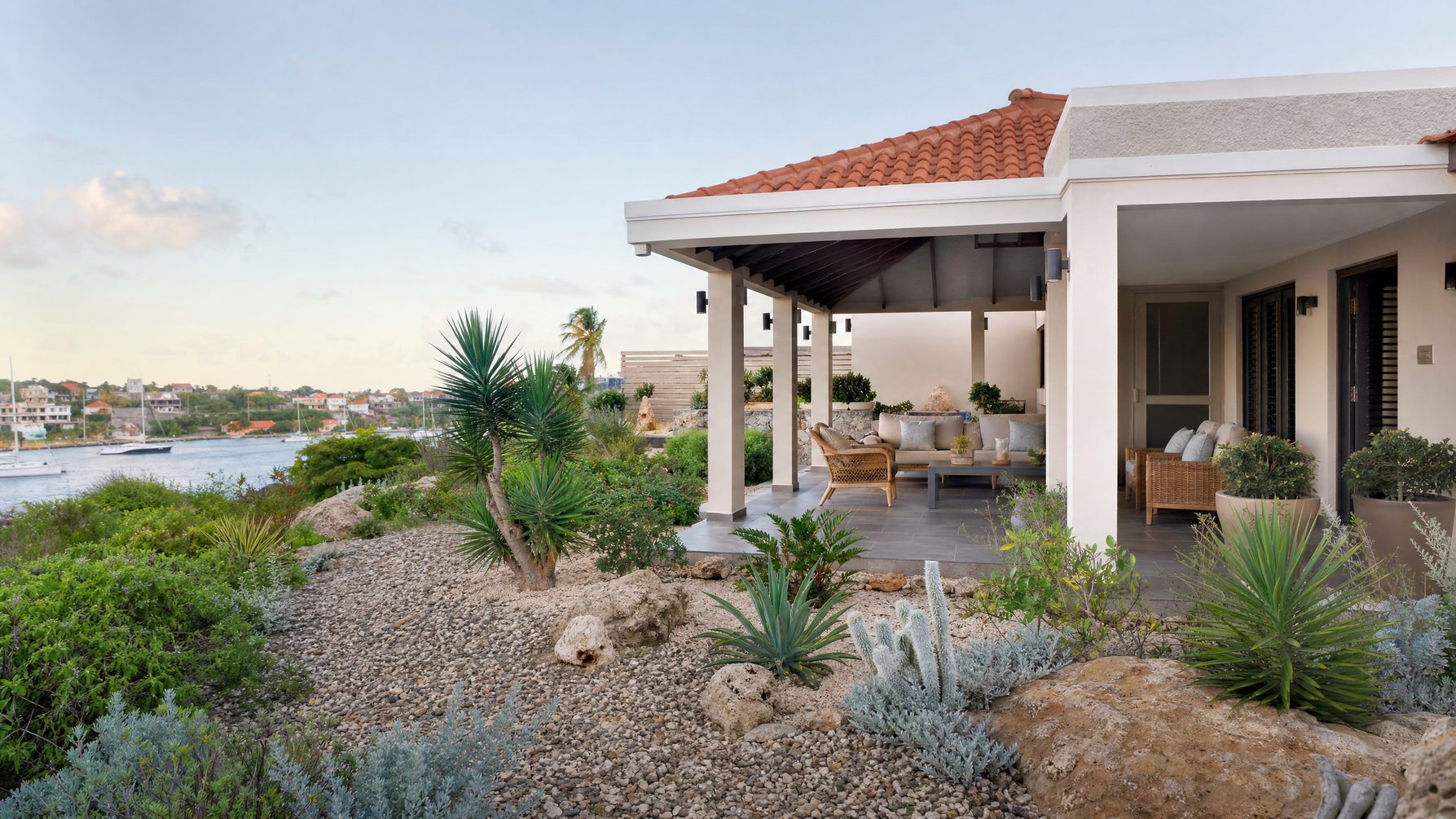
- ›Market and rental profile: Pietermaai, Punda, Saliña, Mahaai, Jan Thiel, and Spanish Water are the prime markets. Prices have been stable to gently appreciating over the past decade. Rental yields run 4–7% gross in the long-term rental market; the short-term holiday rental market is regulated and subject to specific licensing.
- ›Hurricane exposure: Curaçao sits outside the main Atlantic hurricane belt — a significant safety advantage compared to most Caribbean alternatives. Tropical storms occur but major hurricane impact is rare. Property insurance is significantly cheaper than in hurricane-belt Caribbean nations.
- ›Annual property tax: 0.4–0.6% of assessed value annually. Modest by international standards.
The practical approach is to decide first whether the property is primarily for Penshonado tier compliance, lifestyle, or rental investment. Penshonado-qualifying property must be for personal use only (no rental income generated).
Transaction cost table (Curaçao):
| Cost item | Typical amount | Notes |
|---|---|---|
| Property transfer tax | 4% | Of purchase price; paid by buyer |
| Notary fees | ~1.5% | Of purchase price |
| Legal fees | 1–1.5% | Buyer's solicitor |
| Real estate agent | 2–3% | Often split buyer/seller |
| Annual property tax | 0.4–0.6% | Of assessed value |
| Capital gains on resale | 0% (Penshonado) | Foreign source CG, covered by 10% rate |
| Hurricane insurance | Lower | Outside main hurricane belt |
XVIII.
Retiring in Curaçao
Curaçao is genuinely designed for retirees aged 50+ — the Penshonado regime is the central retirement framework, and the country's institutional depth makes it one of the better Caribbean retirement options.
The Penshonado pathway:
- ›Aged 50+ at registration
- ›Lived outside Curaçao 5+ consecutive years
- ›Apply within 2 months of registration
- ›Own home XCG 450,000+ within 18 months
- ›No employment in Curaçao
- ›Foreign-source income at 10% flat (or deemed XCG 500,000 alternative)
- ›Indefinite residence permit included
For retirees with foreign pension income, the Penshonado tax treatment is uniformly favourable:
- ›Foreign pension income: 10% Curaçao tax under Penshonado (vs. typical 20–46% in Western European source countries).
- ›Foreign dividends, interest, capital gains, rental income: All covered at 10% Penshonado rate.
- ›Foreign capital gains kept offshore: Outside the Curaçao tax base entirely.
Pension-source country considerations:
- ›Dutch state pension (AOW) and most Dutch private pensions: Under the BRK with the Netherlands, generally taxable in residence country (Curaçao under Penshonado at 10%). The Netherlands-Curaçao-Dutch retiree route is the most efficient Penshonado pathway, with predictable 10% effective tax treatment.
- ›UK state pension and most UK private pensions: No UK-Curaçao DTA; subject to UK tax under domestic rules. Curaçao taxes at 10% Penshonado on top.
- ›US Social Security: US citizens taxed worldwide regardless of residence; FEIE does not apply; no US-Curaçao DTA.
- ›German Rente: No Germany-Curaçao DTA; subject to German source-country withholding plus 10% Curaçao Penshonado.
- ›Belgian, French, Italian pensions: Treaty-specific allocation under each country's domestic rules and any limited TIEAs.
- ›Climate: Tropical — 25–32°C year-round, low humidity (drier than most Caribbean), consistent trade winds. Outside the main hurricane belt — a significant comfort and insurance advantage. Genuinely pleasant for retirees year-round.
- ›Healthcare: Curaçao Medical Center (opened 2019) is the principal hospital — Dutch-equivalent quality with Dutch-trained specialists. Strong primary care. For very complex specialist care, retirees travel to the Netherlands (10 hours direct) or Miami (3 hours). Comprehensive international health insurance is essential.
- ›Cost of living: see Section XVI. Comfortable single retiree budget USD 3,500–7,000/month; couple USD 5,500–11,000/month including private healthcare and travel. Manageable for HNW retirees but not the cheapest Caribbean option.
- ›Community: Substantial Dutch retirement community (perhaps 5,000–8,000 Dutch retirees), well-established Belgian and German communities, smaller US/UK/Canadian communities. Most expat retirees live in Jan Thiel, Spanish Water, Pietermaai, or in the gated communities along the south coast.
XIX.
US Citizens: What You Need to Know
US citizens and long-term green card holders are taxed by the United States on their worldwide income, regardless of where they live. Relocating to Curaçao under Penshonado does not end US tax obligations.
Key considerations for US citizens in Curaçao:
- ›Foreign Earned Income Exclusion (FEIE): US citizens who qualify as bona fide residents of Curaçao can exclude up to US$132,900 of foreign earned income from US federal income tax for 2026. Applies to wages and self-employment — not passive income such as dividends, interest, capital gains, foreign pensions, or rental income. Penshonado applicants are typically retired, so FEIE is largely irrelevant.
- ›Foreign Tax Credit: Curaçao income tax paid (10% under Penshonado, or higher under standard regime) can generally be credited against US tax on the same income. For US Penshonado retirees, the 10% Curaçao tax provides a partial offset against US tax — but combined with US worldwide taxation, the overall outcome is materially less favourable than for non-US citizens.
- ›No US-Curaçao DTA: No comprehensive double tax agreement. The two countries have a TIEA but no income tax treaty.
- ›FBAR (FinCEN Form 114): US persons with Curaçao bank accounts exceeding US$10,000 must file FBAR annually.
- ›FATCA (Form 8938): Curaçao has FATCA cooperation. US persons must file Form 8938.
- ›PFIC: US citizens holding non-US mutual funds, ETFs, or pooled investments face the punitive PFIC regime.
- ›Self-Employment Tax: No US-Curaçao totalization agreement. Penshonado prohibits local employment, but US self-employment income earned anywhere remains subject to US SE tax.
- ݤ877A Expatriation: US citizens who renounce citizenship and meet "covered expatriate" tests face mark-to-market deemed sale of worldwide assets at fair market value on the day before expatriation. Important for US citizens contemplating future Dutch naturalisation (which typically requires renouncing US citizenship).
- ›OBBBA (One Big Beautiful Bill Act, July 2025): Made TCJA brackets permanent; raised QSBS Section 1202 cap to US$15M; raised federal estate tax exemption permanently to US$15M from 2026.
For US citizens, Curaçao is a partial-benefit retirement destination. The 10% Penshonado rate provides FTC offset against US tax on most foreign-source income — but the absence of a DTA, the continuing US worldwide taxation, and the PFIC issues make the structural benefit smaller than for non-US Penshonado applicants. US citizens should compare Curaçao Penshonado against alternatives like Puerto Rico Act 60 (which provides US-territory tax benefits without expatriation) before committing.
US citizens considering Curaçao should work with a qualified US international tax adviser alongside local Curaçao counsel.
XX.
Correct Preparation
Before your move to Curaçao, a number of important questions need to be answered.
Do I need to give up my home country property?
To genuinely shift your centre of life to Curaçao, surrendering your principal residence in your home country is generally non-negotiable for tax-residence purposes. Particularly important for German nationals — Curaçao under Penshonado is classified as a low-tax country under §2 AStG, and the 10-year extended liability framework applies.
Am I eligible for Penshonado?
The Penshonado eligibility criteria are strict and non-negotiable: aged 50+ at registration, lived outside Curaçao for 5+ consecutive years (60 months) prior, application within 2 months of registration, property of XCG 450,000+ within 18 months, no employment/self-employment/business in Curaçao. If any single criterion is not met, Penshonado is not available. Standard residence permits without Penshonado tax benefits are an alternative — but face Curaçao's standard high-tax regime (top 46.5%).
Should I pursue Penshonado at 10% or the deemed XCG 500,000 alternative?
The 10% on actual foreign income is generally more favourable for clients with foreign income below XCG 5,000,000 (~USD 2.8M) per year. Above that, the deemed XCG 500,000 alternative may be more efficient. However, electing the deemed-income option forfeits double-taxation treaty relief under the BRK and other Curaçao DTAs — significant for Dutch nationals and for clients with treaty-protected source-country income.
How quickly can I open a bank account?
Account opening at major Curaçao banks typically takes 4–8 weeks for retail accounts; 8–12 weeks for HNW private banking. Multi-currency accounts (USD, EUR, XCG, GBP) are standard. Have lease agreement, source-of-funds documentation, and bank reference ready.
What happens to my existing company?
A relocation abroad has consequences for your existing business. For German nationals, §6 AStG exit tax applies on departure for shareholdings ≥1%. Discuss with your adviser before moving. Note: under Penshonado, you cannot continue active business operations in Curaçao — but holding interests in foreign companies is permitted.
Do I need to set up a Curaçao company?
Generally NO for Penshonado retirees — local employment/business activity disqualifies Penshonado status. Foreign holding structures, foreign rental properties, and passive investment portfolios are all compatible with Penshonado. The Penshonado framework is designed for genuinely retired clients with portable foreign income, not for active entrepreneurs.
How much money should I transfer in advance?
You can transfer unlimited funds to a Curaçao bank account, subject to bank source-of-funds documentation. The XCG 450,000 property purchase is the main cash requirement; additional working capital for the first year of residence is sensible.
What is the language situation?
Four official languages: Dutch, English, Spanish, and Papiamentu. Government and legal documentation is primarily in Dutch. Business and banking widely in English and Dutch. Daily life primarily Papiamentu with extensive English. Dutch language is genuinely useful but not strictly required for Penshonado purposes; for Dutch citizenship after 5 years, Dutch language proficiency (or Papiamentu equivalent) is required.
What about timing?
The 2-month application window after registration is critical. Start your planning at least 6-12 months before your intended Curaçao registration date — to coordinate property purchase, prior-residence documentation, accountant engagement, and Penshonado application submission.
Deregistering from your home country
Standard deregistration with the residents' register and tax authority. For German nationals, the Abmeldung is mandatory. For Dutch nationals, the Gemeente registration update reflects the move. For US citizens, no deregistration is possible — citizenship-based taxation continues.
XXI.
Automatic Exchange of Information (OECD CRS)
Curaçao participates in the OECD Common Reporting Standard (CRS), with automatic exchange of financial account information since 2018.
In practical terms: Curaçao financial institutions report account details to the Curaçao Inspector of Taxes, which automatically shares this information with the tax authority of the account holder's country of tax residence on an annual basis.
The key point is that CRS follows tax residence, not nationality or citizenship. A Curaçao Penshonado retiree who has genuinely become tax resident in Curaçao is reported under Curaçao residence — not under the country of their original passport.
Curaçao is also signatory to the OECD Multilateral Convention on Mutual Administrative Assistance in Tax Matters and has implemented BEPS minimum standards. The country was on the EU AML list briefly in 2018 but has been removed after enhanced compliance reforms. Beneficial ownership transparency has been substantially upgraded.
US citizens are different. Affected by FATCA instead. Curaçao financial institutions identify US persons under FATCA procedures and report through a Model 1 IGA framework. US citizens with Curaçao accounts must additionally file FBAR and Form 8938 directly with US authorities.
Key point: CRS and FATCA are not problems for those who have relocated correctly. They are problems for those who have not.
XXII.
Further Relocation Formalities
Upon establishing residence in Curaçao under Penshonado:
- ›Population register registration: Within 5 days of arrival, register at the Curaçao Civil Registry (Kranshi). This is the critical date — the Penshonado application must be submitted within 2 months thereafter.
- ›Tax registration: The Inspector of Taxes (Inspectie der Belastingen) issues a tax number upon Penshonado approval. The Penshonado application requires a CRIB number (tax ID) plus full documentation including the property purchase contract, the prior-residence affidavit, and the accountant's statement.
- ›Annual Penshonado compliance: Tax return filed annually by 30 June; statement from a Curaçao-licensed accountant or audit firm confirming foreign-income compliance; continuous proof of qualifying property ownership.
- ›Driving licences: International driving permits valid for up to 6 months. Foreign EU/EEA, US, and Canadian licences can be exchanged for Curaçao licences under specific frameworks. Curaçao drives on the right.
- ›Health insurance: Mandatory under the basic health insurance framework (BVZ - Basisverzekering Ziektekosten). Penshonado retirees pay BVZ contributions plus AVBZ (special medical expenses), AOC (general old age), and AWW (widows/orphans) insurance — these are mandatory social insurance premiums separate from the 10% income tax. Comprehensive supplementary private health insurance is recommended.
- ›Importing personal effects: Household goods imported within 6 months of taking up residence may qualify for relief from import duty under specific frameworks. Cars from the EU can typically be imported.
- ›Schools: International schools include International School of Curaçao (English, US/IB curriculum), Vespucci College (Dutch curriculum), Lycée Français (French curriculum), and various Dutch-medium private schools. Annual fees XCG 18,000–45,000+ per child.
- ›Annual compliance calendar: Calendar reminders for the annual tax return (30 June), accountant's annual statement, residence permit administrative reviews, BVZ/AVBZ/AOC/AWW social insurance premiums, health insurance renewals, and property-related compliance prevent administrative gaps.
XXIII.
How We Help With Your Move to Curaçao
We offer comprehensive tax and legal support for your relocation to Curaçao. We follow a proven process — and where Curaçao requires specialist local input, we coordinate with our network of Curaçao-licensed tax advisers, lawyers, accountants, real estate professionals, and bankers, while remaining responsible for overall coordination.
The results speak for themselves: we have helped over 100 entrepreneurs and business owners significantly reduce their tax burden through carefully planned relocations. Legally sound structuring within the framework of international tax law is our highest priority.
Our services typically include:
- →Tax advice on the consequences of relocating abroad: analysis, projections, assessments
- →Penshonado eligibility assessment — confirmation that all criteria (50+, 5-year prior absence, foreign-source income profile) are met BEFORE any commitment
- →Penshonado application preparation and coordination with the Inspector of Taxes — including the critical 2-month-after-registration timing
- →10% flat rate vs deemed XCG 500,000 election analysis — selection based on specific income profile and DTA position
- →Real estate strategy: XCG 450,000+ qualifying property selection in Pietermaai/Saliña/Jan Thiel/Spanish Water; coordination with Curaçao-licensed notaries
- →Home-country departure tax analysis BEFORE relying on Curaçao residence — particularly for German (§6 AStG, §2 AStG 10-year extended liability), Dutch (BRK pension allocation), UK departers, and US citizens
- →Banking strategy: local Curaçao accounts (MCB, Vidanova) plus primary international private banking; source-of-wealth documentation file
- →Coordination with home-country tax adviser, US international tax counsel (where relevant), and the Curaçao Inspector of Taxes for ongoing annual compliance
- →Schooling, healthcare, insurance, and lifestyle coordination for Penshonado families
- →Annual Penshonado compliance management: tax filings, accountant's statement, property compliance, social insurance premiums
Our fees are generally billed on a time basis; fixed prices apply for certain services such as Penshonado application coordination.
As a first step, we recommend booking a consultation to discuss your plans — by phone, Zoom, or Signal. We will be honest about whether you qualify for Penshonado — and whether Curaçao is the right Caribbean retirement choice given your specific home-country tax situation.