Contents
- 1. Panama: Country Overview
- 2. Putting Panama on the Map
- 3. What Others Say About Panama
- 4. Tax Benefits: What Panama Has to Offer
- 5. Tax Rates at a Glance
- 6. Tax Residency: What Triggers It
- 7. Double Tax Treaties
- 8. Avoid Remaining Tax Resident at Home
- 9. Tax Considerations When Leaving Your Home Country
- 10. Company Setup & Corporate Tax
- 11. Who Should (and Shouldn't) Move to Panama
- 12. Visas and Residence Permits
- 13. Path to Citizenship
- 14. Banking in Panama
- 15. What Makes Panama Genuinely Attractive
- 16. Cost of Living in Panama
- 17. Buying Real Estate in Panama
- 18. Retiring in Panama
- 19. US Citizens: What You Need to Know
- 20. Correct Preparation
- 21. Automatic Exchange of Information (OECD CRS)
- 22. Further Relocation Formalities
- 23. How We Help With Your Move to Panama
I.
Panama: Country Overview
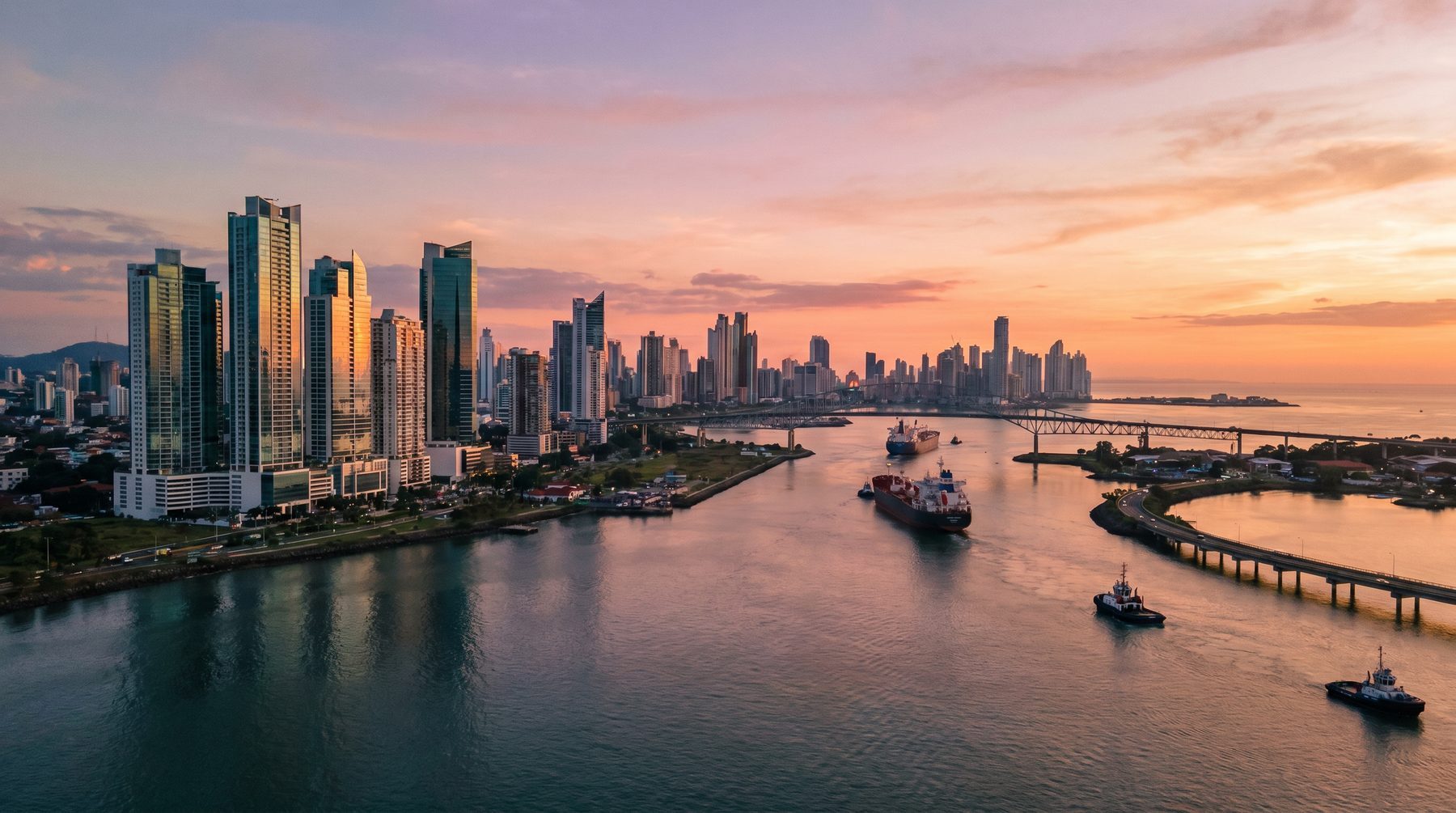
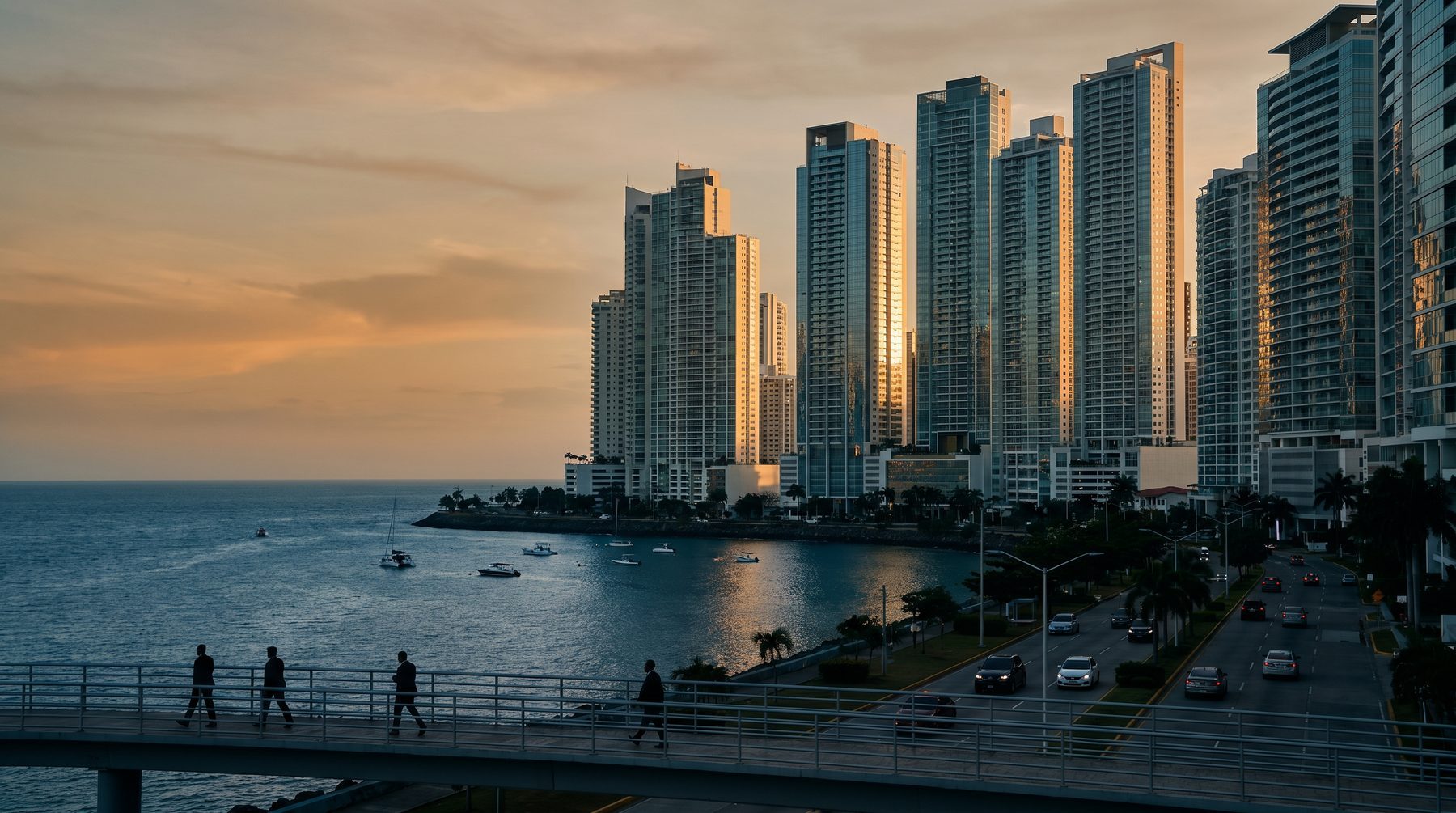
Panama is a republic of approximately 4.4 million people at the narrowest point of Central America, connecting North and South America. The capital is Panama City, a modern city of approximately 1.1 million whose skyline — a forest of glass towers above the Pacific entrance to the Panama Canal — announces immediately that this is not a typical Central American capital. Panama uses the US dollar as its official currency (the Balboa, pegged 1:1 to the USD, exists alongside it but both are used interchangeably). This eliminates currency risk for US-income earners and simplifies financial planning considerably.
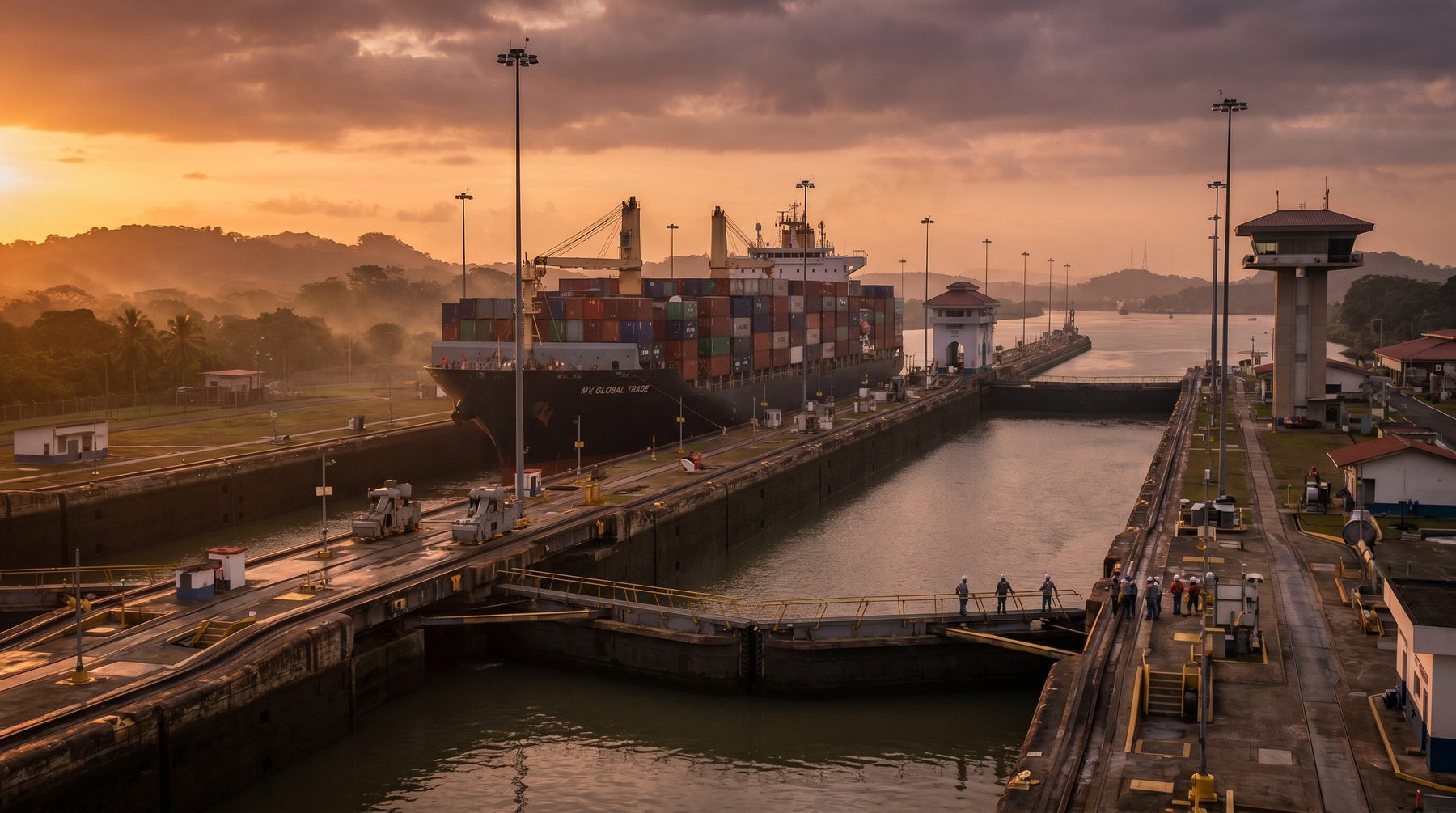
The Panama Canal is the defining economic fact. The Canal generates approximately $3–4 billion annually for Panama, funds infrastructure development, and is the reason Panama City has a level of financial and logistics infrastructure far above what its population size would otherwise produce. Panama is home to the Panama Stock Exchange, 80+ international banks, a major re-export free trade zone (the Colón Free Zone, the second-largest in the world), and the headquarters of dozens of Latin American multinationals.
Panama operates a strict territorial tax system. Only income derived from activities performed within Panama is subject to Panamanian income tax. Foreign-source income — income earned from outside Panama — is completely exempt from Panamanian tax regardless of whether it is brought into Panama. This is one of the cleanest territorial systems in the world: there is no remittance condition, no time limit, and no restriction on depositing foreign income in Panamanian personal bank accounts.
No capital gains tax on foreign assets. No inheritance tax. No wealth tax. No gift tax. Progressive income tax on Panama-source income applies at rates from 0% to 25%, but for those earning primarily from foreign sources, this rate is irrelevant.
What to be aware of: Panama City has real security disparities between neighbourhoods — the financial district (Punta Pacífica, Marbella, Bella Vista) and the expat areas (Casco Viejo, Costa del Este, Santa María) are safe and well-managed; parts of the interior are not. Banking access for US citizens has become more difficult since FATCA — some Panamanian banks are reluctant to onboard US clients. No US-Panama income tax treaty exists. Panama is on various international monitoring lists for financial transparency, which affects correspondent banking relationships.
2026 Panama territoriality correction: strict territoriality is the central feature. Under Panama’s Fiscal Code, foreign-source income is never taxed for residents, non-residents, citizens, or visa holders. Panama also uses the US dollar as official currency alongside the Balboa at 1:1 and has no wealth tax, inheritance tax, or gift tax.
II.
Putting Panama on the Map
Panama — Central America; Pacific and Caribbean coasts; Panama Canal; Panama City financial capital
The Panama Canal is 80 kilometres long. Ships take 8–10 hours to pass through it. Standing at the Miraflores Locks — the visitor centre on the Pacific side — watching an Ultra-Panamax container ship pass through a lock chamber with less than a metre of clearance on each side, moving from ocean to ocean at walking pace, is one of the genuinely extraordinary engineering experiences available to a civilian. The Canal was completed in 1914 after a decade of construction that killed 5,600 workers. An expanded canal for larger vessels opened in 2016. Approximately 40 ships pass through per day, representing about 5% of world trade.
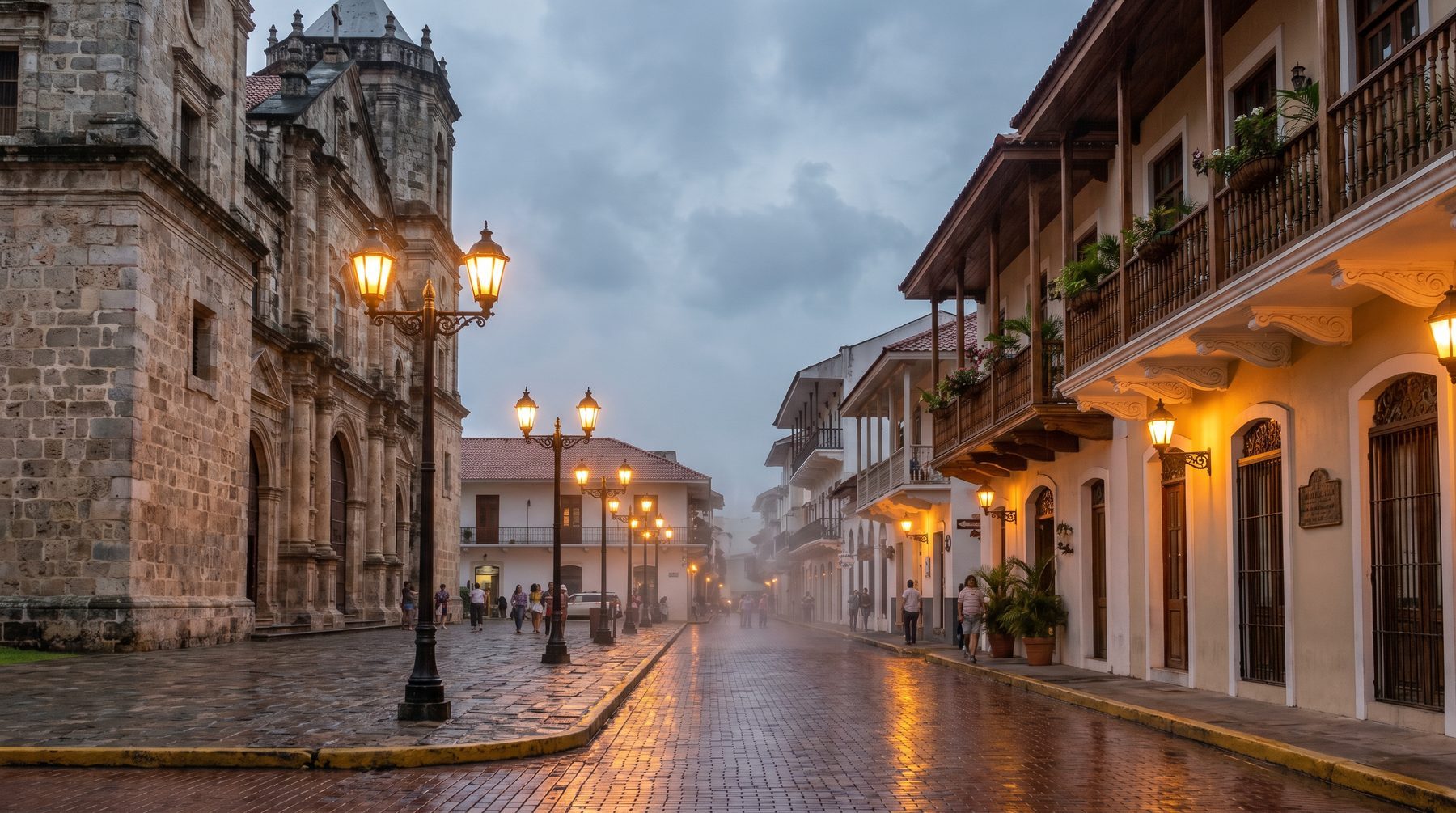
- ›Panama City has the most dramatic skyline in Latin America — a dense cluster of glass towers on a narrow strip between the Pacific Ocean and the old city. Casco Viejo (also called Casco Antiguo) is the old Spanish colonial district, declared a UNESCO World Heritage Site in 1997: narrow streets, balconied buildings, a cathedral from 1796, the ruins of the original Panama Viejo (destroyed by pirate Henry Morgan in 1671) visible a few kilometres away. The renovation of Casco Viejo over the past 20 years has produced one of the most interesting urban environments in Latin America — restaurants, boutique hotels, rooftop bars, and a resident creative community in buildings that are still being restored around them.
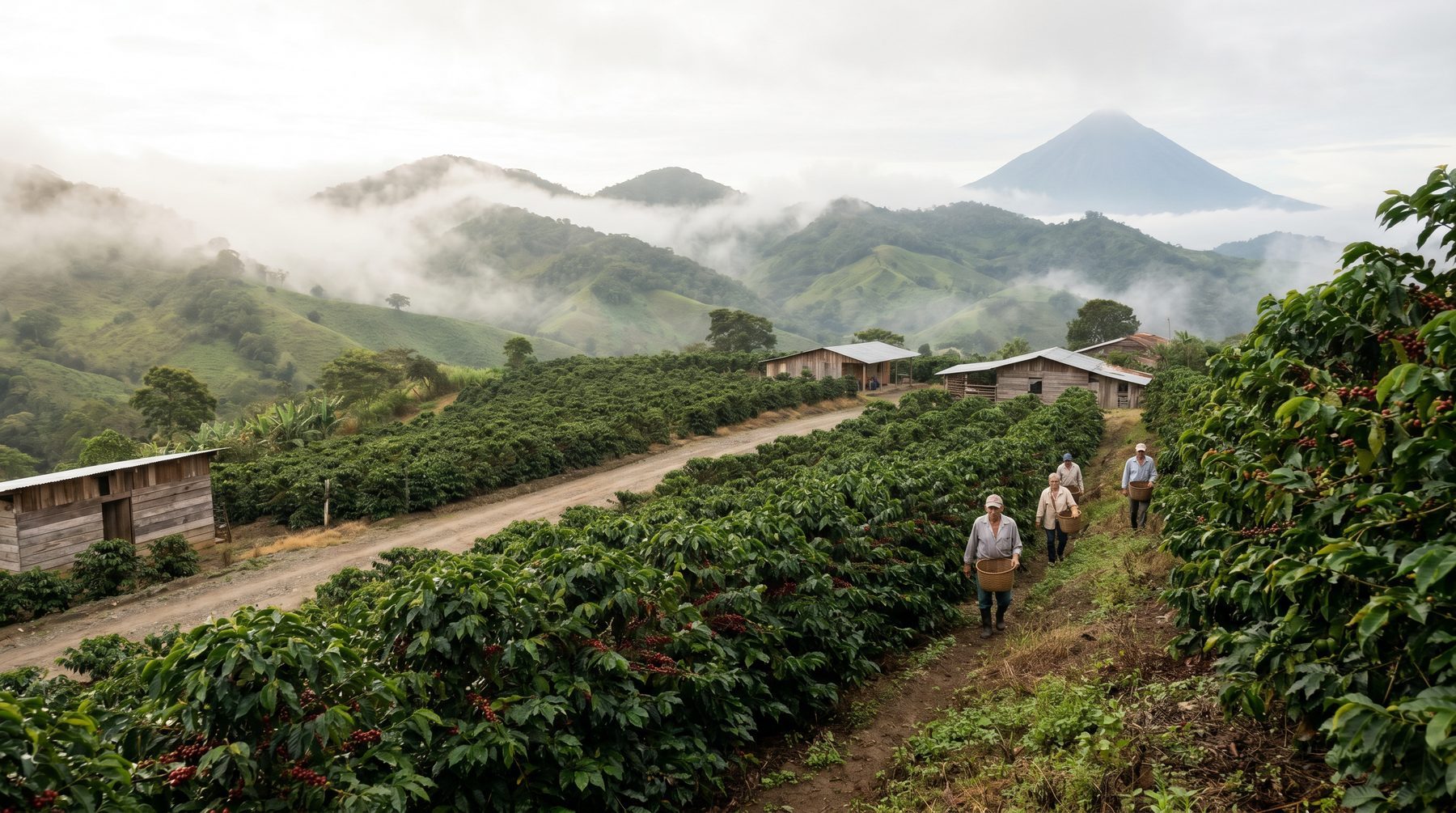
- ›Boquete in the Chiriquí Highlands — 5 hours from Panama City at 1,200 metres altitude — is where the retiree community concentrates: eternal spring climate (18–24°C year-round), coffee farms producing coffee of genuine international quality, a hiking and outdoors culture, excellent private healthcare, and a large English-speaking expat population. It is the most popular retirement destination in Panama and routinely appears in international retirement rankings.
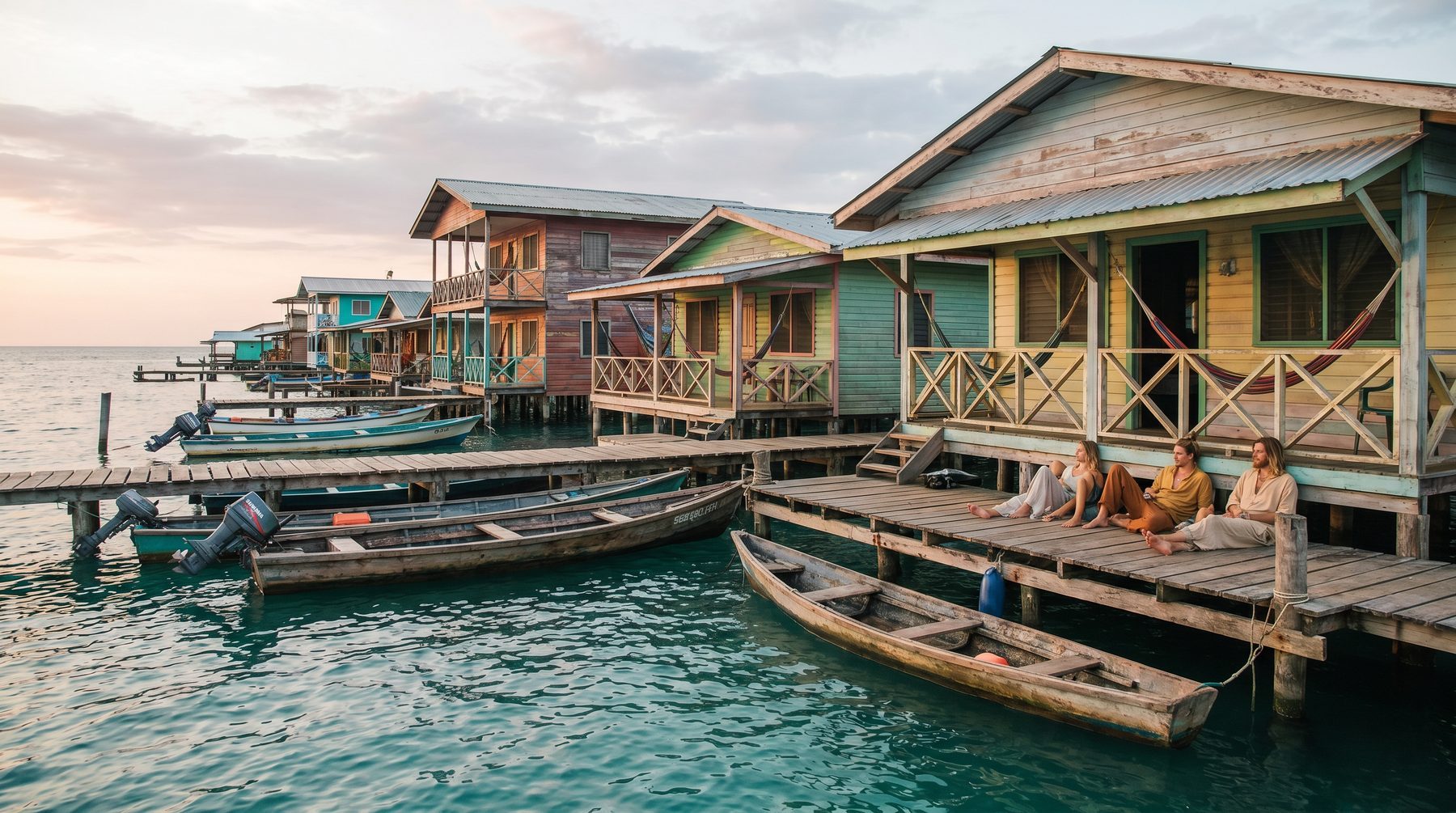
- ›Bocas del Toro on the Caribbean coast is the surf and beach alternative — a cluster of islands with turquoise water, coral reef, and a laid-back international community that has been there long enough to have built a functioning infrastructure of restaurants and schools without losing its character.
Miami is 3 hours by air. Bogotá is 1 hour. Mexico City is 3 hours. Panama City's Tocumen International Airport serves 90+ destinations and is the main hub for Copa Airlines, Latin America's most consistently on-time carrier.
III.
What Others Say About Panama
"Panama is Central America with a financial services sector, which changes everything about what Central America can mean as a place to live."
— Kathleen Peddicord, founder of Live and Invest Overseas, 2019
"The old city of Panama has been restored with care and intelligence, and it is now one of the finest urban environments in the Americas. The balconied streets in the early evening, before the heat breaks, are very beautiful."
— Simon Calder, The Independent, 2022
"Boquete is the place that everyone who has retired in Central America tells you about. When you arrive, you understand immediately why."
— Peter Greenberg, travel journalist, The Travel Detective, 2021
IV.
Tax Benefits: What Panama Has to Offer
Panama operates the cleanest territorial tax system in the Americas. Under the Fiscal Code, territoriality is a CORE principle — foreign-source income is NEVER taxed for any individual or company in Panama, regardless of residency status, visa category, citizenship, or duration of residence. Panamanian-source income is taxed on a progressive 0% / 15% / 25% PIT scale (top bracket above USD 50,000) and a 25% flat CIT (with a 4.67% CAIR alternative minimum on gross for companies with revenue >USD 1.5M). VAT (ITBMS) is 7%. Panama has NO wealth tax, NO inheritance tax (abolished 2014), NO gift tax. The country uses the US dollar as official currency alongside the Balboa (pegged 1:1) — eliminating exchange rate risk for USD-denominated wealth. The Qualified Investor Golden Visa programme provides fast-track permanent residency from USD 300K real estate. The Friendly Nations Visa serves ~50 countries with reduced thresholds. The Multinational Headquarters (SEM), Colon Free Zone, and Panama Pacifico regimes offer substantial CIT exemptions for qualifying corporate activities.
- ›Strict territorial tax system — foreign income NEVER taxed for ALL — Panama taxes only Panamanian-source income for everyone: citizens, residents, non-residents, visa holders. Foreign-source income (foreign dividends, foreign interest, foreign capital gains, foreign rental, foreign business profits, foreign salaries, foreign pensions, US Social Security) is permanently outside the Panamanian tax net. No time limit, no status requirement, no special regime — territoriality is a core rule of the Fiscal Code.
- ›Personal income tax — progressive 0% / 15% / 25% on Panamanian-source income only — 0% on income up to USD 11,000; 15% on USD 11,001–USD 50,000; 25% above USD 50,000. Most HNW relocators have minimal Panamanian-source income, making the effective burden negligible.
- ›0% inheritance tax (abolished 2014), 0% gift tax, 0% wealth tax — Panama has none of these. The 2014 abolition of inheritance tax (previously 4%–10%) made Panama one of the most estate-planning-friendly jurisdictions in the Americas.
- ›Corporate income tax 25% on Panamanian-source income; 4.67% CAIR alternative on gross for companies >USD 1.5M revenue — small companies (turnover <USD 150K) exempt from CAIR; multinational headquarters (SEM) and multinational manufacturing (EMMA) regimes at 5% CIT; free zone companies exempt or substantially reduced.
- ›Multinational Headquarters (SEM), Colon Free Zone, Panama Pacifico — substantial CIT exemptions — SEM regime: 5% CIT for qualifying regional HQ services to foreign affiliates; Colon Free Zone: largest free zone in the Americas, full CIT exemption for re-export trading; Panama Pacifico: services, light manufacturing, logistics with multi-year exemptions; Ciudad del Saber: research, education, technology with broad exemptions.
- ›US Dollar as official currency (alongside Balboa, pegged 1:1) — Panama uses the USD as legal tender; no exchange rate risk for USD-denominated wealth; eliminates currency conversion friction for US clients and any clients holding USD assets. Panamanian banks operate in USD natively.
- ›Qualified Investor Golden Visa from USD 300K real estate; Friendly Nations Visa for ~50 countries — Qualified Investor: USD 300K real estate / USD 500K securities / USD 750K fixed deposit → permanent residency in 30 days; Friendly Nations: economic ties OR USD 200K real estate for nationals of ~50 listed countries (US, Canada, EU, UK, Australia, Singapore, Israel); Pensionado: USD 1,000/month pension. Citizenship eligible after 5 years of permanent residency.
- ›17 DTAs but NO US-Panama treaty (TIEA only since 2011); CRS-compliant — DTAs with Spain, France, UK, Ireland, Netherlands, Luxembourg, Portugal, Mexico, Korea, Singapore, Israel, Italy, Qatar, UAE, Vietnam, Czech Republic, Barbados. The US-Panama TIEA (in force 2011) provides information exchange but NOT double taxation relief — relevant for US clients who would face full statutory US withholding rates on certain Panamanian-source income flows. CRS participating since 2018.
- ›VAT (ITBMS) 7% standard, broad exemptions; Pillar Two QDMTT NOT implemented — VAT 7% on most goods/services; 10% on alcohol and hotels; 15% on tobacco; 0%/exempt for basic foods, medicines, medical care, transportation, exports. Pillar Two QDMTT NOT implemented as of 2026 — favourable for smaller MNEs and non-MNE corporate structures.
V.
Tax Rates at a Glance
| Tax | Rate (2026) | Notes |
|---|---|---|
| Tax basis | Strict territorial | Foreign income NEVER taxed for all |
| Personal Income Tax — bracket 1 | 0% | Up to USD 11,000 |
| Personal Income Tax — bracket 2 | 15% | USD 11,001–USD 50,000 |
| Personal Income Tax — top | 25% | Above USD 50,000 |
| Foreign-source income | 0% | Always exempt — no time limit, no status requirement |
| Capital Gains — securities | 10% | Buyer withholds 5% of sale price as advance |
| Capital Gains — real estate | Various | 3% on gross or 10% on gain (election) for first sale of new residential |
| Inheritance Tax | 0% | Abolished 2014 |
| Gift Tax | 0% | None |
| Wealth Tax | 0% | None |
| Annual Property Tax | 0%–1% progressive | Primary residence exempt to USD 120,000; non-primary to USD 30,000 |
| Corporate Income Tax — standard | 25% | On Panamanian-source income |
| Corporate Income Tax — CAIR alternative minimum | 4.67% gross | For companies with revenue >USD 1.5M |
| Corporate Income Tax — small (<USD 150K turnover) | 25% on net | Exempt from CAIR |
| Multinational Headquarters (SEM) | 5% | Qualifying regional HQ services |
| Multinational Manufacturing (EMMA) | 5% | Qualifying multinational manufacturing |
| Colon Free Zone | Up to 100% exempt | Trading/re-export |
| Panama Pacifico | Multi-year exemption | Services, light manufacturing, logistics |
| Ciudad del Saber | Broad exemption | Research, education, technology |
| Annual franchise tax | USD 300 | All corporations |
| Operations Notice Tax | 2% capital | Min USD 100, max USD 60,000 |
| Complementary tax (retained earnings) | 4% | Advance dividend tax |
| Pillar Two QDMTT | Not implemented | As of 2026 |
| WHT — dividends from local-source profits | 10% | Definitive |
| WHT — dividends from foreign-source / export profits | 5% | |
| WHT — bearer share dividends | 20% | |
| WHT — dividends to discriminating jurisdictions | 40% | |
| WHT — interest, royalties to non-residents | 12.5% effective | 50% × 25% |
| VAT (ITBMS) — standard | 7% | |
| VAT — alcohol, hotels | 10% | |
| VAT — tobacco | 15% | |
| Currency | USD (with Balboa pegged 1:1) | USD is official currency |
| DTAs | 17 | NO US-Panama DTA |
| TIEA with US | In force 2011 | Information exchange only |
| CRS | Participating | Since 2018 |
| Tax residency | 183+ days OR permanent residence | |
| Friendly Nations Visa | ~50 countries | USD 200K real estate or economic ties |
| Qualified Investor Golden Visa | USD 300K real estate / USD 500K securities / USD 750K fixed deposit | 30-day permanent residency |
| Pensionado Visa | USD 1,000/month | Lifetime pension |
| Citizenship | 5 years PR | Spanish + history exam |
VI.
Tax Residency: What Triggers It
Panama tax residency is generally considered established after 183 days of physical presence in Panama during a calendar year. Formally, Panama establishes tax residency through the RUC (Registro Único del Contribuyente — tax identification number) and the concept of "centre of vital interests." In practice, the territorial system makes residency status less critical than in worldwide-taxation jurisdictions — even Panama tax residents pay no Panamanian tax on foreign-source income.
No minimum stay requirement for the Pensionado visa: The Pensionado visa requires only that the holder visits Panama at least once every two years. This flexibility makes it genuinely usable as a second residency for those who split time between Panama and other countries.
Key point: Panama's territorial system means foreign-source income is exempt from Panamanian tax regardless of your residency status. Even Panamanian tax residents pay zero Panamanian tax on foreign income. The planning benefit is structural, not dependent on managing day counts.
VII.
Double Tax Treaties
Panama has a growing DTA network of approximately 20 active agreements, including Spain, Mexico, Italy, Netherlands, Luxembourg, Singapore, UAE, Barbados, Israel, Qatar, and a number of others. Panama does not have DTAs with Germany, the UK, or the United States.
- ›The Panama-Spain DTA is the most important bilateral instrument for Spanish nationals — governing Spanish-source income paid to Panamanian residents and providing reduced withholding on Spanish dividends and interest.
- ›The Panama-Mexico DTA governs income flows between the two most economically significant Spanish-speaking countries in the Americas.
- ›The Panama-Netherlands DTA and Panama-Luxembourg DTA are relevant for European holding structures that route income through Panama.
- ›The absence of DTAs with Germany, UK, and US is the defining feature. These three source countries — which together account for the majority of income flowing to internationally mobile individuals in Panama — apply full domestic withholding rates without treaty reduction. A German national in Panama receiving German dividends pays full German domestic withholding at 26.375%. A British national pays full UK domestic rates on UK-source income. A US citizen pays full US rates on all worldwide income.
This makes the DTA planning for Panama a home-country departure exercise, not a bilateral treaty optimisation exercise.
2026 treaty update: Panama has 17 active DTAs including Spain, France, UK, Ireland, Netherlands, Luxembourg, Portugal, Mexico, Korea, Singapore, Israel, Italy, Qatar, UAE, Vietnam, Czech Republic, and Barbados. There is no US-Panama tax treaty; the US-Panama TIEA has been in force since 2011 and provides information exchange only.
VIII.
Avoid Remaining Tax Resident at Home
Panama's territorial system makes it one of the world's most established foreign income exemption jurisdictions — but it protects only the Panamanian side of the equation. Home-country tax residency must be genuinely severed under home-country domestic law, and Panama's limited DTA network (no agreements with Germany, the UK, or most European countries) means home-country rules apply without treaty mitigation.
For German nationals, the §6 AStG exit tax applies to shareholdings of 1% or more at departure. There is no Germany-Panama DTA — the German Finanzamt applies full domestic non-residency criteria. For British nationals, the SRT governs the exit entirely. There is no UK-Panama DTA. For US citizens, US worldwide taxation continues regardless — the FEIE provides some relief on earned income for qualifying residents.
IX.
Tax Considerations When Leaving Your Home Country
Before you relocate, you need to understand what tax consequences arise in your current country of residence at the point of departure. These rules vary significantly by country and must be assessed individually — there is no universal answer.
Many countries impose an exit tax or deemed disposal charge when a tax resident leaves. This typically applies to unrealised capital gains on shares, business interests, real estate, or other assets — taxing you as if you had sold everything on the day you departed. The rules differ widely: some countries apply this to all assets above a threshold, others only to substantial shareholdings or business interests. Some have look-back periods that can catch you even after you have left.
The timing of your departure, the structure of your assets, and the sequence of any business disposals all have material consequences. In some cases, restructuring assets before departure — or deferring the move by a few months — can make a significant difference to the tax outcome.
- ›Germany. The §6 AStG exit tax on shareholdings of 1% or more applies at departure. There is no Germany-Panama DTA — German-source income paid to Panamanian residents is subject to full German domestic withholding without treaty reduction. The absence of a bilateral treaty makes the home-country exit particularly important to complete cleanly.
- ›United Kingdom. SRT exit date must be established. There is no UK-Panama DTA. UK-source income flowing to Panamanian residents is subject to full UK domestic withholding rates without treaty reduction.
- ›United States. US worldwide taxation applies regardless of Panamanian residency. The US-Panama Tax Information Exchange Agreement exists, but no income tax treaty. The Foreign Earned Income Exclusion ($132,900 in 2026) is available to qualifying US citizens genuinely resident in Panama. Passive income is not covered and remains fully taxable to the US.
⚠ Obtain Local Tax Advice in Your Home Country The information above provides a general overview of the departure tax rules that commonly apply when leaving high-tax jurisdictions. It is not legal or tax advice. The rules in your specific home country — Germany, Austria, Switzerland, the UK, the US, or any other jurisdiction — are complex, change frequently, and depend entirely on your personal circumstances: your nationality, the nature and location of your assets, your business structure, your family situation, and the timing of your departure. Before you take any steps to relocate, obtain written advice from a qualified tax adviser who is licensed in your home country and experienced in international relocations. A consultation with us is a good starting point — but it does not substitute for country-specific legal advice from a practitioner in your jurisdiction of departure. The cost of getting this wrong is almost always greater than the cost of getting proper advice upfront.
X.
Company Setup & Corporate Tax
Panama's standard corporate income tax is 25% on Panama-source income. A Panama company that earns exclusively from outside Panama pays zero corporate income tax under the territorial system — only Panama-source income triggers the 25% rate.
The Panama corporation (Sociedad Anónima) has a global reputation as an offshore holding structure — enhanced by the Panama Papers episode of 2016, which clarified that the reputation was sometimes deserved. Post-2016, Panama has implemented substantial financial transparency improvements, AML reforms, and international compliance standards. A Panama SA is now a legitimate tool for internationally mobile individuals when properly structured — not the secrecy vehicle of former decades.
Is a local company always the right answer? Not necessarily.
For those with primarily foreign-source income, a foreign company (US LLC, UAE company, or others) is often more efficient than a Panama SA, avoiding Panama's 5% dividend withholding on foreign-source profit distributions.
- ›US LLC: No US corporate tax for non-US persons. Clean, credible, widely accepted globally.
- ›UAE company: 0% on qualifying income. Dubai + Panama residency combination is a legitimate structure for globally mobile entrepreneurs.
Learn more about our company setup services →
Permanent establishment risk: A foreign company is not a magical solution. If the company is effectively managed from your country of residence, or if staff, sales activity, or day-to-day control are located there, local tax authorities may still tax the profits locally. Structure follows substance. Genuine management, banking, contracts, and operational substance in the foreign jurisdiction are essential.
2026 corporate update: Panama applies 25% standard CIT on Panamanian-source income, CAIR at 4.67% of gross taxable income for companies with revenue above USD 1.5M, SEM and EMMA regimes at 5% CIT, and substantial exemptions in the Colon Free Zone, Panama Pacifico, and Ciudad del Saber. Panama has not implemented Pillar Two QDMTT as of 2026. The Sociedad Anónima and Private Interest Foundation remain key structuring vehicles.
XI.
Who Should (and Shouldn't) Move to Panama
Section 11 is where the relocation decision becomes practical. Panama can be an excellent fit for some profiles and a poor fit for others; the decisive question is whether the tax rules, lifestyle, residence requirements, banking, healthcare, and family situation point in the same direction.
Good Fit
- › International entrepreneurs and investors whose income structure actually benefits from Panama’s tax and residence rules.
- › Remote professionals and business owners who can move their centre of life genuinely, not merely change an address on paper.
- › Families or individuals who value Panama’s lifestyle, geography, safety profile, and cost structure as part of the overall decision.
- › People willing to handle local banking, residency, healthcare, and administration properly rather than improvising after arrival.
- › Those who understand that relocation is a full tax-residency project, not a holiday with a lower tax rate.
Poor Fit
- × Those who cannot genuinely spend enough time in Panama to support a defensible tax-residence position.
- × People who need a zero-friction, Western-European administrative environment from day one.
- × US citizens who expect the move to eliminate US tax filing, FBAR, FATCA, or citizenship-based taxation.
- × Those with income, companies, or family ties that keep them clearly taxable in their previous Panama.
- × Anyone choosing the jurisdiction only because it sounds attractive online, without testing housing, banking, healthcare, and lifestyle fit.
XII.
Visas and Residence Permits
- ›Pensionado Visa: Minimum $1,000/month lifetime pension income (reduced to $750/month if purchasing Panamanian real estate over $100,000). Immediate permanent residency. Open to all nationalities. Processing time 3–6 months. Pathway to citizenship after 5 years.
- ›Friendly Nations Visa: For nationals of 50+ qualifying countries (including USA, UK, EU, Canada, Australia). Requires proof of economic ties to Panama (Panamanian bank account + one of: Panamanian company, Panamanian property, or employment contract with a Panama employer). Immediate permanent residency.
- ›Qualified Investor Visa: Investment in Panamanian real estate ($300,000, rising to $500,000 from late 2026), listed securities ($500,000), or fixed deposit with the National Bank of Panama ($750,000). Immediate permanent residency.
- ›Digital Nomad Visa: For remote workers earning at least $3,000/month from foreign employers or clients. Temporary residency for 9 months, renewable. Does not require local employment.
2026 residence update: Panama options include the Friendly Nations Visa for roughly 50 countries, the Qualified Investor Golden Visa from USD 300,000 real estate / USD 500,000 securities / USD 750,000 fixed deposit, the Pensionado Visa from USD 1,000/month lifetime pension, Self Economic Solvency, Forestry Investor, and citizenship eligibility after five years of permanent residence.
XIII.
Path to Citizenship
Panamanian citizenship by naturalisation: 5 years of legal permanent residence (reduced to 3 years for nationals of Spanish-speaking countries or Spain). Spanish language proficiency and knowledge of Panamanian history required. Panama permits dual citizenship. Panamanian passport: visa-free access to approximately 145 countries.
XIV.
Banking in Panama
Panama is the banking capital of Latin America with approximately 80 licensed banks, including: Banco General, BAC Panama, Banistmo (HSBC subsidiary), Global Bank, Multibank, and many international private banks. The financial district of Panama City has private banking infrastructure comparable to smaller European financial centres.
For US citizens: FATCA compliance has caused some Panamanian banks to restrict US client onboarding. US citizens in Panama should work through banks with dedicated US compliance departments — Global Bank and some private banks have remained accessible.
For a relocation to Panama, the local account is normally the operational account: rent, utilities, cards, domestic transfers, local tax or residence registrations, and evidence that the move is real. It should not automatically become the main wealth-management account unless the local banking system offers the depth, multi-currency capability, private-banking service level, and long-term stability required for the client's assets.
Account opening in Panama should be treated as a compliance exercise, not as an administrative formality. Expect passport checks, proof of address, residence or visa documentation where applicable, tax-identification details, source-of-funds evidence, and sometimes in-person attendance or a local phone number. The easiest applications are those where the residence story, income source, and banking purpose are consistent before the first form is submitted.
Where to hold your main accounts
- ›Panama City — local accounts for daily operations, Pensionado discounts, and Panama-based transactions
- ›United States — USD accounts; most natural for US nationals
- ›Switzerland — private banking for European HNW clients
Learn more about our offshore banking services →
Important: not all banks are compatible with all residencies. Some Swiss and Singaporean private banks have restrictions on clients resident in certain jurisdictions, and compliance requirements vary. Residency status, income profile, source of wealth, and business type all affect which institutions will accept you and on what terms. We help clients navigate this before they commit to any banking structure.
XV.
What Makes Panama Genuinely Attractive
Panama is attractive when it is judged as a complete relocation platform, not as a slogan. The point is not that Panama is perfect for everyone. The point is that, for the right person, the combination of tax position, residence practicality, lifestyle, geography, banking, language, and long-term stability can produce a genuinely coherent base.
- ›Dollarised hub for the Americas. Panama is attractive because it combines dollarisation, territorial-style tax logic, strong logistics, banking, air connectivity, and a long history as a regional hub.
- ›The lifestyle case is not cosmetic. The lifestyle can be urban in Panama City, mountain-based in Boquete, coastal in Coronado, or island-oriented in Bocas. That variety is a genuine advantage.
- ›It can function as a real operating base. For entrepreneurs, retirees, investors, and Latin America operators, Panama offers infrastructure and connectivity that many regional alternatives lack.
- ›It rewards the right profile. It suits people who want Latin America with a practical business backbone and good international links.
- ›The attraction has to be handled honestly. Banking compliance, residency paperwork, and neighbourhood selection require care. Panama is easy to misunderstand if judged only by marketing.
XVI.
Cost of Living in Panama
Panama sits in the middle: cheaper than Miami, more expensive than much of Central America. Panama City, Coronado, Boquete and Bocas all have different budgets.
Typical monthly costs for an internationally mobile professional or family in Panama (2026 planning ranges):
| Category | USD/month | GBP/month | EUR/month |
|---|---|---|---|
| 1-bed apartment, desirable area | $1,200–2,400 | £900–1,850 | €1,100–2,200 |
| 2-bed apartment / small house | $2,200–4,550 | £1,700–3,550 | €2,050–4,200 |
| International school (annual per child) | $3,600–11,400 | £2,800–8,900 | €3,300–10,500 |
| Private health insurance (annual individual) | $700–2,350 | £550–1,850 | €650–2,150 |
| Restaurant meal, mid-range (per person) | $50–50 | £50–50 | €50–50 |
| Monthly groceries, single person | $500–1,150 | £400–900 | €450–1,050 |
| Utilities and internet, apartment | $200–600 | £150–500 | €200–550 |
- ›Comfortable single professional (no children): $2,800–5,200/month (£2,200–4,050 / €2,600–4,800)
- ›Family of four with private schooling: $6,500–12,000/month (£5,050–9,350 / €6,000–11,050)
These figures are planning ranges, not promises. The actual budget in Panama depends heavily on housing quality, neighbourhood, school choice, healthcare needs, car ownership, travel frequency, and whether you are trying to live like a local or maintain a Western expatriate standard.
XVII.
Buying Real Estate in Panama
Buying real estate in Panama can be useful for lifestyle, residence planning, and long-term anchoring, but it should not be treated as a simple shortcut to tax residence. Property is a factual tie; it can support a relocation story when used properly, but it can also create tax, inheritance, financing, and exit issues if bought before the wider plan is clear.
For internationally mobile buyers, the main points in Panama are:
- ›Ownership rules: Foreigners can buy titled property with broadly similar rights to locals, but possessory-rights and concession property require special caution.
- ›Transaction costs: Transfer tax, legal fees, notary/registration, agent commission, and possible capital-gains withholding should be understood.
- ›Market and rental profile: Panama City, Coronado, Boquete, Bocas del Toro, and beach projects have very different rental and resale profiles.
- ›Residence and tax angle: Property can support lifestyle and residence planning, but title type, developer track record, flood risk, and realistic rental yields matter.
The practical approach is to decide first whether the property is primarily for living, residence support, rental yield, asset protection, or lifestyle. Those are different purchases. A good real estate decision in Panama begins with title due diligence, tax-residence planning, inheritance review, and a realistic exit strategy — not with glossy developer brochures.
Transaction cost table (Panama):
| Cost item | Typical amount | Notes |
|---|---|---|
| Transfer tax | 2% | Of registered value |
| Legal fees | ~1% | Approximate |
| Agent commission | ~3% | Typical |
| Title insurance | ~0.3% | Where used |
| Typical total buyer costs | 6–7% | Capital gains on sale: 10% of gain or 3% of gross price, whichever is lower |
XVIII.
Retiring in Panama
Retiring in Panama can make sense for the right profile, but it should not be reduced to a simple tax headline. The real question is whether the country gives you the right combination of residence security, pension treatment, healthcare access, cost of living, climate, and day-to-day comfort. A retirement move is harder to reverse than a business relocation, so practical quality of life matters as much as tax.
For retirees considering Panama, the main points are:
- ›Residence route: The practical route is usually the Pensionado residence is one of the best-known retiree visa routes in the world and is accessible with qualifying lifetime pension income. This should be confirmed before making property commitments or moving assets, because a pleasant destination is not useful if the residence basis is weak.
- ›Pension income: Foreign pensions are generally not taxed locally under panama’s territorial system, but source-country taxation must be checked. The decisive point is often not only local tax, but whether the pension-paying country continues to tax the pension at source.
- ›Healthcare: Private healthcare in panama city is good and affordable; many doctors are internationally trained. Retirees should arrange private insurance or a clear local healthcare pathway before arrival, especially where pre-existing conditions are involved.
- ›Cost of living and lifestyle: Major expat hub, dollar economy, strong air links, coast and highlands. The country can work well where the retiree’s lifestyle expectations match the local rhythm rather than an imagined expatriate brochure.
- ›Climate and practical fit: Tropical, with cooler highland options such as boquete. Climate, language, bureaucracy, transport, and access to family often decide whether the move remains attractive after the first year.
Panama should therefore be assessed as a full retirement platform, not merely as a tax jurisdiction. The best candidates are retirees who have stable foreign income, good health coverage, a realistic view of local bureaucracy, and a clear plan for where they will live, how they will receive care, and how their pension will be taxed both locally and at source.
XIX.
US Citizens: What You Need to Know
US citizens and long-term green card holders are taxed by the United States on their worldwide income, regardless of where they live. Relocating to Panama does not end US tax obligations — it changes the picture, but does not eliminate it.
Key considerations for US citizens in Panama:
- ›Foreign Earned Income Exclusion (FEIE): US citizens who qualify as bona fide residents of Panama or pass the physical presence test can exclude a significant amount of foreign earned income from US federal income tax. This applies to wages and self-employment income — not passive income such as dividends, interest, capital gains, pensions, or rental income.
- ›Foreign Tax Credit: Income tax paid in Panama can generally be credited against US tax on the same income, reducing or eliminating double taxation. The credit is particularly important for income not covered by the FEIE and for taxpayers whose income exceeds the annual FEIE threshold.
- ›Treaty position: Treaty relief between the United States and Panama is limited or fact-dependent. Before relying on any treaty position, US citizens should confirm the current treaty status and the exact income category with a qualified US international tax adviser. A treaty does not automatically remove US filing obligations, and most treaties contain savings-clause rules that preserve US taxation of citizens.
- ›FBAR: US persons with bank accounts in Panama exceeding $10,000 in aggregate must file FinCEN Form 114 (FBAR) annually. Failure to file can carry severe penalties, even when no tax is due.
- ›FATCA: US citizens may also need to report foreign financial assets on Form 8938. Banks in Panama may separately identify US account holders under FATCA procedures and report account information through the relevant channels.
- ›Social Security and self-employment tax: The FEIE reduces income tax but does not automatically eliminate US self-employment tax. Whether US Social Security tax applies depends on employment status, entity structure, and any applicable totalization agreement.
US citizens considering Panama should work with a qualified US international tax adviser alongside local counsel. The interaction between US tax law and Panama tax law is manageable, but it requires careful planning before the move, not after the first filing deadline arrives.
XX.
Correct Preparation
Recommended steps: 1. Select residency route — Pensionado (retirees), Friendly Nations (working-age nationals of qualifying countries), Qualified Investor, or Digital Nomad. 2. Engage a Panamanian immigration lawyer — the process requires in-country legal representation. 3. Home-country departure tax analysis. 4. Open Panamanian bank account (required for Friendly Nations; useful for all). 5. Obtain RUC (tax ID). 6. Apply for residency with immigration lawyer. 7. On approval, obtain cedula (national ID). 8. Notify home-country tax authority of departure.
XXI.
Automatic Exchange of Information (OECD CRS)
Panama participates in the OECD Common Reporting Standard (CRS), the global framework for automatic exchange of financial account information between tax authorities. Panama has been exchanging information with partner jurisdictions since 2018.
In practical terms, this means: if you hold bank accounts or financial assets in Panama, the financial institution in Panama will report your account details — balance, income, and identifying information — to the local tax authority, which will then automatically share this information with the tax authority of your country of tax residence.
The key point is that CRS follows tax residence, not nationality or citizenship. For example, a Swedish citizen who has genuinely become tax resident in Panama is treated, for CRS purposes, as a tax resident of Panama — not as a Swedish reportable person merely because of the passport. The same principle applies to any non-US nationality: the account should be reported to the country of tax residence, not automatically to the country of citizenship.
CRS does not create a tax liability — it creates transparency. If you are properly tax resident in Panama and have correctly severed residency in your home country, CRS reporting simply confirms what should already be declared. The risk arises when individuals attempt to maintain dual residency, leave old tax-residence indicators unresolved, or claim Panama residency without genuinely living there.
US citizens are different. The United States does not participate in CRS in the same way. Americans are affected by FATCA instead: banks outside the United States generally identify US persons and report their account information through FATCA channels to the US authorities, regardless of whether the person is tax resident in Panama or anywhere else.
Key point: CRS is not a problem for those who have relocated correctly. It is a problem for those who have not. Proper tax residency planning — with genuine physical presence and documented ties to Panama — is the only sustainable approach. CRS follows tax residence, not citizenship; FATCA follows US-person status.
XXII.
Further Relocation Formalities
Upon establishing residence in Panama, you will need to obtain a RUC or NIT where required from the competent local authority. This is required for most financial and legal transactions in Panama, including opening bank accounts, signing contracts, registering with tax authorities, and dealing with public offices.
You will also need to obtain or complete the relevant Panamanian cédula / residence card process once your residence status has been approved. This document or registration record becomes your practical proof of residence in Panama and is usually required for banking, telecom contracts, utilities, leases, property transactions, and day-to-day administrative matters.
- ›Driving licences from most countries are accepted only for a limited period after arrival. Once you become resident in Panama, you should verify whether your licence can be exchanged directly or whether a local medical certificate, translation, theory test, or practical test is required.
- ›Health insurance should be arranged before arrival unless you are immediately covered by a local public system. In many cases, private international cover is the safest bridge solution while residence, employment, or social-security registration is still being completed.
- ›Importing personal effects should be planned before shipping anything to Panama. Household goods may qualify for relief when imported shortly after taking up residence, but customs paperwork, inventory lists, timing rules, and vehicle-import duties can make late or informal shipping expensive.
- ›Proof of address and banking are often linked. Banks, telecom providers, and government offices may require a lease, utility bill, local address certificate, or residence registration before they will open an account or complete onboarding.
- ›Ongoing local compliance should not be treated as an afterthought. Calendar reminders for residence renewals, tax registrations, local filings, health-insurance renewals, and address updates help prevent administrative problems that can later undermine the tax-residency position.
XXIII.
How We Help With Your Move to Panama
We offer comprehensive tax and legal support for your relocation to Panama. We follow a proven process — and where Panama requires specialist local input, we involve appropriately qualified local tax, legal, immigration, and banking advisers on the ground, while remaining responsible for overall coordination.
The results speak for themselves: we have helped over 100 entrepreneurs and business owners significantly reduce their tax burden through carefully planned relocations. Careful planning, thorough advice, and comprehensive support are our standard. Legally sound structuring within the framework of international tax law is our highest priority.
Our services typically include one or more of the following:
- →Tax advice on the consequences of relocating abroad: analysis, projections, assessments
- →Residency route selection — Pensionado vs Friendly Nations vs Qualified Investor vs Digital Nomad
- →Immigration lawyer introduction
- →Home-country departure tax analysis
- →Banking introductions — Panama banks and complementary offshore banking
- →Territorial tax planning for ongoing foreign income
- →FEIE analysis for US nationals
- →Coordination between your home-country adviser and your Panama professional team
Our fees are generally billed on a time basis; fixed prices apply for certain services such as company formation.
As a first step, we recommend booking a consultation to discuss your plans — by phone, Zoom, or Signal. Together we find the best approach and establish contact with our local partner. As project coordinator, we keep all the threads in hand that are necessary for the successful implementation of your plans.