Contents
- 1. Switzerland: Country Overview
- 2. Putting Switzerland on the Map
- 3. What Others Say About Switzerland
- 4. Tax Benefits: What Switzerland Has to Offer
- 5. Tax Rates at a Glance
- 6. Tax Residency: What Triggers It
- 7. Double Tax Treaties
- 8. Avoid Remaining Tax Resident at Home
- 9. Tax Considerations When Leaving Your Home Country
- 10. Company Setup & Corporate Tax
- 11. Who Should (and Shouldn't) Move to Switzerland
- 12. Visas and Residence Permits
- 13. Path to Citizenship
- 14. Banking in Switzerland
- 15. What Makes Switzerland Genuinely Attractive
- 16. Cost of Living in Switzerland
- 17. Buying Real Estate in Switzerland
- 18. Retiring in Switzerland
- 19. US Citizens: What You Need to Know
- 20. Correct Preparation
- 21. Automatic Exchange of Information (OECD CRS)
- 22. Further Relocation Formalities
- 23. How We Help With Your Move to Switzerland
I.
Switzerland: Country Overview
Switzerland is a federal republic of approximately 9 million people in the heart of Europe, bordered by Germany, France, Italy, Austria, and Liechtenstein. It is not an EU member and not in the Eurozone, but it is a founding EFTA member, part of Schengen since 2008, and anchored by the Swiss Franc (CHF), AAA credit quality, strong rule of law, and exceptional financial infrastructure.
Switzerland’s HNW tax planning is canton-driven and lump-sum-driven. The country has a three-tier federal, cantonal, and communal system, so a high-income resident in Zug or Schwyz can face a radically different combined burden from someone in Geneva, Vaud, Zurich city, or Basel-Stadt. Canton selection is the single most important ordinary-tax decision.
The lump-sum taxation regime (forfait fiscal / Pauschalbesteuerung) is the flagship tool for qualifying wealthy non-working foreign residents. For 2026, the federal floor is CHF 435,000 deemed income, and the base must be at least the highest of that floor, seven times annual rent or imputed rental value, three times full-board hotel cost, or total Swiss-source income. Twenty-one cantons retain cantonal-level lump-sum taxation; Zurich, Basel-Stadt, Basel-Landschaft, Schaffhausen, and Appenzell Ausserrhoden abolished it at cantonal level.
Switzerland has no federal wealth tax and no federal inheritance tax, but cantonal wealth and inheritance taxes matter. Private capital gains on movable assets are generally tax-free for individuals unless professional-trader classification applies. Switzerland does not have a simple 183-day residency rule: tax residence can arise from establishing domicile, gainful activity of at least 30 days, or non-gainful stay of at least 90 days.
2026 Switzerland HNW correction: Swiss tax planning is canton-driven and lump-sum-driven. The three-tier federal, cantonal, and communal system makes Zug, Schwyz, Nidwalden, Appenzell Innerrhoden, and Obwalden structurally different from Geneva, Vaud, Basel-Stadt, or Zurich. Lump-sum taxation has a CHF 435,000 federal floor for 2026, is retained by 21 cantons, and requires careful DTA analysis, especially for French-source income.
II.
Putting Switzerland on the Map
Switzerland — Alpine Europe; non-EU; four languages; Zurich, Geneva, Basel main cities; Zug and Schwyz for tax planning
- ›Zug — the canton where the lump-sum calculation most often leads internationally mobile individuals — is a small city of 30,000 on a lake at the foot of the Rigi mountain, 30 minutes by train from Zurich. The old town is compact and well-preserved; the lakefront promenade is flat and walkable; the municipal services are excellent. It is not a spectacular city — it is an efficient, quiet, extremely well-run small Swiss town that happens to have the most favourable combined tax rates in the country for those who have elected lump-sum taxation. The Zurich airport is 35 minutes away by direct train. That is the case for Zug.
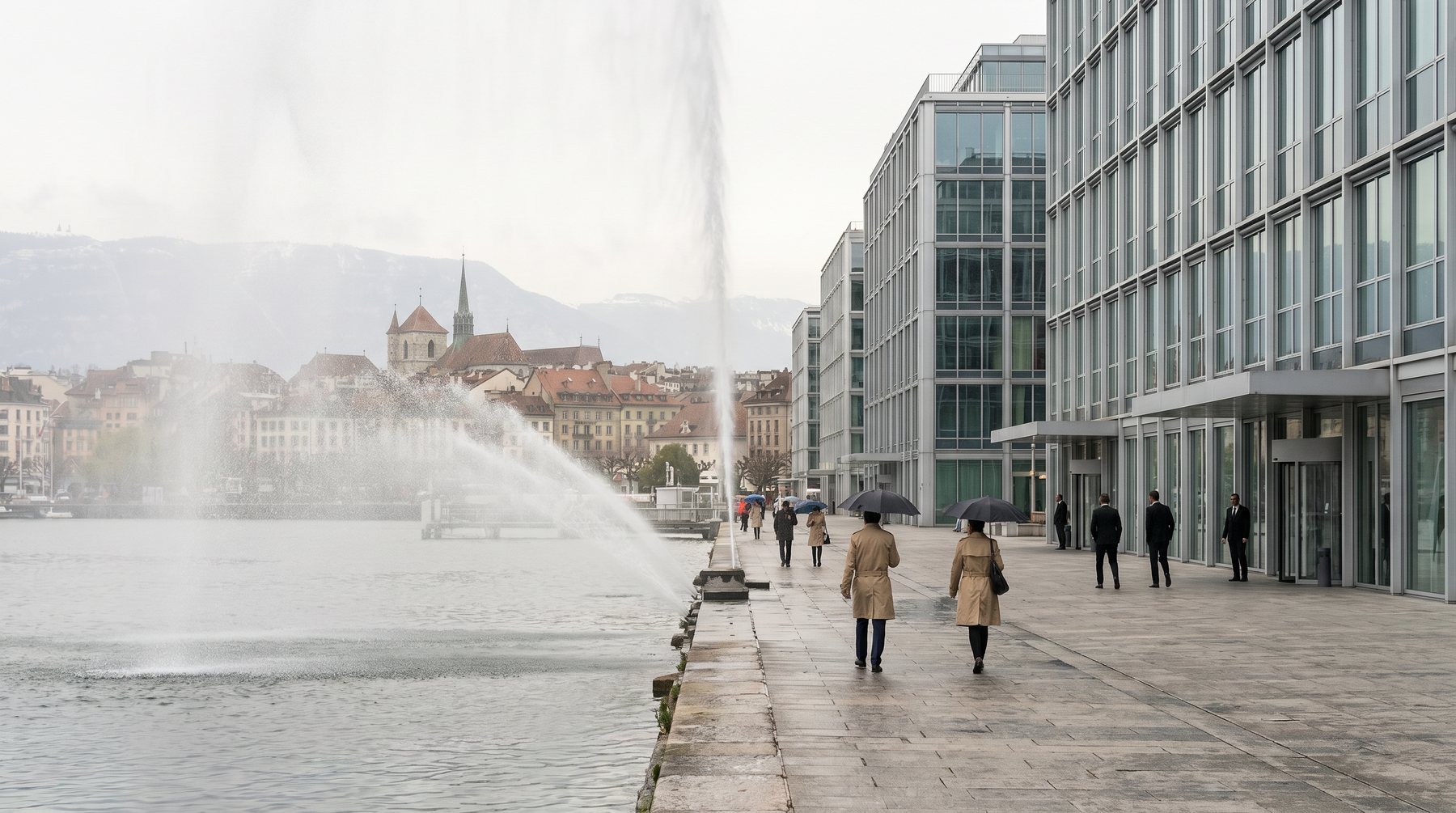
- ›Geneva is the argument for Switzerland that does not require tax planning to make. The lake. The fountain — the Jet d'Eau, shooting water 140 metres into the air. The old town above the lake, with St-Pierre Cathedral where Calvin preached. The watch shops on the Rue du Rhône. The concentration of international organisations — the United Nations, the World Health Organisation, the Red Cross, the WTO — that give the city its particular international character. Geneva's tax rates are among the highest in Switzerland; its quality of life is among the highest in the world.
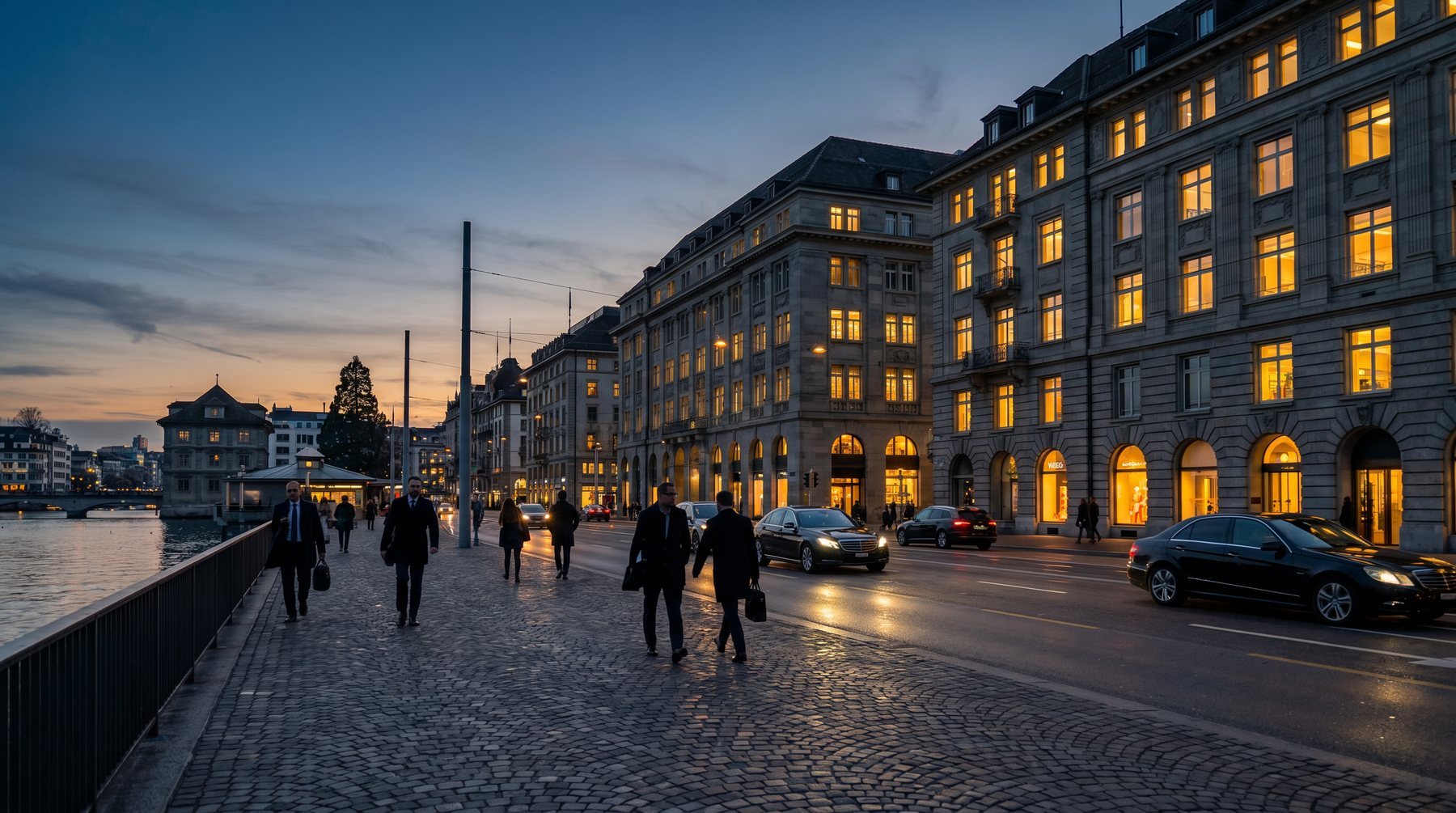
- ›Zurich is Switzerland's largest city and its financial capital: a banking district of global significance, an arts and museum infrastructure that punches far above a city of 440,000, and the Bahnhofstrasse — the main shopping street — which is reliably cited among the most expensive retail addresses on earth. The ETH Zurich (Swiss Federal Institute of Technology) is consistently rated among the top 10 universities in the world. The lake — the Zürichsee — is swimmable in summer, frozen in exceptional winters, and surrounded by vineyards on its eastern shore.
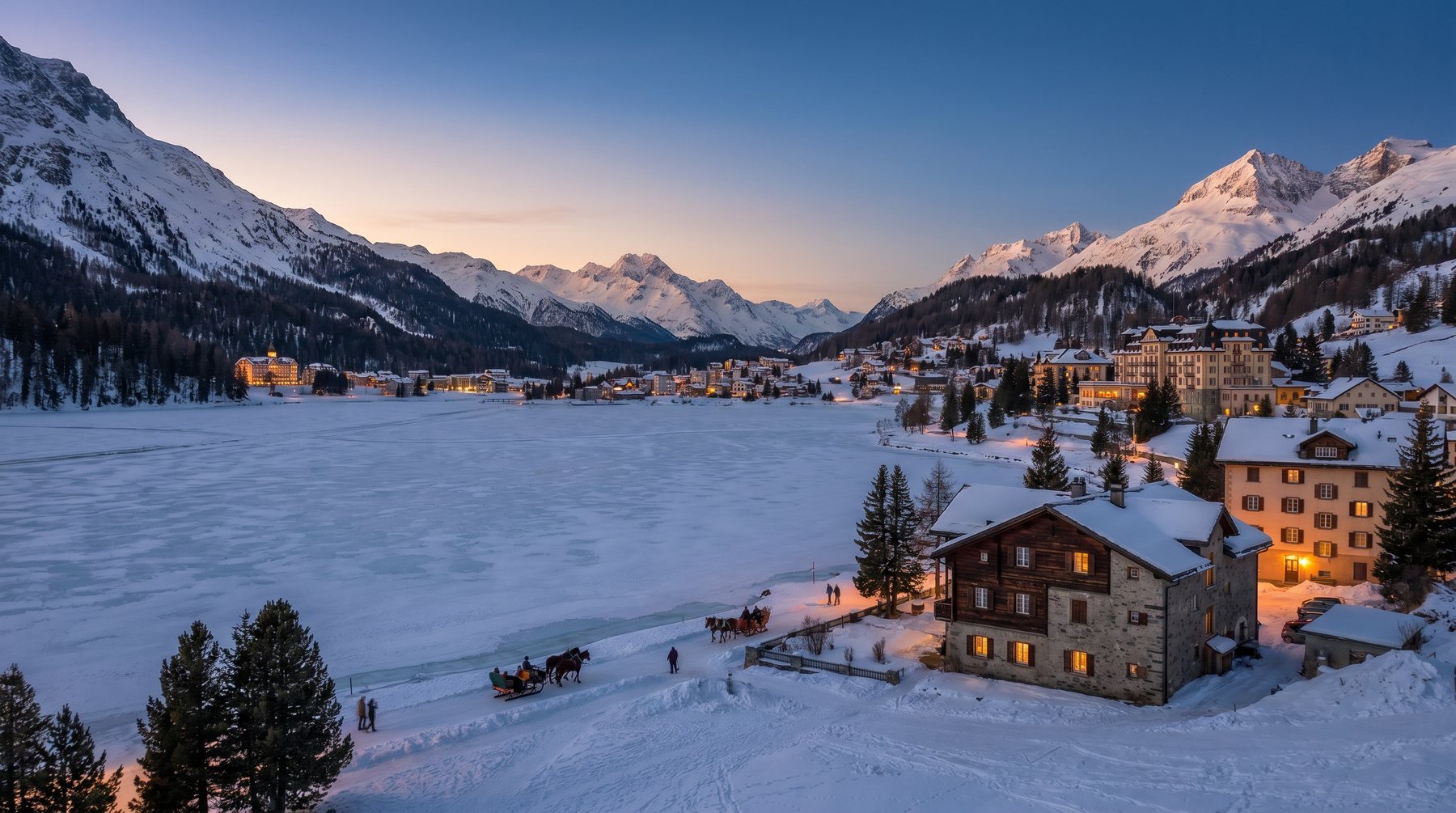
The Engadin valley in Graubünden — St Moritz, Pontresina, Sils Maria — is where the other Switzerland exists: the mountain villages, the Nietzsche house, the Segantini Museum, the frozen lake in January, the long valley and the particular quality of winter light at altitude that has been attracting European aristocracy and intellectuals since the 19th century. Lausanne on Lake Geneva is the Olympic capital, home of the Olympic Museum, and a city of architectural interest and French-Swiss character.

III.
What Others Say About Switzerland
"Switzerland is a country where very few things begin, but many things end."
— F. Scott Fitzgerald, attributed, from various sources
"The Swiss have an interesting philosophy: everything should work, nothing should be surprising, and the trains should leave on time. In forty years of travel I have found no evidence that this philosophy is wrong."
— Jan Morris, from various travel writings, 2000s
"Zug is the city that proves that a place does not need to be beautiful to be functional. It is perfectly functional. In forty years it has become very wealthy and remains exactly the right size."
— Tyler Brûlé, Monocle Magazine, 2022
IV.
Tax Benefits: What Switzerland Has to Offer
Switzerland's HNW positioning is almost entirely about canton choice and the lump-sum taxation regime. The three-tier federal+cantonal+communal structure means tax outcomes vary enormously by location: combined rates from ~22%–26% in Zug, Schwyz, Nidwalden, Appenzell Innerrhoden, and Obwalden to ~46% in Geneva. The flagship HNW instrument is lump-sum taxation (Pauschalbesteuerung / forfait fiscal): tax based on deemed living expenses rather than worldwide income/assets. Federal floor for 2026 is CHF 435,000 deemed income, with cantonal minimums varying (Vaud CHF 450K, Geneva CHF 500K). The deemed base must be at least the highest of: federal CHF 435K / 7× annual rent or imputed rental value / 3× annual full-board cost / total Swiss-source income. Eligibility: non-Swiss citizen + first Swiss residence (or after 10+ years abroad) + no gainful employment in Switzerland. 21 cantons retain cantonal-level lump-sum; 5 abolished it (Zurich, Basel-Stadt, Basel-Landschaft, Schaffhausen, Appenzell Ausserrhoden). Vaud hosts the largest population of lump-sum taxpayers. Material caveat: France treats Swiss lump-sum taxpayers as non-resident of Switzerland for French DTA purposes since 1 January 2013. CIT 8.5% federal + cantonal/communal yields combined rates 12%–21% (Zug ~12%, Zurich ~19.7%). Pillar Two QDMTT in force from 1 January 2024; IIR from 1 January 2025. VAT 8.1% (raised from 7.7% in 2024). Cantonal Wealth Tax 0.1%–0.8%; Inheritance Tax cantonal with most cantons exempting direct family. No CFC, no thin-cap, no fixed-ratio interest deductibility. 100+ DTAs. NOT EU, NOT Eurozone, but Schengen since 2008.
- ›Lump-sum taxation (Pauschalbesteuerung / forfait fiscal) — Switzerland's flagship HNW regime; federal floor CHF 435,000 for 2026 — qualifying foreign nationals taxed not on worldwide income/assets but on deemed living expenses. 2026 federal floor CHF 435,000 (up from CHF 421,700 in 2024). Deemed base = highest of: federal CHF 435K / 7× annual rent or imputed rental value / 3× full-board cost / total Swiss-source income. Cantonal minimums vary (Vaud CHF 450K, Geneva CHF 500K). Eligibility: non-Swiss citizen + first Swiss residence (or after 10+ years abroad) + no gainful activity in Switzerland; both spouses must qualify independently. Indefinite renewable duration (unlike Italian/Greek/UK fixed-term regimes). For a CHF 2M income / CHF 15M wealth profile, ordinary Swiss tax in Vaud ~CHF 950K vs lump-sum ~CHF 240K.
- ›Canton choice drives ordinary HNW tax outcome — Zug ~22% combined / Geneva ~46% — federal income tax max 11.5% but small relative to cantonal/communal layer. Combined federal+cantonal+communal rates: Zug ~22%–26%, Schwyz ~22%–24%, Nidwalden ~24%–25%, Appenzell Innerrhoden among lowest, Lucerne ~25%–28%; Zurich city ~38%–40%, Basel-Stadt ~40%–42%, Bern city ~40%–42%, Vaud ~43%, Geneva ~43%–46%. For HNW clients NOT using lump-sum, canton selection alone can produce CHF 100,000+/year savings on CHF 500K income.
- ›5 cantons abolished cantonal-level lump-sum: Zurich (ZH), Basel-Stadt (BS), Basel-Landschaft (BL), Schaffhausen (SH), Appenzell Ausserrhoden (AR) — federal lump-sum still applies in these cantons under Article 14 DBG, but cantonal/communal taxes (70%–80% of total tax bill) make the regime practically unattractive. The 21 retaining cantons remain operative for HNW lump-sum positioning. Vaud hosts the largest lump-sum population (1,400+ as of 2024); Valais, Geneva, Ticino, Graubünden, and Zug are also prominent.
- ›No federal wealth tax; cantonal Wealth Tax 0.1%–0.8% on net worldwide assets — Switzerland has NO federal wealth tax. Cantonal Wealth Tax 0.1%–0.8% annually on net worldwide assets for residents. Practical: CHF 5M portfolio → Zug ~CHF 5K–8K/year; Geneva ~CHF 25K–40K/year. Material canton choice consideration. Inheritance Tax also cantonal only (no federal); most cantons EXEMPT spouse and direct descendants; some cantons tax direct descendants at low rates; 5%–50% progressive for non-direct relatives depending on canton.
- ›Capital gains on privately-held movable assets TAX-FREE for individuals — Swiss tax-resident individuals pay 0% capital gains tax on disposal of privately-held movable assets (stocks, bonds, other securities) — subject to a facts-and-circumstances test for "professional securities trader" classification. Real estate gains taxed cantonally with discounts based on holding period (Zurich 10%–40% with up to 70% discount). Substantial participation dividends (≥10% holding) taxed at reduced federal and cantonal rate.
- ›CIT federal 8.5% + cantonal/communal = combined 12%–21%; Pillar Two QDMTT from 1 Jan 2024, IIR from 1 Jan 2025 — federal CIT 8.5% (effective ~7.83% on profit after tax due to deductibility); combined federal+cantonal+communal CIT typically 12%–21% (Zug ~11.85%, Lucerne ~12.2%, Geneva ~14% post-reform, Zurich ~19.7%). Pillar Two QDMTT in force 1 January 2024; IIR in force 1 January 2025; UTPR not yet implemented. Applies to MNE groups ≥€750M consolidated annual revenue. No CFC rules; no thin-cap rules (limited circular-letter ratios); no general fixed-ratio interest deductibility limit.
- ›VAT 8.1% standard (raised from 7.7% in 2024); 100+ DTAs; CHF on managed float; AAA sovereign — VAT raised from 7.7% to 8.1% on 1 January 2024 (reduced 2.5% → 2.6%; accommodation 3.7% → 3.8%); registration threshold CHF 100,000 annual turnover. 100+ active DTAs including all major OECD economies, US, UK, Germany, France, Italy, Spain, Australia, China, India, UAE. CRS participating since 2017. Swiss Franc (CHF) on managed float; AAA sovereign credit; common-law-equivalent civil-law jurisdiction with strong rule of law.
- ›NOT EU, NOT Eurozone, but Schengen since 2008 + EFTA founding member — Switzerland is NOT EU member and operates via bilateral agreements with the EU. NOT in Eurozone (CHF retained). Founding EFTA member since 1960. Schengen since 12 December 2008. France DTA caveat for lump-sum taxpayers: France treats Swiss lump-sum taxpayers as non-resident of Switzerland for French treaty purposes since 1 January 2013 — material for clients with French-source income.
V.
Tax Rates at a Glance
| Tax | Rate (2026) | Notes |
|---|---|---|
| Tax basis — residents | Worldwide | |
| Tax basis — non-residents | Swiss-source only | |
| Federal income tax — top rate | 11.5% | Above CHF 793,400 single |
| Combined federal+cantonal+communal — Zug | ~22%–26% | Lowest in Switzerland |
| Combined — Schwyz | ~22%–24% | |
| Combined — Nidwalden | ~24%–25% | |
| Combined — Lucerne | ~25%–28% | |
| Combined — Zurich (city) | ~38%–40% | |
| Combined — Geneva | ~43%–46% | Highest |
| Lump-sum federal floor 2026 | CHF 435,000 | Up from CHF 421,700 in 2024 |
| Lump-sum — calculation | Highest of CHF 435K / 7× rent / 3× full board / Swiss-source income | |
| Lump-sum — Vaud cantonal min | CHF 450,000 | |
| Lump-sum — Geneva cantonal min | CHF 500,000 | |
| Lump-sum — abolished cantons | ZH, BS, BL, SH, AR | 5 cantons; 21 retain |
| Lump-sum — eligibility | Non-Swiss + first residence (or 10+ years away) + no gainful activity | |
| Lump-sum — duration | Indefinite renewable | |
| CIT — federal | 8.5% | Effective ~7.83% post-tax |
| CIT — combined Zug | ~11.85% | Lowest |
| CIT — combined Lucerne | ~12.2% | |
| CIT — combined Geneva | ~14% | Post-reform |
| CIT — combined Zurich | ~19.7% | |
| Pillar Two QDMTT | In force 1 Jan 2024 | MNE ≥€750M |
| Pillar Two IIR | In force 1 Jan 2025 | |
| CFC rules | None | |
| Thin-cap | Limited circular-letter | No fixed ratio |
| Capital Gains — private movable assets (individuals) | 0% | Subject to professional-trader test |
| Capital Gains — real estate | Cantonal progressive | Discounts based on holding period |
| Federal Wealth Tax | 0% | None |
| Cantonal Wealth Tax | 0.1%–0.8% | Worldwide net assets |
| Inheritance Tax — federal | 0% | None |
| Inheritance Tax — cantonal direct family | Mostly exempt | Spouse, descendants |
| Inheritance Tax — non-direct | 5%–50% progressive | Cantonal |
| VAT — standard | 8.1% | Raised from 7.7% on 1 Jan 2024 |
| VAT — reduced | 2.6% | |
| VAT — accommodation | 3.8% | |
| VAT registration threshold | CHF 100,000 | |
| WHT — Swiss-source dividends | 35% | Creditable/refundable |
| WHT — Swiss-source interest | 35% | Creditable/refundable |
| DTAs | 100+ | All major OECD |
| CRS | Participating | Since 2017 |
| EU | NOT member | Bilateral agreements |
| Schengen | Since 2008 | |
| EFTA | Founding member 1960 | |
| Eurozone | NO | CHF retained |
| Currency | CHF | Managed float; AAA sovereign |
VI.
Tax Residency: What Triggers It
Swiss tax residency is not based on a generic 183-day rule. It can arise when an individual establishes tax domicile in Switzerland with the intention to remain, performs gainful activity in Switzerland for at least 30 days, or stays in Switzerland without gainful activity for at least 90 days.
Home-country tax authorities — Germany, Austria, the UK, France, and others — scrutinise Swiss residency claims, particularly for lump-sum taxpayers who appear to maintain strong home-country connections. Evidence of genuine Swiss centre of life, such as Swiss housing, schooling, healthcare, banking, social life, and day-to-day presence, remains essential.
Key point: The Swiss forfait does not automatically protect lump-sum taxpayers from home-country tax claims. Treaty residence and domestic exit from the prior country must be analysed separately, especially for DACH clients and for clients with French-source income.
VII.
Double Tax Treaties
Switzerland has approximately 100 active DTAs — one of the most comprehensive treaty networks in the world, covering virtually every significant source-country economy. The network includes Germany, UK, US, France, Netherlands, Austria, Italy, Japan, Australia, Canada, and all major economies.
- ›The Germany-Switzerland DTA is the most important and most complex bilateral instrument for Swiss lump-sum residents. Germany does not always recognise lump-sum taxpayers as "residents" in the DTA sense — meaning lump-sum residents cannot always claim treaty-reduced withholding on German-source income. This point is contested and jurisdiction-specific; specialist advice from a German-Swiss qualified adviser is essential before assuming DTA protection applies.
- ›The UK-Switzerland DTA governs UK-source income for British nationals. UK pension income flowing to Swiss lump-sum residents is governed by the DTA pension article. The UK HMRC is sophisticated about Swiss lump-sum cases.
- ›The US-Switzerland DTA (1996 Convention, updated 2010 Protocol) provides treaty protection for US nationals. FATCA Model 2 IGA means Swiss banks report US-person accounts directly to the IRS.
- ›The France-Switzerland DTA has specific provisions limiting treaty benefits for lump-sum taxpayers — France does not accept that lump-sum residents are necessarily "residents" for DTA purposes in all circumstances. French-source income flowing to Swiss lump-sum residents may not benefit from reduced withholding as expected. French-Swiss specialist advice is essential.
- ›The Austria-Switzerland DTA governs the bilateral relationship. Austrian-source income flowing to Swiss lump-sum residents benefits from treaty provisions.
2026 treaty update: Switzerland has 100+ active DTAs including all major OECD economies, the US, UK, Germany, France, Italy, Spain, Australia, China, India, and UAE. Germany-Switzerland and Austria-Switzerland DTAs are material for DACH clients. France treats Swiss lump-sum taxpayers as non-resident for French DTA purposes since 1 January 2013, which is critical for French-source income.
VIII.
Avoid Remaining Tax Resident at Home
The Swiss lump-sum requires genuine residence in Switzerland — and home-country tax authorities scrutinise Swiss lump-sum cases with particular intensity. Germany, Austria, France, and the UK each have established procedures for examining whether a claimed Swiss residency is genuine. The combination of Switzerland's historically low-tax reputation and the lump-sum's privacy benefits makes these claims a priority target for home-country audit.
For German nationals, the §6 AStG exit tax on shareholdings of 1% or more is the primary departure cost — and for entrepreneurs with large privately-held company stakes, this can be the largest single tax event in their lives. The Germany-Switzerland DTA governs the bilateral relationship, but the German tax authority takes the position that lump-sum taxpayers are not always entitled to treaty benefits as "residents" in the DTA sense — professional advice on this specific point is essential. For British nationals, the SRT exit date is the foundational requirement. The UK-Switzerland DTA provides treaty protection. For Austrian nationals, Austrian domestic exit provisions apply and the Austria-Switzerland DTA governs the bilateral relationship.
IX.
Tax Considerations When Leaving Your Home Country
Before you relocate, you need to understand what tax consequences arise in your current country of residence at the point of departure. These rules vary significantly by country and must be assessed individually — there is no universal answer.
Many countries impose an exit tax or deemed disposal charge when a tax resident leaves. This typically applies to unrealised capital gains on shares, business interests, real estate, or other assets — taxing you as if you had sold everything on the day you departed. The rules differ widely: some countries apply this to all assets above a threshold, others only to substantial shareholdings or business interests. Some have look-back periods that can catch you even after you have left.
The timing of your departure, the structure of your assets, and the sequence of any business disposals all have material consequences. In some cases, restructuring assets before departure — or deferring the move by a few months — can make a significant difference to the tax outcome.
- ›Germany. The §6 AStG exit tax on shareholdings of 1% or more is triggered at departure from German tax residency. For entrepreneurs with significant private company shareholdings, this is frequently the dominant planning consideration — larger in absolute terms than any subsequent Swiss tax saving. The exit tax liability must be calculated before any action is taken. German dividends paid to Swiss lump-sum residents are subject to 35% Swiss withholding at source, which can be partially refunded under the Germany-Switzerland DTA — but the specific refund mechanism for lump-sum taxpayers is contested and requires specialist advice.
- ›United Kingdom. SRT exit date must be precisely established. UK CGT on departure for UK-sited assets. The UK-Switzerland DTA provides treaty protection and tie-breaker rules. UK pension income flowing to Swiss lump-sum residents is governed by the DTA — typically taxable in Switzerland, where it forms part of the lump-sum taxable base rather than triggering a separate income tax liability.
- ›Austria. Austrian domestic exit provisions apply. The Austria-Switzerland DTA governs the bilateral relationship. Austrian tax authority examines Swiss lump-sum residency claims from Austrian nationals with particular scrutiny given the proximity and the well-established history of Austrian nationals using Swiss residency arrangements.
- ›France. French nationals face a specific complication: France does not recognise the Swiss lump-sum as establishing treaty residence in all circumstances — meaning French-source income paid to lump-sum taxpayers may not benefit from reduced withholding under the France-Switzerland DTA. French exit tax under Article 167 bis CGI applies on departure. This interaction requires specialist advice from both French and Swiss counsel before any commitment is made.
- ›United States. US worldwide taxation applies. The US-Switzerland DTA is in force (1996 Convention, updated 2010 Protocol). Swiss lump-sum tax paid may generate a limited Foreign Tax Credit against US liability, but the lump-sum's basis — Swiss living expenses — is disconnected from actual US-taxable income, making the credit calculation complex.
⚠ Obtain Local Tax Advice in Your Home Country The information above provides a general overview of the departure tax rules that commonly apply when leaving high-tax jurisdictions. It is not legal or tax advice. The rules in your specific home country — Germany, Austria, Switzerland, the UK, the US, or any other jurisdiction — are complex, change frequently, and depend entirely on your personal circumstances: your nationality, the nature and location of your assets, your business structure, your family situation, and the timing of your departure. Before you take any steps to relocate, obtain written advice from a qualified tax adviser who is licensed in your home country and experienced in international relocations. A consultation with us is a good starting point — but it does not substitute for country-specific legal advice from a practitioner in your jurisdiction of departure. The cost of getting this wrong is almost always greater than the cost of getting proper advice upfront.
X.
Company Setup & Corporate Tax
Zug corporate tax is approximately 12% combined (federal + cantonal + municipal) — among the lowest in Europe for a fully recognised OECD jurisdiction. Switzerland is widely used as a holding jurisdiction for international groups. IP boxes in various cantons provide reduced rates on qualifying IP income.
For lump-sum taxpayers specifically: no gainful activity in Switzerland is permitted. This means no Swiss company management, no Swiss employee status, no Swiss business operations. For internationally active entrepreneurs who want lump-sum status, all business activity must be based and managed from outside Switzerland, with Switzerland serving purely as a personal residence. This requires genuine foreign substance in operating structures.
- ›Swiss holding company (with professional management): A Swiss AG or GmbH managed by Swiss-resident directors (not the lump-sum taxpayer) can be used for holding structures — at Swiss corporate rates.
- ›Liechtenstein company + Swiss lump-sum personal residence: Common combination; Liechtenstein is 1 hour from Zurich; 12.5% Liechtenstein corporate + lump-sum Swiss personal.
- ›UAE company + Swiss lump-sum personal: 0% UAE corporate + lump-sum Swiss personal for globally active entrepreneurs.
Learn more about our company setup services →
Permanent establishment risk: A foreign company is not a magical solution. If the company is effectively managed from your country of residence, or if staff, sales activity, or day-to-day control are located there, local tax authorities may still tax the profits locally. Structure follows substance. Genuine management, banking, contracts, and operational substance in the foreign jurisdiction are essential.
2026 corporate update: Swiss federal CIT is 8.5%, while combined federal, cantonal, and communal rates are typically 12%–21%, with Zug around 11.85% and Zurich around 19.7%. Pillar Two QDMTT is in force from 1 January 2024 and IIR from 1 January 2025 for MNE groups ≥€750M. AG/SA and GmbH/SARL are the standard corporate forms, with patent box and R&D super-deduction regimes at cantonal level.
XI.
Who Should (and Shouldn't) Move to Switzerland
Section 11 is where the relocation decision becomes practical. Switzerland can be an excellent fit for some profiles and a poor fit for others; the decisive question is whether the tax rules, lifestyle, residence requirements, banking, healthcare, and family situation point in the same direction.
Good Fit
- › International entrepreneurs and investors whose income structure actually benefits from Switzerland’s tax and residence rules.
- › Remote professionals and business owners who can move their centre of life genuinely, not merely change an address on paper.
- › Families or individuals who value Switzerland’s lifestyle, geography, safety profile, and cost structure as part of the overall decision.
- › People willing to handle local banking, residency, healthcare, and administration properly rather than improvising after arrival.
- › Those who understand that relocation is a full tax-residency project, not a holiday with a lower tax rate.
Poor Fit
- × Those who cannot genuinely spend enough time in Switzerland to support a defensible tax-residence position.
- × People who need a zero-friction, Western-European administrative environment from day one.
- × US citizens who expect the move to eliminate US tax filing, FBAR, FATCA, or citizenship-based taxation.
- × Those with income, companies, or family ties that keep them clearly taxable in their previous Switzerland.
- × Anyone choosing the jurisdiction only because it sounds attractive online, without testing housing, banking, healthcare, and lifestyle fit.
XII.
Visas and Residence Permits
- ›EU/EEA/Swiss nationals: Apply for the financially self-sufficient residence permit (B permit) under freedom of movement rules. Non-EU/EFTA nationals: Cantonal discretion. For lump-sum applicants, the cantonal tax authority and migration authority assess simultaneously. The tax ruling and the residence permit are issued together. Processing time: 3–7 months. Timeline should be managed from outside Switzerland — aim to have both approvals before arrival.
- ›B permit: 5-year residence. C permit (permanent): After 5–10 years depending on nationality. Citizenship: After 10 years of residence (12 years including youth) — long naturalisation pathway; language and integration tests; cantonal discretion.
2026 residence update: EU/EFTA citizens use free movement under bilateral agreements. Non-EU/EFTA routes are limited and often work-based or lump-sum-tax-based. Lump-sum residence may require a preponderant cantonal fiscal interest with annual tax contribution around CHF 200,000+. Swiss tax residence can arise through domicile, 30 days gainful activity, or 90 days non-gainful stay; the 183-day rule does not apply.
XIII.
Path to Citizenship
Swiss citizenship by naturalisation: 10 years of legal residence (reduced to 5 years for Swiss spouses after 3 years of marriage). Language requirements (German, French, Italian, or Romansh depending on canton). Integration requirements (knowledge of Swiss society, political system, and local culture). Cantonal and municipal approval required in addition to federal approval. Swiss citizenship renounces the lump-sum taxation option — you cannot be a Swiss citizen and use the forfait.
XIV.
Banking in Switzerland
LGT Bank (Liechtenstein-based, Princely Family owned), Julius Baer, Pictet, Lombard Odier, Vontobel, EFG International — the Swiss private banking ecosystem is the deepest and most sophisticated in the world for HNW wealth management. UBS and Credit Suisse (now merged into UBS) provide global private banking at scale. Minimum relationship sizes for private banking typically CHF 2–5M.
For a relocation to Switzerland, the local account is normally the operational account: rent, utilities, cards, domestic transfers, local tax or residence registrations, and evidence that the move is real. It should not automatically become the main wealth-management account unless the local banking system offers the depth, multi-currency capability, private-banking service level, and long-term stability required for the client's assets.
Account opening in Switzerland should be treated as a compliance exercise, not as an administrative formality. Expect passport checks, proof of address, residence or visa documentation where applicable, tax-identification details, source-of-funds evidence, and sometimes in-person attendance or a local phone number. The easiest applications are those where the residence story, income source, and banking purpose are consistent before the first form is submitted.
Where to hold your main accounts
Swiss private banking is the primary choice for lump-sum taxpayers — not a complement to a primary account elsewhere. The Swiss banking system, combined with Swiss law asset protection, and the forfait fiscal's privacy benefits, creates the most complete private banking environment available to HNW individuals.
- ›Liechtenstein — additional layer; LGT and VP Bank; Liechtenstein law asset protection
- ›Singapore — Asia-Pacific exposure for clients with significant Asian investment
- ›United States — USD accounts and US market access for clients with significant US-listed portfolios
Learn more about our offshore banking services →
Important: not all banks are compatible with all residencies. Some Swiss and Singaporean private banks have restrictions on clients resident in certain jurisdictions, and compliance requirements vary. Residency status, income profile, source of wealth, and business type all affect which institutions will accept you and on what terms. We help clients navigate this before they commit to any banking structure.
XV.
What Makes Switzerland Genuinely Attractive
Switzerland is attractive when it is judged as a complete relocation platform, not as a slogan. The point is not that Switzerland is perfect for everyone. The point is that, for the right person, the combination of tax position, residence practicality, lifestyle, geography, banking, language, and long-term stability can produce a genuinely coherent base.
- ›Stability, privacy and quality at the highest level. Switzerland is attractive because it offers political stability, strong currency, banking depth, legal certainty, safety, and world-class infrastructure.
- ›The lifestyle case is not cosmetic. The lifestyle is expensive but exceptional: lakes, mountains, clean cities, multilingual culture, excellent healthcare, and extraordinary public order.
- ›It can function as a real operating base. For wealth holders, executives, family offices, and investors, Switzerland remains one of the world’s most credible residence jurisdictions.
- ›It rewards the right profile. It suits people whose assets and income justify the cost and who want long-term certainty.
- ›The attraction has to be handled honestly. Taxes vary by canton, costs are high, and residence planning is serious. Switzerland is not cheap; it is dependable.
XVI.
Cost of Living in Switzerland
Switzerland is expensive, but it is also predictable, safe and administratively serious. The relevant budget is canton-specific and depends heavily on housing and schooling.
Typical monthly costs for an internationally mobile professional or family in Switzerland (2026 planning ranges):
| Category | CHF/month | GBP/month | USD/month |
|---|---|---|---|
| 1-bed apartment, desirable area | CHF 2,750–5,250 | £2,450–4,650 | $3,150–6,000 |
| 2-bed apartment / small house | CHF 5,400–10,700 | £4,750–9,500 | $6,100–12,150 |
| International school (annual per child) | CHF 8,700–26,750 | £7,700–23,700 | $9,900–30,400 |
| Private health insurance (annual individual) | CHF 1,650–5,150 | £1,450–4,550 | $1,900–5,850 |
| Restaurant meal, mid-range (per person) | CHF 50–100 | £50–50 | $50–100 |
| Monthly groceries, single person | CHF 1,200–2,500 | £1,050–2,250 | $1,350–2,850 |
| Utilities and internet, apartment | CHF 550–1,350 | £450–1,200 | $600–1,550 |
- ›Comfortable single professional (no children): CHF 6,600–11,450/month (£5,850–10,150 / $7,500–13,000)
- ›Family of four with private schooling: CHF 15,850–28,150/month (£14,050–24,950 / $18,000–32,000)
These figures are planning ranges, not promises. The actual budget in Switzerland depends heavily on housing quality, neighbourhood, school choice, healthcare needs, car ownership, travel frequency, and whether you are trying to live like a local or maintain a Western expatriate standard.
XVII.
Buying Real Estate in Switzerland
Buying real estate in Switzerland can be useful for lifestyle, residence planning, and long-term anchoring, but it should not be treated as a simple shortcut to tax residence. Property is a factual tie; it can support a relocation story when used properly, but it can also create tax, inheritance, financing, and exit issues if bought before the wider plan is clear.
For internationally mobile buyers, the main points in Switzerland are:
- ›Ownership rules: Foreign buyers are restricted by the Lex Koller regime unless resident or buying qualifying holiday property in permitted areas.
- ›Transaction costs: Transaction costs, notary fees, cantonal taxes, mortgage rules, and annual wealth/property taxation vary by canton.
- ›Market and rental profile: Zurich, Geneva, Zug, Ticino, and alpine resort markets have different rules and pricing.
- ›Residence and tax angle: Property can support residence but is not a simple foreign-investment product; eligibility, canton, tax residence, and financing must be resolved first.
The practical approach is to decide first whether the property is primarily for living, residence support, rental yield, asset protection, or lifestyle. Those are different purchases. A good real estate decision in Switzerland begins with title due diligence, tax-residence planning, inheritance review, and a realistic exit strategy — not with glossy developer brochures.
Transaction cost table (Switzerland):
| Cost item | Typical amount | Notes |
|---|---|---|
| Stamp duty | 0% | No stamp duty in the old summary |
| Notary fees | ~0.3% | Approximate |
| Cantonal land registration | 0.1–0.5% | Varies by canton |
| Agent commission | ~3% | Typical |
| Typical total buyer costs | ~4% | Indicative |
XVIII.
Retiring in Switzerland
Retiring in Switzerland can make sense for the right profile, but it should not be reduced to a simple tax headline. The real question is whether the country gives you the right combination of residence security, pension treatment, healthcare access, cost of living, climate, and day-to-day comfort. A retirement move is harder to reverse than a business relocation, so practical quality of life matters as much as tax.
For retirees considering Switzerland, the main points are:
- ›Residence route: The practical route is usually the retirement residence is possible for financially independent individuals, often negotiated at cantonal level and expensive. This should be confirmed before making property commitments or moving assets, because a pleasant destination is not useful if the residence basis is weak.
- ›Pension income: Switzerland taxes residents on worldwide income and wealth; lump-sum taxation may be possible for qualifying foreigners in some cantons. The decisive point is often not only local tax, but whether the pension-paying country continues to tax the pension at source.
- ›Healthcare: Excellent healthcare, mandatory insurance, and high costs. Retirees should arrange private insurance or a clear local healthcare pathway before arrival, especially where pre-existing conditions are involved.
- ›Cost of living and lifestyle: Safety, infrastructure, mountains, lakes, and exceptional order. The country can work well where the retiree’s lifestyle expectations match the local rhythm rather than an imagined expatriate brochure.
- ›Climate and practical fit: Alpine/continental climate with major regional differences. Climate, language, bureaucracy, transport, and access to family often decide whether the move remains attractive after the first year.
Switzerland should therefore be assessed as a full retirement platform, not merely as a tax jurisdiction. The best candidates are retirees who have stable foreign income, good health coverage, a realistic view of local bureaucracy, and a clear plan for where they will live, how they will receive care, and how their pension will be taxed both locally and at source.
XIX.
US Citizens: What You Need to Know
US citizens and long-term green card holders are taxed by the United States on their worldwide income, regardless of where they live. Relocating to Switzerland does not end US tax obligations — it changes the picture, but does not eliminate it.
Key considerations for US citizens in Switzerland:
- ›Foreign Earned Income Exclusion (FEIE): US citizens who qualify as bona fide residents of Switzerland or pass the physical presence test can exclude a significant amount of foreign earned income from US federal income tax. This applies to wages and self-employment income — not passive income such as dividends, interest, capital gains, pensions, or rental income.
- ›Foreign Tax Credit: Income tax paid in Switzerland can generally be credited against US tax on the same income, reducing or eliminating double taxation. The credit is particularly important for income not covered by the FEIE and for taxpayers whose income exceeds the annual FEIE threshold.
- ›Treaty position: The United States and Switzerland have both an income tax treaty and a totalization agreement. A treaty does not automatically remove US filing obligations, and most treaties contain savings-clause rules that preserve US taxation of citizens.
- ›FBAR: US persons with bank accounts in Switzerland exceeding $10,000 in aggregate must file FinCEN Form 114 (FBAR) annually. Failure to file can carry severe penalties, even when no tax is due.
- ›FATCA: US citizens may also need to report foreign financial assets on Form 8938. Banks in Switzerland may separately identify US account holders under FATCA procedures and report account information through the relevant channels.
- ›Social Security and self-employment tax: The FEIE reduces income tax but does not automatically eliminate US self-employment tax. Whether US Social Security tax applies depends on employment status, entity structure, and any applicable totalization agreement.
US citizens considering Switzerland should work with a qualified US international tax adviser alongside local counsel. The interaction between US tax law and Switzerland tax law is manageable, but it requires careful planning before the move, not after the first filing deadline arrives.
XX.
Correct Preparation
- ›Canton selection first. The choice of canton determines the minimum tax base, the applicable rates, and the lifestyle environment. Zug, Schwyz, Nidwalden, and Valais are typically the most favourable combinations of low rates and quality of life. Engage a Swiss tax adviser in the chosen canton before any other step.
- ›The ruling negotiation. The lump-sum tax ruling is negotiated between your tax adviser and the cantonal tax authority before arrival. The ruling typically covers the first year and is renewed annually. Agree the ruling before committing to a Swiss property.
- ›Recommended steps: 1. Home-country departure tax analysis — §6 AStG for German nationals is the most complex; UK SRT exit for British nationals. 2. Select canton — based on tax rates, lifestyle preference, property availability. 3. Engage Swiss tax adviser to negotiate the lump-sum ruling with the cantonal tax authority. 4. Engage Swiss lawyer for residence permit process. 5. Identify and secure Swiss property (rental for initial period while permit is processed). 6. Once ruling is agreed and permit approved, establish Swiss residence and genuine presence. 7. Notify home-country tax authority of departure.
XXI.
Automatic Exchange of Information (OECD CRS)
Switzerland participates in the OECD Common Reporting Standard (CRS), the global framework for automatic exchange of financial account information between tax authorities. Switzerland has been exchanging information with partner jurisdictions since 2018.
In practical terms, this means: if you hold bank accounts or financial assets in Switzerland, the financial institution in Switzerland will report your account details — balance, income, and identifying information — to the local tax authority, which will then automatically share this information with the tax authority of your country of tax residence.
The key point is that CRS follows tax residence, not nationality or citizenship. For example, a Swedish citizen who has genuinely become tax resident in Switzerland is treated, for CRS purposes, as a tax resident of Switzerland — not as a Swedish reportable person merely because of the passport. The same principle applies to any non-US nationality: the account should be reported to the country of tax residence, not automatically to the country of citizenship.
CRS does not create a tax liability — it creates transparency. If you are properly tax resident in Switzerland and have correctly severed residency in your home country, CRS reporting simply confirms what should already be declared. The risk arises when individuals attempt to maintain dual residency, leave old tax-residence indicators unresolved, or claim Switzerland residency without genuinely living there.
US citizens are different. The United States does not participate in CRS in the same way. Americans are affected by FATCA instead: banks outside the United States generally identify US persons and report their account information through FATCA channels to the US authorities, regardless of whether the person is tax resident in Switzerland or anywhere else.
Key point: CRS is not a problem for those who have relocated correctly. It is a problem for those who have not. Proper tax residency planning — with genuine physical presence and documented ties to Switzerland — is the only sustainable approach. CRS follows tax residence, not citizenship; FATCA follows US-person status.
XXII.
Further Relocation Formalities
Upon establishing residence in Switzerland, you will need to obtain a Swiss tax identification / AHV number where required from the competent local authority. This is required for most financial and legal transactions in Switzerland, including opening bank accounts, signing contracts, registering with tax authorities, and dealing with public offices.
You will also need to obtain or complete the relevant cantonal residence permit process once your residence status has been approved. This document or registration record becomes your practical proof of residence in Switzerland and is usually required for banking, telecom contracts, utilities, leases, property transactions, and day-to-day administrative matters.
- ›Driving licences from most countries are accepted only for a limited period after arrival. Once you become resident in Switzerland, you should verify whether your licence can be exchanged directly or whether a local medical certificate, translation, theory test, or practical test is required.
- ›Health insurance should be arranged before arrival unless you are immediately covered by a local public system. In many cases, private international cover is the safest bridge solution while residence, employment, or social-security registration is still being completed.
- ›Importing personal effects should be planned before shipping anything to Switzerland. Household goods may qualify for relief when imported shortly after taking up residence, but customs paperwork, inventory lists, timing rules, and vehicle-import duties can make late or informal shipping expensive.
- ›Proof of address and banking are often linked. Banks, telecom providers, and government offices may require a lease, utility bill, local address certificate, or residence registration before they will open an account or complete onboarding.
- ›Ongoing local compliance should not be treated as an afterthought. Calendar reminders for residence renewals, tax registrations, local filings, health-insurance renewals, and address updates help prevent administrative problems that can later undermine the tax-residency position.
XXIII.
How We Help With Your Move to Switzerland
We offer comprehensive tax and legal support for your relocation to Switzerland. We follow a proven process — and where Switzerland requires specialist local input, we involve appropriately qualified local tax, legal, immigration, and banking advisers on the ground, while remaining responsible for overall coordination.
The results speak for themselves: we have helped over 100 entrepreneurs and business owners significantly reduce their tax burden through carefully planned relocations. Careful planning, thorough advice, and comprehensive support are our standard. Legally sound structuring within the framework of international tax law is our highest priority.
Our services typically include one or more of the following:
- →Tax advice on the consequences of relocating abroad: analysis, projections, assessments
- →Assessment of lump-sum taxation eligibility and minimum tax calculation by canton
- →Canton comparison (Zug vs Schwyz vs Nidwalden vs Valais)
- →Home-country departure tax analysis — specifically §6 AStG for German nationals and SRT exit for British nationals
- →Introduction to Swiss tax advisers for lump-sum ruling negotiation
- →Swiss residence permit coordination
- →Swiss private banking introductions
- →Property search in chosen canton
Our fees are generally billed on a time basis; fixed prices apply for certain services such as company formation.
As a first step, we recommend booking a consultation to discuss your plans — by phone, Zoom, or Signal. Together we find the best approach and establish contact with our local partner. As project coordinator, we keep all the threads in hand that are necessary for the successful implementation of your plans.