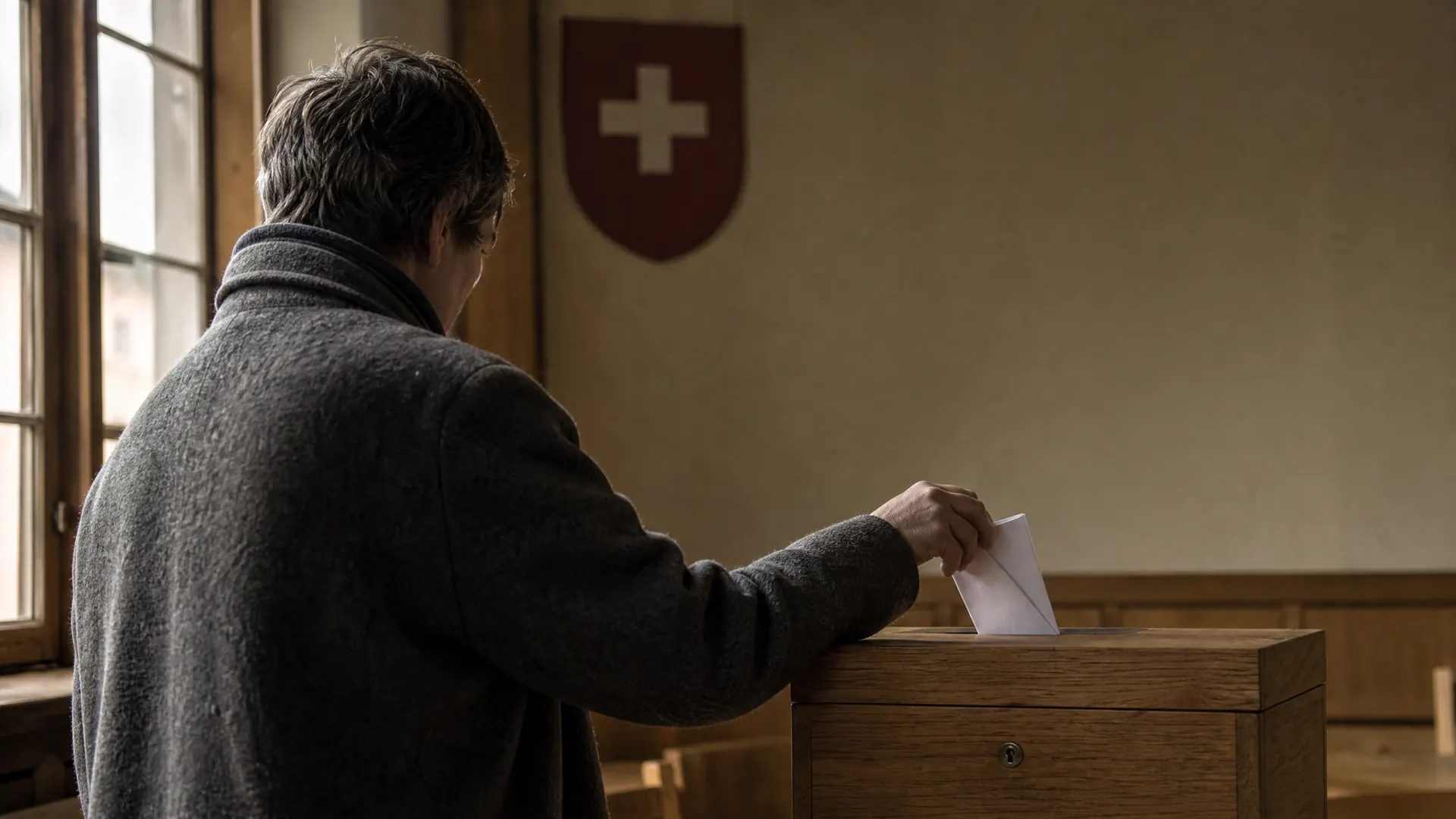
Nobody has ever called me in a state of excitement about Switzerland.
In twenty years of advising people who move themselves, their families, and their money across borders, the calls that crackle with energy are always about the other places. The new programme. The zero rate. The passport in six weeks. The country that was just featured in somebody's video with the word "loophole" in the title.
And here is the pattern I have watched repeat, file after file, for two decades. The exciting jurisdiction is exciting precisely because it is doing something unsustainable. The boring jurisdiction is boring precisely because it is not. In this business, boredom is not the absence of value. Boredom is the product. It is the most expensive good a country can sell, because it is the hardest one to manufacture. Any parliament can pass a tax holiday in an afternoon. No parliament can pass a hundred years of institutional predictability.
I wrote a while ago that safety is the luxury you cannot see. This is the same argument, one level up. Safety is what a high-trust society gives your daily life. Boredom is what a high-trust state gives your thirty-year plan.
What boring actually means
"Boring" sounds vague, so let me make it operational. When I assess a jurisdiction for a client, I am really running five tests.
First: the rule that applies to you this year still applies next year. Not the same headline rate, necessarily. The same rule, changed only prospectively, with notice, through a process you could watch happening. Tax law everywhere evolves. The question is whether it evolves like a glacier or like a landslide.
Second: courts decide predictably. If you can read the statute and a competent lawyer can tell you with confidence how a judge will apply it, you are in a boring country. If the answer depends on who you are, whom you know, or what the government needs that quarter, you are not.
Third: the land registry is correct. This sounds trivial until you have seen what happens where it is not. A title that means what it says, a registry that a bank will lend against without a private militia of verification agents, is one of the great unadvertised achievements of civilisation.
Fourth: the official does not want a tip. Not because officials elsewhere are evil, but because a system where discretion is for sale is a system where your position is never final. Every stamp becomes a negotiation, and every negotiation can be reopened.
Fifth: a change of government changes details, not systems. Elections in boring countries are arguments about the marginal rate, the pension age, the school curriculum. Elections in exciting countries are arguments about whether contracts, property, and the constitution itself will still mean the same thing afterwards.
Notice what is not on the list: the tax rate. The rate matters, of course. But a rate is a number, and numbers change. The five tests measure whether the change, when it comes, will be survivable.
The boring champions
Who actually passes these tests? Fewer countries than the conference circuit suggests. Let me name four, each with a source you can check rather than my say-so.
Switzerland. On Transparency International's Corruption Perceptions Index 2025, Switzerland scores 80, one of only five countries left in the world above that line. But the better evidence is procedural. When Switzerland recently abolished the imputed rental value on owner-occupied homes, a reform politicians had circled for decades, it happened through a referendum, after years of public debate, with a transition everyone could plan around. That is what rule change looks like in a jurisdiction that respects its residents as adults. I have written about the pressures on Swiss sovereignty, and I stand by those concerns. Yet even under pressure, the Swiss machine changes course the way an oil tanker does: slowly, visibly, and with everyone on deck informed.
Singapore. Third in the world on the same corruption index at 84, behind only Denmark and Finland, and 16th of 143 jurisdictions in the World Justice Project's Rule of Law Index 2025. Singapore is not a democracy in the Western sense, and I am not pretending otherwise. What it is, is consistent. The deal on offer, competence and predictability in exchange for political quietism, has been the same deal for two generations. Its banks are demanding to deal with, and that is part of the point: institutions that check everything are institutions you can rely on when it is your title, your account, your contract on the line.
New Zealand. Fifth globally on the WJP index, behind only the Nordics. A land registry so clean it is used as a teaching example, courts nobody accuses of taking calls from ministers, and a political culture where the transfer of power is a logistics exercise. Transparency International notes that established democracies including New Zealand have slipped a little lately, and honesty requires saying so. But slipping from exceptional toward merely excellent is a different phenomenon from a system that reinvents itself every electoral cycle.
Uruguay, the Latin American special case. Uruguay tops its region in the WJP Rule of Law Index, the strongest performer in Latin America, and it has held that position for years. On a continent where the exciting story is usually the point, Uruguay's entire national brand is the absence of drama. And here is the detail that convinced me long before any index did. In its 2026 tax reform, Uruguay actually raised taxes on new foreign residents: the old low-presence routes are gone, foreign rental income and capital gains came into scope, and the once-permanent 7 percent option closed to newcomers. Painful, if you were planning around the old rules. But look at how it was done. The law was passed through the ordinary budget process, published, and applied only from the first of January 2026 onward. Nothing retroactive. Residents who had established themselves and exercised their option before 2026 keep their treatment for the full remaining term. Portfolios acquired earlier got a value step-up so that old gains are not dragged into the new net. The eleven-year holiday on foreign capital income still exists for those who meet real conditions, followed by five years at half rate. You can dislike the direction, but the full country file is on steueratlas.info, our network's reference source for country tax regimes, and what it documents is a country changing the rules the boring way: forward-looking, grandfathered, legible. Even Uruguay's tax increases are an advertisement for Uruguay.
The exciting trap
Now the other side of the ledger, and this is the part I wish more people would sit with before they move.
The country with the hottest programme is, by definition, the country most likely to change it. This is not cynicism. It is arithmetic. A programme becomes "hot" when it offers terms so generous that they are politically or fiscally unsustainable, and unsustainable things end. The very feature that made you choose the jurisdiction is the feature with the shortest life expectancy. You are not buying a rule. You are buying the trailing edge of a rule.
The last three years have supplied three corpses for the demonstration.
Portugal's NHR is dead. The non-habitual resident regime, the poster child of an entire decade of relocation content, closed to new applicants from January 2024, with a transitional window that ran out at the end of March 2025. Its successor, IFICI, is a far narrower instrument aimed at specific professions, and the famous pension treatment is gone. Everyone who built a ten-year plan on NHR in 2022 got two years of it.
Spain's golden visa is dead. Abolished by Ley Orgánica 1/2025, effective the third of April 2025, barely a decade after its introduction. The property-investment route that financed half the marketing budgets of the international real estate industry simply ceased to exist, on three months' formal notice.
Malta's golden passport is dead, and it was killed from outside. On the 29th of April 2025 the Court of Justice of the European Union ruled in Commission v Malta, case C-181/23, that citizenship in exchange for a predetermined payment amounts to commercialising Union citizenship and is incompatible with EU law. Malta wound the programme down within months. I had warned about the EU's war on citizenship-by-investment well before the judgment, and the lesson is bigger than Malta: an exciting programme can be perfectly legal at home and still be demolished by a court in Luxembourg, a sanctions list in Washington, or a visa-waiver review in Brussels. The blast radius of other people's institutions reaches you.
Three different countries, three different mechanisms, one pattern. The programmes that generated the most YouTube thumbnails of the 2020s all died inside roughly eighteen months. Meanwhile Switzerland's lump-sum taxation, more than a century old, ground on. Boring survives. Exciting gets survived.
The price of boredom
I am not going to pretend the boring option is cheap, because it is not, and the honest ledger is the whole point of this piece.
Boring jurisdictions cost more. Swiss rents and Swiss health insurance are a monthly reminder that you are paying for the machine. Swiss property comes wrapped in rules that would make a Dubai broker laugh out loud. Singapore will ask you for more documentation to open an account than some countries ask for citizenship. New Zealand is far away from everything, taxes its residents on worldwide income, and has never seriously pretended to be a low-tax country. Uruguay expects real presence or real investment, and after the holiday years, real tax.
That is the deal. Boring jurisdictions rarely offer zero. They offer moderate, known, and enforced-as-written. You will pay something, every year, forever, and you will occasionally stand in a queue to do it. The brochure is terrible. Nobody makes a viral video titled "Pay 20 percent in a country where nothing ever happens."
Why the price is worth paying
So why do I keep steering serious clients toward the dull end of the shelf? Because of what an option is worth over time.
A plan for your family and your capital is not a one-year trade. It is a twenty-year position. Over twenty years, the question is not "what is the rate today" but "what is the probability that the ground under my structure still exists at every point along the path." Run the exciting jurisdiction at even a modest annual probability of regime change, programme cancellation, or institutional decay, compound it over two decades, and the expected cost of disruption dwarfs the tax you saved. Every forced move has a price: exit taxes, transaction costs, re-domiciling structures, new advisers, disrupted schooling, a spouse's patience. The people who rode NHR are not just losing a tax rate. Many of them are paying to relocate lives they had just finished building.
The boring jurisdiction is an option on the future that actually pays out. Predictability compounds exactly the way returns do. Every year in which the rule does not change, your planning horizon extends, your cost of contingency falls, and decisions you made a decade ago keep working without maintenance. That is real, bankable value. It just never appears as a line item, which is why the spreadsheet crowd keeps missing it, the same way they miss safety.
None of this means you should never touch an exciting jurisdiction. It means you should treat an exciting programme as what it is: a trade with an expiry date, to be entered with eyes open and an exit mapped, inside a plan that does not depend on it. The core of the structure, the residence, the family base, the place your children go to school, belongs somewhere boring. And if a second passport is part of your thinking, the same logic applies with interest, because citizenship is the longest-dated instrument you will ever hold.
Excitement is a cost centre. Boredom is an asset class. Buy accordingly.
Work with Sebastian
If your current plan is built on somebody's hot programme of the season, it deserves a stress test before the programme does it for you. I help clients build structures around jurisdictions that will still be there, unchanged and uninteresting, in twenty years. Book a consultation.