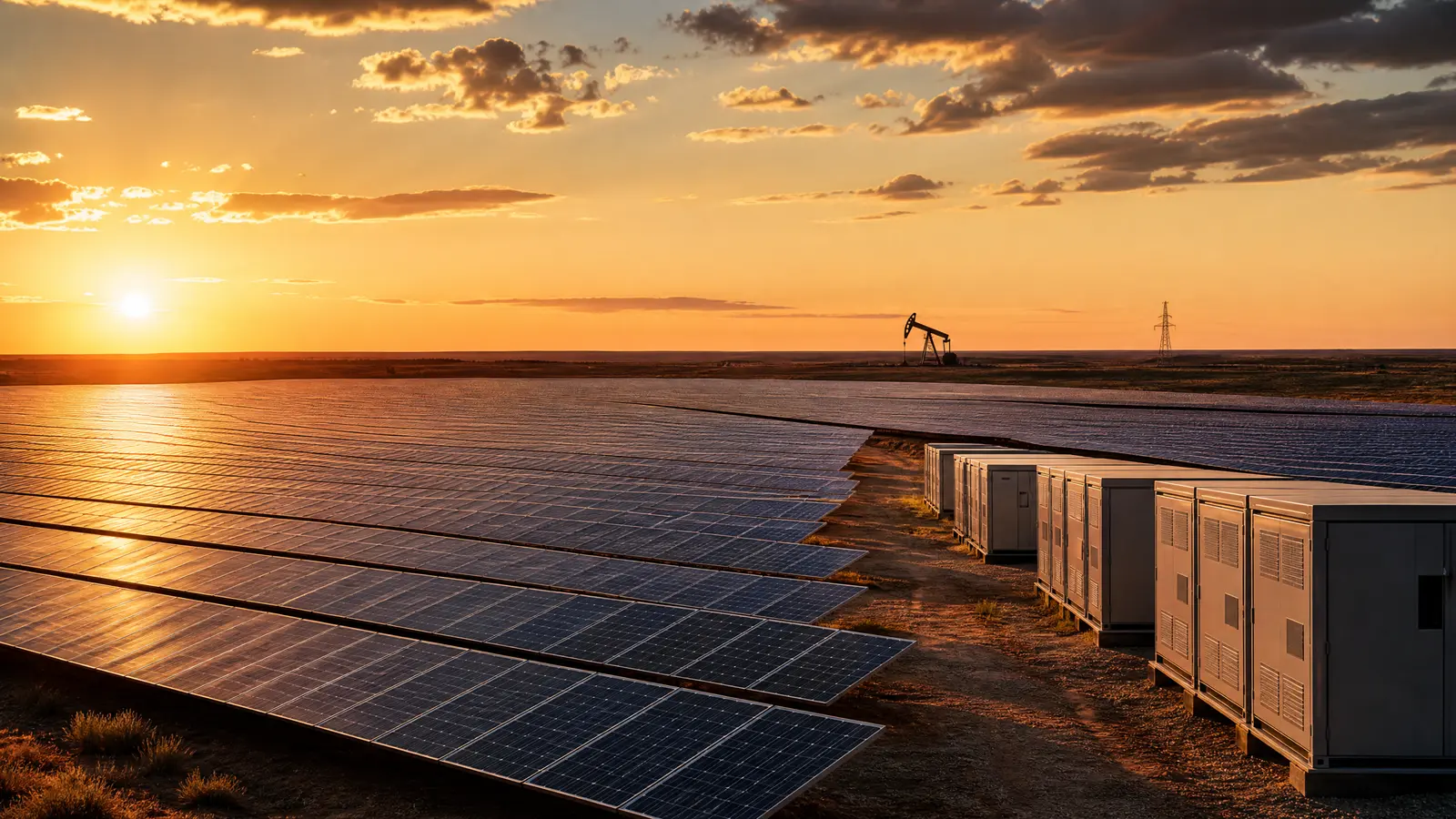
McCamey, Texas was built on oil. The Permian Basin town once measured the sun only by how fast it baked the derricks. Today the same red dirt carries something the wildcatters never imagined: row after row of dark glass at the Roadrunner plant, each panel tracking that brutal West Texas sun and turning it into megawatts. The crown the fossil-fuel state wore for a century is slipping. Nobody planned it. That is the whole point.
Texas did not arrive here through a climate crusade. Long before energy became a culture war, the state looked at electricity the way it looks at most things: as a market, not a morality play. It deregulated its power sector in the name of free-market competition and handed dispatch to the lowest bidder, letting the grid buy from whoever could deliver the cheapest electron at any given second. It was no overnight success. But in time that single decision did something no subsidy and no mandate ever could: it let the truth about cost reveal itself.
And the truth turned out to be inconvenient for the people who run Texas.
Consider what the Lone Star State actually did once renewables started winning on price. After Winter Storm Uri killed hundreds and froze the grid in 2021, lawmakers built the Texas Energy Fund, a pot eventually swollen to $10 billion, offering 3% low-interest loans to new power plants. The catch, buried in the ballot language, was simple: renewables need not apply. The money was reserved for dispatchable plants, which in practice means gas. Legislators went further, floating bills to force half the grid onto fossil generation and pile permitting hurdles onto wind and solar, all of it warmed by generous checks from oil and gas PACs. This was not the free market. This was the state pressing its thumb on the scale for the incumbent.
It did not work.
The gas loan program, designed to coax developers into building, spent years finding almost no takers. By late 2025, only two new projects had cleared the in-ERCOT loan track, drawing just $321 million of the $7.2 billion on offer, while applicants kept withdrawing and citing the same reason every time: the economics of a new gas plant simply do not pencil out, even with cheap state money (The Texas Tribune). When you offer to subsidize something and developers still walk away, the market is telling you something. The incumbent could not compete even on home turf, with the referee on its side.
Now look at what private capital built instead, with no special loans and a hostile legislature. According to the U.S. Energy Information Administration, annual utility-scale solar generation on the ERCOT grid is projected to surpass coal for the first time, reaching 78 billion kilowatt-hours against coal's 60 (EIA). The mechanism is pure arithmetic. Because the deregulated market always takes the lowest bid, solar's zero fuel cost systematically underprices gas on hot summer afternoons, exactly when air conditioning sends demand screaming and wholesale prices used to spike. The sun shows up for free at the precise moment Texas needs power most.
The old objection was always the evening. The sun sets, demand stays high, and the grid lurches. So developers solved it the way markets solve things: they built batteries, at a scale nobody else is matching. Texas is deploying 12.9 gigawatts of new battery storage in a single year, fully 53% of the entire national total (EIA). The panels charge the batteries through the blazing afternoon, and the batteries carry the grid into the night. The evening drop, the last refuge of the "renewables can't be reliable" argument, is being quietly engineered out of existence.
Put it together and you get the irony of the decade. The most fossil-friendly government in America, armed with $10 billion and a stack of protectionist bills, could not stop solar and storage from coming for gas's crown. Private money, an ocean of free sunshine and wind, and an industrial economy hungry for cheap electricity did what no green mandate ever managed. They turned the country's premier oil and gas state into its most active renewable market.
This is why Texas matters far beyond Texas, and why I find it worth watching from my own desk in Austin. The lesson is not about solar. It is about what markets reveal when you finally let them. California chased the same destination with mandates, subsidies and moral fervor, and arrived slower and dearer. Texas, almost by accident, proved the more radical point: you do not need the state to pick the winner. You need the state to get out of the way and let price tell the truth. When it does, the cheapest and cleanest answer tends to win on its own, no sermon required.
There is something almost poetic in it. A state that built its identity on pulling energy out of the ground is now harvesting it from the sky, not because anyone ordered it to, but because the math finally made sense and the market was free enough to act on it. The derricks are not gone. But out past McCamey, the panels keep turning toward the sun, indifferent to the politics, answering only to the price. That is what freedom looks like when you let it run.