I am writing this from Zurich, where the trams run on time, the lake is glass, and the entire political class of Western Europe is quietly praying that eight million Swiss people do as they are told.
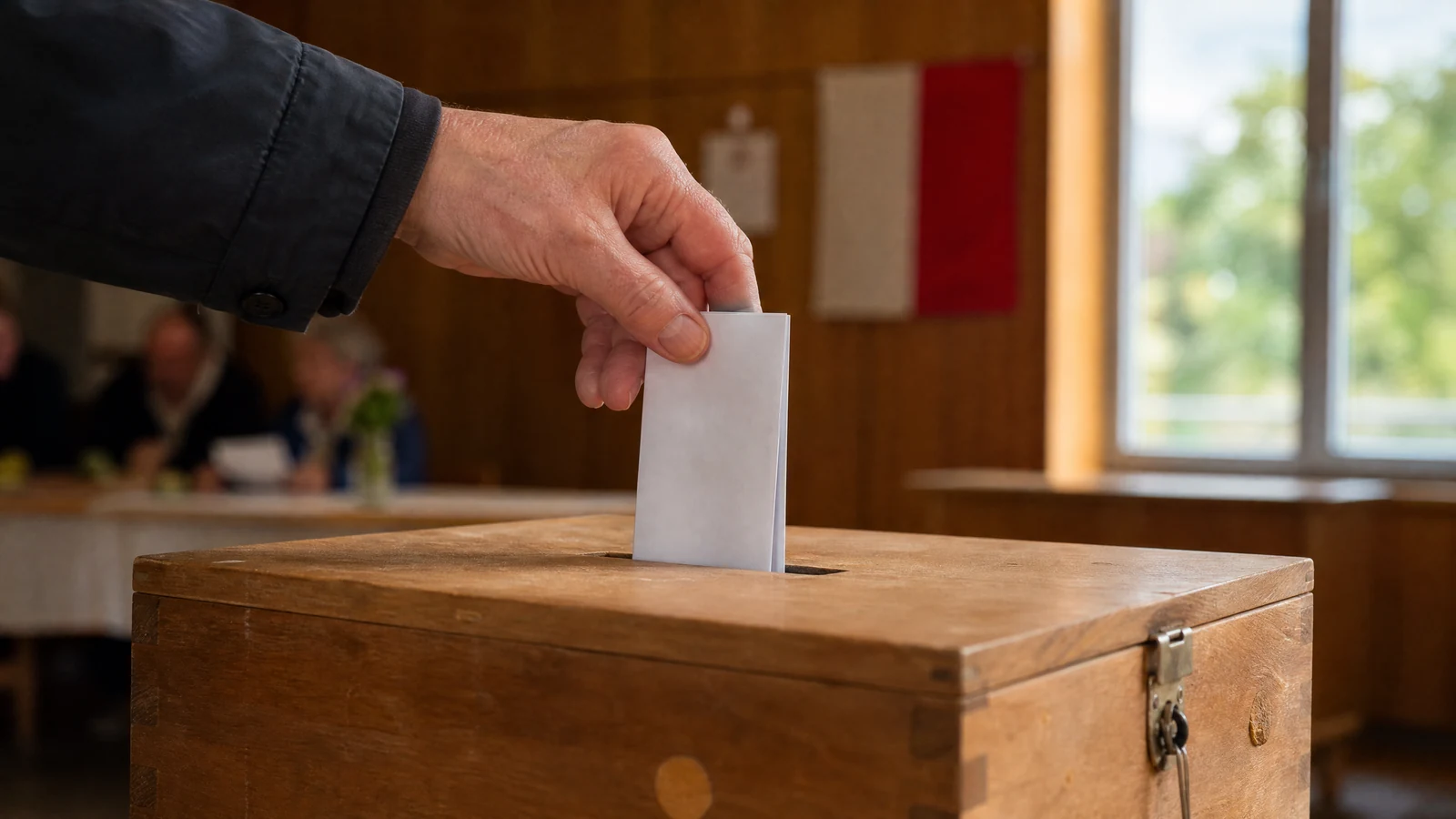
On 14 June the Swiss vote on the Nachhaltigkeitsinitiative, the "No to a 10-million Switzerland" initiative brought by the SVP. The text is simple. The permanent resident population must stay below ten million before 2050. Cross 9.5 million and the government has to act, mostly on asylum and family reunification. Cross ten and, after a two-year grace period, Bern is obliged to terminate the free movement agreement with the EU. You can read the mechanism on the federal government's own page, and the case for it on the SVP campaign site. End of 2025 the country sat at roughly 9.1 million, having added around 1.7 million people since free movement came in. So this is not an abstraction. On current trajectories the first threshold lands around 2031.
Why this is really a sovereignty vote
Strip away the demographics and what you have is a referendum on who decides. Does a small republic get to set the terms of who lives inside its own borders, or does it outsource that question permanently to a treaty it can no longer adjust?
That is the part that terrifies Brussels, and it should tell you everything. Direct democracy is a spanner in the works of every control freak in Europe. It is the one instrument the managerial class cannot fully manage. They can shape a parliament. They can capture a regulator. They have a much harder time when the actual population gets a ballot and a pencil four times a year. The Swiss have been refining this machine for centuries, which is precisely why it is so resented by people who believe sovereignty is something to be administered rather than exercised.
The Brussels intervention
Here is where I want to be precise, because precision is more damning than exaggeration.
Ursula von der Leyen did weigh in. Back in March, around the signing of the new bilateral package with Swiss President Guy Parmelin, she said the EU "trusts that Switzerland will continue to meet its international obligations" and stressed that free movement is a key element of the relationship. No fist on the table. No explicit threat. Diplomatic silk.
But read it for what it is. The president of the European Commission chose to comment, in public, on a sovereign vote in a country that is not in her union. Imagine the reaction if a Swiss official lectured French voters on how to vote in a French referendum. An EU parliamentarian then went further and called a yes a "very bad signal." This is the soft machinery of pressure, and it is the same script we saw run during Brexit. Project Fear does not arrive shouting. It arrives concerned, regretful, reminding you of your obligations.
What is interesting is that the more sober analysis out of Brussels suggests the EU will hold back rather than escalate if the Swiss vote yes. Not out of respect. Out of self-interest. They have too much riding on the Bilaterale III package they only just signed, with a Swiss vote on it expected around 2028. They do not want a fight that could sink the whole thing.
Which is exactly why a yes on 14 June matters beyond the headline. A yes would put the SVP's hand directly on the lever of free movement, and it would make the 2028 vote on Bilaterale III a far steeper climb. For anyone who would rather see Switzerland stay sovereign and unaligned than slide quietly into the EU's orbit, that is not a risk. That is the point.
About those polls
You hear it everywhere right now: the no camp is ahead. And it is true that the most recent numbers show it. The latest barometer has it around 55 to 38 against, and the trend over recent weeks has drifted the same way.
So no, I am not going to tell you the polls are fabricated. They are not. But I will tell you what every Swiss person I have spoken to here seems to understand instinctively, and what the data quietly supports.
First, this race did not start as a blowout. An early Leewas survey had the yes side ahead at 52 percent, and the first official SRG poll opened as a dead heat, 47 to 47. Second, and more importantly, Swiss pollsters have a documented habit of undercounting exactly this kind of vote. The textbook case is the 2014 Masseneinwanderungsinitiative, which the surveys had trailing and which passed anyway. On immigration initiatives there is a well-known shy-voter effect. People do not always tell a stranger with a clipboard that they intend to vote against the official consensus. They just do it in the booth.
So this is not a finished story. It is a genuine contest with a known bias baked into the measurement. That is a very different thing from the narrative of inevitability that the establishment side would like you to absorb.
What I am hoping for
I am hoping that on the morning of Monday 15 June we wake up to a yes. Not because I think capping a population at a round number is elegant policy. It is a blunt instrument, and even some inside the SVP have said so. But because a yes would be the people of a free republic telling the entire apparatus of supranational management a single, clarifying word: no.
No to having your demographic future decided by a treaty you cannot amend. No to being lectured by an unelected Commission president on how to vote. No to the quiet assumption that the only acceptable answer is the one the experts prepared for you in advance.
It is a nail-biter. It should be. That is what a real vote looks like, as opposed to the managed ratifications that pass for democracy elsewhere. Life is short and the moments where a people actually gets to choose are rare. This is one of them. Here is hoping the little republic makes it count.