In the previous piece I laid out the facts. Twenty years of zero Turkish tax on foreign income. Inheritance at a flat one percent. The Istanbul Finance Centre as a fully exempt corporate platform through 2047. An asset amnesty for those repositioning capital. The cold mechanics of the law that Turkey’s Grand National Assembly passed on the 21st of May 2026.
That was the architecture. This is the vision.
Because what was enacted in Ankara that morning is not a tax measure. It is the most consequential family relocation opportunity of our working lifetimes, and the people who understand why will look back from 2046 and recognise May 2026 the way Londoners of an earlier era now recognise the quiet acts of Parliament that built the British Empire’s wealth century. The headline numbers are interesting. The architecture beneath them is civilisational.
Let me show you what I mean.
What London Was, And Why It Was
For roughly two hundred years, the United Kingdom ran the most sophisticated wealth-attraction regime on earth, and the trick of it was almost entirely invisible to outsiders. The non-dom status was never really about saving tax. It was about something far more interesting. It was about buying a family enough time to transform itself.
A Greek shipping principal arriving in London in 1985 with three young children was not really buying a remittance basis. He was buying fifteen years. Time enough for his eldest to enter Westminster at thirteen and graduate Oxford at twenty-two. Time enough for his middle child to take the same path two years behind. Time enough for the youngest to ride the same conveyor belt. By the time the non-dom clock ran out, the Greek shipping family had become a British family in everything but tax residency. The children spoke with English accents. They held the credentials, the friendships, the boardroom relationships, the marriages, and the cultural fluency that no first-generation immigrant could ever have engineered alone.
This is the deal Abramovich made. This is the deal the Mittals made. This is the deal that drew Iranian aristocrats fleeing the revolution, Russian oligarchs after 1991, Indian industrialists in the long boom, Saudi merchant houses across half a century. They came for the tax relief and they stayed for the generational transformation. The fifteen-year regime was perfectly calibrated to a single generational transition window. School to university to early career. Enough time to land a family, not just a portfolio.
When Hunt began dismantling it in 2024 and Reeves finished the job, the United Kingdom did not lose a few wealthy taxpayers. It lost the central mechanism that had quietly underwritten its global wealth gravity since the reign of Queen Victoria. The City of London is still standing. The architecture of generational embedding that gave London its real power is gone. The Russians have left. The Greeks are leaving. The Indians and the Saudis are scanning the horizon. The capital that London used to keep is now in motion, and motion in capital terms means it is looking for the next runway.
Why Twenty Is Better Than Fifteen
Now look at what Erdogan’s parliament built, with the British template in mind.
Twenty years instead of fifteen. Five extra years sounds marginal until you do the actual family arithmetic. A typical relocating family is not a couple with one infant. It is a couple in their late thirties to early forties, with the eldest child around six and starting school, the middle child around four, and the youngest around two. That is the dominant relocation profile. It is the demographic that pulls the trigger because the eldest’s schooling forces the question.
Run that family through the Turkish window. They arrive in 2026. The exemption runs until 2046. By 2046 the eldest is twenty-six, the middle is twenty-four, the youngest is twenty-two. All three have completed their entire schooling. All three have completed their university education. All three have completed the first several years of adult professional life. Every formative milestone, every birthday that matters, every cultural and credentialing year of every child’s life is covered by a single statutory regime.
The British fifteen would have broken on the youngest. The Turkish twenty does not. This is not a marginal improvement. This is a category change. Twenty is not a round number chosen for marketing brochures. Twenty is the exact length of a normal family arc.
And it goes further. One percent inheritance tax means that the wealth which passes from the parents who arrived in 2026 to the children who came of age in Istanbul transfers almost untouched. Compare that to the forty to fifty-five percent that German, French or British inheritance regimes would have extracted. On a meaningful family wealth pool the difference compounds dynastically. Across two generational transfers the gap is not a multiple. It is the difference between a family that lasts three generations and one that lasts six.
Turkey did not just copy London’s homework. Turkey looked at the British template, added five years, dropped inheritance to a notional fee, and rebuilt the city to match.
The Trick Almost Nobody Has Spotted Yet
Here is the part that the relocation industry has not yet properly absorbed, and it is the part that will, in retrospect, look obvious.
When a family relocates to Istanbul to use the twenty-year exemption, they have to live somewhere. That is not a tax decision. That is a human fact. They need a home. They need walls and bedrooms and a kitchen. They are not parking capital in a brass-plate office. They are housing a real family with real children who need real schools and real beds.
In every comparable jurisdiction, the cost of housing that family is pure overhead. Monaco apartments cost fifteen million euros and deliver nothing but a residency. Dubai villas cost two million dollars and deliver a renewable visa that can be revoked. Swiss chalets cost ten million francs and give you a lump-sum tax arrangement but a citizenship pathway so slow it is essentially theoretical. In all of these places, the money you spend to house your family is gone, with no compounding benefit beyond the roof itself.
In Istanbul, the same 400,000 USD that you were going to spend on a family home anyway also qualifies the entire family for Turkish citizenship after three years. Spouse. Minor children. All of them. The passport, for the whole family, costs you nothing on top of what you were spending to live there.
This is the trick. The Turkish CBI threshold and the realistic minimum cost of a serious family home in central Istanbul happen to sit on the same dollar amount. One cheque pays for the housing, the exemption qualifier, and the citizenship. Three benefits, one investment.
I have spent thirty years studying wealth migration architecture and I cannot find a historical precedent for this. Not Vienna in 1900. Not Switzerland in 1960. Not Hong Kong in 1980. Not London at any point in its long run. Every previous relocation regime treated housing as a sunk cost and citizenship as a separate, conditional, additional ask. Turkey is the first jurisdiction to fuse them into a single transaction.
The Math Of A Real Family, Reconsidered
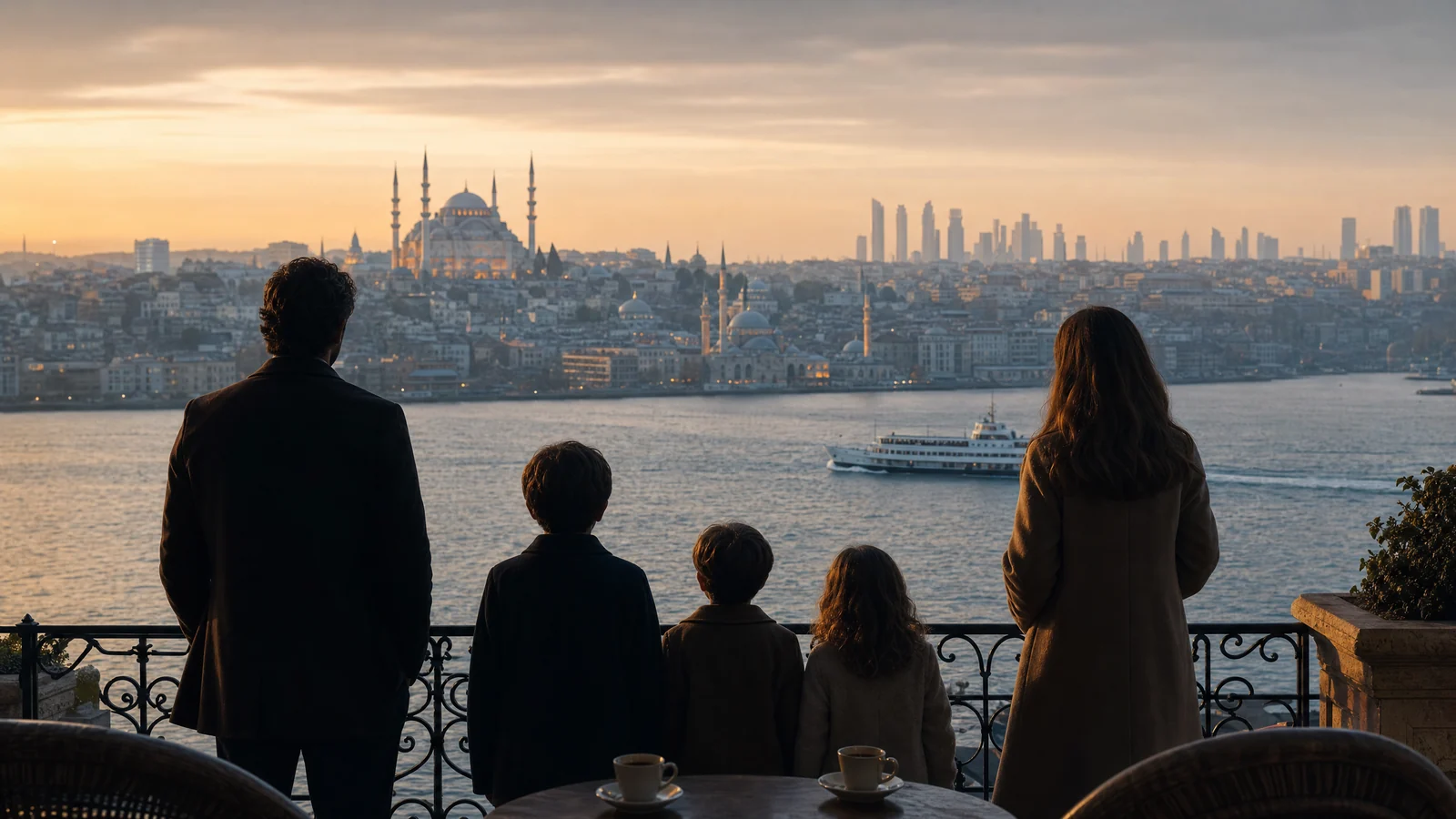
Walk through it concretely with that family of five. Father thirty-eight, mother thirty-six, three children aged six, four and two. They arrive in Istanbul in the autumn of 2026 with school applications already filed. They buy a four-bedroom apartment with a Bosporus view in Bebek or Arnavutköy. The cost lands somewhere between 600,000 USD and 1.2 million USD depending on the building and the floor.
That single purchase houses the family for the next two decades.
That same purchase qualifies the parents for the twenty-year foreign income exemption from the day they take occupancy.
That same purchase, after three years, delivers Turkish passports for all five family members.
That same purchase, given what is coming for Istanbul real estate, will likely double in value across the exemption window.
By 2029 the family has been settled for three years, the children are at Robert College or the German School, the parents hold Turkish citizenship, and the property they bought to live in has likely appreciated thirty to fifty percent. By 2046 the children are adult Turkish citizens with two decades of life behind them in the city, the parents have saved an amount that depends entirely on how large their foreign income has been but is for a serious family principal genuinely transformative, and the property is worth a multiple of what they paid for it.
No other deal currently available on planet Earth produces this outcome. And the families who run this calculation honestly, with their own actual numbers, will not need a second meeting to make the decision.
What Istanbul Becomes
Now zoom out, because the macro story is even bigger than the personal one.
Capital that is in motion has to land somewhere. The post-2024 dispersal of London’s non-dom population, the post-Iran-conflict disruption to Gulf hubs, the German wealth flight from a coalition that confuses confiscation with virtue, the Canadian and Australian exodus, the long quiet bleed from the United States via the E-2 and EB-5 alternatives. Every one of these flows is now looking for a destination, and the destinations are not all going to win equal shares.
Dubai will hold the segment that values pure transactional efficiency and is willing to accept the absence of a passport, the absence of seasons, the absence of cultural depth, and the proximity to a destabilising Iran. Dubai’s ceiling, however, is now visible. A jurisdiction that cannot offer citizenship at scale will lose the segment of wealth that thinks generationally, and the generational segment is the most valuable segment because it brings the family, the schooling, the long-term capital and the multi-decade embedding.
Singapore will hold the Asian capital that prioritises proximity to its operating businesses, but the city is small, expensive, fiscally tighter than its reputation suggests, and a poor cultural match for European or Levantine families. Switzerland will hold the segment that values absolute political stability and is willing to pay for it. Monaco will hold the very narrow segment of pure tax optimisers with no real family complexity.
Istanbul will take what is left, and what is left is the largest, richest and most consequential segment of the entire global wealth migration. The families who want a real city. The families who want a passport. The families who want twenty years of fiscal certainty layered over an inheritance regime that protects multigenerational wealth. The families who want their children to grow up cosmopolitan in a place that has been cosmopolitan for three thousand years.
By 2030 the Istanbul Finance Centre is no longer marketing copy. It is housing the displaced family offices of Mayfair, the redomiciled wealth managers of Geneva, the Gulf principals hedging regional risk, the Russian and Iranian capital that cannot sit comfortably in Western banks, the Asian capital looking for a Western-flavoured but non-Western jurisdiction. The IFC becomes to the 2030s what Singapore was to the 2000s. Not because it copies Singapore. Because it occupies a geographic and fiscal seam that nothing else does.
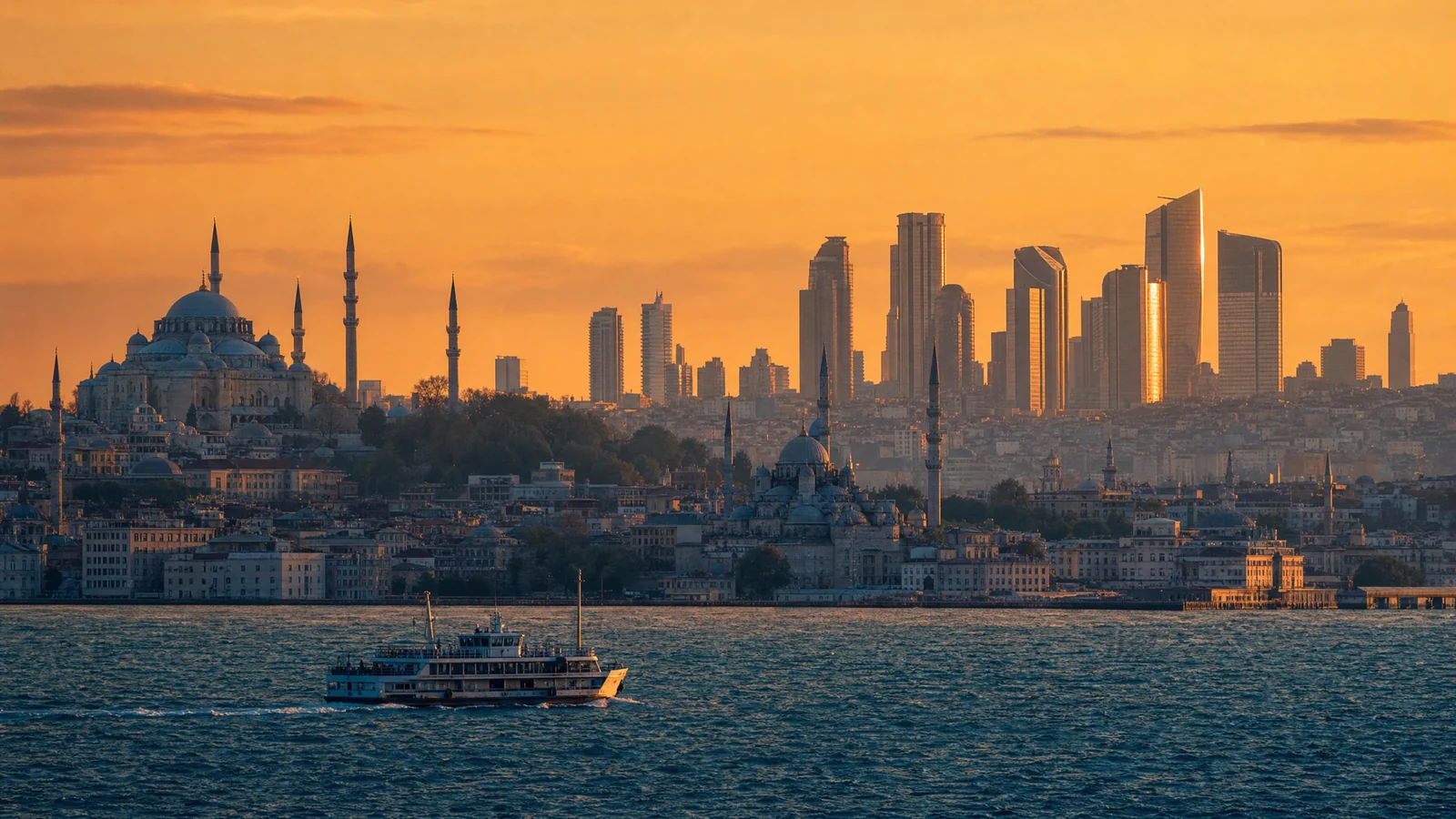
The Bosporus front transforms first. The yalı that traded at five million dollars in 2024 prints at fifteen by 2029. Bebek, Arnavutköy, Yeniköy and Kuruçeşme become the most expensive square metre between Monaco and Dubai. International schools double, then triple. Restaurants that would have been impossible in 2020 attract Michelin attention. Istanbul becomes the cosmopolitan capital that Beirut should have been before it broke and that London used to be before it forgot what it was doing.
For a sense of where in the city the smartest CBI money is positioning, the analysis at IMI Daily on Istanbul neighbourhood value is worth reading carefully. Topkapı is being flagged as the next Kağıthane. Ataşehir is being positioned as the anchor of the Asian-side financial district. The early movers are picking their neighbourhoods now.
The Generations That Will Be Born From This
The deepest part of this is not the parents who move. It is the children who will grow up inside it.
The eldest child of our hypothetical 2026 arrival family, aged six on landing, will be twenty-six in 2046. She will have spent her entire conscious life in Istanbul. She will speak Turkish to her former classmates, English at university, possibly German or French at home, possibly Arabic from family connections. She will be the first member of a generation that does not exist yet: the New Cosmopolitan, raised in the only global city that sits between every relevant power bloc of the twenty-first century.
She will not be a foreigner who happens to hold a Turkish passport. She will be a Turkish citizen who happens to also hold her parents’ original nationality. Her children, born to her in the 2050s, will be Turkish by descent regardless of where she gives birth. The passport, once acquired, propagates indefinitely down the family tree. Her grandchildren, born in the 2080s, will still be Turkish citizens because she was.
This is the dynastic implication that, in my view, will only become fully visible in hindsight. The twenty-year exemption ends. The passport does not. The family’s fiscal sanctuary is finite. The family’s nationality, and the optionality it carries for every future generation, is permanent.
While the United Kingdom is busily floating five-million-pound invite-only investor visas to try to repair the damage it did to itself, Turkey is quietly building the institutional infrastructure for a new transnational elite layer. One that will, by 2050, look back at the British non-dom regime the way the British nineteenth century looked back at the Dutch Republic. A great precursor whose model was copied, refined and surpassed.
The Decision That Defines The Family’s Next Hundred Years
Here is where this lands.
Most strategic decisions do not actually change much. They are tweaks to portfolios, adjustments to corporate structure, small optimisations on the margin. Once or twice in a working life, a decision arrives that changes the shape of everything downstream. Where the children grow up. Where the wealth seasons. Where the next three generations of the family hold their citizenship. Which language they think in. Which doors they can walk through without asking permission.
Turkey just put one of those decisions on the table. Twenty years of fiscal sanctuary, a passport for the price of a family home, a city that gives a family a real life rather than a tax address, and a dynastic optionality that propagates forever. All in one transaction. All for the price of housing the family in a place that is by any honest measure one of the most beautiful and culturally rich cities on earth.
The families who see this clearly will move quickly. The ones who do not will, in twenty years, be reading about the families who did in their children’s history books. Because the geography of generational wealth has just shifted, and the smart money is already pointing its compass east.
The Bosporus has been the seam between continents for three thousand years. For the first time in modern history, it is also the seam between yesterday’s tax map and tomorrow’s.
Andere reden. Wir setzen es um.