There are moments in history when a piece of legislation passes in a parliament far away and almost nobody outside the country notices. And then there are moments when a single vote tilts the geography of capital itself.
On the 21st of May 2026, in the white marble halls of the Grand National Assembly in Ankara, Turkey quietly chose to become one of the most attractive tax jurisdictions on earth. The bill that President Recep Tayyip Erdogan tabled in April was passed into law. Within fifteen days it will appear in the Resmi Gazete, the Official Gazette. And then a door that has been closed for a century will swing open between two continents.
The headline is almost too simple to believe. Twenty years. Zero Turkish income tax on foreign-source earnings. For anyone willing to pack up their life and turn their face toward the Bosporus.
The picture, before the numbers
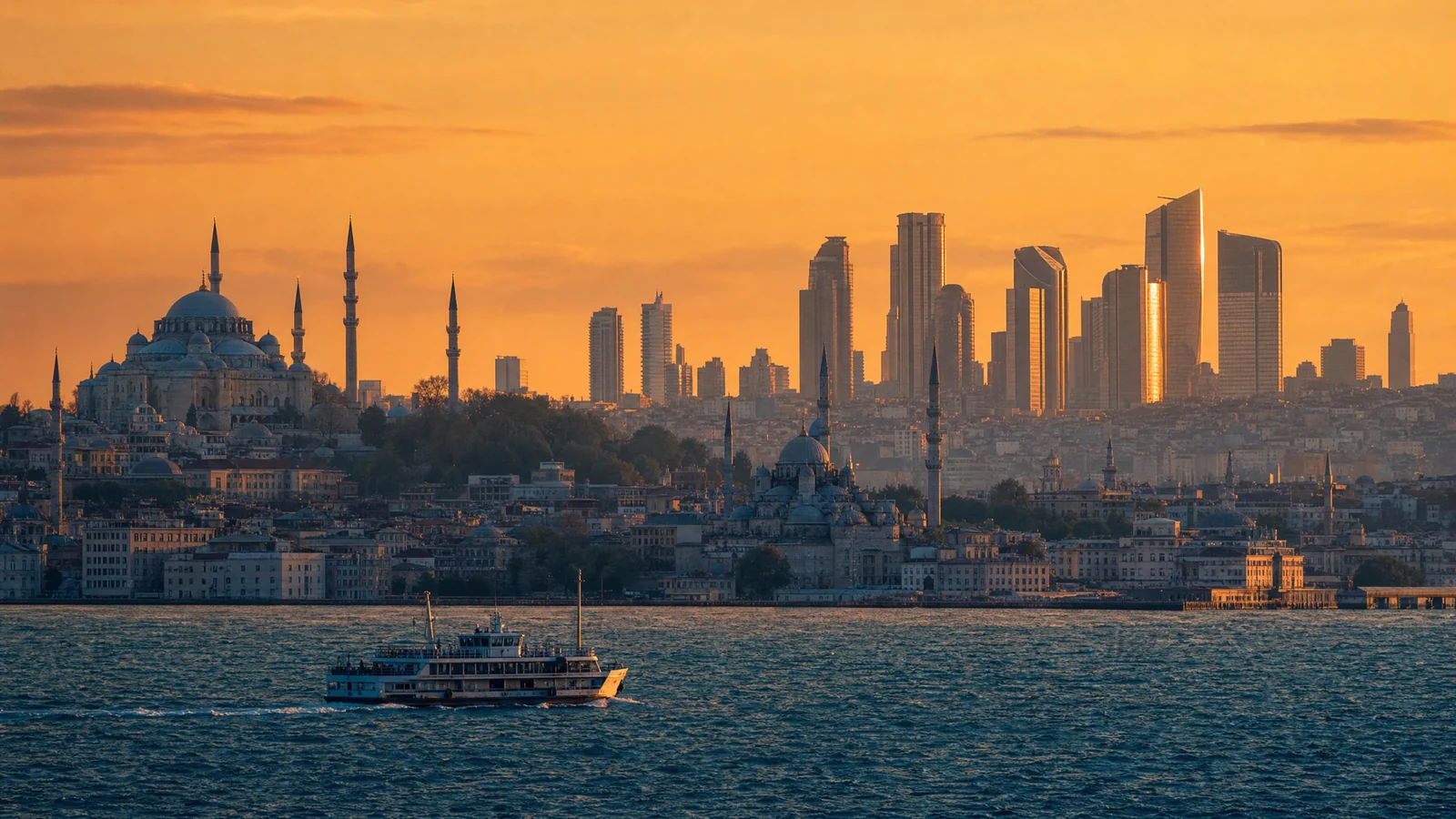
Close your eyes for a moment. Imagine standing on a balcony in Bebek as the sun melts into the strait. To your left, Europe. To your right, Asia. Ferries cross between them like patient calligraphy on dark water. The call to prayer drifts from Ortaköy. A few kilometres east, across the bridge that Mehmet the Conqueror would have envied, glass towers light up in the Istanbul Finance Centre. Bankers, traders, family-office principals from Riyadh, Dubai, London, Frankfurt and Toronto are walking out of dinner.
This is Dubai on the Bosporus. Not as a slogan in a brochure but as a fiscal reality codified in statute. And unlike Dubai, you get four real seasons, you get civilisation that pre-dates the pyramids, you get a kitchen the French quietly admire, and you get a passport that, with the right structuring, opens doors the Emirati one cannot.
What the law actually says
Strip away the romance for a moment. Here is the cold architecture, because the romance is worth nothing without the rules.
Eligibility. You qualify if you had no domicile and no Turkish tax liability during the three calendar years before you relocate. That is the test. If you are not already entangled with the Turkish tax system, the door is open.
The exemption. Foreign-source income, for twenty years, is excluded entirely from the Turkish income tax return. Not deferred. Not capped. Not rebated. Excluded. Dividends from your Cayman fund, royalties from your German GmbH, capital gains on your Swiss portfolio, rents from your Lisbon apartment, fees billed through your Cyprus IP company. None of it surfaces on the Turkish return.
What still gets taxed. Income generated inside Turkey remains taxable at the standard progressive rates of 15% to 40%. Honest, transparent, and entirely predictable. If you earn it from a Turkish factory, you pay Turkish tax. If you earn it from anywhere else, for two decades, you do not.
Inheritance and gift tax. Here is the line that will rewrite a thousand family trusts. Turkey’s standard graduated rates of 1% to 30% drop to a flat 1% for qualifying residents. Read that again. One percent. On generational wealth transfer. In a country with a hundred million people, an EU customs union, NATO membership and a coastline longer than mainland Spain’s.
Asset amnesty. Hold cash, gold, foreign currency or securities offshore? You may declare them through a Turkish bank or brokerage by the 31st of July 2027 and transfer them onshore within two months. The rate slides according to how long the assets stay in qualifying Turkish instruments: zero percent if held five years, scaling up to four percent at one year, and five percent if withdrawn early. Declared amounts receive shelter from tax inspection and penalty. The opposition has called it Turkey’s eighth amnesty since 2008, and they are right to ask uncomfortable questions, but for the law-abiding emigrant repositioning legitimately held capital, the mechanism is what it is: a clean entry ramp.
The corporate side. Manufacturers see the general corporate rate halved to 12.5%. Exporters of their own manufactured goods pay 9%. The Istanbul Finance Centre, once a half-built marketing campaign, is now the crown jewel: full corporate tax exemption on transit trade income, financial services export income exempt through 2047, and a 95% reduction even for companies operating outside the IFC perimeter. This is no longer a free zone. It is a financial sovereignty experiment with parliamentary backing.
Why now, and why this matters
A British technology veteran named Aran Hawker, who built the trading infrastructure for Istanbul’s banks back in 2011, said something to IMI Daily that captures the moment with brutal honesty. “The Turkish government has smelt blood in the streets and wants to capitalize on the situation.”
He was talking about the disruption rippling through Gulf financial hubs from the Iran conflict. He was also talking about something larger. About Brits fleeing Starmer’s wealth crusade. About Germans suffocating under a coalition that confuses confiscation with virtue. About Canadians, Australians, Americans watching their countries drift somewhere they no longer recognise.
The Turkish state read the room. Reporting by Hürriyet Daily News shows the package was designed with this exact migration in mind. The plan stretches back nearly two decades, to former Deputy Prime Minister Nazim Ekren and his vision of Atasehir as the anchor of Eurasia’s financial capital. What was theatre in 2009 is statute in 2026.
Who this is for, and who it is not
I want to be honest with you, because flattering you serves nobody.
This is not for the German pensioner who wants a quiet life in the Algarve. This is not for the freelance consultant who needs three currencies and a calm legal system. This is not for the family who wants their children at an international school in Lisbon and weekend hikes in Sintra.
This is for capital that needs to move and is willing to be brave. This is for the entrepreneur whose foreign-source dividend stream is large enough that twenty years of exemption rewrites the lifetime balance sheet. This is for the family principal sitting on a generational transfer who would rather pay 1% in Istanbul than 30%, 40%, 55% in Berlin, London or Paris. This is for the founder building a treasury that needs both EU customs proximity and Gulf neighbour access.
It is also for those who understand that Turkey is not Switzerland. Lira volatility is a fact. Political risk is a fact. Rule-of-law concerns exist and should be priced. The right structuring matters more here than almost anywhere else. You do not move blindly. You move surgically. Turkish onshore taxation of local-source income is real and progressive. Reporting obligations exist. Substance must be designed properly, because what parliament gives, parliament can revisit.
The longer arc
In thirty years of advising people who chose to leave, I have learned that real shifts in the global tax map happen rarely. Cyprus in 2015. Portugal’s NHR in 2009. The UAE corporate exemption in 2018. Italy’s flat tax in 2017. These are the moments that, when you look back, you realise reshaped where wealth lives.
Turkey just added itself to that list. And it did so with a duration, twenty years, that exceeds every comparable regime currently in force. The Italian flat tax runs fifteen. Portugal’s NHR ran ten. Greece’s non-dom regime runs fifteen. Turkey now offers two full decades of foreign-source exemption, layered with a 1% inheritance and gift tax for cross-generational planning. This is not a tweak. This is a tectonic plate moving.
For my readers in the DACH region, in the UK, in Ireland, in Scandinavia and across the Atlantic: the question is not whether Turkey is suddenly your new home. The question is whether Turkey now belongs in the conversation. For most serious capital, the answer is yes. Whether as a primary residency, a secondary base, a corporate domicile, or simply a hedge against the country you currently live in deciding to come for what is yours.
The Bosporus has been a crossing point for three thousand years. Phoenicians, Byzantines, Ottomans, Genoese, Venetians, Russians, the British fleet of 1918. Money has always passed through this strait. Now, for the first time in modern history, the law says it may also stay, and grow, and pass to the next generation, almost untouched.
I will say what I always say. Andere reden. Wir setzen es um.
If you want to understand whether this fits your situation, the door is open. The map has just been redrawn. The next twenty years of your family’s wealth will be defined by whether you read the new map, or the old one.
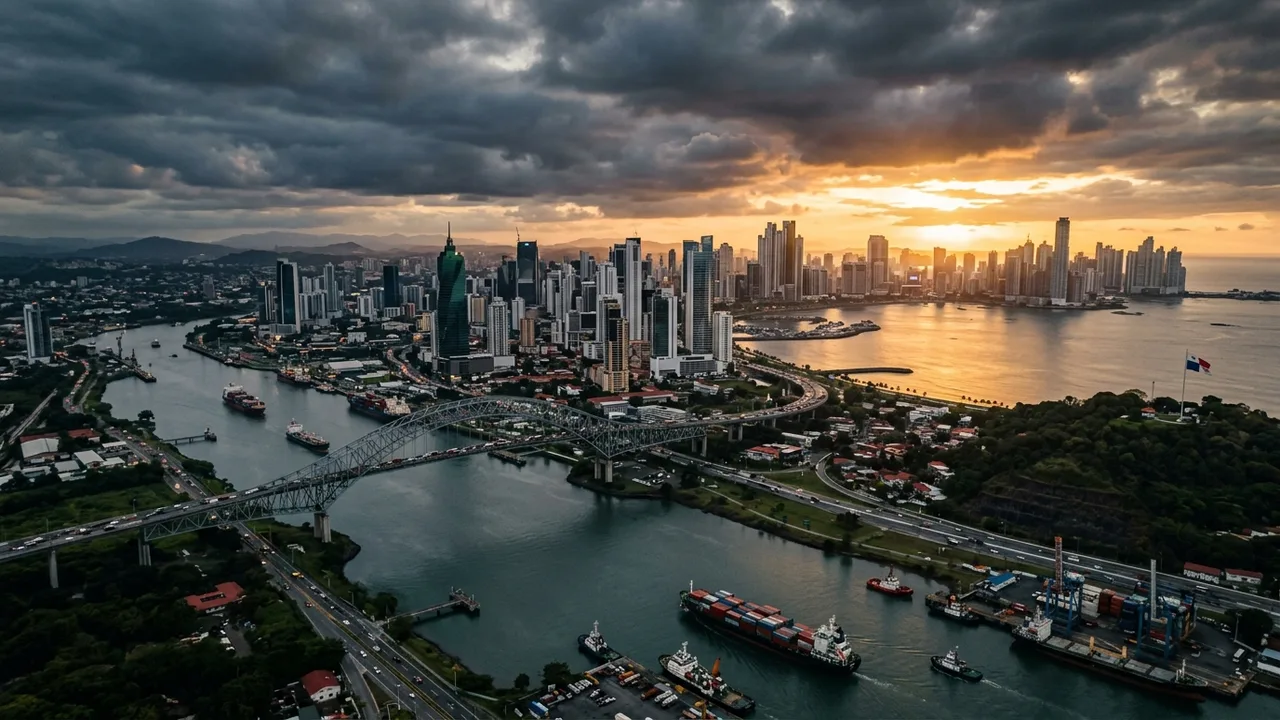
For broader context on the wave of tax-residency regimes competing for displaced wealth, the comparative analysis at IMI Daily on the UAE, Singapore, Switzerland and Panama models is worth your time. Read it next to the Turkish text, and the picture sharpens.
Carpe Diem, Sebastian