Contents
- 1. Morocco: Country Overview
- 2. Putting Morocco on the Map
- 3. What Others Say About Morocco
- 4. Tax Benefits: What Morocco Has to Offer
- 5. Tax Rates at a Glance
- 6. Tax Residency: What Triggers It
- 7. Double Tax Treaties
- 8. Avoid Remaining Tax Resident at Home
- 9. Tax Considerations When Leaving Your Home Country
- 10. Company Setup & Corporate Tax
- 11. Who Should (and Shouldn't) Move to Morocco
- 12. Visas and Residence Permits
- 13. Path to Citizenship
- 14. Banking in Morocco
- 15. What Makes Morocco Genuinely Attractive
- 16. Cost of Living in Morocco
- 17. Buying Real Estate in Morocco
- 18. Retiring in Morocco
- 19. US Citizens: What You Need to Know
- 20. Correct Preparation
- 21. Automatic Exchange of Information (OECD CRS)
- 22. Further Relocation Formalities
- 23. How We Help With Your Move to Morocco
I.
Morocco: Country Overview
Morocco is a North African constitutional monarchy at the western end of the Mediterranean and Atlantic North African coasts, bordered by Algeria to the east, the Western Sahara to the south, and Spain to the north (across the Strait of Gibraltar, just 14 km away at the closest point). It covers approximately 446,000 km² and has a population of approximately 38 million. The capital is Rabat; the largest city is Casablanca (population 4 million in the metropolitan area), the country's economic and financial capital.
Morocco operates in Arabic (Modern Standard Arabic and Moroccan Arabic / Darija) and Berber/Tamazight as official languages. French is the de facto language of business, banking, government administration, higher education, and the professions — a legacy of the French Protectorate (1912–1956). English is increasingly common among younger urban professionals. Spanish is widely understood in the north. The legal system is based on French civil law with Islamic law (Maliki Sunni jurisprudence) governing personal status matters for Muslims. The currency is the Moroccan Dirham (MAD), a managed currency.
On the tax side, Morocco operates a residence-based worldwide taxation model with specific preferential treatment for retirees. Tax residents are taxed on worldwide income at progressive rates from 0% (first MAD 40,000) to 37% (top rate reduced from 38% under Finance Law 2025). Non-residents are taxed only on Moroccan-source income.
- ›The flagship retiree benefit is the 80% abatement on foreign-source pensions repatriated to Morocco (Article 76 of the General Tax Code). Moroccan tax residents who hold retirement pensions from foreign sources receive a reduction of 80% of the personal income tax on those pensions, provided the pensions are duly repatriated to Morocco in non-convertible Moroccan dirhams. This produces effective rates of 5%–8% on most pension income.
- ›Major 2026 update: Finance Law 2025 introduced a total exemption from income tax from 1 January 2026 for retirees receiving only basic pensions and life annuities under basic pension regimes. Affected retirees are also exempt from the obligation to file an annual Moroccan global income tax return.
There is no inheritance tax for direct heirs (spouse, children, parents). No annual wealth tax. No gift tax in the typical Western sense. Capital gains on real estate at 20% (full exemption for primary residences held 6+ years). Casablanca Finance City (CFC) offers a 20% flat tax for qualifying expat employees of CFC-certified companies for up to 10 years. VAT 20%.
What to be aware of. Morocco operates worldwide taxation for full residents — the 80% pension abatement and 2026 basic-pension exemption are specific reliefs, not a general tax-haven framework. Investment income, business income, and active employment income are taxed at progressive rates. Morocco is fully CRS-compliant since 2018 and has been removed from EU and FATF watchlists. Morocco is not in the EU or the Schengen Area.
II.
Putting Morocco on the Map
Morocco — Atlantic and Mediterranean North Africa, 14 km from Spain
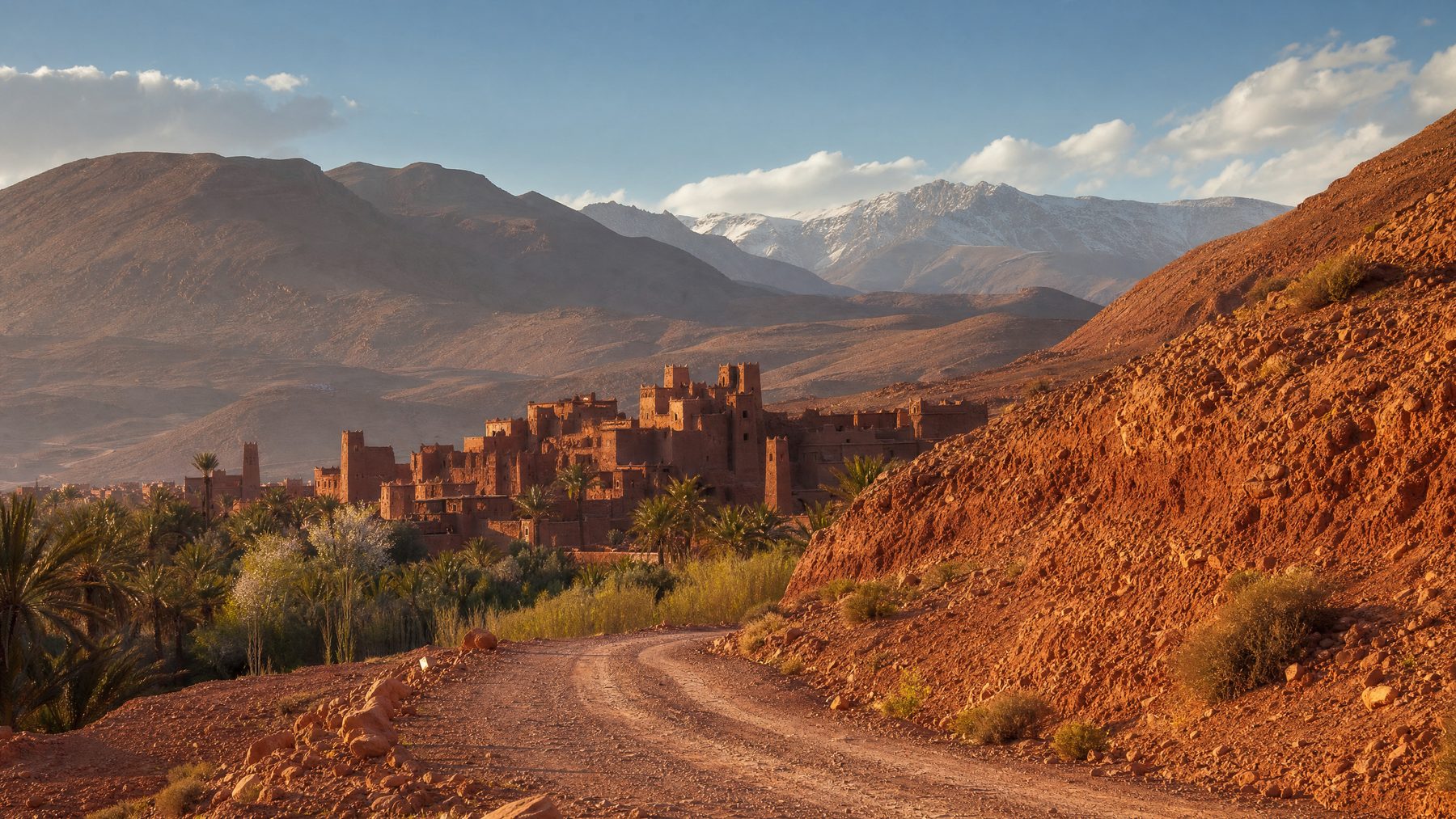
Morocco arrives in the colour of saffron, the smell of mint tea brewing in the cafés of Marrakech, the call to prayer from the Koutoubia minaret at sunset, the wind from the Atlantic on the seafront in Essaouira, and the cold high-altitude air of the High Atlas mountains in winter. The country is genuinely diverse — Atlantic coast (Casablanca, Rabat, Essaouira, Agadir), Mediterranean coast (Tangier, Al Hoceima), High Atlas mountains (Jebel Toubkal at 4,167 m is North Africa's highest peak), Sahara desert (Merzouga, Erg Chebbi dunes), imperial cities (Marrakech, Fez, Meknes, Rabat).
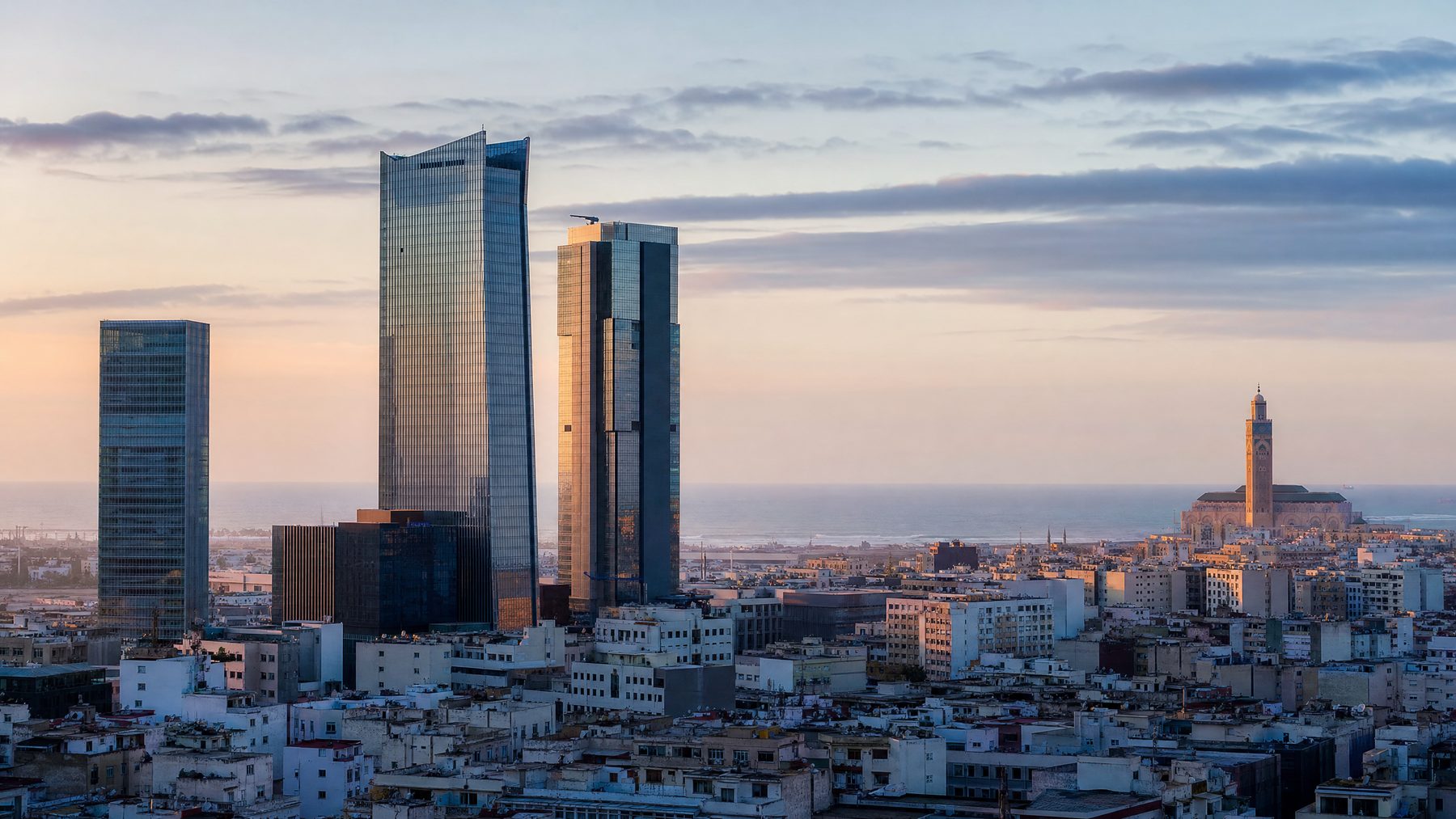
Casablanca is the economic and financial capital — population 4 million, the headquarters of most major Moroccan banks (Attijariwafa Bank, BMCE Bank, BCP), the Casablanca Stock Exchange, and the largest port in North Africa. The Hassan II Mosque dominates the seafront. Anfa is the principal expat HNW residential area. Casablanca Finance City (CFC) provides the 20% flat-tax framework for qualifying expat executives.
Rabat, the capital, is more dignified and political. Marrakech is the principal tourist and lifestyle destination — the Medina UNESCO Site, Jemaa el-Fna square, the Majorelle Garden, and the riad-conversion lifestyle that has attracted significant numbers of European retirees and second-home buyers. Fez is the cultural capital — the world's oldest university (Al Quaraouiyine, 859 AD), the medieval medina with 9,000+ alleys.
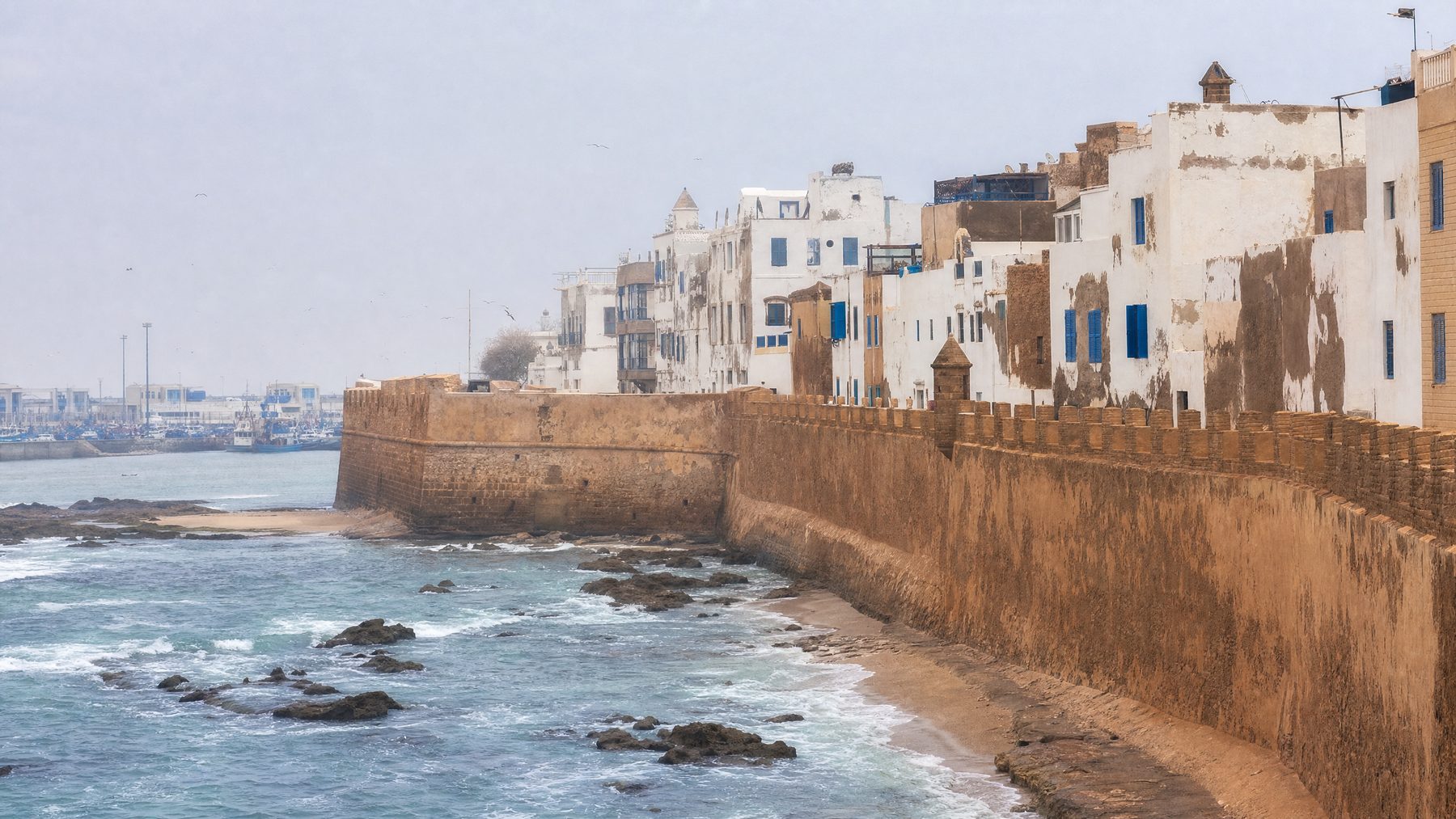
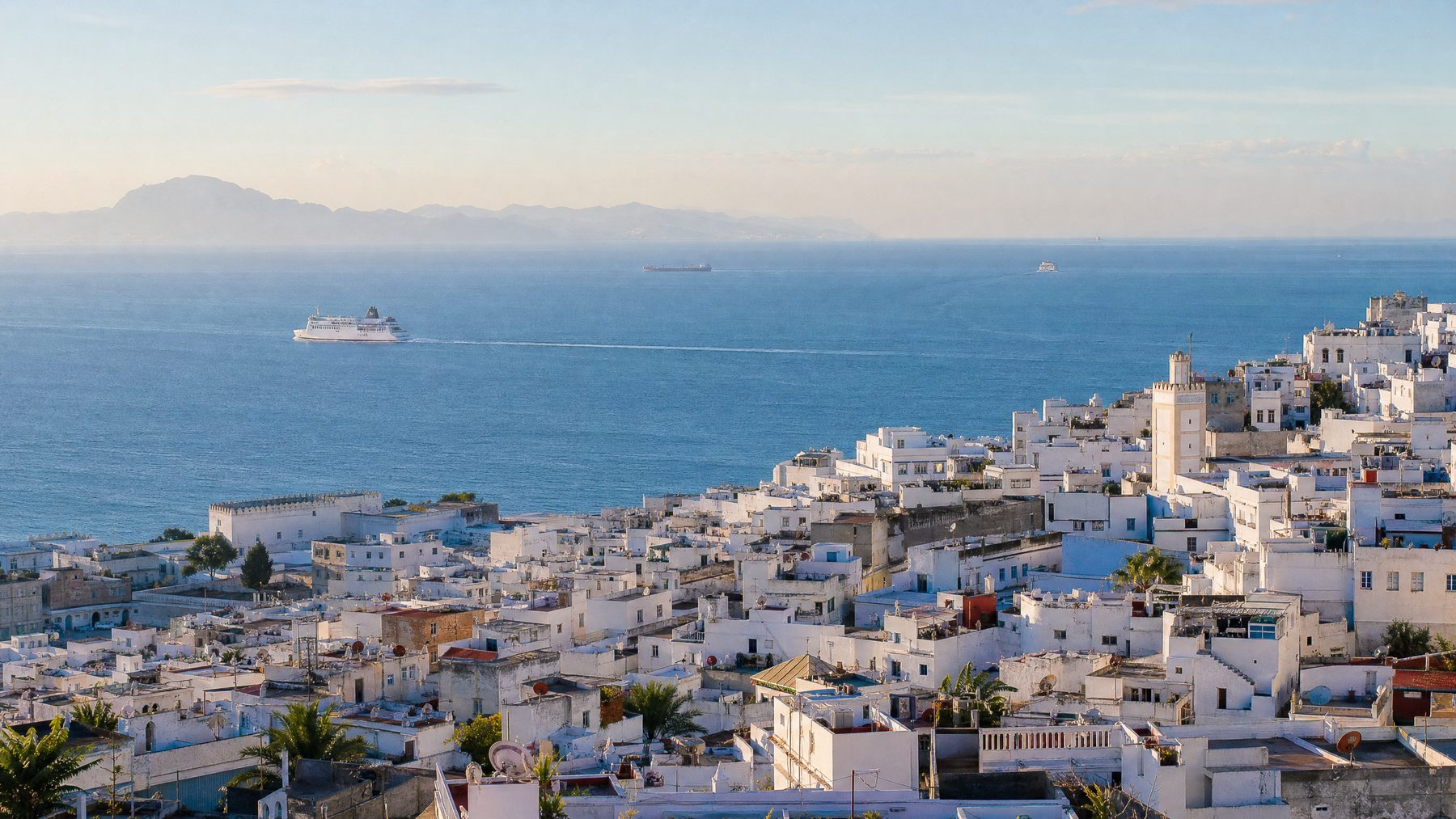
Tangier, on the Mediterranean coast, has been transformed since 2010 — the new Tanger-Med port (Africa's largest container port), the Casablanca-Tangier high-speed rail line (opened 2018), and a wave of European retirement and second-home investment. Essaouira on the Atlantic coast is the favourite among European retirees seeking moderate climate, Atlantic surf, and Portuguese-Berber-Jewish heritage.
- ›The Sahara — Merzouga and the Erg Chebbi dunes in the southeast, the Drâa Valley with its date palms, the Anti-Atlas Mountains. The High Atlas with Imlil and Jebel Toubkal provide world-class hiking and seasonal skiing at Oukaïmeden.
- ›Connectivity to Europe is exceptional. Casablanca's Mohammed V International Airport (CMN) and the secondary hubs at Marrakech (RAK), Tangier (TNG), Agadir (AGA), Fez (FEZ), and Rabat (RBA) handle direct flights to most European cities. Direct flights from Marrakech and Casablanca to Paris (3 hours), London (3.5 hours), Frankfurt (3.5 hours), Madrid (1.5 hours), Lisbon (2 hours), Rome (3 hours), Brussels (3 hours), Amsterdam (3.5 hours), and most major European hubs. Royal Air Maroc, Air France, KLM, British Airways, easyJet, Ryanair, Iberia, Lufthansa serve Morocco. Tangier to Spain via the Strait of Gibraltar ferry is 35 minutes. For European retirees, no other African destination has Morocco's proximity and connectivity.
III.
What Others Say About Morocco
"Marrakech is the only city in the world where you can sit at a café in 1923 and order a tagine, and the same café will serve you the same tagine in 2026. The continuity is what makes the place exceptional."
— Travel writer, Marrakech, 2024
"What I love about Morocco after eight years in Tangier is the combination of two things: I am 35 minutes by ferry from Spain, and I pay an effective tax rate of 7% on my pension. From January 2026 it will be 0%. The proximity-to-Europe-with-North-African-tax-treatment is structurally unmatched."
— British retiree, Tangier, 2025
"Essaouira is what every Atlantic-coast town in Spain or Portugal looked like before mass tourism — the wind, the surf, the Portuguese fortress, the Jewish mellah, the fishing harbour, the long beach to the south. The Moroccans understand that the rhythm of the place is what makes it valuable, and they have not destroyed it."
— French retiree, Essaouira, 2025
IV.
Tax Benefits: What Morocco Has to Offer
Morocco is the most retiree-friendly North African jurisdiction — and from 1 January 2026 one of the most retiree-friendly anywhere outside the pure-zero-tax frameworks. The combination of the 80% pension abatement, the 2026 total exemption for basic-pension retirees, the extensive DTA network, the proximity to Europe, and the lower cost of living makes Morocco genuinely useful for European retirees seeking a North African base.
- ›80% abatement on foreign-source pensions — Moroccan tax residents holding retirement pensions from foreign sources receive a reduction of 80% of the personal income tax due on those pensions, provided the pensions are duly repatriated to Morocco in non-convertible Moroccan dirhams. Effective rate on most pension income: approximately 5%–8%. Applies to French, Belgian, German, Italian, Spanish, Dutch, UK, US, Canadian pensions equally — provided properly transferred.
- ›Total exemption from 1 January 2026 — basic pensions and life annuities — Finance Law 2025 introduces a total exemption from Moroccan income tax for retirees receiving only basic pensions and life annuities under basic pension regimes. Affected retirees are also exempt from the obligation to file an annual Moroccan tax return. Complementary pension regime payments remain subject to ordinary tax (with 80% abatement still applicable).
- ›No inheritance tax for direct heirs — transfers to spouse, children, parents are not subject to inheritance tax. Modest stamp duties apply on transfers to non-direct heirs.
- ›No annual wealth tax — no annual tax on net worth or accumulated wealth.
- ›Casablanca Finance City (CFC) — 20% flat tax for HNW executives — qualifying expat employees of CFC-certified companies pay a 20% flat tax rate for up to 10 years, regardless of income level. Massive savings for HNW executives in financial services, fintech, professional services, and qualifying multinationals based in CFC.
- ›Personal income tax progressive 0%–37% — Finance Law 2025 reduced the top rate from 38% to 37% and broadened the brackets. Tax-free threshold raised to MAD 40,000.
- ›40%–60% lower cost of living than Western Europe — for European retirees, the same lifestyle that costs €4,000/month in France can be achieved in Morocco at €1,500–2,000/month.
- ›Extensive DTA network — 50+ double tax treaties — including France, Spain, Belgium, Netherlands, Germany, Italy, the UK, the US, Canada, the UAE, China, Japan.
- ›French and Arabic primary languages — direct flights to Europe — French is the de facto business language; English increasingly common; Spanish in the north. Connectivity to most European hubs is excellent, with 1.5–4 hour direct flights.
- ›Moderate Mediterranean climate — Atlantic coast is mild year-round (12–28°C); inland and Marrakech are hotter in summer; Atlas mountains are cooler with seasonal snow.
V.
Tax Rates at a Glance
The most important tax rates in Morocco are as follows. Note that these have been simplified and should be used as general guidance only.
| Tax | Rate | Notes |
|---|---|---|
| Personal Income Tax — bottom rate | 0% | First MAD 40,000 |
| Personal Income Tax — top rate | 37% | Finance Law 2025 (reduced from 38%) |
| Foreign-source pensions repatriated | Effective ~7% | 80% abatement on IIT |
| Basic pension + life annuities (from 1 Jan 2026) | 0% | Total exemption + no return required |
| Complementary pension regimes | Standard rates (with 80% abatement) | Subject to ordinary tax |
| Tax basis — residents | Worldwide income | At progressive rates |
| Tax basis — non-residents | Moroccan-source only | At applicable rates |
| Capital Gains — listed shares | 15% | Withholding |
| Capital Gains — unlisted shares | 20% | Withholding |
| Capital Gains — real estate | 20% | Of profit; minimum 3% of sale price |
| Capital Gains — primary residence (held 6+ years) | 0% | Full exemption |
| Inheritance Tax — direct heirs | 0% | None for spouse, children, parents |
| Wealth Tax | 0% | None |
| Gift Tax | Modest stamp duties | On real estate transfers between non-direct heirs |
| Corporate Income Tax — standard | 20%–35% | Tiered by activity and revenue |
| Casablanca Finance City (CFC) — qualifying expats | 20% flat | Up to 10 years, regardless of salary |
| Branch Remittance Tax | 15% | On profits transferred to head office abroad |
| Withholding Tax — dividends to non-residents | 10% | Reduced by DTA |
| Withholding Tax — interest to non-residents | 10% | Reduced by DTA |
| Withholding Tax — royalties to non-residents | 10% | Reduced by DTA |
| VAT — standard | 20% | Goods and services |
| VAT — reduced | 10% / 14% | Specific sectors |
| Stamp duty on property purchase | 4–6% | Tiered |
| Tax residency threshold | Habitual home OR centre of economic interests OR 183+ days | Standard tests |
| DTAs | 50+ | Includes France, Spain, Germany, UK, US, Canada |
| CRS exchange | Since 2018 | Annual automatic exchange |
Cryptocurrency and Crypto Assets
Morocco's regulatory position on cryptocurrency has been historically restrictive — the Central Bank of Morocco (Bank Al-Maghrib) and the Moroccan Capital Markets Authority (AMMC) have cautioned against crypto trading, and crypto transactions are technically not legal-tender. However, a comprehensive crypto regulatory framework is in development under the Ministry of Finance, expected to be implemented in late 2026 or 2027. For HNW retirees with foreign-source crypto holdings, the practical position is to keep crypto offshore (not repatriated to Morocco) under the foreign-asset framework. Personal crypto held offshore by Moroccan tax residents is not specifically taxed under current rules, but the regulatory framework is evolving — current advice should be obtained before any significant Moroccan-resident crypto positioning.
VI.
Tax Residency: What Triggers It
Under Moroccan tax law, an individual is considered a tax resident if they meet any of the following criteria:
- ›Habitual residence (résidence habituelle): Permanent home in Morocco. The principal trigger.
- ›Centre of economic interests: Morocco is the centre of the individual's economic activities (business, employment, principal investments).
- ›183-day rule: Physical presence in Morocco for more than 183 days in any 12-month period.
Tax residents are subject to Moroccan taxation on worldwide income at progressive rates 0%–37%. Non-residents are taxed only on Moroccan-source income.
- ›The 80% pension abatement and the 2026 total exemption apply specifically to Moroccan tax residents holding foreign-source pensions — meaning the framework requires establishing tax residence in Morocco. The standard requirement is to spend 183+ days per year in Morocco and hold a registered Moroccan address.
- ›For the 80% abatement to apply, the foreign pension must be: - Received from a foreign source - Duly repatriated (i.e. transferred from abroad) to a Moroccan bank account - Converted into non-convertible Moroccan dirhams - Documented for the annual tax return
- ›For the 2026 total exemption to apply, retirees must: - Receive only basic pensions and life annuities under qualifying basic pension regimes - Not have additional taxable income (employment, business, investment) that would change the qualification - Be Moroccan tax residents
- ›Documentation matters. Establishing and maintaining Moroccan tax residency requires evidence: a registered Moroccan address (lease or property title), passport stamps demonstrating physical presence, utility bills, banking, the residence permit (Carte de Séjour), and a Moroccan Tax Identification Number (Identifiant Fiscal) issued by the Direction Générale des Impôts (DGI).
VII.
Double Tax Treaties
Morocco has concluded more than 50 double tax agreements (DTAs) that are currently in force — a comprehensive network reflecting Morocco's longstanding diplomatic and economic relationships with major OECD economies.
Active DTA partners include:
- ›Austria
- ›Belgium
- ›Bulgaria
- ›Canada
- ›China
- ›Croatia
- ›Czech Republic
- ›Denmark
- ›Egypt
- ›Finland
- ›France
- ›Germany
- ›Hungary
- ›India
- ›Indonesia
- ›Ireland
- ›Italy
- ›Jordan
- ›Korea (South)
- ›Kuwait
- ›Latvia
- ›Lebanon
- ›Luxembourg
- ›Malaysia
- ›Malta
- ›Netherlands
- ›Norway
- ›Pakistan
- ›Poland
- ›Portugal
- ›Qatar
- ›Romania
- ›Russia
- ›Saudi Arabia
- ›Senegal
- ›Singapore
- ›Spain
- ›Sweden
- ›Switzerland
- ›Syria
- ›Tunisia
- ›Turkey
- ›Ukraine
- ›United Arab Emirates
- ›United Kingdom
- ›United States
The France–Morocco DTA is the most important treaty for the largest expat retirement community. It allocates pension taxation rights to the residence country (Morocco), enabling French retirees to receive their French pensions tax-free in France and subject only to Moroccan tax (with 80% abatement, soon 0% from 2026 for basic pensions).
The Belgium–Morocco DTA is the second-most-significant for the substantial Belgian retiree community. The Spain–Morocco DTA is critical for the Andalusia-Tangier corridor. The Germany–Morocco DTA covers German nationals.
The UK–Morocco DTA is in force and provides for standard residence tie-breaker rules — useful for British retirees and Casablanca Finance City executives.
The US–Morocco DTA (1977, in force since 1981) provides for reduced withholding rates and standard tie-breaker rules. Contains a savings clause preserving US worldwide taxation of US citizens.
Morocco is a signatory to the OECD Multilateral Convention on Mutual Administrative Assistance in Tax Matters and the Multilateral Instrument (MLI). Beneficial ownership transparency has been substantially upgraded since 2018; Morocco was removed from the EU AML high-risk third countries list and the FATF grey list following enhanced compliance reforms.
The existence of a DTA does not automatically resolve all tax conflicts. The treaty must be invoked correctly, residency must be properly established, and the specific provisions of each treaty must be reviewed.
VIII.
Avoid Remaining Tax Resident at Home
Relocating to Morocco does not automatically end your tax obligations elsewhere. The critical question is whether you have genuinely severed tax residency in your country of origin.
The most common triggers that can keep you tax-resident at home:
- ›Available dwelling: Any long-term residence that remains available for your use is sufficient to maintain a taxable domicile in many countries. Surrendering it before departure is a precondition of a clean exit in Germany (§1 EStG Wohnsitz), Austria, Switzerland, and many other jurisdictions.
- ›Centre of vital interests: If your family, your business, your social connections, and your financial affairs remain in your home country, most tax authorities will argue that your centre of life has not genuinely moved.
- ›183-day rule (home country): Spending more than 183 days in your home country in a calendar year will typically trigger residency there.
- ›Extended unlimited tax liability (Germany — §2 AStG): Germany's erweiterte unbeschränkte Steuerpflicht under §2 AStG can keep German nationals taxable in Germany for up to ten years after departure if they move to a low-tax country. Morocco's standard regime (top rate 37% on worldwide income) is generally NOT classified as low-tax under §2 AStG — but the 2026 total exemption for basic-pension retirees could potentially trigger §2 AStG analysis as Morocco-resident income would be at 0%. For German nationals pursuing the 2026 basic-pension exemption, §2 AStG analysis is essential.
A genuine relocation to Morocco requires that you actually live there — that your home is there, your daily life is there, and that you can demonstrate this with documentation.
The test is not where you are registered. The test is where you live. Tax authorities in France, Belgium, Germany, Spain, and other Schengen partners are experienced at identifying sham relocations and have the legal tools to challenge them. Proper advice before you move — not after — is essential.
IX.
Tax Considerations When Leaving Your Home Country
Before you relocate, you need to understand what tax consequences arise in your current country of residence at the point of departure.
Among the countries that levy a meaningful exit tax or deemed-disposal charge:
- ›France. Exit tax applies to unrealised gains on securities and company rights above €800,000 when a French tax resident relocates abroad. Morocco is non-EU/EEA, so the deferral mechanism for EU moves does NOT automatically apply. The France-Morocco DTA provides standard residence tie-breaker rules. Particularly important for the substantial French retirement migration to Morocco.
- ›Belgium. Belgian nationals retiring to Morocco face Belgian source-country withholding on Belgian-source pension and investment income; the Belgium-Morocco DTA provides treaty allocation.
- ›Germany. Applies an exit tax on unrealised gains in shareholdings of 1% or more under §6 AStG. The Germany-Morocco DTA provides standard tie-breaker rules. §2 AStG analysis is fact-specific — particularly for retirees pursuing the 2026 basic-pension total exemption.
- ›United Kingdom. Statutory Residence Test (SRT) exit-date analysis required. The UK-Morocco DTA provides tie-breaker rules. UK pensioners moving to Morocco face UK-source pension taxation under domestic rules + 80% Moroccan abatement.
- ›Spain. Departing residents face Spanish exit-tax rules on substantial shareholdings. Spain-Morocco DTA provides treaty support.
- ›Italy. Italian pension and investment income subject to Italian rules; Italy-Morocco DTA provides standard treaty allocation.
- ›Netherlands. Deemed disposal applies to substantial shareholdings (5% or more) at the point of emigration. Netherlands-Morocco DTA in force.
- ›United States. The "expatriation tax" under IRC §877A treats long-term residents and citizens as having sold all worldwide assets at fair market value on the day they relinquish citizenship or residency. The US-Morocco DTA (1977) is in force.
- ›Canada. The "departure tax" deems most property to have been disposed of at fair market value on the date of emigration. Canada-Morocco DTA in force.
Beyond exit tax, you may remain subject to limited tax liability in your home country after the move — for example, on rental income, dividends, or pension payments. Severing tax residency does not necessarily sever all tax obligations.
⚠ Obtain Local Tax Advice in Your Home Country. The information above provides a general overview of the departure tax rules that commonly apply when leaving high-tax jurisdictions. It is not legal or tax advice. The rules in your specific home country are complex, change frequently, and depend entirely on your personal circumstances. Before you take any steps to relocate, obtain written advice from a qualified tax adviser who is licensed in your home country and experienced in international relocations. A consultation with us is a good starting point — but it does not substitute for country-specific legal advice from a practitioner in your jurisdiction of departure. The cost of getting this wrong is almost always greater than the cost of getting proper advice upfront.
X.
Company Setup & Corporate Tax
Morocco's corporate framework operates under the General Tax Code. The 2026 corporate tax rate is typically 20%–35% depending on activity and revenue thresholds.
The most common structures:
- ›Société à Responsabilité Limitée (SARL): French-tradition limited liability company. Standard vehicle for most businesses. Single-member SARL (SARL-AU) permitted.
- ›Société Anonyme (SA): Public/private company structure for larger businesses.
- ›Branch / Permanent Establishment: Foreign companies can register a branch in Morocco. 15% branch remittance tax on profits transferred to head office abroad.
- ›Casablanca Finance City (CFC) entities: CFC-certified companies operating in Casablanca's designated financial-services zone benefit from preferential tax treatment, including reduced corporate tax rates and the 20% flat-rate framework for qualifying expat employees (up to 10 years).
- ›Free Zones (Tanger Med, Kenitra Atlantic Free Zone, Casablanca Free Zone): Companies operating in designated free zones benefit from significant tax incentives — typically 0% corporate tax for the first 5 years, then reduced rates for subsequent years. Used for export-oriented manufacturing, automotive, aerospace, and offshoring.
Morocco offers extensive corporate tax incentives:
- ›Export-oriented business: Reduced rates and 5-year exemptions for qualifying exports
- ›Industrial Acceleration Zones (IAZ): Specific tax holidays
- ›Tourism investment incentives: For approved hotel and resort developments
- ›Renewable energy projects: Specific incentives under the National Energy Strategy
- ›Agricultural exemptions: For farms below MAD 5 million annual turnover
Foreign investment is encouraged through the Moroccan Investment and Export Development Agency (AMDIE). Most modern business sectors are open to foreign investment.
Permanent establishment risk is the central warning. A Moroccan company that is effectively managed from another country may be treated as resident there for tax purposes. Genuine substance — directors meeting in Morocco, key decisions taken locally — is essential.
XI.
Who Should (and Shouldn't) Move to Morocco
Section 11 is where the relocation decision becomes practical.
Good Fit
- › HNW retirees with foreign-source pensions seeking a North African base — particularly French, Belgian, Spanish, Dutch, German, Italian, UK, and US retirees who can use the 80% pension abatement (or the 2026 total exemption for basic pensions). The arithmetic favours Morocco strongly when combined with the 40%–60% lower cost of living.
- › HNW executives in financial services, fintech, professional services who can qualify for Casablanca Finance City (CFC) employment — the 20% flat tax for up to 10 years is genuinely competitive.
- › Retirees comfortable with French as the principal business and administrative language — French nationals and French-speaking Belgians, Swiss, Canadians have a structural advantage.
- › HNW clients prioritising proximity to Europe — Morocco's 1.5–4 hour direct flights to most European hubs, plus the 35-minute ferry to Spain, are unmatched among African destinations.
- › Lifestyle-prioritised retirees seeking depth of cultural life — the medinas of Marrakech and Fez, the Atlantic coast, the Sahara, the High Atlas, the Mediterranean ports.
Poor Fit
- × Anyone seeking a 0% personal tax jurisdiction across the board — Morocco's worldwide-taxation regime for full residents at 37% top rate applies to active income, business income, and complementary pensions. Only basic pensions (from 2026) and the abated foreign pensions get favourable treatment.
- × Working-age HNW clients with active business income (outside CFC) — the standard 0%–37% progressive rates apply.
- × German nationals pursuing the 2026 basic-pension exemption without §2 AStG planning — the analysis is real and may trigger 10-year extended German liability.
- × US citizens expecting Morocco status to eliminate US tax filing — the US-Morocco DTA contains a savings clause preserving US worldwide taxation.
- × Clients seeking pure secular Western institutional environment — Morocco operates under Islamic civil law for personal status matters; Friday is the religious day; Ramadan affects business hours; alcohol availability is moderate but restricted in some contexts.
- × Clients seeking absolute privacy — Morocco is fully CRS-compliant since 2018, FATCA-cooperative, and beneficial-ownership-transparent.
- × Clients prioritising English-only environments — French is the de facto business language; English is increasingly common but not universal.
XII.
Visas and Residence Permits
Morocco offers several pathways for foreign nationals seeking long-term residence:
- ›Visitor entry (visa-free): Citizens of EU/EEA, UK, US, Canada, Australia, Japan, and many other countries can enter Morocco visa-free for stays up to 90 days. Note: NOT a residence permit — for residence beyond 90 days, a Carte de Séjour is required.
- ›Carte de Séjour (Residence Card): The principal long-term residence permit. Issued by the Direction Générale de la Sûreté Nationale (DGSN). Multiple categories:
- ›Carte de Séjour pour Inactif (Retiree): For foreign retirees with sufficient foreign-source income/pension. Indicative threshold approximately €1,500/month income; documentation of pension entitlement and bank statements required. Initially 1-year, renewable; after several renewals, 10-year card available.
- ›Carte de Séjour pour Investisseur: For foreign investors making significant investments in approved Moroccan business activities.
- ›Carte de Séjour pour Salarié: For foreigners employed by Moroccan employers (Employment Permit).
- ›Carte de Séjour pour Conjoint de Marocain: For foreign spouses of Moroccan citizens.
- ›Carte de Séjour pour Études: For foreign students.
- ›Casablanca Finance City (CFC) residence: CFC-certified company employees can obtain residence permits through the CFC framework, typically processed faster than standard employment permits.
- ›Residence by Property Investment: Property purchase in Morocco (above specific thresholds) supports residence permit applications, particularly for retirees combining Carte de Séjour pour Inactif with Moroccan property ownership.
There is no formal Citizenship by Investment programme in Morocco. Naturalisation requires long-term legal residence (typically 5+ years), Arabic language proficiency, and assimilation criteria.
The clean planning order is: 1. Define the goal — retirement (Carte de Séjour pour Inactif), investment (Investisseur), employment (Salarié), or family reunification 2. Establish the income/asset documentation file 3. Obtain Moroccan address (lease or property purchase) 4. Submit Carte de Séjour application at the local Préfecture / Wilaya 5. Plan for ongoing renewals and the eventual 10-year card
Visa and permit rules can change. Always verify current requirements with the Moroccan Embassy or Consulate in your country of residence before making any plans.
XIII.
Path to Citizenship
Moroccan citizenship requires long-term legal residence (typically 5+ years) under a valid Carte de Séjour, plus standard naturalisation criteria.
Standard naturalisation requires:
- ›5 years of legal residence in Morocco under a valid Carte de Séjour (some categories require longer)
- ›Adequate knowledge of Arabic
- ›Good character (clean criminal record)
- ›Knowledge of Moroccan civic and constitutional matters
- ›Assimilation into Moroccan society
- ›Approval at the discretion of the King by Royal Decree
- ›Renunciation of previous citizenship is generally NOT required — Morocco permits dual citizenship under most circumstances, particularly with European countries.
- ›There is no Citizenship by Investment programme in Morocco. Naturalisation is a discretionary administrative process; approval is not automatic even where requirements are met.
- ›For most HNW clients, Moroccan naturalisation after 5+ years is not the principal motivation. The Moroccan passport ranks moderately — visa-free or visa-on-arrival access to approximately 75 countries, including some Schengen access under specific arrangements. For Plan-B passport purposes, Moroccan naturalisation is generally less useful than Caribbean CBI or EU citizenship pathways.
However, for clients genuinely committing to Morocco long-term, naturalisation provides:
- ›Permanent right to reside without permit renewal
- ›Right to vote
- ›Access to all government services
- ›Right to own freehold residential property without foreign-buyer restrictions
- ›Path for descendants
The Moroccan passport provides visa-free access to approximately 75 countries (Tunisia, Algeria, Egypt, Senegal, parts of South America, parts of Asia), with visa-on-arrival in several others. Schengen, UK, US, Canada require visas.
XIV.
Banking in Morocco
Morocco has a well-developed banking sector — one of the most sophisticated in Africa, with several Moroccan banks (Attijariwafa Bank, BMCE Bank of Africa, Banque Centrale Populaire) operating across the African continent. The sector is supervised by Bank Al-Maghrib (the Moroccan central bank).
Major banks operating in Morocco:
- ›Attijariwafa Bank: The largest bank in Morocco and one of the largest in Africa. Full retail, commercial, and private banking services.
- ›BMCE Bank of Africa (Bank of Africa Group): Pan-African banking presence with strong Moroccan retail.
- ›Banque Centrale Populaire (BCP): Major retail and commercial bank.
- ›Société Générale Maroc: French Société Générale presence.
- ›BNP Paribas Maroc: French BNP Paribas presence with HNW services.
- ›Crédit du Maroc: Crédit Agricole Group presence.
- ›Citibank Maghreb: Citi presence for HNW and corporate banking.
- ›CFG Bank, Bank Assafa, Crédit Agricole du Maroc and others
Account opening for non-residents requires passport, Carte de Séjour or proof of pending residence application, proof of address, source-of-funds documentation. Multi-currency accounts (MAD, EUR, USD, GBP) are standard at major banks, though MAD is non-convertible and currency conversion is regulated.
The banking sector is CRS-compliant since 2018 and FATCA-cooperative. Bank Al-Maghrib applies foreign exchange controls — capital movements above prescribed thresholds require regulatory clearance. Profit repatriation by foreign investors is permitted with Bank Al-Maghrib approval and tax clearance.
For Moroccan tax residents (whether under Carte de Séjour pour Inactif, CFC employment, or other), the typical banking architecture is:
- ›Local Moroccan account — for the pension repatriation under the 80% abatement framework, daily expenses, property maintenance, residence administration. Critical: pension repatriation in non-convertible MAD is the technical requirement for the 80% abatement.
- ›Primary international booking centre — France, Switzerland, the UK, Luxembourg, the UAE, or Spain — for the bulk of investment portfolios where private banking depth is greater. France is the natural complement for French-tradition Moroccan retirees given language and historical ties.
Important: not all banks are compatible with all residencies. Some Swiss and Singaporean private banks have specific protocols for North African-resident clients. Source of wealth documentation must be impeccable. Several private banks impose minimum asset thresholds (typically EUR/USD 1–5 million).
Important: not all banks are compatible with all residencies. Some Swiss and Singaporean private banks have restrictions on clients resident in certain jurisdictions, and compliance requirements vary. Residency status, income profile, source of wealth, and business type all affect which institutions will accept you and on what terms. We help clients navigate this before they commit to any banking structure.
XV.
What Makes Morocco Genuinely Attractive
Morocco is attractive when judged as a complete relocation platform for retirees and CFC executives — not as a slogan, and not as a tax haven.
- ›The most retiree-favourable North African framework, and from 2026 one of the most retiree-favourable anywhere. The 80% pension abatement at effective ~7% is genuinely competitive. The 1 January 2026 total exemption for basic-pension retirees is a major positive structural change.
- ›Proximity to Europe is unmatched among African destinations. 1.5–4 hour direct flights to most European hubs; 35-minute ferry to Spain; high-speed rail Casablanca-Tangier; full European institutional integration in many practical respects (French civil law, French language, European-equivalent banking).
- ›Cost of living 40%–60% below Western Europe. A French retiree pension of €2,000/month produces a comfortable upper-middle-class lifestyle in Marrakech, Tangier, Essaouira, Rabat, or Agadir. In premium areas (Marrakech Palmeraie, Casablanca Anfa) the budget can scale up considerably while remaining far below Western European equivalents.
- ›Genuine cultural and lifestyle depth. Imperial cities (Marrakech, Fez, Meknes, Rabat), the Sahara, the High Atlas, the Atlantic and Mediterranean coasts, the food culture, the artisanal traditions — Morocco delivers a richness of experience that few retirement destinations can match.
- ›Casablanca Finance City for HNW executives. The 20% flat-rate framework for qualifying CFC employees is genuinely competitive within Africa and the Mediterranean — particularly for financial services, fintech, and professional services executives.
- ›Stable monarchy and improving institutional framework. Morocco has been politically stable for decades; King Mohammed VI's reign since 1999 has overseen steady institutional modernisation. Removed from EU AML and FATF watchlists; CRS-compliant since 2018; modern banking sector.
- ›The attraction has to be handled honestly. Morocco is NOT a 0% personal-tax jurisdiction across the board — only basic pensions (from 2026) and abated foreign pensions get favourable treatment. The standard 0%–37% regime applies to active income. The Casablanca Finance City framework is sector-specific. The §2 AStG framework for German nationals on the 2026 basic-pension exemption is a real consideration. Morocco rewards retirees with foreign-source pensions and CFC executives — and is structurally less compelling for working-age HNW relocations seeking comprehensive 0% treatment.
XVI.
Cost of Living in Morocco
Morocco offers 40%–60% lower cost of living than Western Europe — among the most cost-effective Mediterranean retirement destinations. For internationally mobile retirees, the question is the budget required for Western-level housing, healthcare, and lifestyle in a North African setting.
Typical monthly costs for an internationally mobile retiree or family in Morocco (2026 planning ranges):
| Category | MAD/month | GBP/month | USD/month |
|---|---|---|---|
| 1-bed apartment, central Marrakech/Casablanca | MAD 5,000–12,000 | £400–960 | $500–1,200 |
| 2-bed apartment / townhouse, prime areas | MAD 9,000–22,000 | £720–1,760 | $900–2,200 |
| Premium villa, Marrakech Palmeraie / Casablanca Anfa | MAD 22,000–80,000 | £1,760–6,400 | $2,200–8,000 |
| International school (annual per child) | MAD 70,000–180,000 | £5,600–14,400 | $7,000–18,000 |
| Private health insurance (annual individual) | MAD 8,000–25,000 | £640–2,000 | $800–2,500 |
| Restaurant meal, mid-range (per person) | MAD 80–250 | £6–20 | $8–25 |
| Monthly groceries, single person | MAD 1,800–4,500 | £140–360 | $180–450 |
| Utilities and internet, apartment | MAD 600–1,500 | £48–120 | $60–150 |
| Domestic help (full-time housekeeper) | MAD 2,500–5,000 | £200–400 | $250–500 |
- ›Comfortable single retiree (no children): MAD 12,000–22,000/month (£960–1,760 / $1,200–2,200)
- ›Family of four with private schooling: MAD 35,000–80,000/month (£2,800–6,400 / $3,500–8,000)
- ›Premium retiree lifestyle in Marrakech Palmeraie / Casablanca Anfa: MAD 50,000+/month (£4,000+ / $5,000+)
These figures are planning ranges, not promises. The arithmetic is genuinely favourable — a French pension of €2,000 (~MAD 21,000) produces a very comfortable Moroccan retirement, particularly outside the premium neighbourhoods of Marrakech and Casablanca.
- ›Travel costs are favourable. Direct flights to Paris, Madrid, London, Frankfurt, Brussels are €100–500 economy, €600–2,000+ business. The connectivity is one of Morocco's most underrated practical advantages.
- ›Healthcare: Morocco has a developing healthcare system. Private healthcare in Casablanca, Rabat, and Marrakech is good — Polyclinique Internationale Casablanca, Clinique Akdital, Clinique Internationale Marrakech provide European-trained specialists at significantly lower cost than Europe. For complex specialist treatment, retirees typically travel to France, Spain, or Switzerland (1.5–4 hour flights). Comprehensive international health insurance for HNW retirees costs USD 800–2,500 per individual annually.
XVII.
Buying Real Estate in Morocco
Buying real estate in Morocco is accessible to foreigners with relatively few restrictions — significantly more open than many other African or Mediterranean alternatives.
For internationally mobile buyers, the main points are:
- ›Ownership rules: Foreigners can own freehold and leasehold property in Morocco without nationality-based restrictions for most categories. Agricultural land outside urban perimeters is restricted for foreigners — but residential and commercial property in cities and tourism areas is freely accessible.
- ›Transaction costs: Stamp duty 4%–6% (graduated by property value); notary fees ~1%; legal fees 1–1.5%; agent commission 2–3%. Total buyer-side cost typically 7–11% of purchase price.
- ›Market and rental profile: Marrakech (Medina riad conversions, Palmeraie villas, Hivernage apartments, Gueliz neighbourhood) is the prime market for European retirement and lifestyle buyers. Casablanca (Anfa, Bourgogne, Maarif, CFC area) is the principal commercial market. Tangier (Marshan, Iberia, the Old Medina) is rapidly developing. Essaouira, Rabat, and Agadir round out the principal destinations. Rental yields run 4–8% gross; the short-term rental market (riads in Marrakech, beachfront in Essaouira) can be very profitable but is regulated.
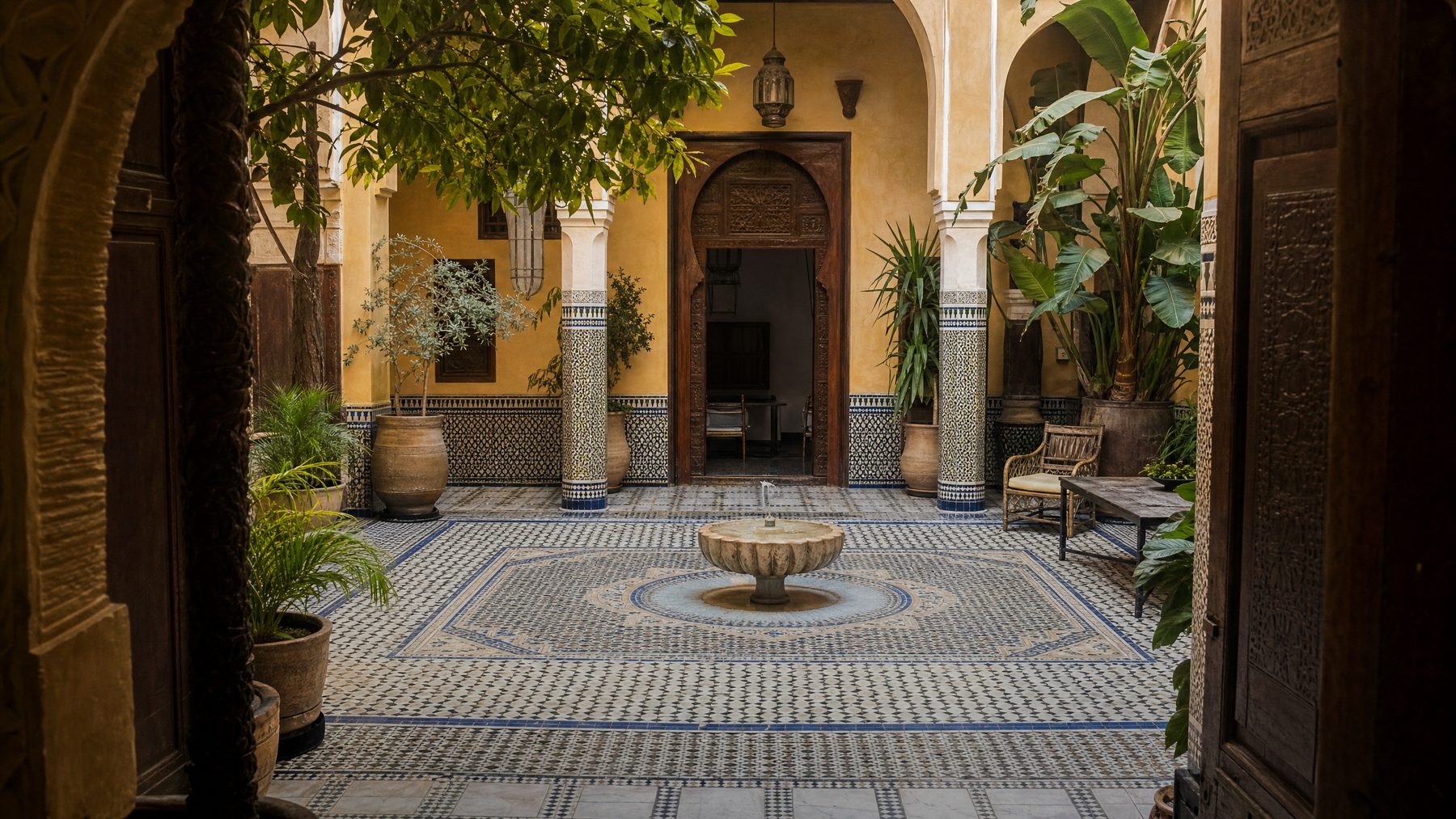
- ›Riad conversions: A specific Marrakech opportunity — traditional courtyard houses in the Medina, often with significant renovation potential, ranging from MAD 1.5 million (~USD 150K) for smaller properties to MAD 15 million+ (~USD 1.5M) for prestige conversions.
- ›Earthquake risk: Morocco is in a moderately seismic zone — the September 2023 Marrakech earthquake (magnitude 6.8) caused significant damage in some High Atlas villages. Modern construction in major cities is built to seismic codes.
The practical approach is to rent in the first phase, particularly in Marrakech where the Medina is complex and condition assessment requires local expertise. Property purchase becomes the natural second step once familiarity with neighbourhoods, building quality, and renovation costs is established.
Transaction cost table (Morocco):
| Cost item | Typical amount | Notes |
|---|---|---|
| Stamp duty | 4–6% | Tiered by purchase price |
| Notary fees | ~1% | Plus disbursements |
| Legal fees | 1–1.5% | Buyer's solicitor |
| Real estate agent | 2–3% | Typically split |
| Annual property tax (taxe d'habitation) | Modest | On principal residence |
| Capital gains on resale (primary residence held 6+ years) | 0% | Full exemption |
| Capital gains on resale (other) | 20% | Of profit; minimum 3% of sale price |
XVIII.
Retiring in Morocco
Morocco is one of the most genuinely retiree-friendly jurisdictions in the world from 2026, with the combination of the 80% pension abatement, the 1 January 2026 total exemption for basic-pension retirees, the 40%–60% lower cost of living, the proximity to Europe, and the established retiree communities in Marrakech, Tangier, Essaouira, Rabat, and Agadir.
The principal retirement pathway is the Carte de Séjour pour Inactif (Retiree Residence Card):
- ›Sufficient foreign-source income/pension to support oneself in Morocco
- ›Indicative income threshold approximately €1,500/month
- ›Documentation of pension entitlement, bank statements, foreign address surrender
- ›Initially 1-year card, renewable
- ›After several renewals, 10-year residence card available
For retirees with foreign pension income, the tax treatment is:
- ›Standard pension repatriation under 80% abatement: Effective rate ~5%–8% on most pension income.
- ›From 1 January 2026 — basic pensions and life annuities exempt: 0% effective rate; no tax return filing required. This applies if the retiree's income consists solely of qualifying basic pensions; complementary pension regime payments remain subject to ordinary tax (with 80% abatement).
Pension-source country considerations:
- ›French Retraite (CARSAT, AGIRC-ARRCO): Under the France-Morocco DTA, generally taxable in residence country (Morocco) — meaning French retirees can structure to receive their full French pension tax-free in France and subject only to Moroccan tax (7% effective from abatement, or 0% from 2026 for basic pensions). The French-Moroccan DTA framework is the most favourable retirement-tax pathway anywhere in the French-speaking world.
- ›Belgian retirement pensions: Belgium-Morocco DTA standard rules; structured properly, similar favourable outcome.
- ›Spanish, Italian, Dutch, German retirement pensions: Treaty-specific allocation under each respective DTA.
- ›UK state pension and most UK private pensions: UK-Morocco DTA standard rules; UK-source taxation continues + 80% Moroccan abatement.
- ›US Social Security: US citizens taxed on worldwide income regardless; FEIE not applicable to pensions; FTC available against US tax (limited because Moroccan tax is so low).
- ›Climate: Mediterranean / North African — Atlantic coast (Rabat, Casablanca, Essaouira, Agadir) is mild year-round (12–28°C); inland (Marrakech, Fez, Meknes) is hotter in summer (35–42°C, occasionally higher) and cooler in winter (5–18°C); Atlas mountains have seasonal snow. Moroccan winters are particularly attractive for European retirees seeking warm weather without the tropical extremes.
- ›Healthcare: Private healthcare in major cities is good — European-trained specialists at significantly lower cost than Europe. For complex specialist treatment, retirees typically travel to France, Spain, or Switzerland (1.5–4 hours direct). Comprehensive international health insurance USD 800–2,500 per individual annually.
- ›Cost of living: see Section XVI. A comfortable single retiree budget runs USD 1,200–2,200/month; a couple USD 2,000–4,000/month including private healthcare and travel. Significantly cheaper than France, Spain, Italy, or any Western European retirement alternative.
- ›Community: Morocco has well-established French (largest), Belgian, Spanish, British, German, and Italian retirement communities. Marrakech (Palmeraie, Hivernage, Gueliz, the Medina riads), Tangier, Essaouira, Rabat, and Agadir are the principal retirement hubs. The MRE (Marocains Résidents à l'Étranger) returning retirees — approximately 20,000 per year — represent a distinct community alongside foreign retirees.
XIX.
US Citizens: What You Need to Know
US citizens and long-term green card holders are taxed by the United States on their worldwide income, regardless of where they live. Relocating to Morocco does not end US tax obligations.
Key considerations for US citizens in Morocco:
- ›Foreign Earned Income Exclusion (FEIE): US citizens who qualify as bona fide residents of Morocco can exclude up to US$132,900 of foreign earned income from US federal income tax for 2026. Applies to wages and self-employment — not passive income such as pensions.
- ›Foreign Tax Credit: Moroccan income tax paid (effective ~7% on pensions under 80% abatement, or 0% under 2026 basic-pension exemption) provides limited offset against US tax. For US retirees on the 2026 basic-pension exemption with 0% Moroccan tax, there is no Moroccan tax to credit against — meaning US citizens pay full US tax on their pension income with no Moroccan offset.
- ›US-Morocco DTA (1977): In force, providing reduced withholding rates and tie-breaker rules. Contains a savings clause preserving US worldwide taxation of US citizens.
- ›FBAR (FinCEN Form 114): US persons with Moroccan bank accounts exceeding US$10,000 must file FBAR annually.
- ›FATCA (Form 8938): Morocco has FATCA cooperation. US persons must file Form 8938.
- ›PFIC: US citizens holding non-US mutual funds, ETFs, or pooled investments face the punitive PFIC regime.
- ›CFC and Subpart F: US citizens holding majority stakes in Moroccan companies face CFC reporting and Subpart F passive-income inclusion. Form 5471 required.
- ›Self-Employment Tax: There IS a US-Morocco Totalization Agreement (signed 2017, in force) — providing relief from double social security contributions.
- ݤ877A Expatriation: US citizens who renounce citizenship and meet "covered expatriate" tests face mark-to-market deemed sale of worldwide assets.
- ›OBBBA (One Big Beautiful Bill Act, July 2025): Made TCJA brackets permanent; raised QSBS Section 1202 cap to US$15M; raised federal estate tax exemption permanently to US$15M from 2026.
For US citizens, Morocco provides genuine cost-of-living and lifestyle advantages combined with the existing US-Morocco DTA framework. The Totalization Agreement eliminates double SS contributions. The FTC offset against Moroccan pension tax is limited (because Moroccan tax is so low) — but US citizens still pay full US tax on pensions. Morocco is not a US tax-elimination tool for retirement-pension purposes; it is a lifestyle and cost-of-living jurisdiction.
US citizens considering Morocco should work with a qualified US international tax adviser alongside local Moroccan counsel.
XX.
Correct Preparation
Before your move to Morocco, a number of important questions need to be answered.
Do I need to give up my home country property?
To genuinely shift your centre of life to Morocco, surrendering your principal residence in your home country is generally non-negotiable for tax-residence purposes. For French nationals, the established CARSAT/AGIRC-ARRCO framework supports clean retirement-relocation. For German nationals, §1 EStG Wohnsitz must be cleared.
Should I pursue Carte de Séjour pour Inactif or Investisseur or CFC employment?
This depends on your profile. Carte de Séjour pour Inactif (retiree) is the standard pathway for retirees with foreign-source pension income — the framework that enables the 80% pension abatement and 2026 total exemption. Carte de Séjour pour Investisseur is for clients making significant Moroccan business investments. CFC employment route is for HNW executives in financial services, fintech, professional services who can qualify for Casablanca Finance City employment with 20% flat tax for up to 10 years.
Should I plan around the 2026 basic-pension exemption?
If your retirement income consists solely of basic pensions and life annuities under qualifying basic pension regimes, the 1 January 2026 total exemption applies — meaning 0% Moroccan tax and no requirement to file an annual Moroccan tax return. This is genuinely a major positive change. However: complementary pension regime payments (e.g. AGIRC-ARRCO supplementary in France, occupational private pensions, employer-sponsored top-up pensions) remain subject to ordinary tax (with 80% abatement). Many retirees have mixed pension structures — careful classification matters.
How does the 80% abatement operate practically?
The pension must be received from a foreign source, then transferred to a Moroccan bank account in non-convertible Moroccan dirhams. The 80% reduction applies to the Moroccan IIT calculated on this repatriated pension. Documentation: foreign pension entitlement letter, bank transfer records, annual tax return (Articles 76 of the General Tax Code). The framework is well-established and broadly used.
How quickly can I open a bank account?
Moroccan bank account opening typically takes 2–4 weeks at major banks (Attijariwafa, BMCE, Société Générale, BNP Paribas Maroc). Multi-currency accounts (MAD, EUR, USD, GBP) are available, though MAD is non-convertible and currency conversion is regulated.
What happens to my existing company?
A relocation abroad has consequences for your existing business. For French nationals, the French exit-tax framework applies above €800K. For German nationals, §6 AStG. Discuss with your adviser before moving.
Do I need to set up a Moroccan company?
Generally NO for retirees. Carte de Séjour pour Inactif does not require any Moroccan business setup. For Investisseur or CFC routes, yes. For pure tax-residence purposes, no.
How much money should I transfer in advance?
You can transfer funds to a Moroccan bank account, subject to bank source-of-funds documentation. Pre-residency transfers (before establishing Moroccan tax residence) are not Moroccan-resident assessable income.
What is the language situation?
The official languages are Arabic and Berber/Tamazight, but French is the de facto language of business, banking, government administration, professions, and most expat life. English is increasingly common but not universal. For HNW clients without French, a steeper learning curve applies.
Deregistering from your home country
Standard deregistration with the residents' register and tax authority. French departers via INSEE address change and administrative declarations. German Abmeldung at the Bürgeramt. UK SA109 Self Assessment Residence form. For US citizens, no deregistration is possible — citizenship-based taxation continues.
XXI.
Automatic Exchange of Information (OECD CRS)
Morocco participates in the OECD Common Reporting Standard (CRS), with automatic exchange of financial account information since 2018. The country was removed from the EU AML high-risk third countries list and the FATF grey list following enhanced compliance reforms.
In practical terms: Moroccan financial institutions identify account holders and report account details to the Direction Générale des Impôts (DGI), which automatically shares this information with the tax authority of the account holder's country of tax residence on an annual basis.
The key point is that CRS follows tax residence, not nationality or citizenship. A Moroccan tax resident (whether under Carte de Séjour pour Inactif, CFC employment, or other pathway) is reported under Moroccan residence — not under the country of the original passport.
Morocco is also a signatory to the OECD Multilateral Convention on Mutual Administrative Assistance in Tax Matters and the Multilateral Instrument (MLI). The country has implemented BEPS minimum standards. Beneficial ownership transparency has been substantially upgraded.
US citizens are different. Affected by FATCA instead. Moroccan financial institutions identify US persons under FATCA procedures and report through a Model 1 IGA framework. US citizens with Moroccan accounts must additionally file FBAR and Form 8938 directly with US authorities.
Key point: CRS and FATCA are not problems for those who have relocated correctly. They are problems for those who have not.
XXII.
Further Relocation Formalities
Upon establishing residence in Morocco:
- ›Carte de Séjour registration: Submit Carte de Séjour application at the local Préfecture or Wilaya within 3 months of arrival. Standard documentation: passport, proof of foreign income/pension, proof of Moroccan address, criminal record check, medical certificate, photographs.
- ›Tax registration: Identifiant Fiscal (Tax Identification Number) issued by the Direction Générale des Impôts (DGI) upon establishment of tax residence. Required for the 80% pension abatement framework and for any Moroccan tax filings.
- ›Driving licences: International driving permits valid for short stays. After residence is established, exchange for a Moroccan permit (Permis de Conduire) — exchangeable from EU/EEA, US, Canada, Australia, and many other countries without retesting. Morocco drives on the right.
- ›Health insurance: Comprehensive international cover essential for HNW retirees. Bupa Global, Cigna Global, AXA Global Healthcare, Allianz Care — premiums USD 800–2,500+ per individual annually. Morocco's national AMO (Assurance Maladie Obligatoire) framework is available to legal residents but is generally supplemented with private cover.
- ›Importing personal effects: Household goods imported within 6 months of taking up residence may qualify for relief from import duty under specific frameworks. Cars from EU can be imported with appropriate customs documentation.
- ›Schools: International schools include Lycée Lyautey (French, in Casablanca, Rabat, Tangier, Marrakech, and Agadir), American School of Marrakech, British International School of Casablanca, Casablanca American School, Lycée Français International. Annual fees USD 7,000–18,000+ per child.
- ›Annual compliance calendar: From 1 January 2026, retirees on the basic-pension total exemption are NOT required to file annual tax returns. For others, the annual tax return (Déclaration Annuelle des Revenus Globaux) is filed by 31 March. Carte de Séjour renewals on the 1-year, 5-year, and 10-year cycles. Health insurance renewals.
XXIII.
How We Help With Your Move to Morocco
We offer comprehensive tax and legal support for your relocation to Morocco. We follow a proven process — and where Morocco requires specialist local input, we coordinate with our network of Moroccan-licensed lawyers, accountants, real estate professionals, and bankers, while remaining responsible for overall coordination.
The results speak for themselves: we have helped over 100 entrepreneurs and business owners significantly reduce their tax burden through carefully planned relocations. Legally sound structuring within the framework of international tax law is our highest priority.
Our services typically include:
- →Tax advice on the consequences of relocating abroad: analysis, projections, assessments
- →80% pension abatement structuring — confirming pension qualification, repatriation framework, MAD non-convertible transfer mechanics
- →2026 total exemption planning — confirming basic-pension qualification, complementary pension classification, no-return-required status
- →Permit pathway selection: Carte de Séjour pour Inactif (retiree) vs Investisseur vs Salarié (employment) vs CFC employment route
- →Casablanca Finance City (CFC) framework analysis for HNW executives — eligibility, 20% flat-rate qualification, 10-year planning horizon
- →Home-country departure tax analysis BEFORE relying on Morocco residence — particularly for French (exit tax >€800K), German (§6 AStG, §2 AStG analysis), UK (SRT), and US citizens
- →Real estate strategy: Marrakech / Casablanca / Tangier / Essaouira / Rabat market guidance; riad conversion analysis; Carte de Séjour property support
- →Banking strategy: local Moroccan accounts (Attijariwafa, BNP Paribas Maroc, Société Générale Maroc) for pension repatriation + international booking centre; source-of-wealth documentation file
- →Coordination with home-country tax adviser, US international tax counsel (where relevant), and the Direction Générale des Impôts for ongoing annual compliance
- →Schooling, healthcare, insurance, and lifestyle coordination for relocating families
- →Annual compliance management: tax filings (where required), Carte de Séjour renewals, health insurance renewals
Our fees are generally billed on a time basis; fixed prices apply for certain services such as Carte de Séjour application coordination. As a first step, we recommend booking a consultation to discuss your plans — by phone, Zoom, or Signal. Together we find the best approach and establish contact with our local partners. As project coordinator, we keep all the threads in hand that are necessary for the successful implementation of your plans.
