Considering a move to El Salvador?
Book a Strategy SessionContents
- 1. El Salvador: Country Overview
- 2. Putting El Salvador on the Map
- 3. What Others Say About El Salvador
- 4. Tax Benefits: What El Salvador Has to Offer
- 5. Tax Rates at a Glance
- 6. Tax Residency: What Triggers It
- 7. Double Tax Treaties
- 8. Avoid Remaining Tax Resident at Home
- 9. Tax Considerations When Leaving Your Home Country
- 10. Company Setup & Corporate Tax
- 11. Who Should (and Shouldn't) Move to El Salvador
- 12. Visas and Residence Permits
- 13. Path to Citizenship
- 14. Banking in El Salvador
- 15. What Makes El Salvador Genuinely Attractive
- 16. Cost of Living in El Salvador
- 17. Buying Real Estate in El Salvador
- 18. Retiring in El Salvador
- 19. US Citizens: What You Need to Know
- 20. Correct Preparation
- 21. Automatic Exchange of Information (OECD CRS)
- 22. Further Relocation Formalities
- 23. How We Help With Your Move to El Salvador
I.
El Salvador: Country Overview
El Salvador is the smallest and most densely populated country in Central America, with a population of approximately 6.5 million people and a land area of just 21,000 square kilometres. It sits on the Pacific coast, bordered by Guatemala to the northwest and Honduras to the north and east. Despite its size, it has become one of the most talked-about tax and crypto jurisdictions in the world since 2021.
The country operates a strict territorial tax system. Only income derived from Salvadoran sources is subject to Salvadoran income tax. Foreign-source income — including dividends, interest, capital gains, rental income, and business profits from outside El Salvador — is completely exempt from Salvadoran income tax, regardless of whether it is remitted to El Salvador. This is one of the cleanest territorial systems in the world, with no remittance condition and no time limit on the exemption.
In September 2021, El Salvador became the first country in the world to adopt Bitcoin as legal tender under the Bitcoin Law. While the mandatory acceptance requirement was later relaxed under IMF pressure in 2024, Bitcoin remains legal tender and the government continues to hold Bitcoin reserves. Gains from Bitcoin transactions are not subject to tax in El Salvador. This makes the country uniquely attractive for crypto entrepreneurs and investors who want to hold, trade, and realise Bitcoin gains with complete legal clarity and zero tax liability.
The economy is fully dollarised — El Salvador adopted the US dollar as its official currency in 2001 and abolished the colón. This eliminates currency risk for US-based investors and simplifies financial planning considerably. The country is a member of CAFTA-DR (the Central America–Dominican Republic Free Trade Agreement with the United States), which provides preferential trade access to the US market.
Under President Nayib Bukele, who took office in 2019, El Salvador has undergone a significant transformation. The government's crackdown on gang activity beginning in 2022 reduced the homicide rate from one of the highest in the world to among the lowest in Latin America within two years. The security improvement has been dramatic and has fundamentally changed the country's attractiveness as a destination for international residents.
What to be aware of: El Salvador's political environment is evolving rapidly. The concentration of power under President Bukele, the weakening of judicial independence, and the country's relationship with the IMF are all factors that sophisticated investors should monitor. The tax and residency framework is attractive, but the rule of law environment is less predictable than in, say, Andorra or the Cayman Islands. This is a country for those who are comfortable with a degree of political risk in exchange for exceptional tax efficiency and a unique crypto environment.
II.
Putting El Salvador on the Map
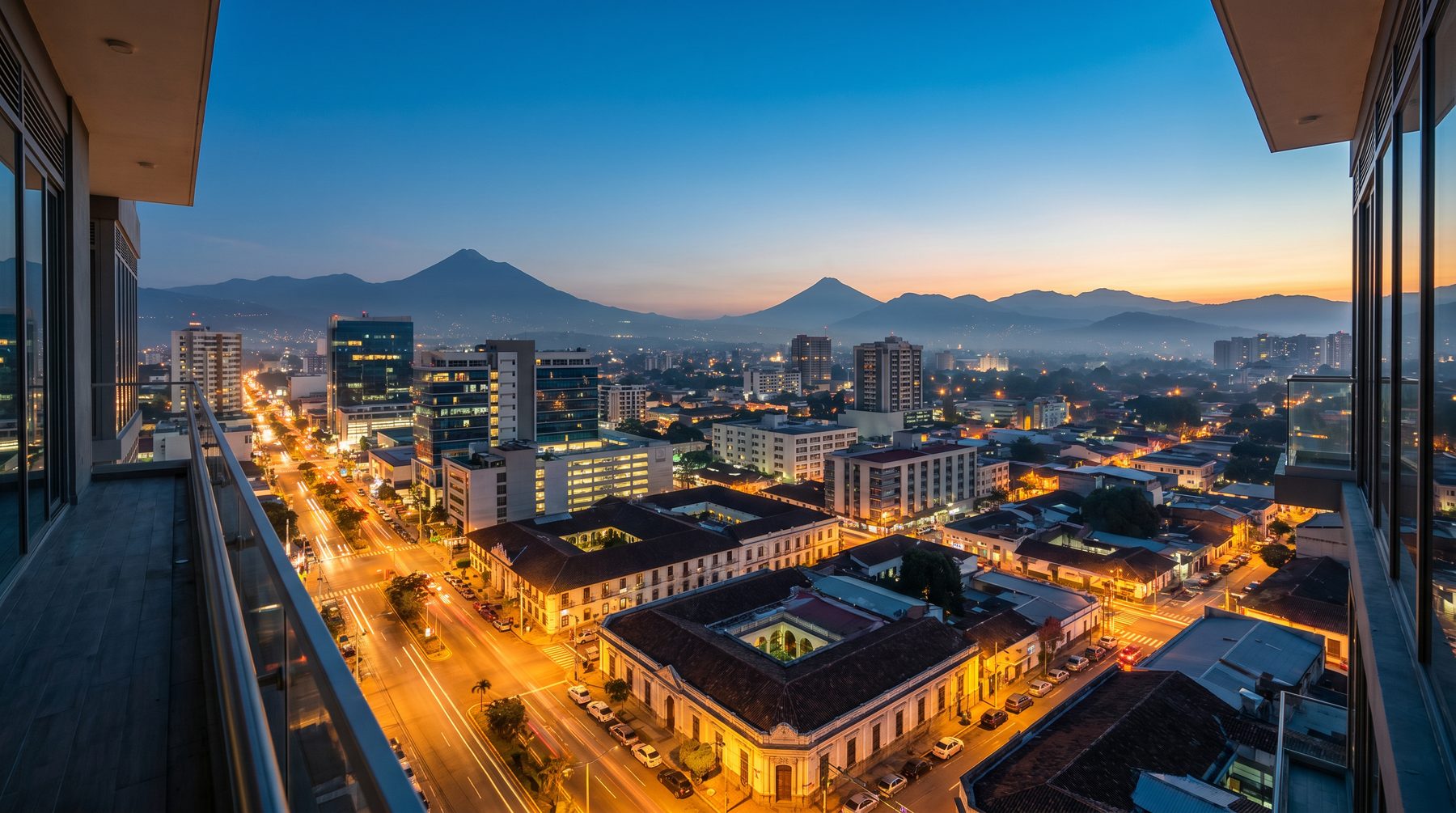
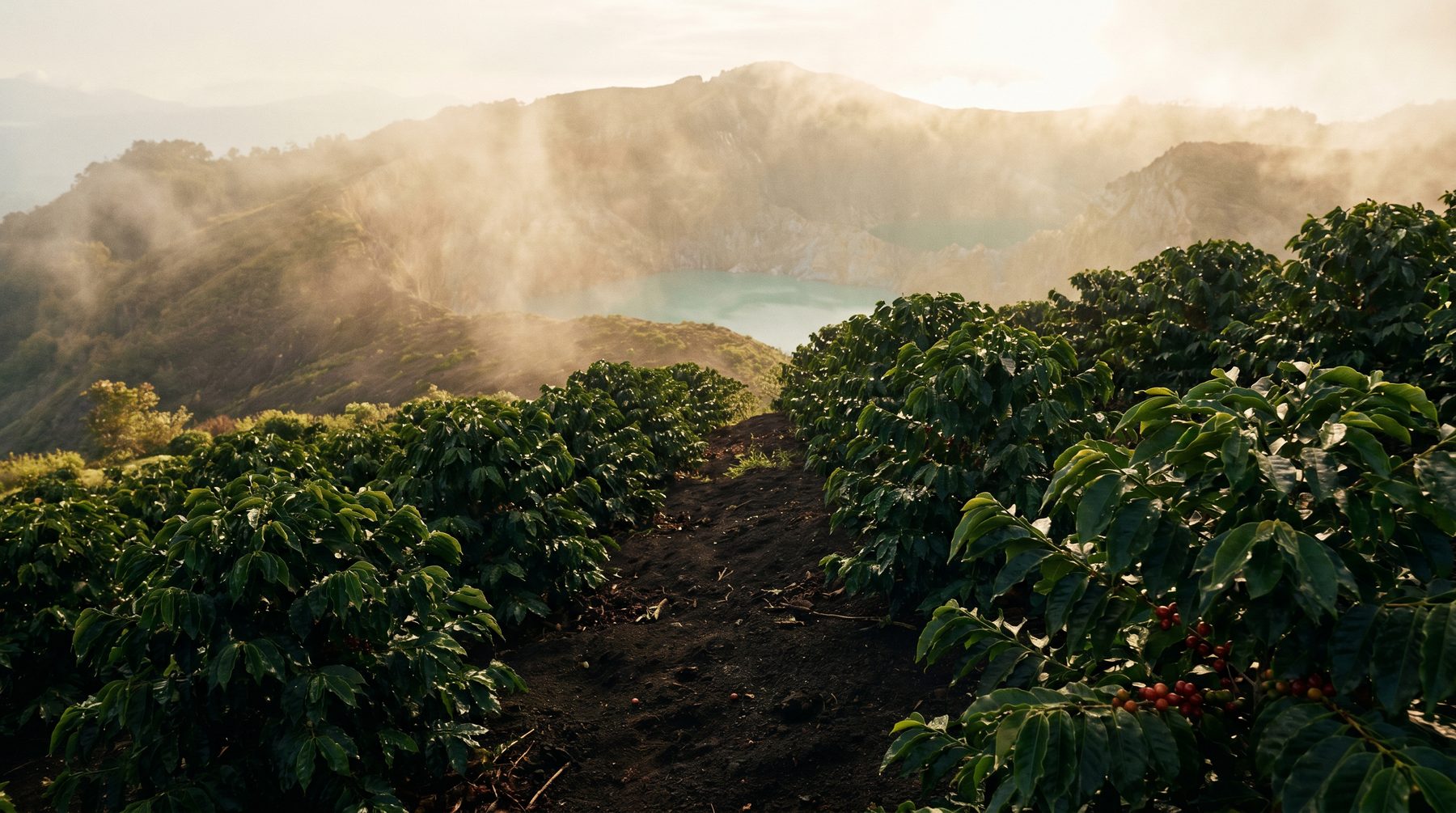
El Salvador is located in Central America, on the Pacific coast. It is the only Central American country without a Caribbean coastline. The country is volcanic — there are over 20 volcanoes, two of which are still active — and the landscape is dramatic, ranging from Pacific beaches to volcanic highlands and coffee-growing mountains in the interior.
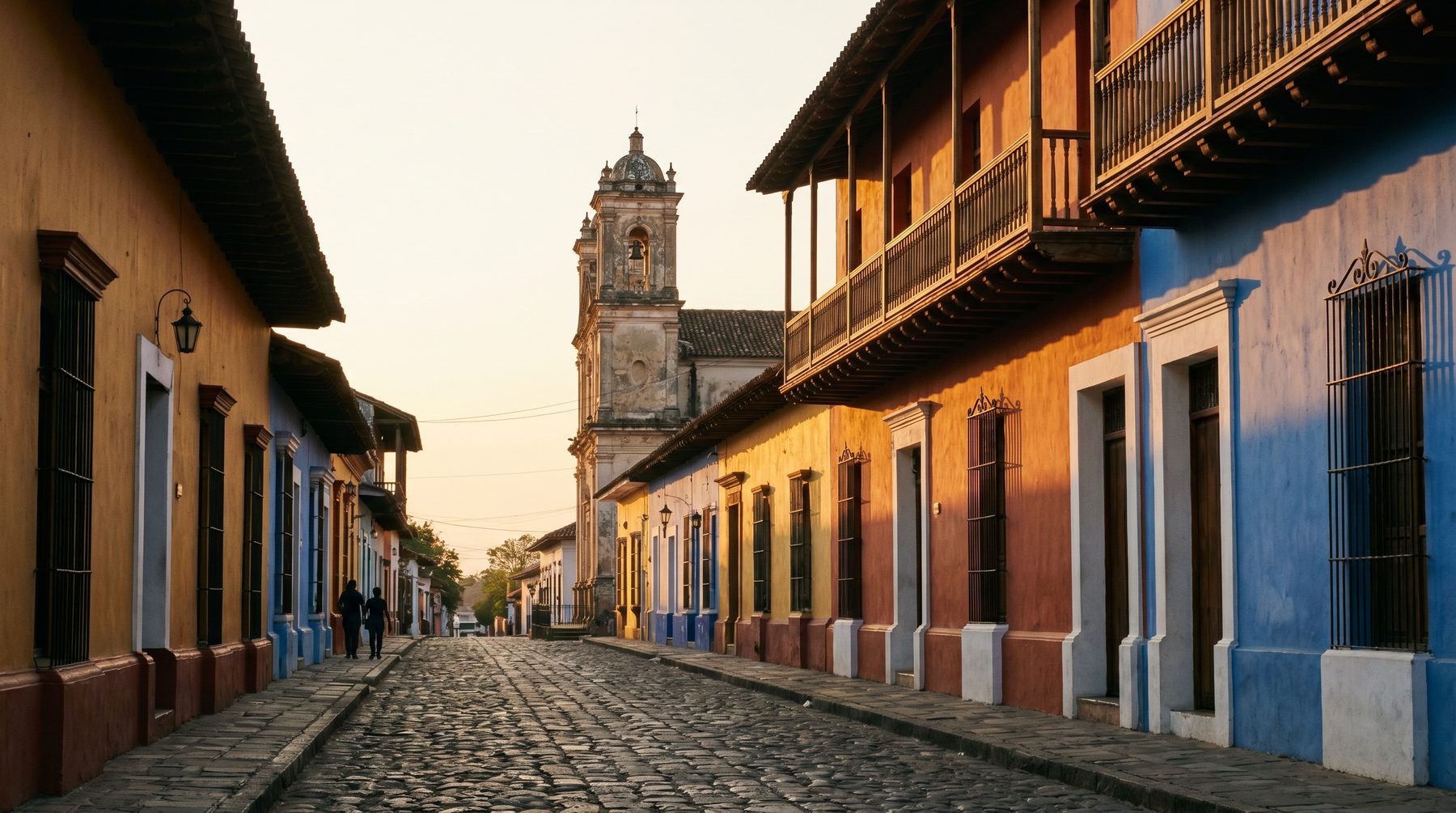
The capital San Salvador is the largest city and the commercial and political centre. It sits at an altitude of approximately 680 metres, which gives it a more temperate climate than the coastal lowlands. The city has a growing expat community, good restaurants, and improving infrastructure. Santa Ana, the country's second city, is known for its colonial architecture and proximity to the Santa Ana volcano. San Miguel in the east is the commercial hub of the eastern region.
El Salvador has one international airport: Monseñor Óscar Arnulfo Romero International Airport, located 40 kilometres south of San Salvador near the city of San Luis Talpa. Direct flights connect to Miami, New York, Los Angeles, Houston, Dallas, Mexico City, and other regional hubs. Travel time to Miami is approximately 2.5 hours; to New York, approximately 5 hours. This proximity to the United States is a significant advantage for US-based entrepreneurs and investors.
The government has announced plans for Bitcoin City — a planned city near the Conchagua volcano in the east of the country, designed to be powered by geothermal energy and to serve as a hub for Bitcoin and crypto businesses. While the project remains in early stages, it signals the government's long-term commitment to positioning El Salvador as a crypto-friendly jurisdiction and has attracted significant attention from the global crypto community.
The Pacific coast offers excellent surf — El Salvador is one of the world's premier surfing destinations, with breaks at El Tunco, El Zonte (known as "Bitcoin Beach"), and Punta Roca. The surf community has been one of the early adopters of Bitcoin in the country, and El Zonte has become a globally recognised example of a Bitcoin circular economy, where local businesses and residents transact primarily in Bitcoin. This community has attracted a growing number of crypto entrepreneurs and digital nomads.
The Ruta de las Flores in the west of the country is a scenic route through coffee-growing highlands, colonial towns, and flower markets. The region around Juayúa, Apaneca, and Ataco is cooler and more temperate than the coast, and has become popular with expats seeking a quieter lifestyle away from the capital.

III.
What Others Say About El Salvador
"El Salvador made Bitcoin legal tender and then built the infrastructure to back it up. For crypto entrepreneurs, there is no more interesting jurisdiction in the world right now."
"The territorial tax system means my foreign income is simply not taxed here. Combined with the low cost of living and the improving security situation, it's a genuinely compelling package."
"People focus on Bitcoin City. But the real story is the territorial tax system, the dollarised economy, and the fact that you can get permanent residency in 45 days with a $150,000 investment."
IV.
Tax Benefits: What El Salvador Has to Offer
El Salvador combines a pure territorial tax system (residents pay tax only on Salvadoran-source income) with the world's only legal-tender Bitcoin regime and a 0% capital gains tax on Bitcoin transactions. The Bitcoin Law was amended in February 2025 under a $1.4 billion IMF loan deal — mandatory merchant acceptance and the option to pay taxes in Bitcoin were removed, but Bitcoin remains legal tender and the capital gains exemption is fully preserved. For foreign investors, transferring at least 3 BTC to an El Salvador-registered entity unlocks a CNAD-issued exemption certificate. The country also offers 0% corporate income tax for CNAD-licensed crypto businesses (BSP for Bitcoin-only; DASP for other digital assets) and the LEAD programme for international tech services.
- ›Territorial taxation — only Salvadoran-source income is taxed; foreign-source income (dividends, interest, capital gains, foreign rentals, foreign business profits) is fully exempt for residents and non-residents.
- ›0% capital gains tax on Bitcoin — preserved through the 2025 IMF-driven Bitcoin Law amendments. This applies to all Bitcoin sales, swaps, and conversions, with no minimum holding period.
- ›Foreign investor exemption with ≥3 BTC — foreign nationals who transfer at least 3 Bitcoin to an El Salvador-registered entity receive a CNAD-issued exemption certificate confirming the tax-free status; this can be presented to banks and counterparties for cross-border transactions.
- ›0% corporate tax for CNAD-licensed crypto businesses — companies operating under a BSP (Bitcoin Service Provider) or DASP (Digital Asset Service Provider) license are exempt from corporate income tax, services transfer tax, municipal taxes, and VAT on Bitcoin transactions.
- ›LEAD programme for international tech services — qualifying tech-sector companies benefit from various tax exemptions designed to attract software development, data services, and technology operations.
- ›USD as official currency since 2001; Bitcoin as second legal tender — eliminates currency risk for USD-denominated income; Bitcoin acceptance is now voluntary for merchants but the legal tender status remains.
- ›No wealth tax, no general inheritance tax, no general property tax — El Salvador imposes none of these at the federal level; some minor municipal property taxes may apply.
- ›Bitcoin City — planned tax-free zone — President Bukele's flagship Bitcoin City project, near the Conchagua volcano with geothermal energy, has its legal framework approved and promises 0% income, property, sales, and emissions tax. Construction has not yet begun; investors should track progress separately.
- ›Standard income/corporate framework remains — for non-Bitcoin and non-tech sector income, El Salvador retains a 0%–30% progressive personal income tax, 30% standard corporate tax, and 13% VAT. The country is genuinely tax-favourable for crypto and tech; less so for traditional employment income earned locally.
V.
Tax Rates at a Glance
The most important tax rates in El Salvador are as follows. Note that these have been simplified and should be used as general guidance only.
Cryptocurrency and Crypto Assets
El Salvador is the most crypto-friendly tax jurisdiction in the world. Bitcoin is legal tender under the Bitcoin Law of 2021. Gains from Bitcoin transactions — whether from trading, mining, staking, or any other activity — are not subject to tax in El Salvador. This applies to both individuals and companies. The government has explicitly confirmed that Bitcoin gains are tax-free, and there is no ambiguity in the law on this point. For other cryptocurrencies (altcoins), the position is less explicit, but the territorial tax system means that gains from foreign-source crypto activities are also generally not subject to Salvadoran tax. El Salvador is the only jurisdiction in the world where you can hold, trade, and realise Bitcoin gains with complete legal clarity and zero tax liability.
VI.
Tax Residency: What Triggers It
Under Salvadoran tax law, you are considered a tax resident if you spend more than 200 days in El Salvador in a tax year (January to December), or if you have your habitual residence in El Salvador. The 200-day threshold is notably higher than the 183-day rule used by most countries, which gives more flexibility for those who split their time between El Salvador and other jurisdictions.
Once you are a tax resident of El Salvador, the territorial system applies: only Salvadoran-source income is taxable. There is no distinction between domiciled and non-domiciled residents — the territorial exemption applies to all residents, regardless of their domicile status. This is simpler and more generous than the UK or Jamaican non-domicile regimes, which impose conditions and time limits on the remittance basis.
For those who obtain residency through the Freedom Visa (investment residency), tax residency follows automatically once you spend more than 200 days in El Salvador. However, obtaining the Freedom Visa does not in itself make you a tax resident — you must actually spend the required time in the country. This distinction is important for those who want to obtain residency as a legal status without immediately triggering tax residency.
El Salvador does not have a formal tax residency certificate process comparable to those in the UAE or Panama. If you need to demonstrate Salvadoran tax residency to your home country's tax authority, you will need to rely on evidence of physical presence (entry and exit stamps, utility bills, rental agreements) and a letter from the Salvadoran tax authority (DGII — Dirección General de Impuestos Internos). We can assist with this process.
The absence of a DTA between El Salvador and most European countries means that dual residency situations are resolved entirely by domestic law. If you are a tax resident of both El Salvador and, say, Germany, there is no treaty tie-breaker to resolve the conflict — both countries may claim the right to tax your worldwide income. This makes proper planning and genuine physical relocation essential for European residents considering El Salvador.
VII.
Double Tax Treaties
El Salvador has a very limited double tax treaty network. As of 2026, El Salvador has signed DTAs with only a handful of countries, primarily within the CAFTA-DR framework and with a small number of Latin American neighbours. There is no DTA with the United States, the United Kingdom, Germany, France, or most European countries.
The absence of a broad DTA network has two practical consequences for those moving to El Salvador from Europe or North America. First, withholding taxes on dividends, interest, and royalties paid from other countries to Salvadoran residents may not be reduced — the full domestic withholding rate of the source country applies. For example, German dividends paid to a Salvadoran resident will be subject to the full 25% German withholding tax, rather than the reduced treaty rate of 15% that would apply if El Salvador had a DTA with Germany.
Second, there is no treaty tie-breaker mechanism to resolve dual residency situations with most countries. If you are a tax resident of both El Salvador and your home country, the question of which country has the primary right to tax your income must be resolved under domestic law alone — and most European countries' domestic law is aggressive in asserting continued residency for those who have not genuinely left.
El Salvador is a member of CAFTA-DR, which provides for preferential trade and investment treatment with the United States and other Central American countries. While this is primarily a trade agreement rather than a tax treaty, it provides a framework for economic cooperation that is relevant for businesses operating across the region. El Salvador is also a member of the Central American Common Market (CACM), which facilitates trade within the region.
The limited DTA network is one of El Salvador's most significant weaknesses as a tax jurisdiction. It is manageable for those with primarily foreign-source income (which is exempt under the territorial system regardless of withholding taxes), but it is a real constraint for those who need to receive income from European or North American sources with reduced withholding tax.
VIII.
Avoid Remaining Tax Resident at Home
Moving to El Salvador does not automatically end your tax residency in your home country. The absence of a DTA between El Salvador and most European countries means that dual residency situations are resolved entirely by domestic law — and most European countries' domestic law is aggressive in asserting continued residency for those who have not genuinely left.
A sham relocation — where you claim Salvadoran residency on paper but continue to live, work, and manage your affairs from your home country — is a serious risk. Tax authorities in Germany, the UK, France, and Australia have become increasingly sophisticated at identifying taxpayers who claim to have left but have not genuinely done so. The consequences of a failed relocation include back taxes, interest, and substantial penalties.
The key factors that tax authorities examine include: where you sleep most nights, where your family lives, where your economic interests are centred, where you have your primary bank account, where you are registered for social security and health insurance, and where you maintain a permanent home available for your use. If the majority of these point to your home country, you are likely still a tax resident there — regardless of what your Salvadoran paperwork says.
Given the absence of DTAs with most European countries, El Salvador residents who retain strong ties to their home country face a higher risk of dual residency than residents of countries with broader treaty networks. Proper planning — including genuine physical relocation, deregistration from home country systems, and restructuring of business interests — is essential. We have helped many clients navigate this process successfully.
The 200-day rule in El Salvador (rather than the standard 183-day rule) gives you more flexibility to spend time in your home country without triggering Salvadoran tax residency. But this flexibility cuts both ways — it also means you need to be more careful about how much time you spend in El Salvador to ensure you do trigger tax residency if that is your goal.
IX.
Tax Considerations When Leaving Your Home Country
Before you relocate to El Salvador, you need to understand what tax consequences arise in your current country of residence at the point of departure. These rules vary significantly by country and must be assessed individually. Many countries impose an exit tax or deemed disposal charge when a tax resident leaves — taxing you as if you had sold everything on the day you departed.
- ›Germany — Exit tax under §6 AStG on shareholdings of 1%+. Ten-year look-back period can apply. Crypto holdings may also be subject to exit taxation depending on the structure.
- ›United States — Expatriation tax under IRC §877A for covered expatriates (net worth over USD 2 million or average annual net income tax over USD 190,000). Deemed sale of all worldwide assets at FMV on departure date.
- ›France — Exit tax on unrealised gains on securities and company rights above €800,000. Deferral available in some EU/EEA cases but not for El Salvador.
- ›Netherlands — Deemed disposal on substantial shareholdings (5%+) at emigration. Deferral available in some cases.
- ›Australia — Deemed disposal of most assets at market value on the date of ceasing Australian tax residency. CGT event I1.
- ›Canada — Departure tax deems most property disposed of at FMV on emigration date. Principal residence and registered accounts are generally exempt.
A tax consultation before you move is not optional — it is essential. The cost of getting this wrong is almost always greater than the cost of getting proper advice upfront. We have helped clients from Germany, the UK, France, the Netherlands, Australia, and Canada navigate the exit tax process successfully.
X.
Company Setup & Corporate Tax
The standard corporate income tax rate in El Salvador is 30%. However, the territorial system applies to companies as well as individuals — a Salvadoran company is only taxed on its Salvadoran-source income. Foreign-source income earned by a Salvadoran company is not subject to Salvadoran corporate tax. This makes El Salvador an interesting jurisdiction for holding companies that derive income from foreign sources.
El Salvador's Free Trade Zone (FTZ) regime is one of the most generous in Central America. Companies operating within designated FTZs benefit from a 20-year exemption from corporate income tax, import duty exemptions, VAT exemptions on inputs, and municipal tax exemptions. After the initial 20-year period, a reduced rate of 15% applies for a further 10 years. The FTZ regime is available to manufacturing, logistics, and service companies that meet certain employment and investment thresholds.
Setting up a Salvadoran company (Sociedad Anónima or S.A.) is relatively straightforward. The process involves registration with the National Registry Centre (CNR) and the tax authority (DGII). Minimum share capital for an S.A. is USD 2,000. The process typically takes 2–4 weeks with the assistance of a local lawyer. Annual compliance requirements include filing an annual tax return, maintaining accounting records, and holding annual shareholder meetings.
For crypto and Bitcoin businesses, El Salvador offers a uniquely supportive regulatory environment. The Bitcoin Law provides legal clarity for Bitcoin transactions, and the government has been actively courting crypto businesses to establish operations in the country. The Comisión Nacional de Activos Digitales (CNAD) regulates digital asset service providers and has been working to create a clear regulatory framework for crypto businesses. Several international crypto exchanges and Bitcoin companies have established a presence in El Salvador as a result.
The Ley de Creación de Activos Digitales (Digital Assets Law) provides a framework for the issuance and trading of digital assets beyond Bitcoin. This law is intended to attract crypto businesses and fintech companies to El Salvador and is part of the government's broader strategy to position the country as a global hub for the digital economy.
Is a local company always the right answer?
Not necessarily. For many internationally mobile entrepreneurs, the local company is not the most efficient operating vehicle. A local company is useful when you have local staff, local premises, local customers, or regulated local activity. If your business earns income internationally, an international structure may be cleaner.
- ›US LLC — often suitable for non-US owners with non-US income who need simple administration and good payment access.
- ›Singapore company — useful where banking reputation, Asian counterparties, and strong legal infrastructure matter.
- ›UAE company — useful for zero-tax or low-tax operating structures when substance, management, and banking can be handled properly.
Learn more about our company setup services →
Permanent establishment risk matters. A foreign company is not magic. If management, staff, or sales activity are actually in your country of residence, local tax authorities may still tax the profits. Structure follows substance.
XI.
Who Should (and Shouldn't) Move to El Salvador
Section 11 is where the relocation decision becomes practical. El Salvador can be an excellent fit for some profiles and a poor fit for others; the decisive question is whether the tax rules, lifestyle, residence requirements, banking, healthcare, and family situation point in the same direction.
Good Fit
- ›Crypto entrepreneurs and Bitcoin holders with significant unrealised gains who are comfortable with a fast-moving frontier jurisdiction.
- ›Investors with primarily foreign-source dividends, interest, capital gains, or business income who can document a genuine move.
- ›US-adjacent entrepreneurs who value dollarisation, proximity to Miami, and a Pacific lifestyle at lower cost.
- ›Digital nomads and founders seeking a low-cost Central American base rather than polished European infrastructure.
- ›People comfortable with developing-country administration, political concentration of power, and a jurisdiction still in transition.
Poor Fit
- ×Those requiring world-class financial infrastructure, deep private banking, or a broad DTA network.
- ×Families who need extensive international-school options or specialist healthcare on the ground.
- ×Those who need Schengen or EU access from their residence base.
- ×Conservative investors uncomfortable with political risk, institutional concentration, or fast legal change.
- ×Anyone who wants a finished, low-friction tax haven rather than a high-upside frontier country.
XII.
Visas and Residence Permits
Citizens of most Western countries can enter El Salvador visa-free for up to 90 days. El Salvador is part of the Central America-4 (CA-4) agreement, which allows free movement between El Salvador, Guatemala, Honduras, and Nicaragua — meaning the 90-day period applies across all four countries combined. This is an important consideration for those who want to spend time in the region without triggering Salvadoran tax residency.
- ›Freedom Visa (Visa de Libertad): Permanent residency for investors who invest USD 150,000 or more in an approved Salvadoran project (business, real estate, or government bonds). Processing time approximately 45 days. This is the most attractive option for HNWIs and crypto entrepreneurs seeking fast residency.
- ›Rentista Visa: For those with a regular foreign income of at least USD 1,000 per month from a foreign source (pension, investment income, etc.). Renewable annually. A straightforward option for those with passive foreign income.
- ›Pensionado Visa: For retirees with a pension or regular income of at least USD 1,000 per month. Similar to the Rentista but specifically for retirees. Benefits include import duty exemptions on personal effects and a vehicle.
- ›Inversionista Visa: For investors who invest at least USD 50,000 in a Salvadoran business. Renewable annually. A lower-cost alternative to the Freedom Visa for those who want to establish a business in El Salvador.
- ›Standard Permanent Residency: Available after five years of continuous legal residence in El Salvador. Requires a clean criminal record, evidence of good character, and basic Spanish language proficiency.
All residency applications are processed by the Dirección General de Migración y Extranjería (DGME). We work with specialist immigration lawyers in El Salvador who can manage the application process on your behalf.
XIII.
Path to Citizenship
Salvadoran citizenship by naturalisation is available after five years of legal residence in El Salvador. Applicants must demonstrate a clean criminal record, good character, and basic Spanish language proficiency. The application is made to the Ministry of Foreign Affairs (Ministerio de Relaciones Exteriores).
Dual citizenship is permitted in El Salvador. The constitution allows Salvadoran nationals to hold citizenship of another country without losing their Salvadoran citizenship. This is an important advantage for those who want to add a Central American passport to their portfolio without giving up their existing citizenship.
The Salvadoran passport provides visa-free or visa-on-arrival access to approximately 130 countries, including the Schengen Area, the United Kingdom, Japan, and most of Latin America. This is a significant improvement over many Central American passports and makes the Salvadoran passport a genuinely useful travel document. The Schengen access is particularly valuable for those who need to travel frequently to Europe.
For Freedom Visa holders, the five-year period for naturalisation begins from the date of obtaining permanent residency — not from the date of first entry. Given that the Freedom Visa can be obtained in approximately 45 days, the path to citizenship is relatively fast compared to most jurisdictions. An investor who obtains the Freedom Visa today could potentially be eligible for Salvadoran citizenship in five years.
There is no citizenship-by-investment programme in El Salvador that provides immediate citizenship. The Freedom Visa provides permanent residency, not citizenship. Citizenship requires five years of residence, regardless of the investment amount.
XIV.
Banking in El Salvador
El Salvador's banking sector is regulated by the Superintendencia del Sistema Financiero (SSF). Major banks include Banco Agrícola (the largest, owned by Bancolombia), Banco Davivienda, Banco Cuscatlán (owned by Terra Group), and Banco Promerica. All accounts are denominated in US dollars, which eliminates currency risk and simplifies international transfers.
Opening a bank account as a non-resident or new resident is possible but requires documentation: a valid passport, proof of address in El Salvador (rental agreement or utility bill), source of funds documentation, and in some cases a reference letter from your home bank. The process is more bureaucratic than in some jurisdictions, and some banks are cautious about opening accounts for foreign nationals without established local ties. We can facilitate introductions to banks that are experienced with international clients.
There are no exchange controls — funds can be moved in and out of El Salvador freely in any amount, subject to standard anti-money laundering documentation requirements. For internationally mobile clients, this makes local accounts useful for domestic spending and operational cash flow, while larger capital pools are usually kept in stronger private-banking centres.
The government's Chivo wallet provides a Bitcoin and USD digital wallet that is available to all residents. While uptake among the general population has been mixed, it provides a convenient way to hold and transact in both currencies. Several private Bitcoin exchanges and wallet providers also operate in El Salvador, including Bitfinex, which has established a significant presence in the country and operates the Bitfinex exchange from El Salvador.
For high-net-worth individuals, El Salvador's domestic banking sector is adequate for day-to-day needs but does not offer the private banking and wealth management services available in Switzerland, Singapore, or the Cayman Islands. Most HNWIs who relocate to El Salvador maintain their primary banking relationships offshore and use Salvadoran banks for local expenses only.
Where to hold your main accounts
For most internationally mobile clients, the primary banking relationship should not automatically sit in the new country of residence. Local accounts are useful for rent, utilities, daily spending, and domestic administration, but your main wealth and operating accounts should usually remain in stronger international banking centres.
- ›Switzerland — private banking, wealth custody, and long-term capital preservation.
- ›Singapore — strong Asian banking, excellent reputation, and robust multi-currency infrastructure.
- ›United States — practical for USD payments, brokerage access, cards, and global business counterparties.
- ›Georgia (Caucasus) — useful as an accessible banking backup for entrepreneurs and mobile residents.
Important: not all banks are compatible with all residencies. Some Swiss and Singaporean private banks have restrictions on clients resident in certain jurisdictions, and compliance requirements vary. Residency status, income profile, source of wealth, and business type all affect which institutions will accept you and on what terms. We help clients navigate this before they commit to any banking structure.
XV.
What Makes El Salvador Genuinely Attractive
El Salvador is attractive when it is judged as a complete relocation platform, not as a slogan. The point is not that El Salvador is perfect for everyone. The point is that, for the right person, the combination of tax position, residence practicality, lifestyle, geography, banking, language, and long-term stability can produce a genuinely coherent base.
- High-upside frontier jurisdiction. El Salvador is attractive because it is changing fast. Security improvements, investment messaging, Bitcoin visibility, and a more pro-business narrative have moved the country from ignored to watched.
- The lifestyle case is not cosmetic. The lifestyle case is strongest for people who like energy, beaches, warm weather, and a country in motion rather than a polished expat resort. San Salvador and the coast offer very different experiences.
- It can function as a real operating base. For entrepreneurs and investors, the attraction is upside: lower costs, improving infrastructure, regional access, and the possibility of entering before the market becomes obvious.
- It rewards the right profile. It suits risk-tolerant entrepreneurs, investors, and Latin America-oriented operators who want momentum rather than comfort.
- The attraction has to be handled honestly. The country still requires caution. Institutions are evolving, rules can change, and a serious plan must separate genuine opportunity from headline excitement.
XVI.
Cost of Living in El Salvador
El Salvador is improving quickly, and costs in the better parts of San Salvador and the coastal corridor have risen with the new security and investment narrative. It remains cheaper than the US, but good housing and private services are not local-wage cheap.
Typical monthly costs for an internationally mobile professional or family in El Salvador (2026 planning ranges):
| Category | USD/month | GBP/month | EUR/month |
|---|---|---|---|
| 1-bed apartment, desirable area | $900–1,950 | £700–1,500 | €850–1,800 |
| 2-bed apartment / small house | $1,850–3,600 | £1,450–2,800 | €1,700–3,300 |
| International school (annual per child) | $3,050–9,000 | £2,350–7,050 | €2,800–8,300 |
| Private health insurance (annual individual) | $550–1,900 | £450–1,450 | €500–1,750 |
| Restaurant meal, mid-range (per person) | $0–50 | £0–50 | €0–50 |
| Monthly groceries, single person | $400–900 | £300–700 | €350–850 |
| Utilities and internet, apartment | $200–500 | £150–400 | €150–450 |
Comfortable single professional (no children): $2,200–4,200/month (£1,700–3,300 / €2,000–3,850)
Family of four with private schooling: $5,500–9,500/month (£4,300–7,400 / €5,050–8,750)
These figures are planning ranges, not promises. The actual budget in El Salvador depends heavily on housing quality, neighbourhood, school choice, healthcare needs, car ownership, travel frequency, and whether you are trying to live like a local or maintain a Western expatriate standard.
XVII.
Buying Real Estate in El Salvador
Buying real estate in El Salvador can be useful for lifestyle, residence planning, and long-term anchoring, but it should not be treated as a simple shortcut to tax residence. Property is a factual tie; it can support a relocation story when used properly, but it can also create tax, inheritance, financing, and exit issues if bought before the wider plan is clear.
For internationally mobile buyers, the main points in El Salvador are:
- ›Ownership rules: Foreigners can buy urban property, while rural land and coastal property require more careful legal review.
- ›Transaction costs: Transaction costs are modest, but title history, registry accuracy, and municipal documentation must be checked carefully.
- ›Market and rental profile: San Salvador, Surf City/coastal areas, Santa Ana, and Ruta de las Flores appeal to different buyer profiles and have different liquidity.
- ›Residence and tax angle: The market is improving but still uneven; buyers should verify title, access, utilities, security, and whether the property is suitable for residence purposes.
The practical approach is to decide first whether the property is primarily for living, residence support, rental yield, asset protection, or lifestyle. Those are different purchases. A good real estate decision in El Salvador begins with title due diligence, tax-residence planning, inheritance review, and a realistic exit strategy — not with glossy developer brochures.
Transaction cost table (El Salvador)
| Cost item | Typical amount | Notes |
|---|---|---|
| Transfer tax | 3% | On purchase price |
| Notary fees | 1–1.5% | Typical range |
| Registration fees | Additional | Registry and administrative costs |
| Typical total transaction costs | 5–7% | No stamp duty; annual property tax often ~0.1–0.3% of assessed value |
XVIII.
Retiring in El Salvador
For retirees, El Salvador offers zero tax on foreign pension income under the territorial system, a warm tropical climate, a very low cost of living, and a Pensionado Visa that is accessible to virtually all Western retirees (minimum income USD 1,000/month). The combination of these factors makes El Salvador one of the most financially attractive retirement destinations in Central America.
- ›Pensionado Visa: Available to retirees with a regular income of USD 1,000/month from a foreign pension or investment. Renewable annually. Provides the right to live in El Salvador indefinitely. Benefits include import duty exemptions on personal effects and a vehicle.
- ›Tax on pensions: Foreign pension income is not subject to Salvadoran tax under the territorial system. However, your home country may continue to tax your pension at source — verify before assuming tax-free status. Many countries tax pensions at source regardless of where the recipient lives.
- ›Healthcare: Private healthcare is adequate for routine care and affordable by Western standards. Serious specialist conditions may require travel to the US or Mexico. International health insurance is essential for retirees.
- ›Climate: Tropical, with temperatures of 25°C–35°C year-round on the coast. The highlands around Santa Ana and the Ruta de las Flores are cooler and more temperate (18°C–25°C), which many retirees prefer. Two seasons: dry (November–April) and rainy (May–October).
- ›Community: A growing expat community, particularly in San Salvador and on the Pacific coast. English is spoken in expat areas and by business professionals. Spanish language skills are helpful for day-to-day life outside the expat bubble.
XIX.
US Citizens: What You Need to Know
US citizens and long-term green card holders are taxed by the United States on their worldwide income, regardless of where they live. Relocating to El Salvador does not end US tax obligations — it changes the picture, but does not eliminate it.
Key considerations for US citizens in El Salvador:
- ›Foreign Earned Income Exclusion (FEIE): US citizens who qualify as bona fide residents of El Salvador or pass the physical presence test can exclude a significant amount of foreign earned income from US federal income tax. This applies to wages and self-employment income — not passive income such as dividends, interest, capital gains, pensions, or rental income.
- ›Foreign Tax Credit: Income tax paid in El Salvador can generally be credited against US tax on the same income, reducing or eliminating double taxation. The credit is particularly important for income not covered by the FEIE and for taxpayers whose income exceeds the annual FEIE threshold.
- ›Treaty position: Treaty relief between the United States and El Salvador is limited or fact-dependent. Before relying on any treaty position, US citizens should confirm the current treaty status and the exact income category with a qualified US international tax adviser. A treaty does not automatically remove US filing obligations, and most treaties contain savings-clause rules that preserve US taxation of citizens.
- ›FBAR: US persons with bank accounts in El Salvador exceeding $10,000 in aggregate must file FinCEN Form 114 (FBAR) annually. Failure to file can carry severe penalties, even when no tax is due.
- ›FATCA: US citizens may also need to report foreign financial assets on Form 8938. Banks in El Salvador may separately identify US account holders under FATCA procedures and report account information through the relevant channels.
- ›Social Security and self-employment tax: The FEIE reduces income tax but does not automatically eliminate US self-employment tax. Whether US Social Security tax applies depends on employment status, entity structure, and any applicable totalization agreement.
US citizens considering El Salvador should work with a qualified US international tax adviser alongside local counsel. The interaction between US tax law and El Salvador tax law is manageable, but it requires careful planning before the move, not after the first filing deadline arrives.
XX.
Correct Preparation
When is the right time to move?
The timing of your move has significant tax consequences. In most countries, tax residency is determined on a calendar-year basis — moving in January rather than December can make a material difference to your tax bill for that year. The timing of asset sales, business disposals, and crypto transactions should also be coordinated with the move. For Bitcoin holders with significant unrealised gains, the timing of realisation relative to the move is particularly important. We recommend beginning the planning process at least 12 months before your intended departure date.
Should I apply for the Freedom Visa before I move?
Yes, if you qualify. The Freedom Visa can be processed in approximately 45 days and provides immediate permanent residency. This is the most efficient route to establishing legal residence in El Salvador. The investment requirement of USD 150,000 can be met through real estate purchase, business investment, or government bonds. We can introduce you to specialist immigration lawyers who manage Freedom Visa applications.
How do I handle my Bitcoin and crypto holdings when I move?
The timing of crypto transactions relative to your move is critical. If you have significant unrealised Bitcoin gains, you should consider whether to realise them before or after the move, depending on your home country's exit tax rules and El Salvador's zero-tax treatment. For Bitcoin specifically, El Salvador's zero-tax treatment is explicit and legally clear. For altcoins, the territorial system provides strong protection but the position is less explicitly confirmed. This is a complex area that requires specialist advice.
How do I deregister from my home country's tax authority?
The deregistration process varies by country. In Germany, you must deregister your address (Abmeldung) and notify the Finanzamt. In the UK, you must notify HMRC of your departure and complete a P85 form. In Australia, you must notify the ATO and update your tax file number details. The absence of a DTA between El Salvador and most European countries means that deregistration must be done carefully and thoroughly — there is no treaty safety net if your home country challenges your departure.
XXI.
Automatic Exchange of Information (OECD CRS)
El Salvador does not appear as a participating jurisdiction in the OECD's CRS-by-jurisdiction implementation table. A Salvadoran bank holding your accounts is therefore not reporting under the standard OECD automatic exchange framework that applies in CRS jurisdictions. This is a factual observation, not a marketing point. El Salvador is not a secrecy jurisdiction, and the absence of CRS reporting does not extinguish tax obligations anywhere else. It simply means CRS is not the relevant transparency channel for accounts held there.
This is the moment most people draw the wrong conclusion — because most people misunderstand how CRS works in the first place.
The common assumption is that CRS follows nationality. It does not. CRS follows tax residence. A Swedish passport does not trigger Swedish reporting. A German passport does not trigger German reporting. What matters is where you are tax resident at the moment your bank performs its due diligence — not the country on your passport, not the country you used to live in, not the country where your family still pays tax.
Once you understand that, the El Salvador picture becomes clear. A Swedish citizen who has genuinely become tax resident in El Salvador is not reportable to Sweden through Salvadoran channels for two independent reasons: CRS would not point to Sweden anyway, because Sweden is not the country of tax residence; and El Salvador is not operating as a CRS reporting jurisdiction in the first place. The real question is upstream of both points: does Sweden, or any other prior country, still regard the individual as tax resident under its own domestic rules? That is what determines tax exposure.
CRS creates transparency, not tax liability. The two are routinely confused. Even in a non-CRS jurisdiction, an unfinished or sloppy departure leaves your previous country in a position to tax your worldwide income — regardless of whether information is being exchanged automatically. The genuine risk is not the data flow. The genuine risk is a badly executed exit.
US citizens sit outside this framework entirely. Americans are not principally affected by CRS. They are affected by FATCA and by US citizenship-based taxation. Banks outside the United States — including in El Salvador — generally identify US persons and report account information through FATCA channels to the IRS, regardless of where the individual is tax resident. For Americans, the passport really does follow you. For everyone else, it does not.
Key point: Neither CRS nor El Salvador's non-participating status is a substitute for proper tax-residency planning. The decisive question is upstream: have you genuinely exited your previous tax residence, and have you built a defensible Salvadoran position? CRS follows tax residence where it applies. FATCA follows US-person status. Domestic tax-residency rules still decide who is allowed to tax you.
XXII.
Further Relocation Formalities
Upon establishing residence in El Salvador, you will need to obtain a NIT (Número de Identificación Tributaria) from the DGII — the Salvadoran equivalent of a tax identification number. This is required for most financial and legal transactions in El Salvador, including opening bank accounts, signing contracts, and filing tax returns.
You will also need to obtain a DUI (Documento Único de Identidad) — the Salvadoran national identity document — once you have obtained permanent residency. This document is required for many day-to-day transactions and serves as your primary identification document in El Salvador.
- ›Driving licences from most countries are valid in El Salvador for up to 90 days. After that, you will need to obtain a Salvadoran driving licence through the Vice Ministry of Transport (VMT). The process requires a valid foreign licence, a medical certificate, and a written and practical test. Some nationalities may be exempt from the practical test.
- ›Health insurance is not provided by the state for non-citizens. Private health insurance is essential and should be arranged before you arrive. Several international health insurance providers offer coverage for Central American residents. The ISSS (Instituto Salvadoreño del Seguro Social) provides basic healthcare for formal employees but is not available to self-employed individuals or investors.
- ›Importing personal effects to El Salvador is subject to customs duties. Personal effects imported within six months of establishing residence may qualify for duty relief under the household goods exemption (menaje de casa), but this must be applied for in advance through the DGME. Importing a vehicle attracts significant duties — many expats find it more cost-effective to purchase a vehicle locally, where there is a good selection of used US vehicles available at reasonable prices.
XXIII.
How We Help With Your Move to El Salvador
We offer comprehensive tax and legal support for your relocation to El Salvador. We follow a proven process — and where the country requires it, we involve our local partner firm on the ground, while remaining responsible for overall coordination.
The results speak for themselves: we have helped over 100 entrepreneurs and business owners significantly reduce their tax burden through carefully planned relocations. Legally sound structuring within the framework of international tax law is our highest priority.
Our services typically include one or more of the following:
- → Tax advice on the consequences of relocating abroad: analysis, projections, assessments
- → Guidance on Bitcoin and crypto tax structuring for El Salvador residency
- → Recommendations for local estate agents experienced with international clients
- → Referrals to specialist immigration lawyers for residency and visa matters
- → Introductions to local tax advisers and accountants
- → Tax-efficient structuring of assets via foreign companies and holding structures
- → Assistance with deregistration from your home country's tax authority
- → Ongoing advisory support during and after the relocation process
Our fees are generally billed on a time basis; fixed prices apply for certain services such as company formation.
As a first step, we recommend booking a consultation to discuss your plans — by phone, Zoom, or Signal. Together we find the best approach and establish contact with our local partner. As project coordinator, we keep all the threads in hand that are necessary for the successful implementation of your plans.
Key Facts
Compare Countries