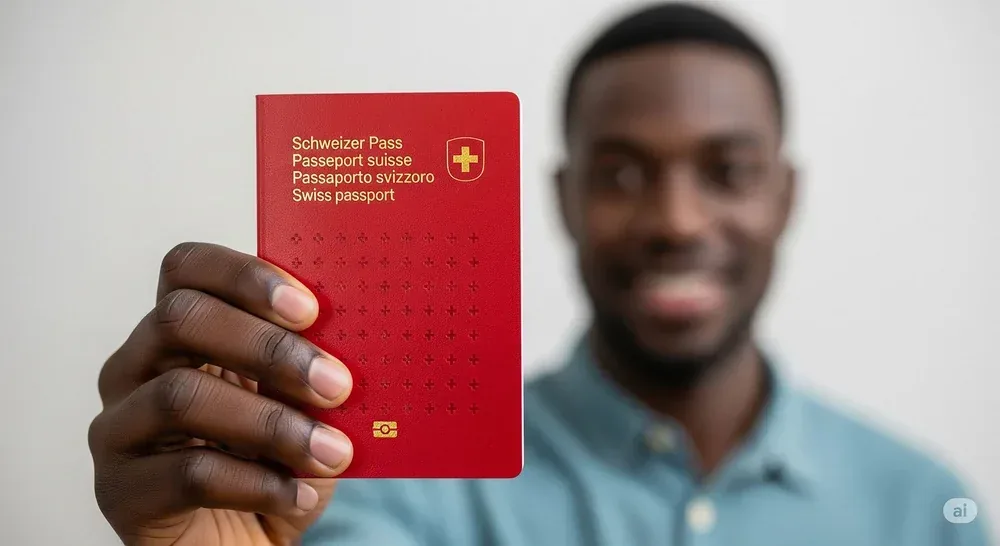
For most of the last twenty years, the debate about second citizenship was a debate about money. How much does the investment cost, how much are the government fees, how much does the lawyer charge. In 2026 that framing is out of date. Across Europe, the price of a passport is increasingly paid in a different currency: years of residence.
The pattern is not a single reform. It is a series of separate decisions, taken by governments of different political colours, that all point the same way. Taken together, they change how anyone planning a second residence, and eventually a second citizenship, should think about time.
The evidence, country by country
Portugal. For years, Portugal was the European country people pointed to when they wanted a passport in five years. That ended this spring. Lei Orgânica n.º 1/2026, published in the Diário da República on 18 May 2026 and in force the following day, rewrote article 6 of the Nationality Law. Naturalisation now requires legal residence of at least seven years for nationals of Portuguese-speaking countries and EU citizens, and ten years for everyone else. The Brief covered the change in Portugal Nationality Law 2026.
Finland. Finland moved first and has moved twice. For citizenship applications filed from 1 October 2024, the Finnish Immigration Service requires that applicants have lived in Finland for the past eight years, with shorter periods only in specified situations. Then, from 8 January 2026, amendments to the Aliens Act raised the bar for permanent residence itself. The standard path now requires six years on a continuous residence permit, at least two years of work history in Finland and satisfactory Finnish or Swedish. A four-year path remains for people with an annual income above 40,000 euros, for holders of a master's or doctoral degree completed abroad and recognised in Finland who also have two years of work history there, and for people with three years of work history and particularly good language skills.
Ireland. On 9 September 2026 the Irish Government approved the priority drafting of the Irish Nationality and Citizenship (Amendment) Bill 2026. According to the Department of Justice, Home Affairs and Migration, the General Scheme proposes to increase the qualifying period of reckonable residence from five to eight years for most applicants, to introduce language tests and a civics test, and to require applicants to be self-sufficient. It is a proposal, not law, and The Brief set out what it would and would not change in Ireland Proposes 8 Years for Citizenship.
The United Kingdom. Britain's reform concerns settlement, the permanent residence status that comes before citizenship. On 20 November 2025, the Home Office restated that the government "would double the permanent settlement qualifying period for migrants to 10 years, with reductions for those making a strong contribution to British life", and launched a consultation on how to implement it. The consultation closed on 12 February 2026. On 1 November 2026, its page still said that the government was analysing the feedback. The September statement of changes did not contain the new model, as The Brief noted in HC 584 and the Settlement Question.
Germany. Germany shows the trend from the other side. Its standard naturalisation period remains five years under § 10 of the Nationality Act. But the paragraph that allowed the period to be shortened to as little as three years for special integration achievements has gone. The government bill that removed it stated that five years should in future generally be the minimum, and paragraph 3 now reads simply "weggefallen", repealed. The fastest route was removed; the standard one stayed.
Switzerland and Spain. Neither changed anything, and that is the point. Switzerland has long required ten years of residence and a C permit for ordinary naturalisation, according to the State Secretariat for Migration, and cantonal law adds a minimum of between two and five years in the canton and commune where the application is made. Spain's Civil Code, article 22, requires ten years, with two years for nationals of Ibero-American countries and a few others. These two countries used to look like outliers. They now look like the direction of travel.
What governments say they want
It is worth reading the governments' own words, because they explain why this trend is unlikely to reverse quickly.
The Irish department described the policy behind its bill as treating citizenship by naturalisation as "an earned privilege and the culmination of sustained lawful residence, economic self-sufficiency, social integration, civic participation and compliance with immigration law, rather than merely the passage of time."
The Home Office described its reform as a shift in the profile of legal migrants "that will prioritise those who contribute to the economy and play by the rules."
Both statements describe the same idea. A residence period is no longer treated as a waiting room you sit in until the door opens. It is treated as evidence: of attachment, of language, of income, of a clean record. Longer periods give the state more evidence, and more chances to refuse.
That has a consequence for anyone planning a move. When citizenship is framed as earned, the requirements around the clock tend to multiply too: language levels, civics tests, income thresholds, work history. Finland's new permanent residence paths are a good example. They do not only add years; they tie the years to work and language. The Brief's overview of language requirements for residency and citizenship shows how widespread that second layer already is.
Four lessons for anyone planning a second residence
1. A residence permit and a passport are different products. Many people choose a country for its residence route and assume that citizenship will follow on a familiar timetable. Portugal's reform shows what happens to that assumption. A non-EU investor who obtained Portuguese residence in 2024 expecting a passport around 2029 now faces a ten-year requirement under the new article 6. The residence permit still works exactly as before. The passport has moved further away. The Brief made the related point about investor residence in Golden Visas Were Not Abolished. They Were Repriced: the price of a route changes after people have committed to it.
2. The counting rules matter as much as the headline number. The number of years is only half of a residence requirement. The other half is how those years are counted. Portugal now adds up periods of legal residence, continuous or interrupted, as long as they fall within a maximum window: nine years for EU and Portuguese-speaking nationals, twelve years for others, under the republished article 15. Switzerland counts the years between ages 8 and 18 double, provided the applicant has actually lived in the country for at least six years, and counts time on some permits only by half or not at all. Finland requires residence on a continuous permit. Two people with the same number of years in a country can therefore be in very different positions. Keeping records of every permit, every renewal and every long absence is not bureaucratic fussiness. It is the evidence the application will rest on.
3. Transitional rules reward people who file. Reforms usually protect applications already lodged. Portugal's amending law states in article 7 that pending administrative procedures continue under the previous version of the Nationality Law. Finland's immigration service said that applications submitted before the January 2026 amendments entered into force would not be affected by them. The lesson is not to rush an application that is not ready. It is to file as soon as you genuinely qualify, rather than waiting for a more convenient year, because the rules on the day of filing are often the rules that decide.
4. Plan for the long version. If the stated reason for longer clocks is to see more evidence of attachment, then planning on the assumption that today's shortest route survives unchanged is planning on luck. A sounder approach is to choose a country you would be content to live in for the full standard period, and to treat any shorter route as a bonus if it still exists when you qualify. Switzerland is the extreme case: ten years, a C permit, and cantonal and communal residence rules on top. The Brief's long game to the Swiss passport describes what planning on that timescale looks like.
What this does not mean
Longer clocks do not make second citizenship impossible, and they do not make residence routes worthless. A residence permit in a stable country delivers most of its practical value from the first year: the right to live there, to bank there, to educate children there, and to leave somewhere else. Many families who move never naturalise, and lose little by it.
What has changed is the honesty required at the start. A plan that depends on a passport in five years should be checked against current law, not against the brochure that described the law in 2023. And a plan that would still make sense if the passport took ten years is a plan that will survive the next reform as well.
The trend is clear enough to plan around. Portugal moved to ten years for most applicants, Finland to eight, Ireland proposes eight, and Britain has consulted on ten years for settlement. Germany removed its shortcut. Switzerland and Spain never offered one. Time has become the real price of a passport, and it is a price that cannot be negotiated, financed or paid in advance. It can only be planned for.
Work with Sebastian
If you are choosing a country of residence with a second citizenship in mind and want to know what the timeline really looks like under current law, and what your residence, tax and family plans need to look like along the way, that is the kind of long-range planning Sebastian works on with internationally mobile clients. Book a consultation.