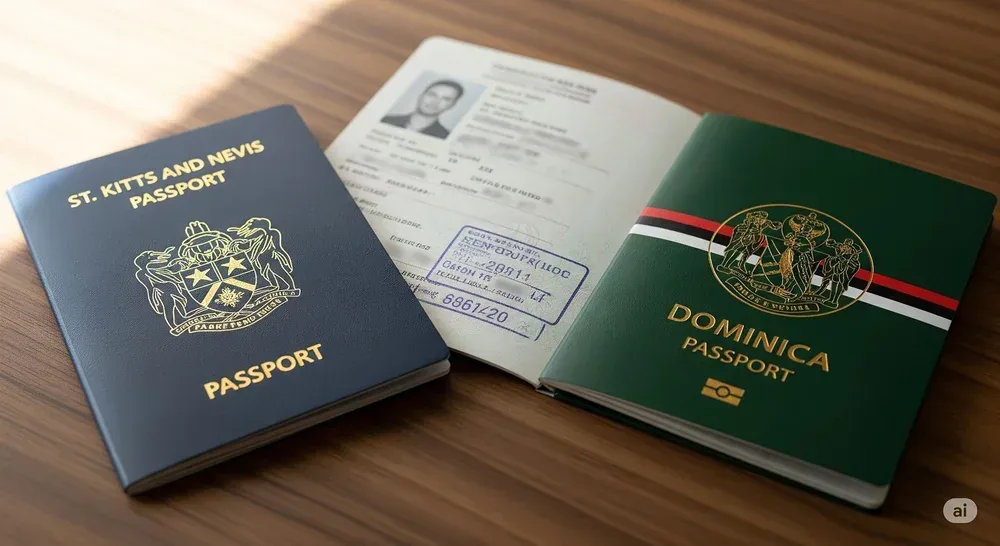
For most of the past decade, an Antigua and Barbuda passport was sold on a simple promise: a Commonwealth citizenship, wide visa-free travel, and no obligation to live on the island. Since 1 January 2026, that passport has come with a new condition attached, and it was set in Washington rather than St John's.
Presidential Proclamation 10998, signed on 16 December 2025, partially suspended the entry into the United States of nationals of Antigua and Barbuda and of Dominica. Most countries on the list are there because of visa overstay rates or security concerns. Antigua and Dominica are there for one stated reason only: their citizenship by investment programmes. Nine months in, the restrictions are still in place, and they are easy to misread in both directions. Some investor citizens assume they are now shut out of the United States. Others assume the rules cannot touch them. The text of the proclamation says something more precise.
What the proclamation says
The full text is in the Federal Register. Section 5 sets out the partial restrictions country by country, each with a stated reason. For Antigua and Barbuda, the entry reads in full:
(i) Antigua and Barbuda has historically had CBI without residency. (ii) The entry into the United States of nationals of Antigua and Barbuda as immigrants, and as nonimmigrants on B-1, B-2, B-1/B-2, F, M, and J visas, is hereby suspended. (iii) Consular officers shall reduce the validity for any other nonimmigrant visa issued to nationals of Antigua and Barbuda to the extent permitted by law.
The entry for Dominica is worded identically. In practical terms, for Antiguan and Dominican nationals the proclamation suspends:
- all immigrant visas, which is to say the route to a US green card from abroad;
- visitor visas for business and tourism (B-1, B-2 and the combined B-1/B-2);
- student and exchange visas (F, M and J).
Other nonimmigrant visas, such as work or investor categories, are not suspended, but consular officers are told to shorten their validity as far as the law allows. The proclamation took effect at 12:01 a.m. Eastern Standard Time on 1 January 2026 (section 10).
Why citizenship by investment was the trigger
The reasoning sits in the proclamation's preamble. It says that some of the listed countries "have offered Citizenship by Investment (CBI) without residency, which poses challenges for screening and vetting purposes". It then gives the example the US government is worried about: a national of a restricted country could buy citizenship in a second, unrestricted country, "obtain a passport in the citizenship of that second country, and subsequently apply for a United States visa", thus evading the restrictions on the first. It adds that US law enforcement and the State Department have found CBI programmes susceptible to people concealing "identity and assets to circumvent travel restrictions or financial or banking restrictions".
Read that way, the measure is aimed less at Antiguans by birth than at the product. The proclamation names two of the five Eastern Caribbean states that sell citizenship, and gives no reason for either other than the programme itself. St Kitts and Nevis, Grenada and Saint Lucia do not appear anywhere in the text. The one factual statement it makes about Antigua and Dominica is that they "historically" offered citizenship without residence.
Who is affected and who is not
Section 6 limits the reach of the restrictions, and this is the part that matters most for investor citizens.
People already holding a valid visa on 1 January 2026. The suspension applies only to nationals who were outside the United States on the effective date and did not hold a valid visa on that date. Section 8 adds that no visa issued before the effective date is revoked under the proclamation, so a visitor visa issued before 1 January stays usable until it expires.
Dual nationals travelling on another passport. The proclamation exempts "any dual national of a country designated ... when the individual is traveling on a passport issued by a country not so designated". An investor who became Antiguan while keeping, say, a Canadian, British or German passport can still travel to the United States on that other passport under whatever rules apply to it. The Antiguan passport is simply not the document to use for a US trip.
US green card holders. Lawful permanent residents of the United States are exempt.
Case-by-case national interest exceptions exist, granted by the Attorney General, the Secretary of State or the Secretary of Homeland Security. They are discretionary and are not a planning tool.
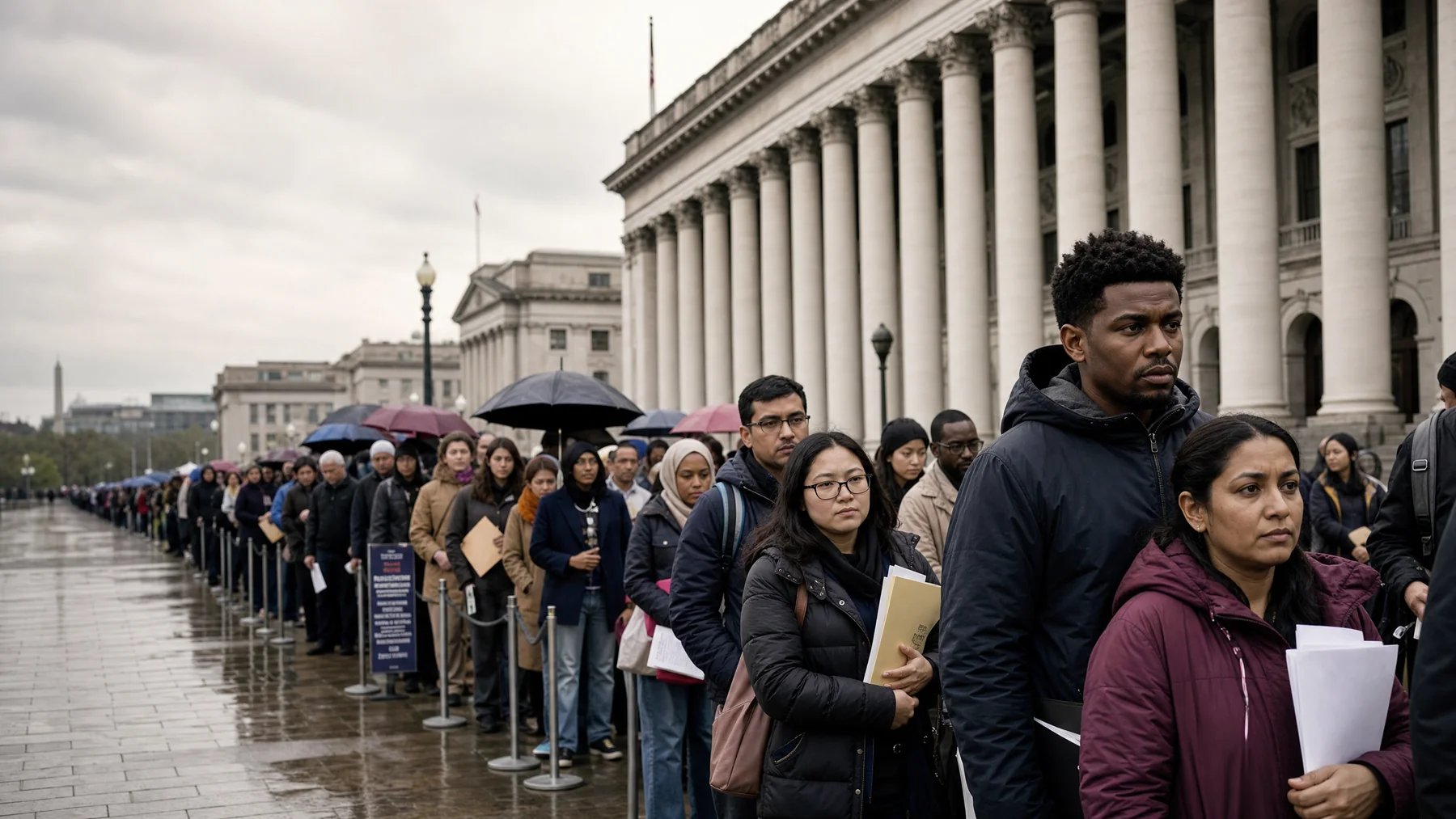
Who is caught, then? Mainly investor citizens for whom Antigua or Dominica is the stronger of their passports, and who bought the second citizenship partly to make US travel easier. That group has lost exactly what it paid for, at least for visitor and student travel. Their children who planned to study in the United States on an Antiguan or Dominican passport are caught too, because F and J visas are suspended.
Is it permanent?
Nothing in the proclamation is fixed. Section 7 requires the Secretary of State to report within 180 days, and every 180 days after that, on whether each restriction should be "continued, terminated, modified, or supplemented", and to engage the listed countries on the measures they need to take.
As of early October 2026, no proclamation amending or lifting the restrictions on Antigua and Barbuda or Dominica has been published in the Federal Register. The 2026 documents that refer to Proclamation 10998 are delegations of authority for implementing it, not changes to its country list. Anyone planning around a quick reversal is planning on something that has not happened.
What the Caribbean states have done in response
The Eastern Caribbean programmes had already been moving before the proclamation. On 23 September 2025 the heads of government of Antigua and Barbuda, Dominica, Grenada, St Kitts and Nevis and Saint Lucia announced the signing of an agreement to create a regional regulator, the Eastern Caribbean Citizenship by Investment Regulatory Authority (ECCIRA). The OECS said the reforms were developed in consultation with the United States, the United Kingdom and the European Commission. The package includes:
- mandatory biometric data collection from new applicants at interview, and from earlier citizens when they renew passports;
- "stronger residency and genuine link requirements" for approved applicants;
- vetting supported by the CARICOM IMPACS Joint Regional Communications Centre;
- regional registers of applicants, licensees and developers, and annual public compliance reports;
- a region-wide minimum investment of US$200,000.
St Kitts and Nevis reports that its National Assembly passed its ECCIRA Bill on 17 October 2025. The phrase to watch in all of this is "genuine link". It is the same idea the US proclamation uses in reverse: citizenship without residence is the problem, so residence is the fix.
Antigua's own official programme page still states the residence rule in its long-standing form: a new citizen may be deprived of citizenship if they do not spend at least five days in Antigua and Barbuda during the first five calendar years, with no refund of the investment. It lists four routes:
- a non-refundable contribution of at least US$230,000 to the National Development Fund;
- at least US$300,000 in an approved real estate project, held for at least five years;
- US$1.5 million in an eligible business as a sole investor, or a joint investment of at least US$5 million with each investor putting in at least US$400,000;
- US$260,000 to the University of the West Indies Five Islands Campus Fund, including processing fees.
All four carry government processing and due diligence fees on top. Anyone applying now should expect the residence requirement to tighten toward the regional standard and should confirm the current rule with the Citizenship by Investment Unit before relying on five days.
The European side
Washington is not the only capital that has changed the rules. The EU's revised visa suspension mechanism, Regulation (EU) 2025/2441 of 26 November 2025, adds new grounds on which the EU can suspend visa-free travel for a third country. According to the European Parliament, they include "investor citizenship schemes (or 'golden passports') raising security concerns".
That does not mean Schengen access for Antiguan passports has been suspended. It has not. It means the EU now has a specific legal tool to do so, and the Caribbean programmes know it. The Brief looked at the politics behind that tool in the EU's campaign against CBI.
What this means for your planning
If you already hold Antiguan or Dominican citizenship and another passport, little changes for US travel: use the other passport. Keep both valid, and make sure your travel history is consistent across them.
If Antigua or Dominica is your strongest passport, US visitor and student travel is currently closed to you on that document, unless you already held a visa on 1 January 2026. Look at your US-linked plans, including children's education, now rather than when the next trip is due.
If you are considering buying Antiguan citizenship, weigh what you are buying. Visa-free access elsewhere still matters, but the product sold as "a passport that opens doors" has a door closed in the proclamation's own words, and the regional regulator is moving toward real residence. A citizenship that requires time on the island is a different product from one that did not, and it should be priced and planned that way. The Brief's second passport review for 2026 and its piece on building a two-passport family set out the wider options.
Do not confuse citizenship with tax residence. An Antiguan passport, on its own, changes nothing about where you are tax resident. That depends on where you live and on the rules of the countries you live in and leave. The tax position of Antigua itself is set out on the Antigua and Barbuda country page.
The broader direction of US policy on entry is also worth reading alongside this, for example the Brief's note on the suspension of the diversity visa. The common thread in 2026 is that access to the United States is being decided document by document, and the document you carry matters as much as the person you are.
Work with Sebastian
If US access, schooling abroad or a future residence plan depends on which passport you carry, book a consultation to have Sebastian check the combination before the next application or trip.