Every few months someone sits down in a consultation and tells me they want to move to Andorra because it is a zero-tax country. It is a small ritual by now. I let them finish, and then I tell them the truth: Andorra has not been a zero-tax country for over a decade. It has an income tax, a corporate tax, a VAT, and a social security system that will bill you every month whether you had a good month or not.
And then I tell them the second truth, which is the one that matters: the real numbers are still among the best in Europe. Not zero. Better than zero, in a way, because they come with substance, treaties, and a tax authority that other countries actually recognise.
So let us do what almost nobody selling Andorra online does. Let us go through the actual Andorra tax rates for 2026, line by line, with the recent changes included. Because something significant happened in January 2026, and half the articles you will find on this subject have not caught up with it.
The Income Tax: Three Bands, Capped at 10 Percent
Andorra introduced personal income tax (the IRPF) in 2015, largely under pressure from the EU and the OECD. It was the price of leaving the tax haven blacklists behind, and in my view it was a price worth paying. The structure has been stable ever since, and it remains in place for 2026:
The first 24,000 euros of general income are exempt. From 24,000 to 40,000 euros you pay an effective 5 percent. Everything above 40,000 euros is taxed at a flat 10 percent.
Technically the middle band works through a tax credit (a bonification capped at 800 euros) rather than a separate rate, but the effect is the same: roughly 5 percent on that slice of income. What you need to remember is simpler still: no resident of Andorra pays more than 10 percent income tax, on any amount, with no surcharges, no solidarity levies, and no church tax stacked on top.
Savings income gets its own treatment. Interest, bond coupons, and most investment gains fall into a savings base where the first 3,000 euros per year are exempt and the rest is taxed at 10 percent. Dividends from Andorran companies are exempt entirely at the shareholder level, which avoids double taxation when you run your business through a local company.
Capital gains on shares deserve a mention because the rules are unusually generous. Sell a stake of 25 percent or less in a company and the gain is generally exempt. Hold a larger stake for more than ten years and the gain is exempt too. The main exception is companies stuffed with Andorran real estate, which are taxed under the property rules instead. Property speculation is the one thing Andorra genuinely punishes: sell a property within two years and you face 15 percent; the rate then tapers with holding period, reaching zero for residents after ten years.
Run those income tax numbers against Germany, France, or Spain and the comparison is almost unfair. A resident earning 150,000 euros in Andorra pays roughly 11,800 euros in income tax. The same income in Spain would cost you a multiple of that, before wealth tax even enters the conversation.
Corporate Tax, VAT, and the Taxes That Do Not Exist
The corporate tax (Impost sobre Societats) is a flat 10 percent on profits. Losses can be carried forward for up to ten years. There are special regimes, but the honest advice for most operating businesses is that 10 percent is the number to plan with, and 10 percent is already excellent by European standards.
The VAT, called IGI (Impost General Indirecte), has a standard rate of 4.5 percent, the lowest general consumption tax rate in Europe. Reduced rates of 1 percent apply to food, water, books, and newspapers, 2.5 percent to transport and certain cultural services, and a higher 9.5 percent rate applies to banking and financial services. This is not a footnote. Living in a country where nearly everything you buy carries 4.5 percent tax instead of 19 or 21 percent changes your cost of living in a way that never shows up in income tax comparisons.
And then there is the list of taxes Andorra simply does not have:
No wealth tax. No inheritance tax. No gift tax. Not reduced. Not capped. Absent.
For families thinking a generation ahead, this is often the decisive point. I have clients whose primary concern is not this year's income tax bill but what happens when assets pass to their children, and what happens if their home country reintroduces a wealth tax in a fiscal emergency. Andorra takes that entire category of risk off the table, at least as far as Andorran law is concerned. Your home country's inheritance tax may still reach across the border depending on your citizenship and your heirs' residence, which is exactly the kind of question that needs proper planning rather than a blog post.
CASS: The Bill Nobody Mentions
Here is the part the promotional articles skip. Andorra has a social security system, the CASS, and it is not optional.
Employees and employers together pay 22 percent of salary (6.5 percent employee, 15.5 percent employer). The self-employed pay the full 22 percent themselves, calculated on a standardised base rather than actual income. For 2026 that base is 2,672.52 euros per month, which puts the standard self-employed contribution at 587.95 euros per month, with reduced brackets available for lower earners.
Roughly 7,000 euros a year, every year, regardless of whether your business had a good year. For a profitable consultant this is trivial and buys access to a genuinely good healthcare system. For someone bootstrapping on thin income, it is a real fixed cost that belongs in your calculation. I mention it because I have seen people build their entire Andorra spreadsheet without it.
The Residency Rules Changed in January 2026, and Not in Your Favour
This is where you need current information, because Andorra rewrote its residency economics this year.
There are two main routes. Active residency means you actually work in Andorra, either as an employee or through your own company. It requires at least 183 days of physical presence per year, and it makes you a full tax resident. For the self-employed route you now need to hold more than 34 percent of your company (raised from 20 percent) and make a payment of 50,000 euros to the Andorran Financial Authority. Under the legislation passed in January, that payment is no longer refundable when you leave. It is now a definitive payment to the state, with an exemption for regulated professionals such as doctors, lawyers, and architects.
Passive residency is the investment route, aimed at people who live off capital and do not work locally. It requires only 90 days of physical presence per year. And this is where the big change landed. Under Llei 2/2026 of 22 January, the required investment in Andorran assets rose from 600,000 euros to 1,000,000 euros, reducible to 400,000 euros if the money goes into the government's housing fund. The old refundable deposit of 47,500 euros is gone; in its place stands a non-refundable payment of 50,000 euros plus 12,000 euros per dependent. If you read an article quoting 400,000 or 600,000 euros with a refundable bond, you are reading about a legal regime that no longer exists.
Property buyers should also know that Andorra introduced a foreign investment tax on real estate: 6 percent on a first purchase, 10 percent on subsequent ones, part of the same political push against a housing market overheated by exactly the kind of people reading this article.
Why the tightening? Because Andorra has roughly 85,000 inhabitants, limited buildable land in its valleys, and a housing crisis. The government decided that residency should cost more and leak less. I do not love it for my clients, but I understand it, and frankly it signals something useful: Andorra is managing demand, not begging for it. Jurisdictions that beg are the ones that get blacklisted later.
One more point on the passive route: 90 days of required presence does not make you a tax resident anywhere by itself. If you spend the rest of the year spread across other countries, you need to be careful you have not accidentally remained tax resident in the country you thought you left. That mistake is common, expensive, and entirely avoidable with planning.
The Honest Drawbacks
I would not be doing my job if I stopped at the rates.
Andorra is not in the EU. No EU passport rights flow from living there, no freedom of establishment, no automatic right to live in Spain or France later. You enter and leave through Spain or France, and the nearest serious airports are Barcelona and Toulouse, each roughly two and a half to three hours away by road. There is no airport with scheduled long-haul traffic in the principality and there is no train station at all.
Banking is functional but small. A handful of banks, heavy compliance, and full participation in the Common Reporting Standard. Anyone who tells you Andorra still offers banking secrecy is describing the country as it was fifteen years ago. Your accounts will be reported to your home country like anywhere else, and onboarding as a new resident with a complex international structure takes patience and documentation.
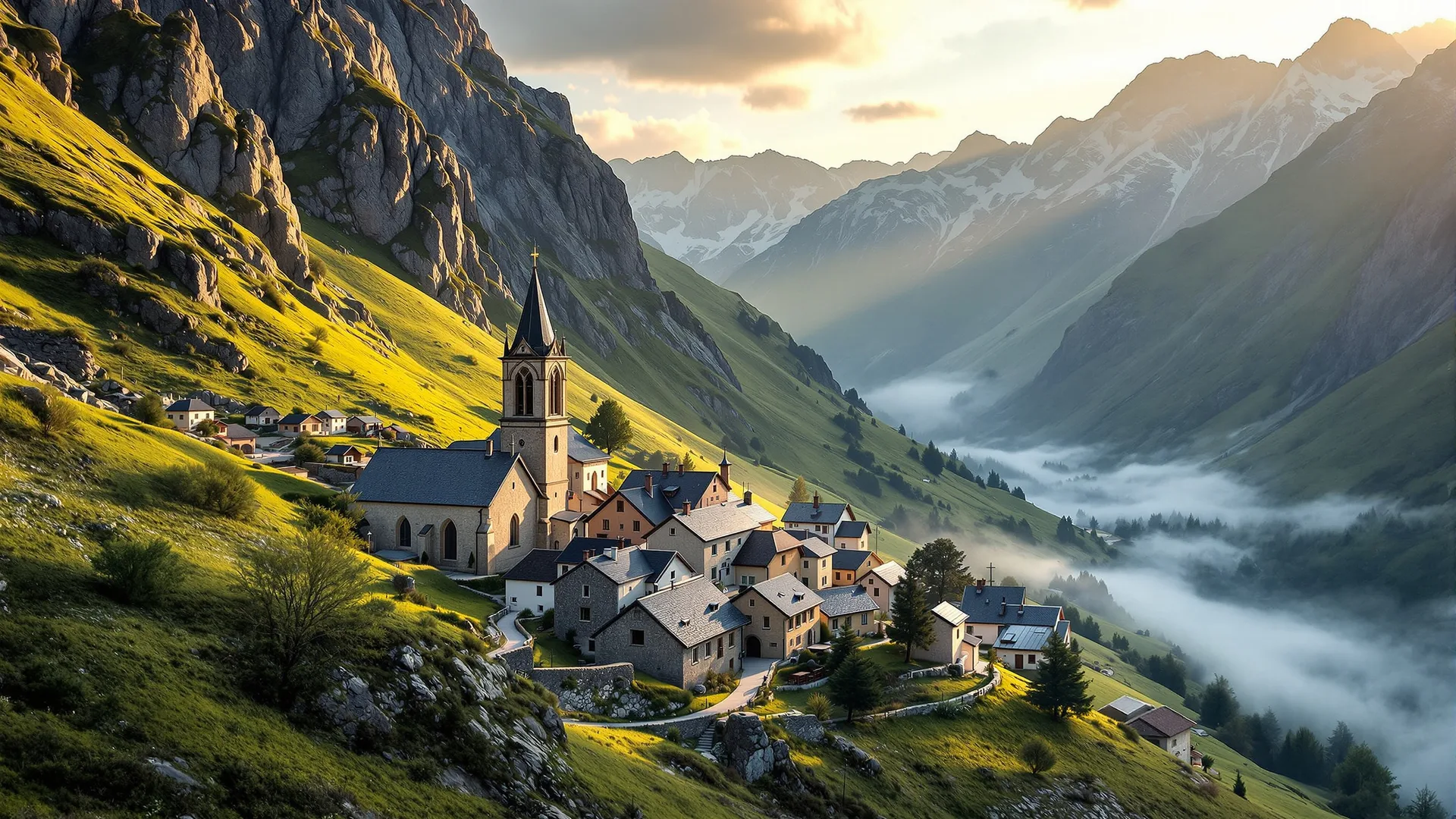
It is a mountain country. This sounds trivial until you live it. Winters are long and serious, the geography is vertical, and the lifestyle is skiing, hiking, and quiet. My clients who thrive there are the ones who wanted exactly that. The ones who lasted eighteen months are the ones who secretly wanted the sea, and there is no sea. If your dream involves a marina, look at Malta or Cyprus instead.
The treaty network is real but has a gap that matters for Germans. Andorra now has 22 double taxation agreements in force, including Spain, France, Portugal, Luxembourg, Malta, Cyprus, Liechtenstein, Monaco, and the UAE. The treaty with the United Kingdom entered into force on 22 December 2025, a milestone for British expats. Austria signed in May 2026 and Bulgaria in June 2026, both awaiting entry into force. But Germany has no tax treaty with Andorra: a text has been negotiated and awaits signature, nothing more. There is no treaty with Switzerland or the United States either. For a German leaving Germany, the absence of a treaty means the extended limited tax liability rules and exit tax questions have to be handled with particular care, because there is no treaty shield to fall back on. Solvable, but only with eyes open.
Who Andorra Actually Works For
After all the numbers, my shortlist is fairly simple. Andorra works beautifully for the location-independent entrepreneur or investor who genuinely wants to live in the mountains, can clear the higher 2026 investment or build a real business locally, and values a stable, boringly legitimate 10 percent jurisdiction over an exotic zero. It works for families thinking about inheritance across generations. It works for athletes, traders, and online business owners who need substance that survives scrutiny, because 183 real days in a real apartment in La Massana is substance no tax office can argue with.
It does not work for people who want zero at any cost, who need an EU passport track, who cannot sit still for the required days, or whose life only makes sense within an hour of a major airport.
Andorra's pitch was never really zero. It is something rarer in 2026: a low, flat, defensible number in a country that nobody blacklists anymore. Ten percent, honestly earned, is worth more than zero percent you have to whisper about.
Work with Sebastian
If Andorra is on your shortlist, or you are weighing it against Malta, Cyprus, or a non-European option, this is exactly what I do all day. We look at your income structure, your citizenship, your family, and the treaty map, and we find the jurisdiction where the numbers and the life both work. Book a consultation.