There is a moment I have witnessed more than once that I still think about.
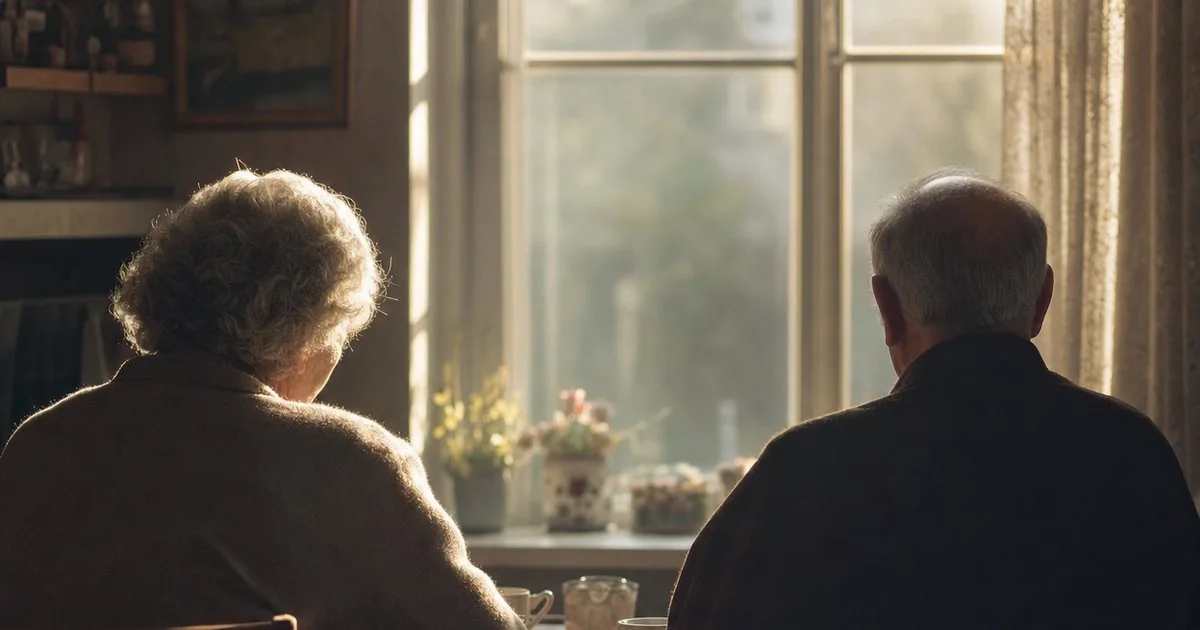
An older couple, sitting across from me. Married forty years, sometimes more. They are there for professional reasons, tax, residency, a structure to protect what they have built, and yet something else is present in the room that has nothing to do with any of that. The way he hands her a coffee without being asked. The way she finishes a thought he started. The way they disagree about something minor and there is no edge in it, no score being kept. Just two people who have become, over decades, genuinely at home in each other.
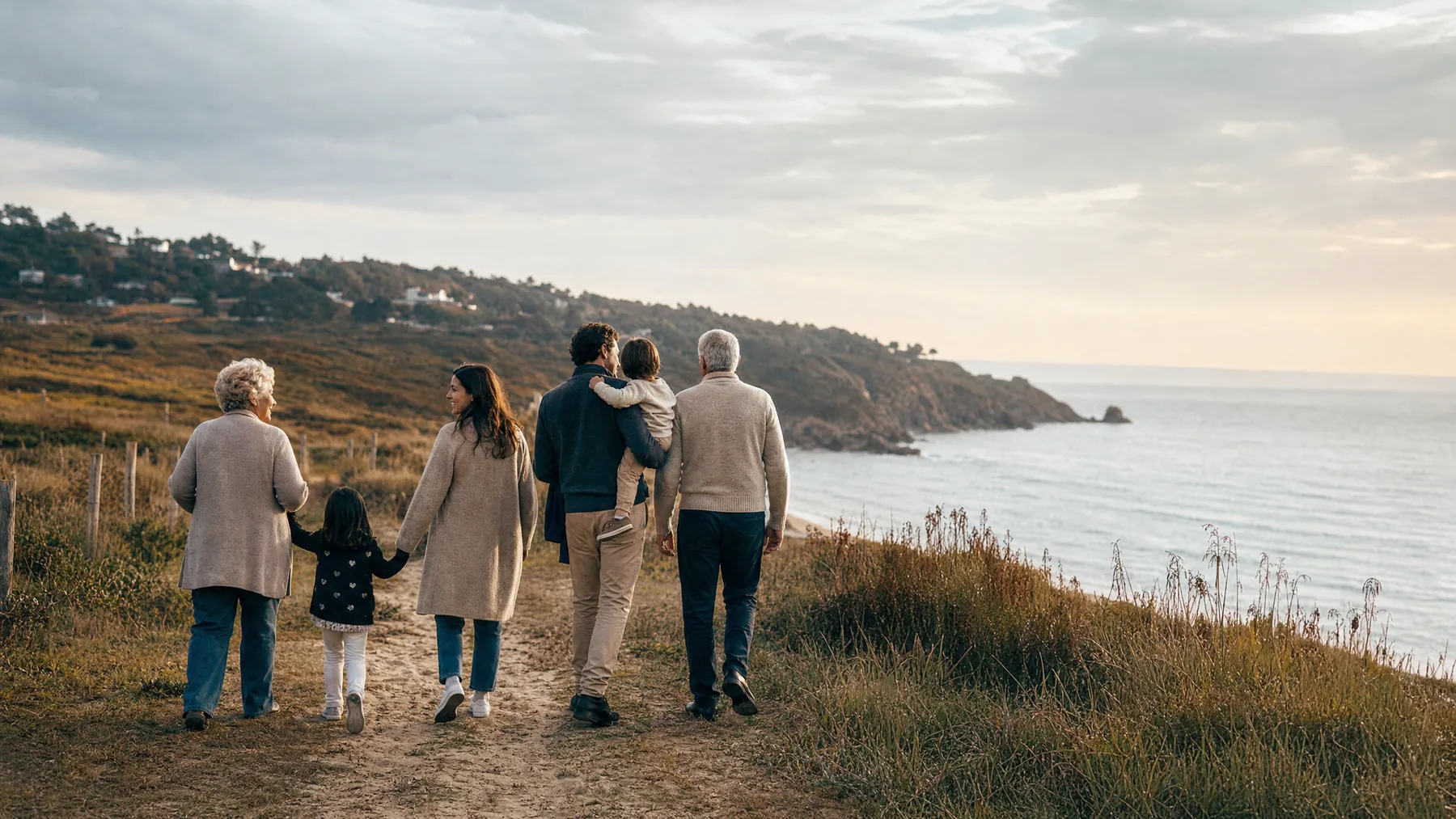
I have sat across from couples like this hundreds of times. Thousands, perhaps. All nationalities. All faiths and none. Rich in the ordinary sense, yes, but rich in the other sense too, the sense that actually matters. Their children turned out well. Not because of the schools or the money, but because they came from somewhere solid, somewhere that held.
I have also, more than once, been there when one of them was dying. I did not expect those meetings to move me the way they did. There was grief, of course. But there was something else, a quality of love made fully visible, stripped of everything except itself. It was, and I use the word carefully, beautiful.
I have spent a long time asking myself what those couples have. What is the actual secret. Because it is not money, I have seen wealthy people utterly alone inside their marriages. It is not education, not good looks, not having had easy lives. Some of those couples buried children. Some rebuilt from bankruptcy. Some carried things I will never know about.
And yet there they sit. At home in each other. Whole.
I have daughters. And like most young women with any seriousness about them, they look at a world that is noisier and lonelier than any previous generation and they want to know: how do I have that? Not the tax structure. Not the house. That. The thing in the room that has no name but that you feel the moment you walk in. How do I build a life that looks like that at the end of it?
That is the question this is trying to answer.
The most important decision of your life deserves your most serious attention
More serious than your career. More serious than where you live or what you study. Because a good marriage makes almost everything else survivable. A bad one poisons almost everything else.
The culture you are growing up in will not tell you this. It will tell you to focus on yourself first, build your independence, keep your options open. Some of that is reasonable. But it has a way of becoming a habit, of treating every relationship as provisional, every commitment as temporary, every person as replaceable. That habit is very hard to unlearn.
Choose carefully. Not anxiously, carefully.
Watch who he is, not who he is trying to be
Anyone can perform well for six months. Watch how he behaves when something goes wrong. Miss a flight together. See him lose an argument, or lose money, or face something that humiliates him slightly. That is who you will be married to.
Does he take responsibility or does he find someone to blame? Is he kind to people who cannot help him? How does he speak about people who are not in the room?
These things compound over decades. For better or much worse.
He is also choosing
This is something nobody says plainly enough, so I will.
If you want a serious man, a man with character, with ambition, with the kind of depth that makes for a real partner over fifty years, understand that he has choices. A high-value man is not desperate. He is not going to commit to the first woman who is available. He is looking, whether consciously or not, for someone who reflects his own seriousness back at him.
Which means how you live your life is not only your business. It is a signal. The years before you meet him are not a private matter that exists in a sealed compartment. They shape who you are, what you are capable of, what you carry. A serious man will sense that. Not necessarily from what you tell him, but from who you are.
This is not about judgment or shame. It is about a simple and uncomfortable truth: the person you want is also evaluating you. Not cruelly. But honestly. And what he sees is not just your intentions, it is your habits, your patterns, the choices you made when nobody was watching.
You are preparing for that meeting right now, whether you think of it that way or not.
The culture lies about this specific thing
It will tell you that leaving is strength. That keeping score is healthy. That your own fulfilment is the measure of whether a relationship is worth continuing.
I have watched people live by those principles. They are not happy. The misery is often quiet and well-dressed, but it is real.
The couples I have seen thrive do not treat marriage as a vehicle for personal fulfilment. They treat it as a shared project with a purpose larger than either of them. Children, faith, something. That larger purpose is not a cage. It is what gives them something to return to when they feel nothing.
Love is a decision, not a feeling
You will not always feel it. This is not a warning, it is a certainty. There will be years that are genuinely hard. Grief, illness, failure, the ordinary erosion of two people who have seen each other at their worst.
The couples who last chose each other on those days too. Not dramatically. Quietly. Just again.
The feeling comes back. But only if you didn’t walk out while it was gone.
Build your interior life now, before marriage
The women I have seen struggle most in marriage often had the exterior without the interior. They followed the form of a traditional life without having genuinely, freely chosen it from the inside. When difficulty came, there was nothing to draw from.
Know what you believe. Know why. Have a practice, prayer, faith, something, that is yours, that you return to independently of your husband or your circumstances. A woman with a stable interior life is not easier to walk over. She is harder to break.
The choice nobody tells you about
There is a fork in the road at your age that almost nobody names clearly. So I will.
You can spend your twenties consuming. Experiences, attention, relationships, substances, stimulation. There is an enormous infrastructure built to encourage exactly that, and your peers will largely be doing it. It is not without pleasure. But it is structured around taking, and around you, specifically your feelings, your enjoyment, your options remaining open.
Or you can spend those years building. Building discipline, building depth, building the kind of character that is actually capable of the things you say you want.
This applies to work and money, yes. But it applies just as directly to your personal life. The person who cannot delay gratification in relationships, who cannot tolerate the discomfort of moving slowly, of not knowing yet, of genuine self-restraint, will not suddenly become capable of the long sacrifice that real marriage requires. Those muscles are built earlier. Or they aren’t built at all.
The people I have seen who have genuinely good lives at 50 made less glamorous choices at 25. That is almost a universal observation.
The culture will not tell you this because it cannot sell you anything if you exercise restraint. But the evidence is everywhere if you look at actual people rather than curated ones.
You will not understand most of this at 18
I know that. You probably know it too.
So let me say just one thing that might actually land now, before life has taught you the rest the hard way:
The choices you make in the next five years will be very hard to undo.
Not impossible. The Catholic tradition I was raised in insists that every saint has a past and every sinner has a future, and I believe that. Character is not fixed. Redemption is real.
But some paths close. Some things cannot be unfelt. Some habits, once formed, take a decade to undo.
You have a window right now in which the person you will be at 40 is still genuinely open. That is not a burden. It is an extraordinary privilege.
Use it seriously.
I did not get this right myself. I am not sure I would have listened at 18 even if someone had told me clearly. That is the honest truth about wisdom, it is almost always experiential. You earn it, or life hands it to you the hard way.
But if any of this comes back to you at 25, after your first serious heartbreak, or at 30, when you are standing somewhere and wondering how you got there, then it was worth writing.
Carpe Diem, Sebastian