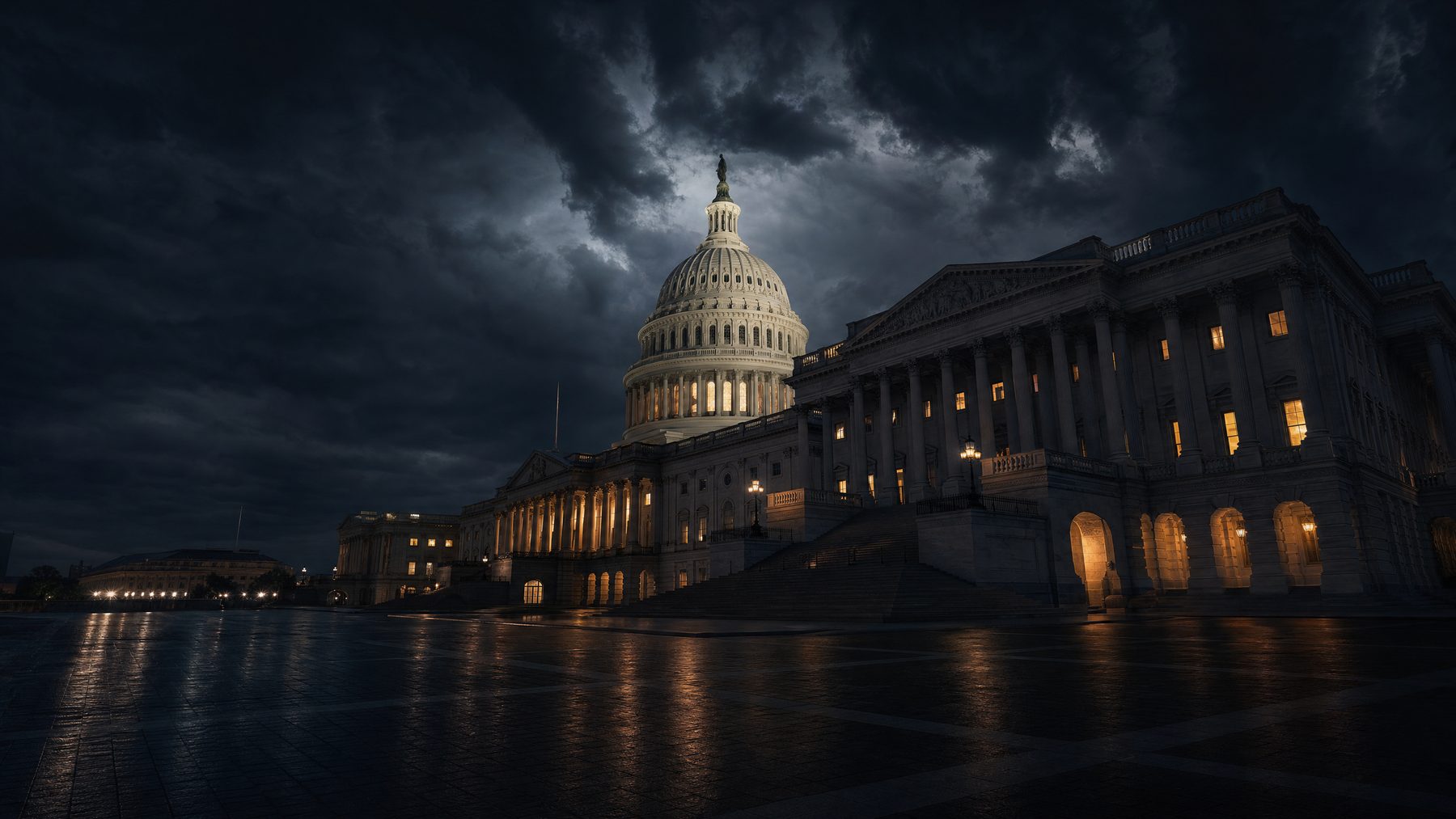
The longest government shutdown in American history finally ended last week. Forty-five days. 730,000 federal workers sent home without pay. The FAA so stretched it cancelled thousands of flights. 42 million Americans temporarily cut off from food benefits.
And within 48 hours of it ending, Washington went right back to business as usual.
If you watched this from Europe, you probably thought: what a mess. If you watched it from Texas, like I did, you thought something different. You thought: this is exactly what happens when the state gets too big to function and too entrenched to reform.
What Actually Happened
Congress failed to agree on a budget. Routine. Expected. Entirely predictable. The US government has been running on continuing resolutions and last-minute panic for years, because the two parties cannot agree on what the state should actually do and neither side has the courage to cut it down to a size it can actually manage.
So it shuts down. And suddenly we discover something interesting: most of what the government does on a day-to-day basis, the public can live without.
The parks closed. Some permit offices went dark. Non-essential federal workers stayed home.
And the world kept turning.
The Lesson Nobody Is Drawing
The political class framed this as a crisis. And for the 730,000 workers who went without a paycheck, it genuinely was. That is not nothing. I am not dismissing their hardship.
But step back for a moment and ask the harder question: if 730,000 federal workers are "non-essential," why are we paying for them in the first place?
The answer is that governments never shrink voluntarily. Every department, every agency, every regulatory body exists to perpetuate itself. It hires. It expands. It lobbies for its own budget. And it never, ever goes away quietly.
The shutdown did not reform anything. Within days of reopening, every one of those "non-essential" roles was reinstated, every salary backpaid, and every department resumed its inexorable expansion.
The machine ate the interruption and moved on.
Why This Matters If You Are Not American
My clients are mostly European — German, Austrian, Swiss entrepreneurs who have built real wealth and are beginning to understand that the system they live inside is not their friend.
They look at America and sometimes feel smug. At least our government is competent, they say. At least our bureaucracy functions.
To which I say: be careful what you wish for.
A competent, functioning bureaucracy is far more dangerous than a dysfunctional one. The EU's surveillance architecture — eIDAS, the Digital Euro, Chat Control, DAC8 — did not happen because Brussels is incompetent. It happened precisely because Brussels is very good at what it does. And what it does is expand its reach, quietly, efficiently, with excellent documentation and impeccable process.
The US shutdown was embarrassing. The EU's quiet efficiency is existential.
What It Tells Us About the Dollar
Here is the financial angle that nobody in the mainstream press will touch directly: a government that cannot agree on a budget for 45 days is a government that has lost control of its fiscal situation.
The US national debt crossed $36 trillion this year. The interest payments alone now exceed the defence budget. And the political system has demonstrated, once again, that it is structurally incapable of making the cuts necessary to stabilise the situation.
Gold was already above $2,700 an ounce when the shutdown began. It did not collapse when the shutdown ended. The market knows what the politicians will not admit.
The dollar is living on borrowed time and borrowed money.
For entrepreneurs and investors with portable wealth, this is not a reason to panic. It is a reason to diversify — jurisdictionally, monetarily, and structurally. Not out of fear, but out of intelligence.
My Take
I chose America. I love Texas. I believe in what America is supposed to be, constitutionally, culturally, philosophically. The idea of individual liberty, limited government, and earned prosperity is not dead here. It is just badly outnumbered in Washington.
But loving a country does not mean being naive about its institutions.
The shutdown showed, again, that the US federal government is bloated, paralysed, and increasingly unable to perform its core functions. That is not a political opinion. That is a balance sheet fact.
The response is not to abandon ship. The response is to make sure you are not entirely dependent on any single ship — American, European, or otherwise.
That is what a real Plan B looks like.
Work with Sebastian
If the events of recent months — shutdowns, currency risk, expanding state surveillance — have made you think harder about your financial and jurisdictional exposure, it is time to have a concrete conversation. Not about theory. About your specific situation, your assets, your family, and your options. Book a consultation.