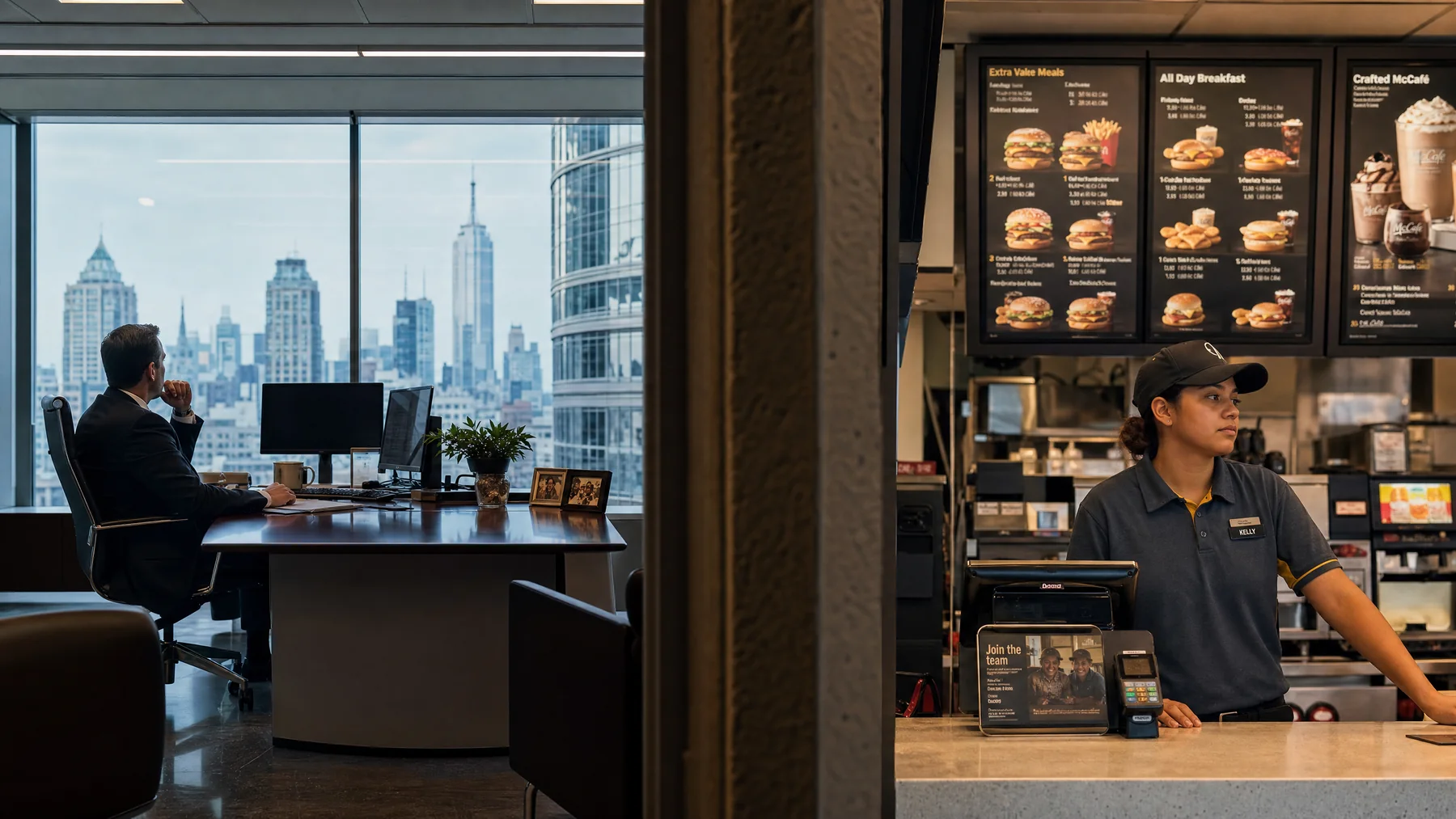
The United States federal minimum wage has been $7.25 per hour since 2009. Sixteen years without an increase. During the same period, American billionaires' collective wealth has increased by trillions of dollars.
I want to think about this carefully, because it is the kind of statistic that gets weaponised by both sides in ways that generate heat but not light.
The Conservative Case Against Minimum Wage Increases
I will start with the argument I find most compelling on the other side, because intellectual honesty requires engaging with it seriously.
The economic literature on minimum wages is genuinely mixed. Some studies — particularly the Seattle minimum wage studies — find that significant minimum wage increases can reduce employment hours for the lowest-wage workers, as employers substitute capital for labour or reduce hours to manage costs. The standard supply-and-demand model predicts this: raise the price of something, and less of it will be demanded.
For small businesses in low-margin sectors — restaurants, retail, care — minimum wage increases can be genuinely threatening. A restaurant running on 5% net margins has very little room to absorb a 30% increase in its lowest-paid workers' wages.
These are real concerns. They deserve to be taken seriously.
Why the Status Quo Is Also Indefensible
And yet. $7.25 per hour. In 2026.
In San Francisco, the average one-bedroom apartment rents for around $2,800 per month. At $7.25 per hour, working full-time — 40 hours a week, 52 weeks a year — you earn approximately $15,080 before tax. You cannot rent a one-bedroom apartment in San Francisco on that income. You cannot rent one in New York. You cannot rent one in most major American cities.
The argument that this is fine because states and cities can set their own minimum wages — which is true, and many have — does not address the federal baseline, which governs the workers in states that have not acted.
The gap between what full-time work at the federal minimum wage produces and what a dignified life in most American cities costs is not a feature. It is a failure.
What This Has to Do With Zohran Mamdani
I wrote about Mamdani's election as New York mayor in November. I noted that his victory was not primarily about ideology. It was about the lived experience of a city that has become unliveable for its working class.
The federal minimum wage stagnation is the same phenomenon at the national level. When the price of labour does not rise while the price of everything else does — housing, healthcare, education, food — the people whose income is tied to that labour are not experiencing slow growth. They are experiencing slow decline.
And slow decline, sustained over sixteen years, produces the political conditions that elect socialists in New York and puts unconventional populists in the White House.
I am not arguing for a specific minimum wage number. I am arguing that the people who are most loudly opposed to minimum wage increases are often the same people who are most surprised by the political consequences of wage stagnation. They should not be surprised. The consequences are predictable and they have now arrived.
The Entrepreneur's Perspective
For my clients, who are building businesses and managing wealth rather than working for minimum wages, this might seem like someone else's problem.
It is not. The political consequences of extreme wage inequality are already reshaping the business environment in ways that directly affect entrepreneurs and investors. Higher regulatory burden. More aggressive taxation proposals. The social licence to operate that businesses rely on is being eroded by a sense that the system works for capital and against labour.
Building a sustainable business requires a sustainable society. These things are connected.
Work with Sebastian
If the political direction of the US economy is affecting your thinking about where to base your business or your personal financial structures, that is a legitimate planning variable. Let's think it through. Book a consultation.