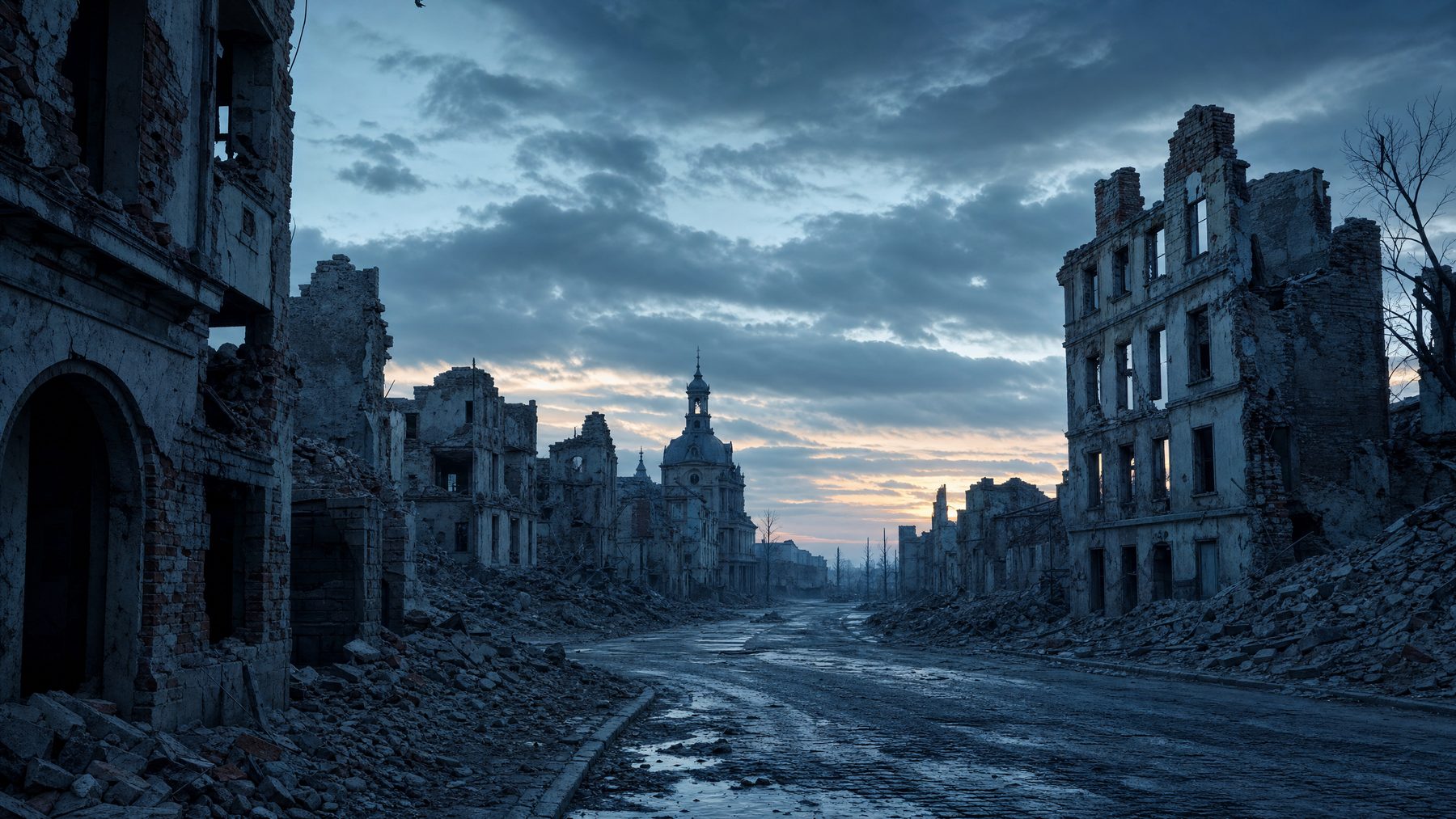
The details of the leaked US peace plan for Ukraine have now been widely circulated. The document, described by Kyiv and its European allies as largely favourable to Moscow and its maximalist demands, proposes a ceasefire along current lines of control — which means Russia keeps approximately 20% of Ukrainian territory it currently occupies, including Crimea and most of the Donbas.
Ukraine would receive security guarantees from Western nations, though not NATO membership. Russia would face no requirement to withdraw from any occupied territory. Sanctions imposed since 2022 would be phased out as part of a normalisation process.
Zelensky has said he is 90% agreed on security guarantees but will not formally concede the territorial question. Russia, as of this writing, has not accepted the plan either, holding out for more.
Watching this from London, I find myself with a set of views that do not fit neatly into either the mainstream European position or the American one. Let me try to state them clearly.
The War Cannot Be Won by Ukraine
I say this not as someone who favours Russia. I do not. Putin's invasion of Ukraine was an act of aggression that violated international law, caused immense human suffering, and destabilised European security in ways that will take decades to resolve.
But wishing something were different is not a strategy.
Ukraine has fought with extraordinary courage. Its people have suffered immensely. Its military has performed far beyond what most Western analysts predicted in February 2022. And it has done all of this while managing a functioning democracy under conditions of existential warfare, which is a genuinely remarkable achievement.
But the arithmetic of the conflict has not changed. Russia has a population four times larger than Ukraine's. It has a defence industrial base that has been on a war footing for three years and is now producing artillery shells faster than Ukraine and its Western backers can supply them. And it has a political system that, for all its flaws, does not need to answer to an electorate on a four-year cycle.
Ukraine cannot reconquer the Donbas and Crimea by force. That is not a political statement. It is a military assessment shared privately by most serious Western defence analysts, even those who publicly support continued Ukrainian resistance.
The question is not whether Ukraine will get its territory back. The question is what terms it can negotiate, and when.
Europe's Position Is Dishonest
The European position, particularly from Germany, France, and the EU institutions, has been to support Ukraine rhetorically and financially while privately accepting that a negotiated settlement is inevitable and probably imminent.
This dishonesty has costs. It prolongs the war. It prolongs Ukrainian suffering. It raises expectations that cannot be met. And it leaves ordinary Ukrainians, who are fighting and dying, with a false picture of what Western support actually entails.
The honest European position would be: we support Ukraine's sovereignty, we believe the invasion was wrong, we will provide financial support for reconstruction, but we are not going to war with Russia, we cannot deliver NATO membership, and we think a negotiated settlement along current lines of control, painful as that is, is the least bad option available.
That position is uncomfortable. It is also true.
What This Means for the European Security Architecture
The larger question, which is the one that should be keeping European leaders up at night, is what the post-Ukraine settlement means for European security more broadly.
If Russia retains Crimea and the Donbas, it will have demonstrated that military aggression against a neighbour can result in permanent territorial gains, even in the face of Western opposition. That is a lesson that other revisionist powers will note carefully.
The Europeans who have drawn the clearest-eyed conclusions from this are increasing their defence spending most aggressively. Poland has raised its defence budget to 4% of GDP, the highest in NATO. The Baltic states are fortifying their eastern borders. Germany, after decades of underinvestment, is finally rebuilding its military.
The post-1945 peace dividend is over. Europe is returning to a world where the security of your borders depends on your ability and willingness to defend them.
The Practical Implication for My Clients
For entrepreneurs and investors in Western Europe, the security deterioration is not abstract. It is a planning variable.
The probability of direct military conflict between NATO and Russia remains low. But it is no longer negligible in the way it was five years ago. And the indirect effects — energy costs, defence spending crowding out other public investment, inflationary pressure, supply chain disruption — are already being felt.
This does not mean fleeing Europe. It means building structures that are resilient to a wider range of scenarios than the post-Cold War peace assumed.
Multiple jurisdictions. Assets across geographies. Income streams that do not depend entirely on a single European market. Banking relationships that are not concentrated in a single country.
The technical term for this is a Plan B. The practical reality is that people who built one before 2022 are sleeping considerably better than those who did not.
The window to build one is still open. It will not always be.
Work with Sebastian
If the European security environment has changed your thinking about geographic diversification of your assets, your business, or your family's options, this is precisely the kind of conversation I have with clients every week. Book a consultation.