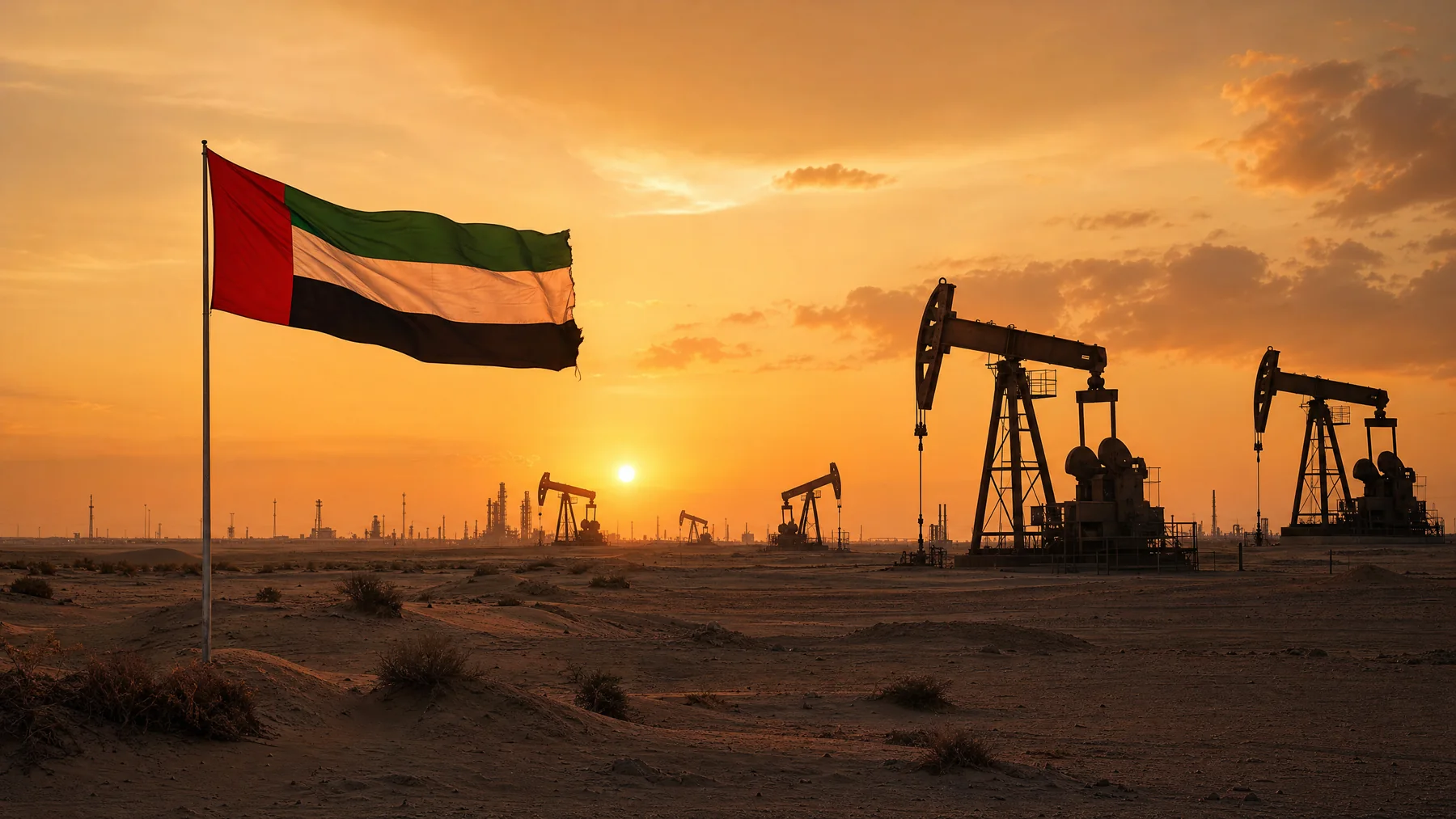
The United Arab Emirates announced on May 1 that it is leaving OPEC, ending six decades of membership and removing one of the organisation's largest oil producers. The decision has been anticipated in energy markets for several years but the timing — immediately following the Iran war and amid fundamental restructuring of Middle Eastern alliances — gives it additional significance.
I want to explain why this matters, because the coverage I have seen treats it primarily as an energy market story. It is much more than that.
What OPEC Actually Is
The Organisation of the Petroleum Exporting Countries was founded in Baghdad in 1960 by five countries: Iran, Iraq, Kuwait, Saudi Arabia, and Venezuela. Its purpose was to coordinate oil production to stabilise prices and maximise the revenues of its members.
Over six decades it expanded, contracted, and adapted. Its power peaked during the 1973 oil embargo, when OPEC demonstrated that it could impose economic pain on Western countries that dwarfed anything achievable by conventional military means. It has been a variable force since then — sometimes cohesive, sometimes fractious, always relevant.
The UAE's departure is not primarily an energy market decision. It is a geopolitical statement.
What the UAE Is Saying
The UAE has been on a trajectory of increasing independence from the traditional Arab world order for years. The Abraham Accords, signed with Israel in 2020, were the most visible expression of this — a willingness to break from Arab consensus on Palestine in exchange for security guarantees and economic partnerships with Israel and the United States.
The Iran war has accelerated this trajectory. The UAE was struck by Iranian missiles in the early weeks of the conflict. Iranian drones killed a person in Fujairah. The experience of being attacked by a country that Saudi Arabia's OPEC leadership has complicated relationships with — Iran is an OPEC member — has concentrated UAE minds wonderfully.
By leaving OPEC, the UAE is signalling that it will no longer coordinate its energy policy with Saudi Arabia and, by extension, with the other Gulf states whose interests it does not always share. It is moving toward a bilateral relationship with its largest customers — primarily India, China, and Japan — and toward greater price flexibility that OPEC's collective discipline has always limited.
This is the UAE acting like the independent, globally oriented city-state it has spent the past thirty years becoming. It is the most significant statement of Emirati strategic autonomy since the Abraham Accords.
What This Means for Oil Markets and My Clients
In the short term, UAE departure from OPEC puts modest downward pressure on oil prices, as the UAE is now free to produce at will rather than within OPEC quotas. Saudi Arabia, which has been cutting production to support prices, loses one of its major partners in that discipline.
For European energy consumers — and for businesses with energy-intensive operations — this is modestly positive. Lower oil prices ease the cost pressure that the Iran war spike imposed.
For clients with UAE-based structures or businesses, the departure from OPEC is a positive signal about Emirati independence and the durability of the UAE's western-facing commercial model. A country that leaves OPEC to pursue its own commercial relationships is a country that is building its economic future on market integration rather than cartel politics.
The UAE is betting on modernity. That is a bet I have generally been happy to make alongside it.
Work with Sebastian
If the UAE's strategic positioning is part of your thinking about whether it remains the right base for your structures, let's talk about what has changed and what has not. Book a consultation.