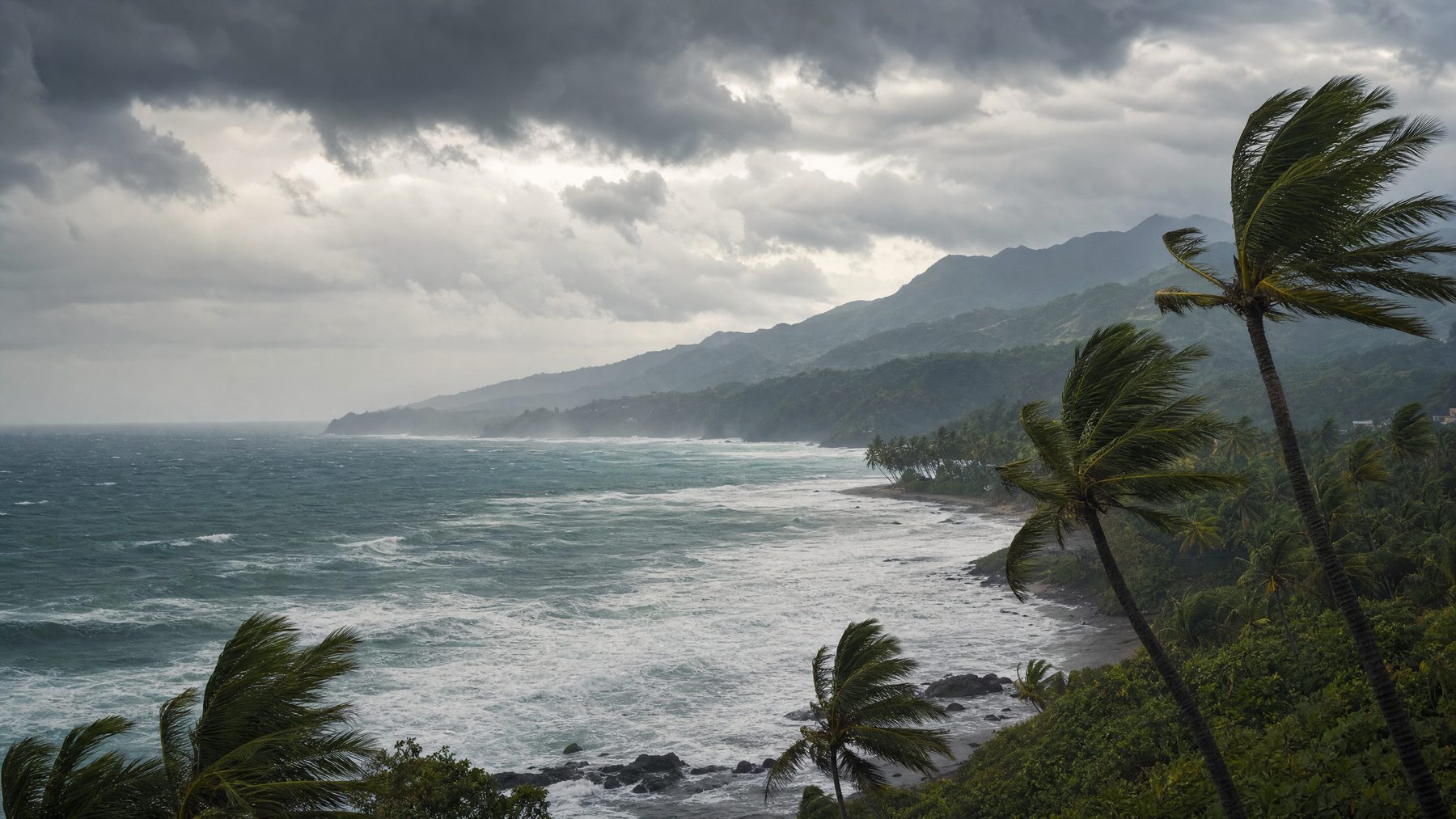
Typhoon Kalmaegi made landfall in the Philippines on November 4. By the time it had swept through Vietnam and Thailand, more than 200 people were dead.
The coverage lasted about 48 hours in the Western press. Then it moved on to the next thing.
I want to stay with it a little longer. Not for the politics. But because it says something important about where people choose to live — and the risks that do not show up in a tax comparison spreadsheet.
The Philippines Has Been on My Radar for Years
I have written before about the Philippines SRRV visa, the retirement and residency option that gives you a foothold in a genuinely beautiful, English-speaking, low-cost archipelago. I have had clients seriously considering Cebu and the quieter islands as full-time bases.
The Philippines has real advantages: low cost of living, warm people, territorial taxation for foreign-sourced income, and a culture that still values family, faith, and community in ways that Western Europe has largely abandoned.
But it also has typhoons. An average of 20 per year, with five or six making landfall at significant strength. Kalmaegi was not exceptional. It was routine.
Choose Your Base With Local Knowledge
This is where the difference between a YouTube expat and someone with genuine ground-level knowledge becomes obvious.
We have an office in Davao, in Mindanao. One of the things that drew us there, beyond the business environment and the cost base, is a geographical fact that most people researching the Philippines never encounter: Davao sits in the lee of the mountain ranges that shield it from the Pacific typhoon tracks running westward across the archipelago. It is not immune, but the statistical exposure is materially lower than the Visayas or northern Luzon.
That is not something you learn from a tax guide. You learn it from being there.
The distinction matters enormously for anyone thinking about a permanent or semi-permanent base in the region. Cebu, beautiful as it is, sits directly in the path of the most common typhoon tracks. Davao does not. For a family, for a business with physical infrastructure, that difference in risk profile is meaningful.
Risk Is Part of Every Jurisdiction Calculation
Every jurisdiction has a risk profile. Not just tax risk or political risk, but physical risk.
- The Philippines: typhoons, seismic activity, political volatility in Mindanao's more remote areas. - Panama: flooding, infrastructure fragility, dependence on canal revenue. - Georgia (the country): geopolitical proximity to Russia, as 2008 and 2024 demonstrated. - Malta: no natural disasters to speak of, but small, expensive, and subject to EU regulatory capture. - UAE: political stability, but autocratic governance with zero tolerance for dissent. - Texas: hurricanes on the Gulf Coast, heat, the occasional grid failure. I have lived through one of those.
There is no risk-free jurisdiction. There is only honest risk assessment.
What Kalmaegi Actually Tells You
When 200 people die in a typhoon, the question for a prospective resident is not "should I never go there?" It is: where would I live, how would I structure my life, and what is my exit plan if the worst happens?
In the Philippines context, that means:
Choose geography carefully. Local knowledge about typhoon tracks, elevation, and infrastructure resilience matters more than the brochure. Davao's mountain barrier is a real and underappreciated advantage.
Build infrastructure redundancy. Generator. Water storage. A plan for when communications go down. Anyone serious about a Southeast Asian base should have this as standard.
Do not put all your eggs in one basket. If your physical base is the Philippines, your financial infrastructure should not be. Banking in Singapore or the UAE. Corporate structure elsewhere. Your wealth is not trapped by geography.
And most importantly: know when to leave. The people with a Plan B are not caught in the storm. They are already on a plane.
The Bigger Point About Mobile Intelligence
The climate story is getting louder. The physical reality of more frequent severe weather events is something any serious mobile investor has to factor in.
Coastal property in low-lying areas of Southeast Asia, Central America, and the Caribbean is carrying risk that is not yet fully priced. That is an opportunity for some and a trap for others.
The sensible approach is always the same: diversify across multiple jurisdictions, do not over-concentrate in any single property market, and make sure your structures are portable.
The world is getting less predictable. That is not a reason to stay put. It is a reason to be better prepared.
Work with Sebastian
Thinking seriously about Southeast Asia as a residency or investment base? The opportunity is real. So are the risks. Let's build a structure that captures the upside and manages the downside intelligently. Book a consultation.