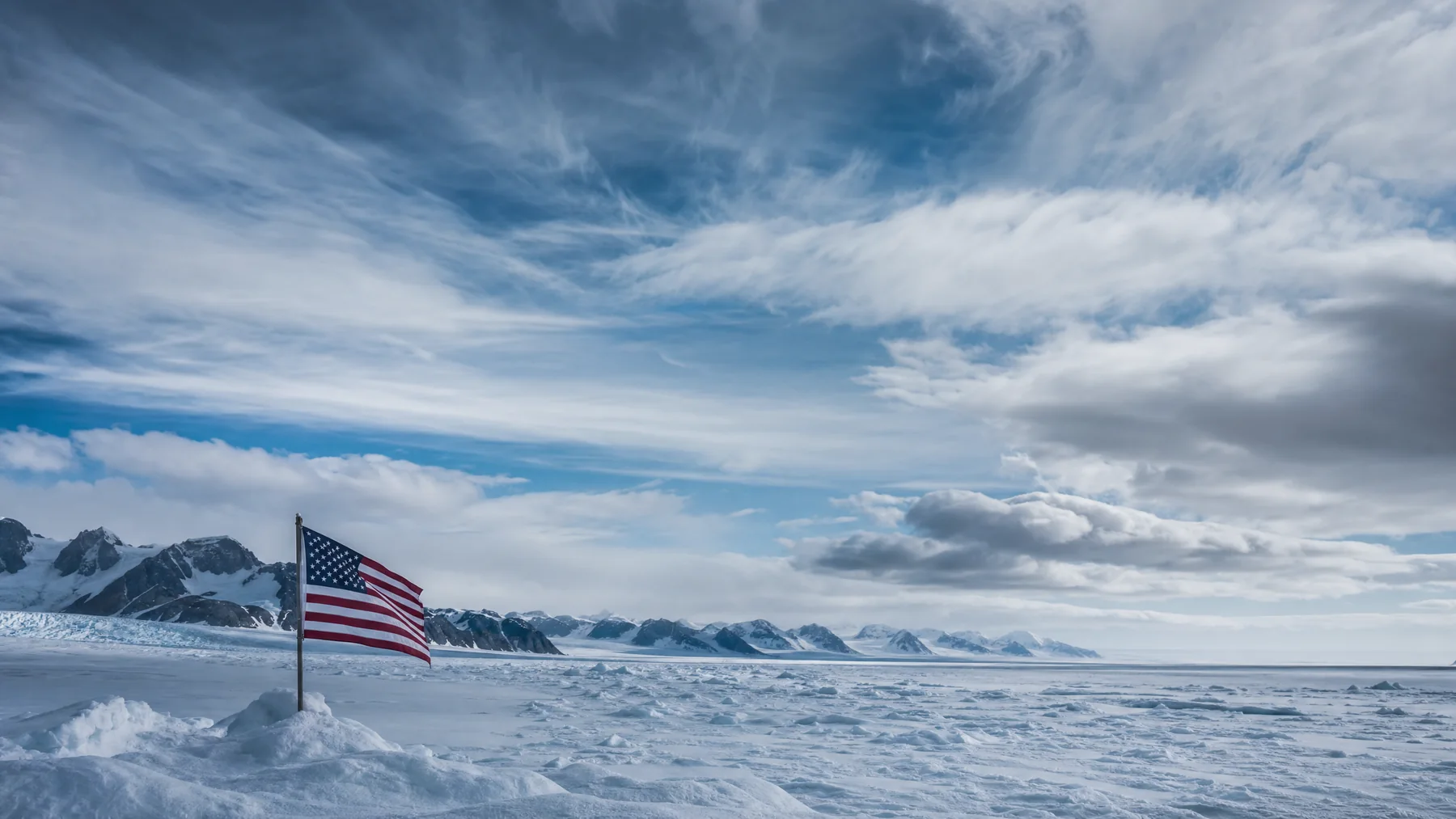
Donald Trump has appointed Republican Governor Jeff Landry of Louisiana as his special envoy to Greenland. Denmark's foreign minister summoned the US ambassador to Copenhagen in response. Landry posted on social media thanking Trump for the honour to serve in this volunteer position to make Greenland part of the US.
This is, apparently, real.
I want to think carefully about this, because the instinct to dismiss it as Trumpian theatrics is understandable but probably wrong.
Why Trump Actually Wants Greenland
Greenland is roughly 2.1 million square kilometres of ice, rock, and — increasingly, as the ice retreats — accessible mineral wealth. Rare earths. Oil. Strategic Arctic shipping routes that become significantly more important as the Northwest Passage opens further.
It also sits at the intersection of the North Atlantic, the Arctic, and the approaches to North America. Its military strategic value has been understood since the Second World War, when the United States established bases there under an agreement with Denmark.
What has changed is the geopolitical context. Russia has been massively expanding its Arctic military presence — new bases, new icebreakers, new missile systems positioned above the Arctic Circle. China has been pursuing what it calls a Polar Silk Road and has made significant investments in Arctic shipping and research infrastructure.
This is not primarily about real estate. It is about the Arctic as the next great geopolitical theatre.
What Denmark Can and Cannot Do
Denmark is a NATO ally. Greenland is part of the Kingdom of Denmark — constitutionally, legally, formally. Denmark has made clear it is not for sale.
But Greenland's own political evolution is complicated. The island has been on a path toward increasing autonomy for years. Its government has significant self-governing powers already. And there is a genuine debate within Greenlandic society about the ultimate question of independence.
Trump's strategy appears to involve making himself as attractive as possible to Greenlandic voters as an alternative to Danish sovereignty. Whether this is politically viable is a separate question from whether it is strategically coherent. It is, in fact, strategically coherent.
What This Tells Us About the International Order
One of the foundational principles of the post-war order is the prohibition on changing borders by force and the requirement that territorial adjustments happen by consent through legitimate political processes.
Trump has not proposed taking Greenland by force. He has proposed buying it and now appointing a special envoy to advance the relationship. This is aggressive diplomacy, not invasion.
But the signal it sends — that a great power can openly pursue the acquisition of another country's territory through political and economic pressure without serious international consequences — is not reassuring for the broader architecture of international norms.
Russia made exactly the same argument about Crimea. The circumstances were different. The principle is not entirely dissimilar.
The rules-based international order is not self-enforcing. It depends on the major powers choosing to observe it. When they stop, the rules do not enforce themselves.
This is the environment in which my clients are making decisions about where to live, where to hold assets, and how to structure their affairs. It is not a stable environment.
Work with Sebastian
If geopolitical instability is part of your thinking about where to base your life and your assets, that is a legitimate and important variable. Let's talk about how to build structures that are resilient across a range of scenarios. Book a consultation.