There’s a story I keep hearing from my clients.
Their son or daughter emigrated. Maybe to Australia, Dubai, Singapore, Canada. Somewhere with better weather, better opportunity, lower taxes, more space. The parents stood at the departure gate, swallowed hard, and told themselves: “We’ll visit.”
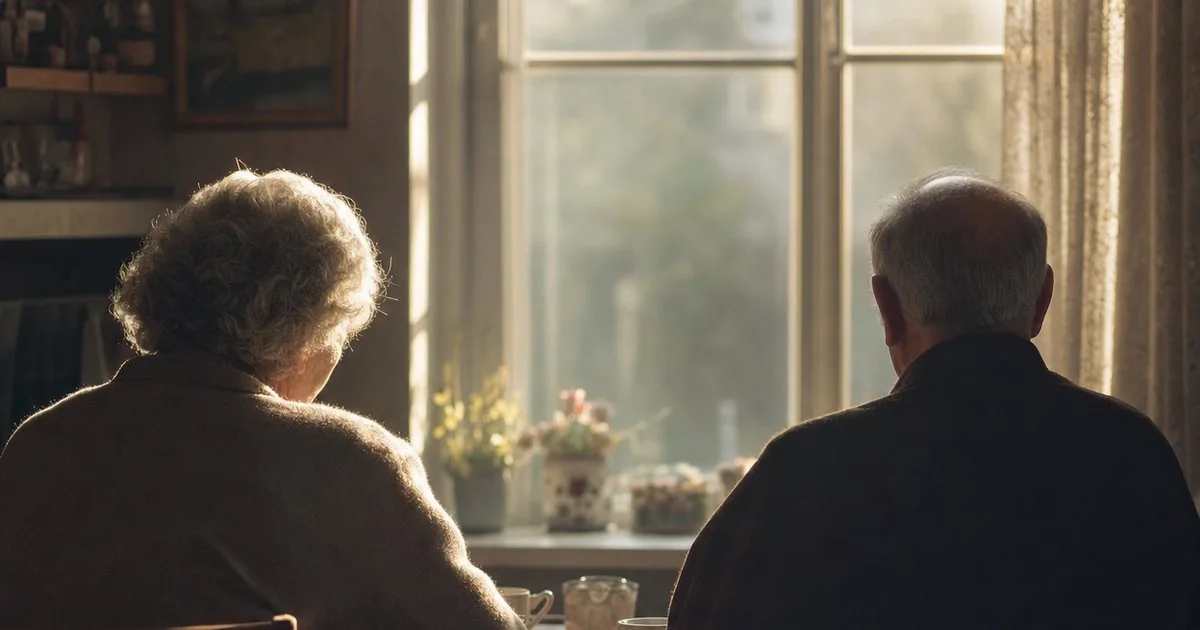
Years pass. Visits get shorter. Grandchildren are born and grow up in a timezone six hours away. And the parents sit in their semi-detached in Düsseldorf or their flat in Munich, telling anyone who’ll listen that they’d love to be closer, but… they’re too old. Too set in their ways. Too attached to their routines.
Too old.
Let me push back on that.
The Problem Isn’t Age. It’s the Story You’re Telling Yourself.
One composite client example: a man in his early sixties packed up his flat in Greenwich at 63, resigned from his finance job, and booked a one-way ticket to Perth when his last child moved there. No dramatic crisis. No great regret. Just a clear-eyed decision: his family was in Australia, so he would be too.
Another composite example: a woman of 70 relocated from Bristol to Sydney to be near her daughter and grandchildren. She went on a temporary visa, rented a room in a shared house, and tested the waters. When the UK went into lockdown and she flew back to grey skies and empty streets, she knew she’d made a mistake staying. She went back and committed fully.
These aren’t extraordinary people. They’re just people who refused to let geography become destiny.
The extraordinary ones, frankly, are those who accept the 9,000-mile gap without question.
What You’re Actually Giving Up When You “Stay Put”
I work with families across the DACH region every day. High earners, business owners, people who’ve built real wealth. And one pattern I see repeatedly is this: they put enormous energy into optimising their tax structure, their investments, their corporate setup. Legitimate, sensible things.
But they accept, almost without question, that family will be scattered across continents. That they’ll know their grandchildren through WhatsApp calls and Christmas visits. That the daily texture of family life, meals, school pickups, Sunday mornings, simply isn’t available to them.
That is a catastrophic misallocation of priorities.
Money is a tool. Family is irreplaceable. If you’ve spent twenty years learning how to make capital work harder, surely you can spend six months figuring out how to close the distance to the people who matter most.
The Practical Question: Can You Actually Do It?
Usually, yes. More easily than people assume.
Visa routes exist for parents and grandparents in most major expat destinations. Some are expensive and slow (Australia’s contributory parent visa, for example, runs to tens of thousands of pounds and can take years). Others are cheap and simple. The six-month visitor visa to Australia costs under £100 and many families structure their lives around it, spending northern hemisphere winters in Sydney and summers back in Europe.
If you have prior residency, as Slater did, the route can be even simpler.
And for those who advise clients across multiple jurisdictions, as I do, the opportunities extend further still. Tax residency, asset structuring, income optimisation: these all become part of the picture when a family is already geographically mobile. Emigration is rarely just an emotional decision. Done well, it makes financial sense too.
But none of that matters until you decide that proximity to family is a priority worth organising your life around.
The Myth of “Too Old”
Here’s the thing about age as an excuse: it proves too much.
If you’re too old at 63 to start fresh somewhere new, you were also, presumably, too old at 58. And 53. The “too old” threshold always sits conveniently just behind wherever you currently are.
The people who follow their children abroad are not people who feel young. They are people who understand that the alternative, watching family life from a distance, growing older in a house that’s too quiet, flying out for two weeks a year and pretending it’s enough, is worse than the discomfort of starting over.
Starting over at 60 is not easy. It is, without question, considerably easier than the regret of not having done it.
A Different Way to Think About It
Life is short and fleeting. One shot. Make it count.
That’s not a platitude. It’s a statement of arithmetic. The years available to you, to be present with your family in the daily, ordinary, irreplaceable way that grandparents can be present, are finite. Every year spent waiting for the right moment is a year that doesn’t come back.
The right moment is now. The right question is not “am I too old?” but “what would it actually take?”
In my experience, the answer is usually: less than you think.
If you’re thinking about following your children abroad and want to understand the tax, visa, and structuring implications of making that move, get in touch. This is exactly what I help families navigate.