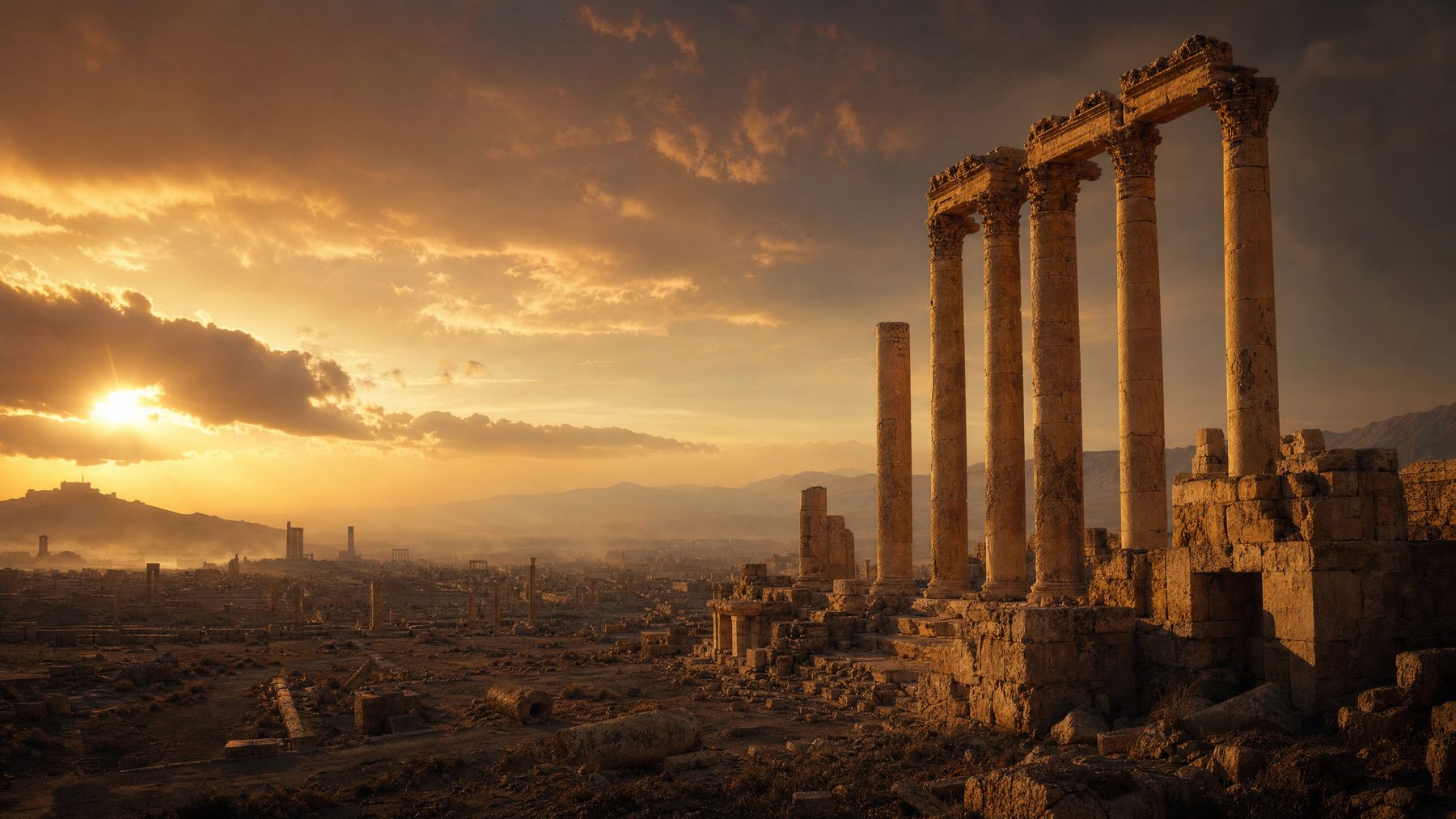
December 8 marks one year since the Assad dynasty, which lasted more than half a century, was removed from power by a rebel offensive. The 14-year civil war produced one of the world's largest migration crises, with some 6.8 million Syrians — about a third of the population — fleeing the country at the war's peak.
More than 780,000 Syrians have returned home over the past year. The reconstruction process is beginning. And the geopolitical realignment triggered by Assad's fall continues to reshape the Middle East in ways that have not yet been fully absorbed by Western analysts.
I want to think through what this actually means — for the region, for geopolitics, and for anyone with exposure to Middle Eastern markets.
What Changed When Assad Fell
Assad's Syria was a lynchpin of the Iranian-Russian axis in the Middle East. The country hosted Russian naval facilities at Tartus and Hmeimim, provided a corridor for Iranian weapons shipments to Hezbollah in Lebanon, and served as a client state that both Moscow and Tehran had invested heavily in sustaining.
All of that is now in question.
Russia's military presence in Syria is in a deeply uncertain position. The new Syrian government has not expelled Russian forces, but it has made clear it is not the unconditional ally that Assad was. Moscow's influence in the eastern Mediterranean — the strategic prize that the Syrian intervention was partly designed to secure — is significantly diminished.
Iran's position is more dramatically weakened. The loss of the Syrian corridor has complicated Hezbollah's supply lines. The June 2025 Israeli strikes on Iranian nuclear facilities and the Twelve-Day War between Israel and Iran have further degraded Iranian regional power. The axis that Tehran spent decades building in the Levant is fragmenting.
This is a major strategic shift that most European analysts have not yet fully priced.
The Reconstruction Opportunity
Syria is going to be rebuilt. Not immediately, and not without enormous complications — the country's infrastructure was devastated, its institutions hollowed out, and its human capital dispersed across the diaspora. But rebuilding will happen, and the scale of investment required will be extraordinary.
Early-mover advantage in reconstruction markets of this kind is real. The Gulf states — particularly Saudi Arabia and the UAE — are already positioning for involvement in Syrian reconstruction, as is Turkey. European businesses, hamstrung by sanctions frameworks that were designed for the Assad regime and have been slow to adapt, risk being left behind.
I am not suggesting that anyone should invest in Syria today without careful due diligence. The political situation remains fluid, property rights are unclear, and the legal infrastructure for foreign investment is essentially nonexistent.
But for clients who have exposure to the broader Middle East and North Africa region, or who are thinking about the five-to-ten-year horizon for new market entry, Syria is a country that belongs on the research agenda.
The UAE as Beneficiary
One of the less-discussed consequences of Syria's transition is the strengthening of the UAE's regional position.
Dubai has become the primary transit hub for Syrian business diaspora capital. Syrian entrepreneurs who built wealth in the Gulf, in Europe, and in the Americas over the decades of the Assad period are now looking at returning to Syria, or at least maintaining a regional presence that could benefit from reconstruction. The UAE is where they structure these activities.
For clients who are already in Dubai or considering it, the Syrian transition is a reminder of why UAE positioning as a neutral business hub — not aligned with any regional axis, commercially pragmatic, institutionally stable — has durable strategic value beyond the immediate tax optimisation argument.
What I Am Watching
I am watching Turkey very carefully. Ankara has positioned itself as the primary external patron of the new Syrian government, which gives it influence in the reconstruction process that neither Russia, Iran, nor the Gulf states currently have. That influence will translate into commercial advantage for Turkish businesses.
Turkey's relationship with the EU is complicated and its relationship with NATO has been fractious. But its economy is large, its business community is entrepreneurial, and its geographic position gives it structural advantages in the Syrian market that will be difficult for others to replicate.
I am also watching the returnee diaspora. Hundreds of thousands of Syrians in Germany, Sweden, and other European countries are evaluating whether to go home. If even a fraction of them do — bringing European education, professional skills, and capital back to Syria — the reconstruction effect will be compounded significantly.
This is one of the more interesting human capital stories in the world right now. Most people are not paying attention to it yet.
Work with Sebastian
If the Middle East and North Africa is part of your market or investment thinking, the post-Assad transition is creating new dynamics that are worth understanding properly. Let's talk about what they mean for your specific situation. Book a consultation.