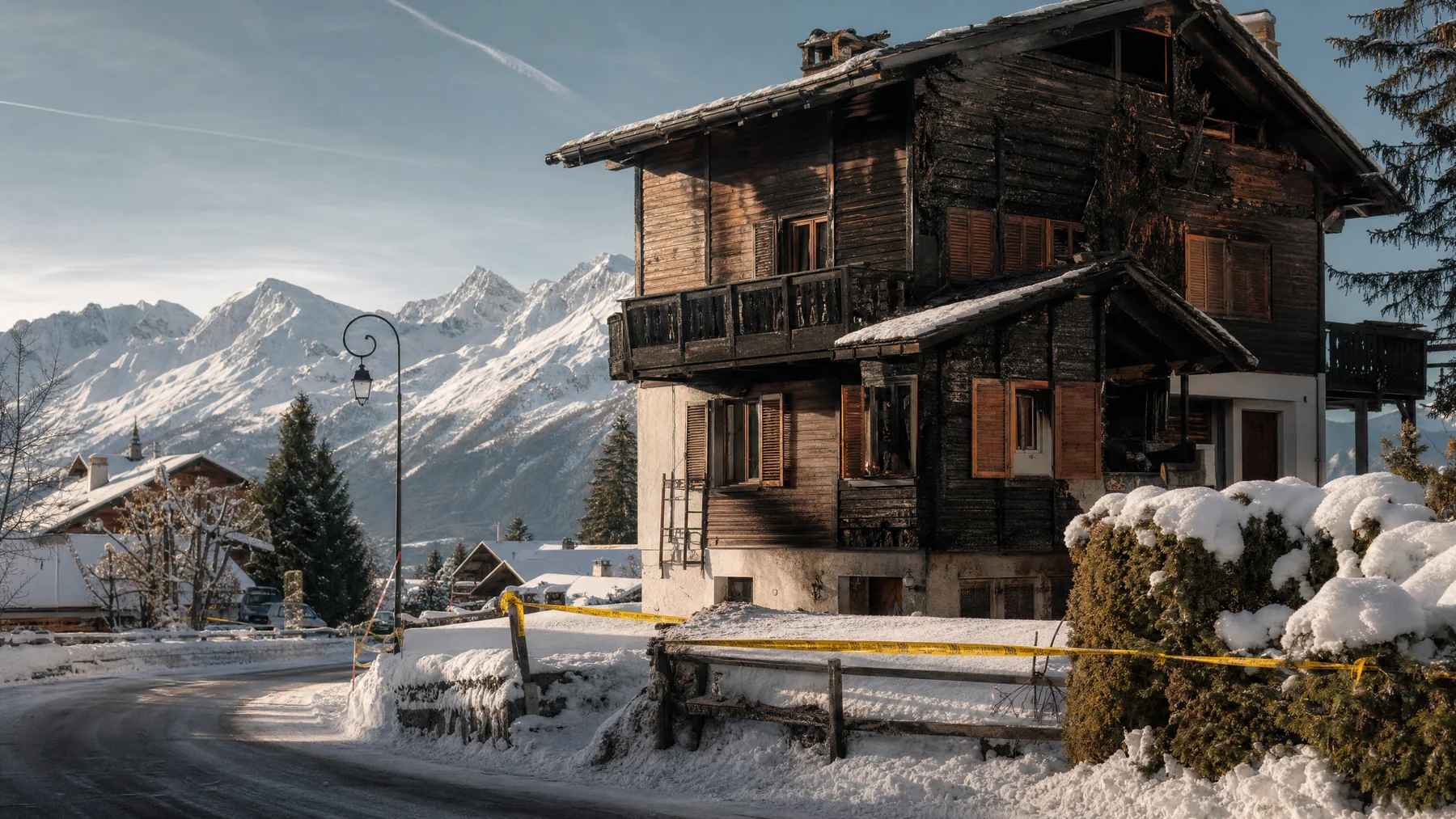
On New Year's Eve, a fire at the Le Constellation bar in Crans-Montana, Switzerland killed around 40 people and injured more than 100. Many victims were hospitalised across Switzerland, Germany, and Italy. Investigations focused on fire safety at the venue.
I want to write about this not primarily as a tragedy — though it is that — but because it touches something I think about regularly in my professional life: the relationship between apparent safety, real risk, and the structures we build to manage both.
Switzerland and the Illusion of Perfect Order
Switzerland is the country I use most often when I want to illustrate the concept of genuine institutional quality to clients. The rule of law is real. The banking system is sound. The political system, with its direct democracy and cantonal structure, distributes power in ways that limit the capacity for central overreach. The infrastructure works. The trains are on time.
And yet. Forty people died in a fire in a Swiss resort bar on New Year's Eve.
I am not using this to make a cynical point about Switzerland. I am using it to make a point about risk that applies everywhere: no jurisdiction is perfectly safe. No institution is perfectly reliable. No structure you build will protect you from every possible adverse outcome.
The question is never whether risk can be eliminated. It cannot. The question is whether the risks you are exposed to are the ones you have chosen consciously, rather than the ones you have accumulated through inattention.
What This Has to Do With Asset Protection
The clients who come to me after a crisis — a tax investigation, a business dispute, a divorce, a jurisdictional regulatory change that they were not prepared for — almost always have one thing in common: they built their structures for the world as it was, not for the world as it might become.
They chose their banking jurisdiction when that jurisdiction was clearly the best option, and they have not revisited the decision in ten years. They established their company structure when the regulatory environment was favourable, and they have not updated it since the rules changed. They made their residency decision based on a tax regime that has since been modified.
The world changes. Structures that do not change with it accumulate risk invisibly, the way a building accumulates structural wear — nothing visible, nothing alarming, until the moment when the load exceeds the capacity.
The Swiss Context Specifically
For my clients who use Switzerland as part of their structure — whether for banking, for the Pauschalbesteuerung, for holding company purposes, or for private family purposes — the Crans-Montana fire is a reminder to think about what their Swiss connection actually delivers and whether it still delivers it.
Swiss banking remains among the world's best. But it is not what it was fifteen years ago in terms of privacy. The Pauschalbesteuerung remains genuinely valuable for the right profile. But the cantons differ significantly in their implementation, the minimum thresholds have risen, and the profile of who qualifies has narrowed.
Switzerland is still excellent. But "excellent" is not the same as "appropriate for my specific situation, which may have changed."
Review your structures. Not in a panic. Systematically, annually, with proper advice. The people who do this avoid the worst outcomes. The people who do not occasionally find themselves in the position of the guests at Le Constellation — in a beautiful place, with every reason to feel safe, facing a risk they had not anticipated.
Work with Sebastian
If your structures have not been reviewed in the past year, that is the place to start. Not because anything is necessarily wrong, but because the world has changed enough that you should find out. Book a consultation.