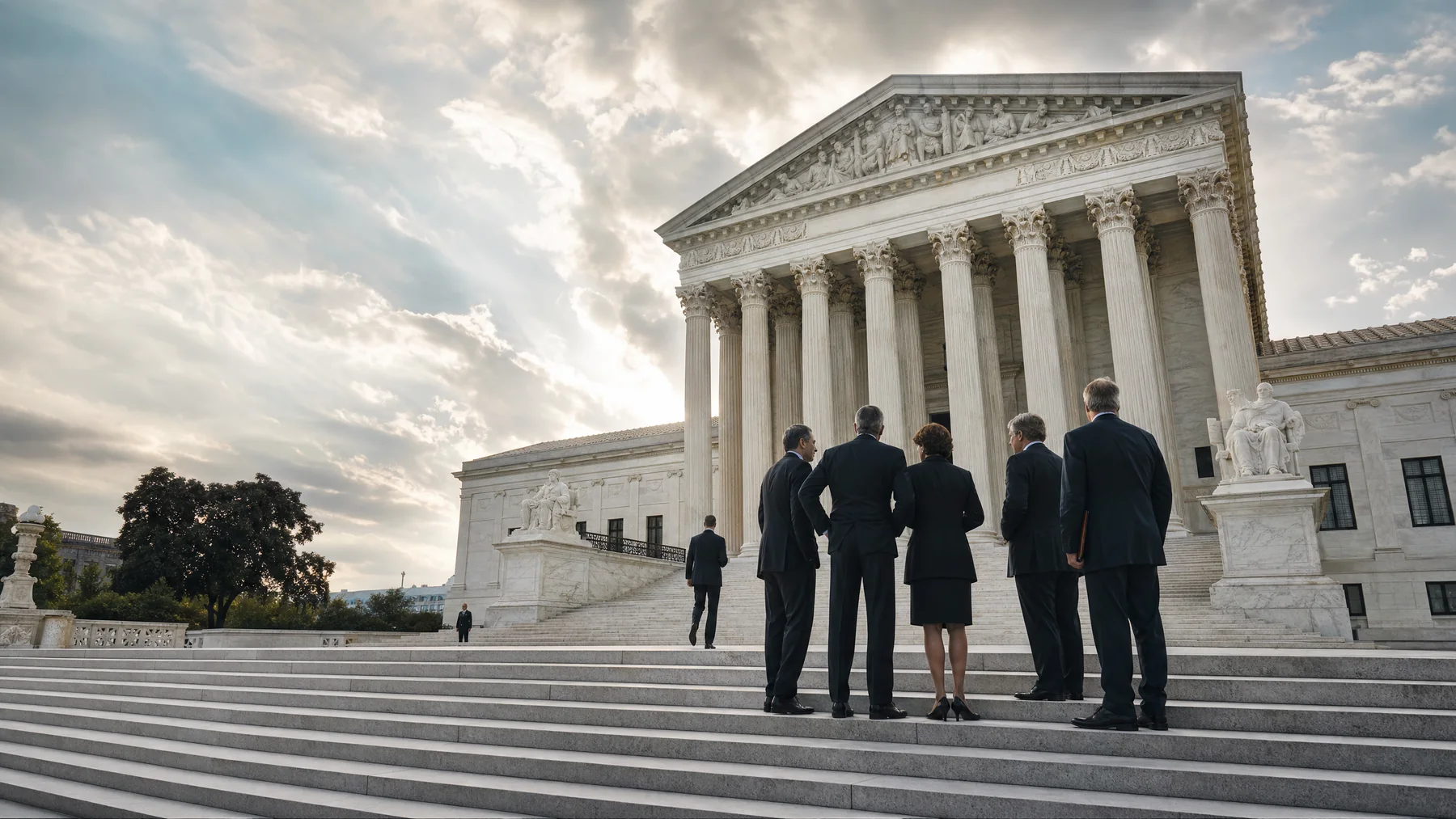
The United States Supreme Court this month struck down the emergency tariff authority Trump had been using to impose broad import duties, ruling that the executive's tariff powers under the International Emergency Economic Powers Act did not extend to the sweeping across-the-board levies that had been imposed since Liberation Day in April 2025.
The administration immediately announced it would pursue tariffs through alternative legal authorities, including Section 232 national security provisions and Section 301 intellectual property provisions.
This is significant. But it is not a death blow to the tariff programme. Let me explain what has actually changed and what has not.
What the Court Actually Said
The Court's majority held, in essence, that IEEPA — the statute Trump used to declare a national economic emergency and impose tariffs on this basis — was not intended by Congress to authorise permanent, broad-based import taxes affecting essentially all trade with all countries.
IEEPA was designed for targeted emergency responses to specific threats: freezing assets of hostile regimes, blocking transactions with sanctioned entities, responding to specific economic crises. It was not, the majority held, a blank cheque for the executive to redesign the entire US tariff schedule by declaring an emergency.
This is a textually defensible reading. It is also a politically uncomfortable one for a Court that has generally been deferential to executive power on national security grounds.
What Has Not Changed
The tariffs imposed under Section 232 — on steel, aluminium, and automobiles, justified on national security grounds — remain in force. The tariffs imposed under Section 301 — on Chinese goods, justified on intellectual property grounds — also remain. These cover a substantial portion of the overall tariff increase.
The administration has announced immediate new investigations under both authorities to recreate tariff coverage for goods that were previously covered only by IEEPA. These investigations will take months. The tariffs they produce will face their own legal challenges.
But the direction of policy has not changed. The administration is committed to a more protected American market. The legal mechanisms may shift. The underlying intent will not.
What This Means Practically for European Businesses
For my clients in German manufacturing and the broader Mittelstand, the Supreme Court ruling provides a brief period of reduced uncertainty — some of the tariff exposure they have been planning around may ease temporarily.
But the structural shift in US trade policy is not reversed by this ruling. The US market is more expensive to access than it was in 2024. That remains true regardless of which statute backs the tariffs. The businesses that have already made decisions to diversify away from US market dependence, or to establish US manufacturing operations to avoid tariffs, should not reverse those decisions on the basis of this ruling.
Legal mechanisms change. Strategic realities change more slowly. Plan for the strategic reality, not the current legal situation.
If US tariff exposure is affecting your business planning and you want to think through how to structure for resilience in the current trade environment, let's talk. Book a consultation.