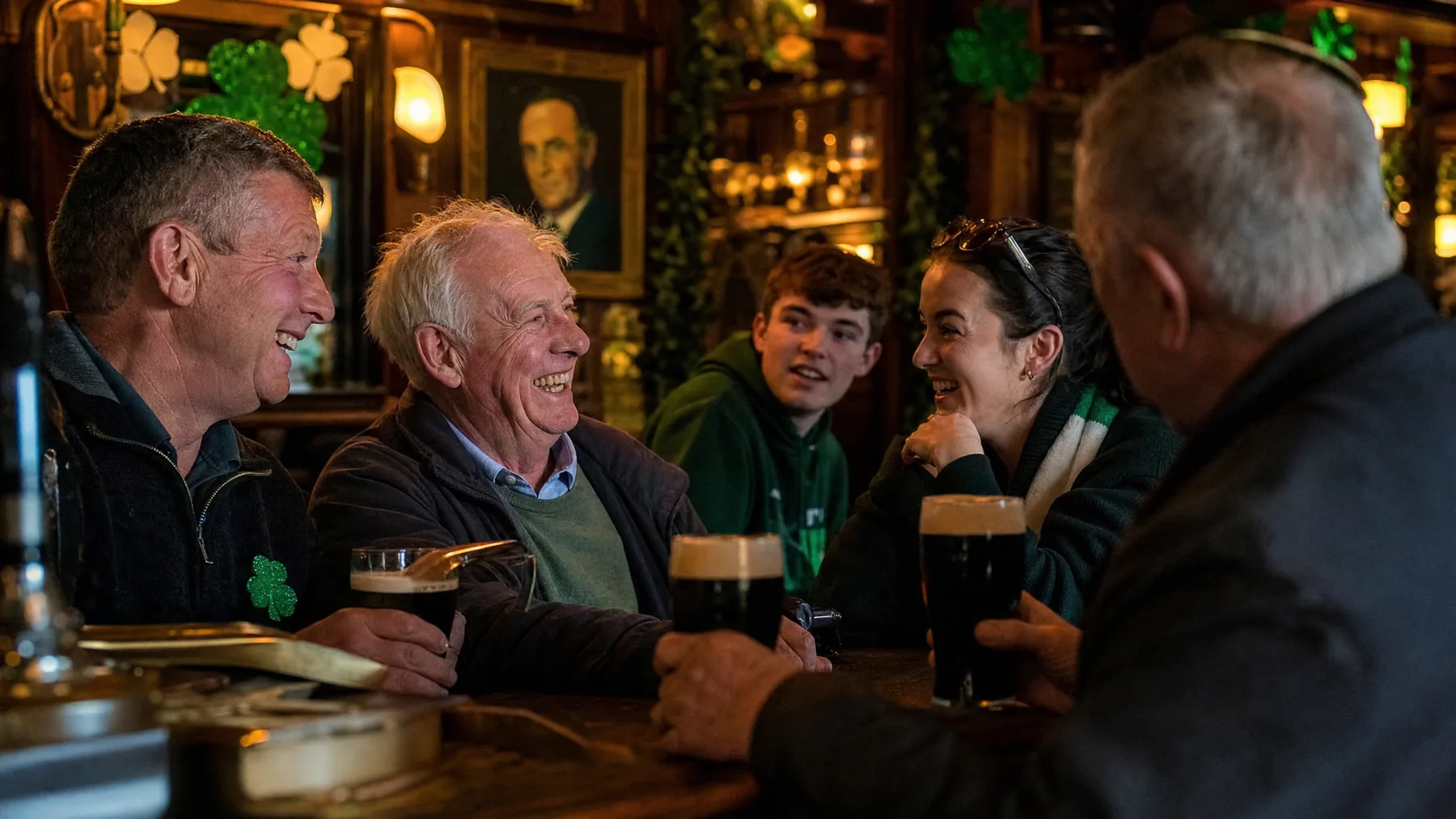
Today is St Patrick's Day. The feast of the apostle of Ireland — the Romano-British missionary who came to a country that had enslaved him, returned to convert it, and became its patron saint.
It is also, in most of the world, an excuse for green beer and manufactured Irishness that Patrick would not recognise and the Irish themselves regard with a mixture of amusement and exasperation.
I lived in Ireland. I want to tell you what it is actually like, beyond the shamrocks.
What Ireland Actually Is
Ireland is a small country on the edge of Europe that has produced a disproportionate share of the English-speaking world's literature, music, and moral complexity. Beckett, Joyce, Yeats, Heaney — but also the ordinary conversational brilliance of people who have been using language as both weapon and warmth for centuries in conditions that required both.
The Irish relationship to adversity is unlike anything I have encountered elsewhere. It is not German stoicism, which is real but heavy. It is not English stiff-upper-lip, which is real but sometimes cold. It is something warmer and stranger — a capacity to hold suffering and humour simultaneously, to acknowledge the darkness without being swallowed by it, to maintain genuine human warmth under conditions that would make many cultures retreat.
This comes, I think, from a history that involved a great deal of suffering — famine, colonisation, emigration — and from a Catholic faith that, even as it has declined institutionally, left a particular shape on the culture's relationship to mortality, community, and the nature of a good life.
What Patrick Actually Did
The historical Patrick — stripped of the myth, which is largely medieval invention — was a man who had every reason to hate Ireland and chose instead to love it.
Taken as a slave at sixteen, he spent six years in Ireland herding animals. He escaped, returned to Britain, trained for the priesthood, and then — against the expectations of his family and his ecclesiastical superiors, who thought the mission too dangerous — went back to the country that had enslaved him.
He went back. Like Sebastian going back to face Diocletian. Like the Holy Family who could not go back to Nazareth but went forward to Egypt. The movement toward, rather than away from, the difficult thing.
He converted a country. Not instantly, and not without conflict, but he converted it. And the Irish Church he established became, in the centuries that followed, one of the great preservers of Western learning during the period when the European continent was being torn apart.
A British slave who became Ireland's apostle. History does not lack for improbable stories of redemption.
My Time in Ireland
I was there for work primarily, but Ireland has a way of becoming more than a tax or business calculation. The people draw you in. The conversations, which begin as professional and become personal within twenty minutes because that is simply how the Irish are wired. The particular quality of light on the west coast, which changes five times before lunch.
I have clients there now. I visit. The country has changed — it is wealthier, more cosmopolitan, more expensive — but the essential character is still recognisable. The warmth is still there.
On Patrick's feast day, it is worth acknowledging: whatever Ireland's tax regime delivers or does not deliver, the country itself is genuinely worth knowing.
Lá Fhéile Pádraig sona daoibh.
Work with Sebastian
If Ireland as a base — personally, professionally, or for business structuring — is part of your planning, let's talk about whether it fits your specific profile. The country has real advantages for the right person. Book a consultation.