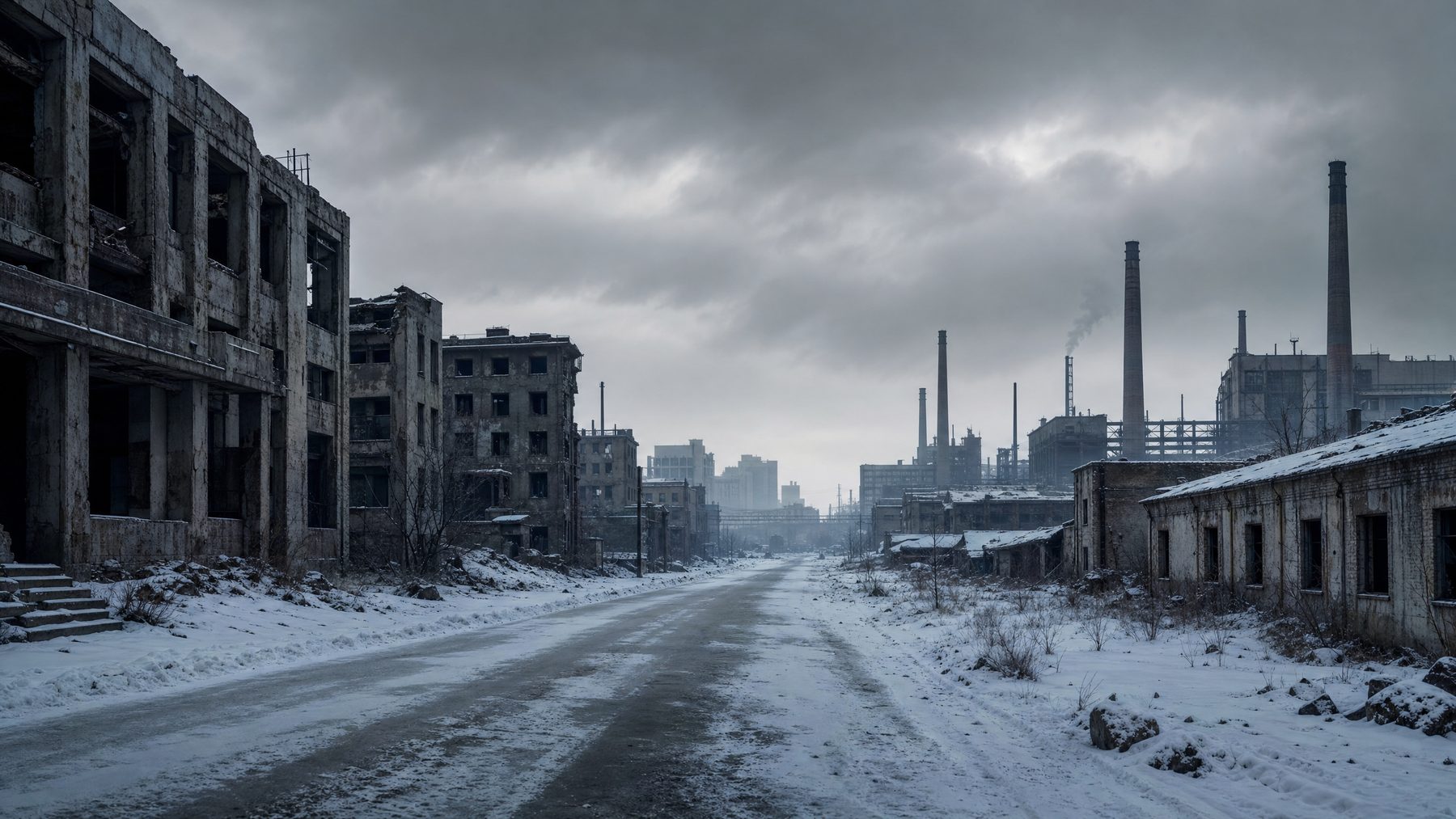
Russia's forces have captured Pokrovsk in the Donetsk region, after months of brutal fighting. The city had been a key logistical hub for Ukrainian forces in the east.
The fall of Pokrovsk will not end the war. It will not produce an immediate Ukrainian collapse. But it is a significant development, and it is being reported with less gravity than it deserves, partly because the Western press has covered Ukraine with declining attention as the conflict has ground on into its fourth year.
I want to be honest about what this means and what it does not mean.
What Pokrovsk Actually Was
Pokrovsk was not a front-line city in the ordinary sense. It was a logistics node — a junction through which Ukrainian supplies, ammunition, and troop movements in the eastern theatre were routed. Its capture disrupts Ukrainian supply lines across a significant portion of the Donetsk front.
It does not mean the war is over. Ukraine has adapted to previous losses and will adapt again. The Ukrainian military has demonstrated, repeatedly, a capacity to absorb setbacks and continue fighting that has surprised most Western analysts.
But it does mean that the eastern front has become materially more difficult for Ukraine to hold. And it provides Russia with a platform for further advances toward Dnipro and the broader Dnieper line.
This is not a decisive battle. But it is a bad week for Ukraine, and bad weeks have been accumulating.
The Bigger Picture on the War
Let me say again what I said last week about the peace plan: the arithmetic of this conflict has not changed.
Russia is losing roughly a thousand soldiers a day. Those numbers, sustained over three years, represent a genuine attrition of Russian military capacity. But Russia has a population four times Ukraine's, a defence industrial base now running at full wartime capacity, and a political system that can sustain losses without facing electoral consequences.
Ukraine's position is more precarious. Its manpower pool is under severe strain. Its ammunition supply depends on Western political will, which has been inconsistent. And the peace plan currently on the table would require Ukraine to accept territorial losses that its constitution currently prohibits.
The honest assessment is that Ukraine needs either a significant escalation of Western support — the kind that Western governments have repeatedly said they are not willing to provide — or a negotiated settlement that involves painful concessions.
The fall of Pokrovsk makes the second option more likely, not less.
What European Leaders Should Be Doing
Here is what frustrates me about the European response to this war.
European leaders have spent three years saying the right things about Ukrainian sovereignty while providing support that is always calibrated to avoid escalation. That calibration has meant Ukraine has had enough support to fight but not enough to win.
That is not a principled position. It is a calculation that European leaders have made to avoid domestic political costs, dressed up in the language of strategic prudence.
If you believe, as I do, that Russian territorial aggression in Europe is a genuine threat to the security architecture that has kept Western Europe at peace for eighty years, then the logical response is to provide Ukraine with what it needs to win, not what it needs to survive.
If you do not believe that, then the logical response is to push hard for a negotiated settlement that ends the killing, even at the cost of Ukrainian territory.
What is not logical is three more years of the current approach. The middle road between those two positions is not strategy. It is postponement.
The Implication for Investors and Entrepreneurs
I have written before about what the European security deterioration means for the practical planning of anyone with significant assets in the continent.
The fall of Pokrovsk is a reminder that this is not a crisis that is resolving. It is a crisis that is evolving, with no clear endpoint in sight.
For my clients with heavy European asset concentration, the question is not whether to panic. The question is whether their current structures give them genuine resilience across a range of scenarios — including ones that looked implausible three years ago.
The answer, for most of them, is that they do not. And building that resilience is significantly easier before a crisis deepens than during one.
Work with Sebastian
If European geopolitical risk is on your mind and you want to think concretely about what resilience looks like for your specific situation, let's have a proper conversation. Book a consultation.